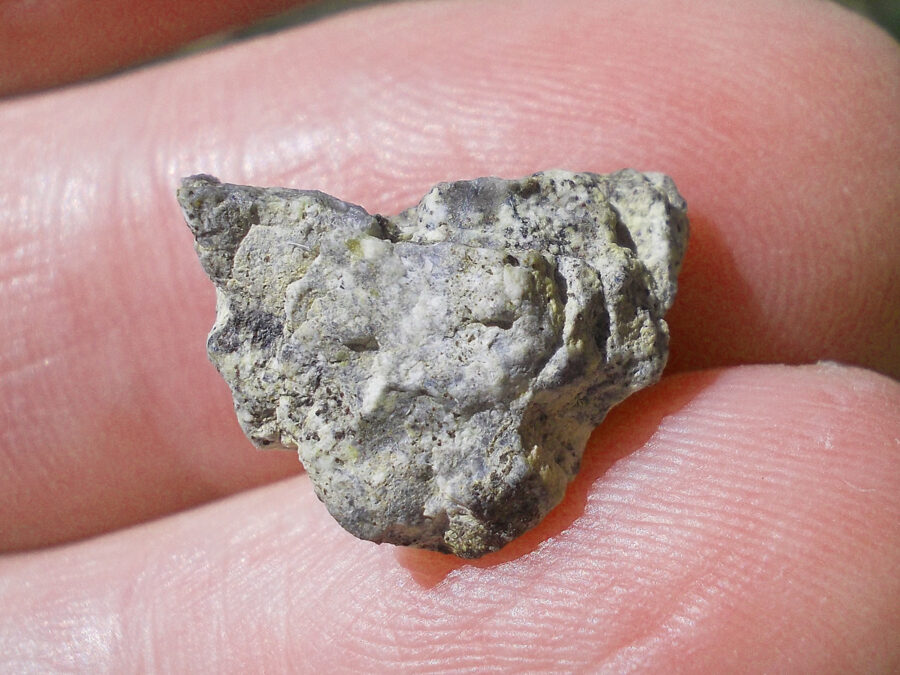
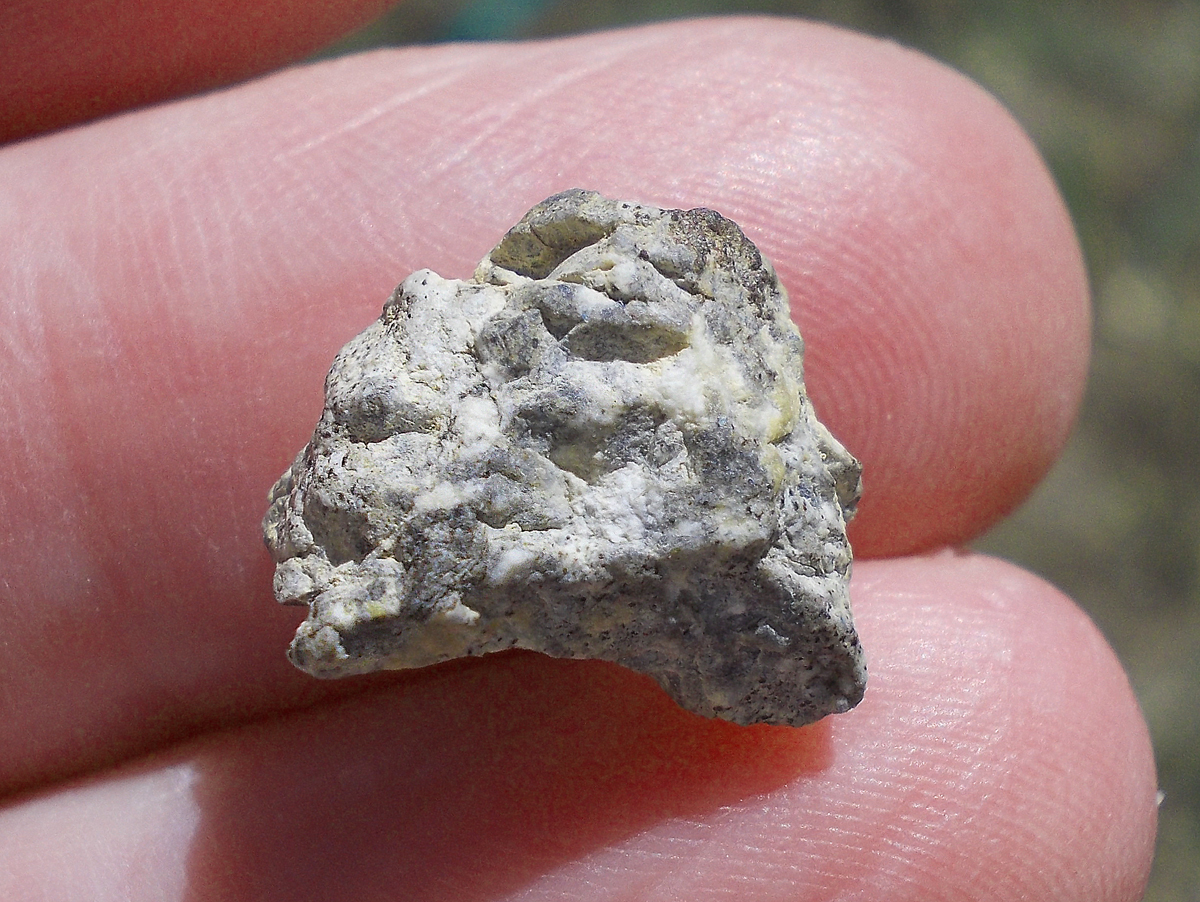
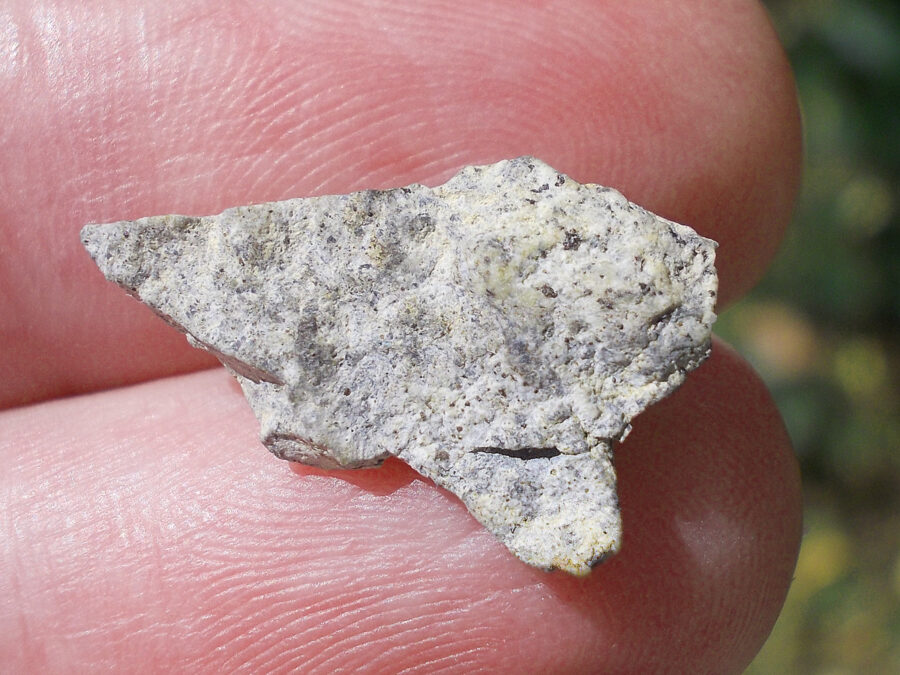
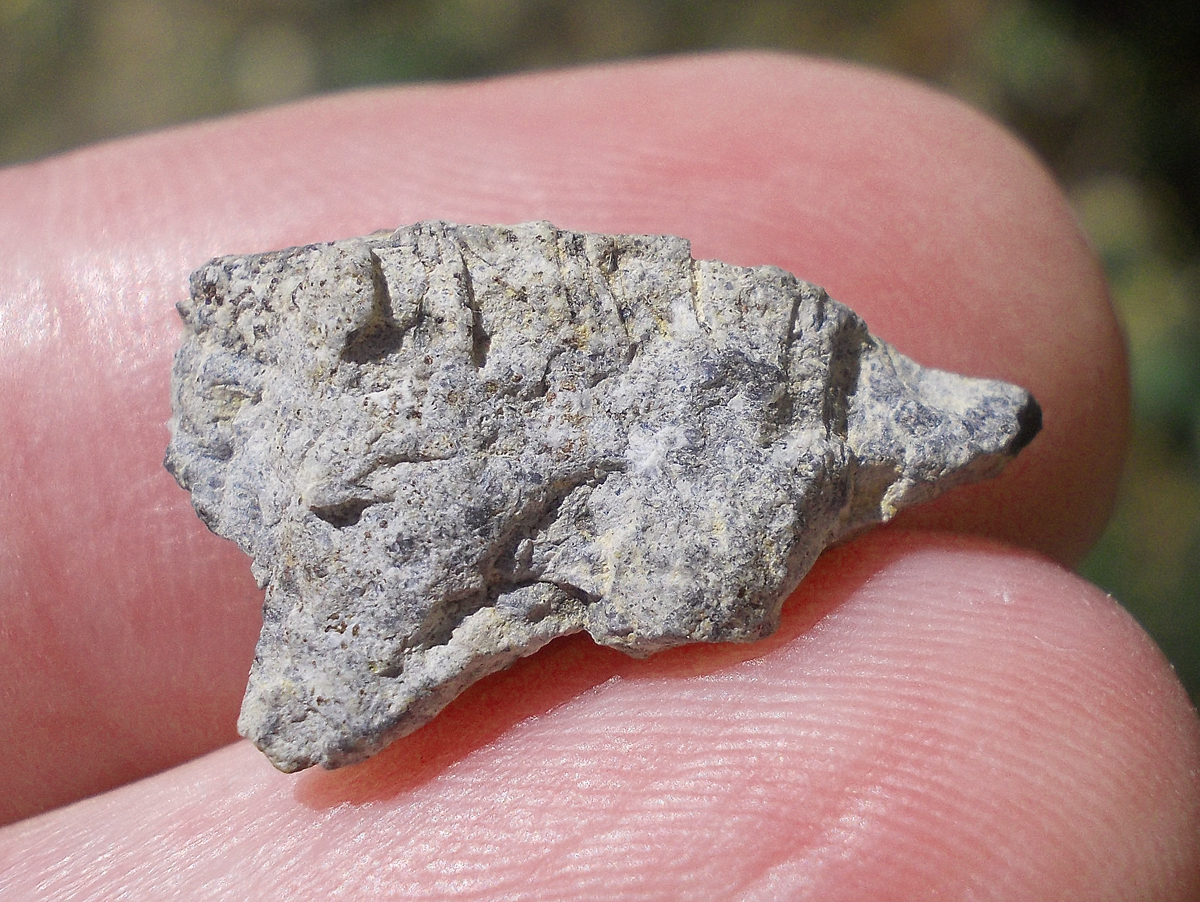
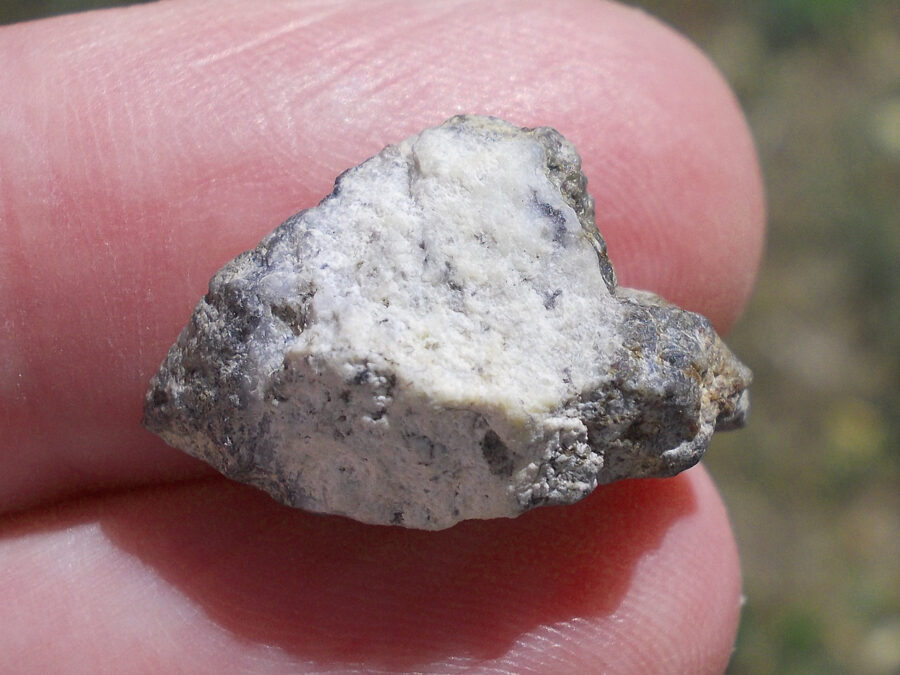
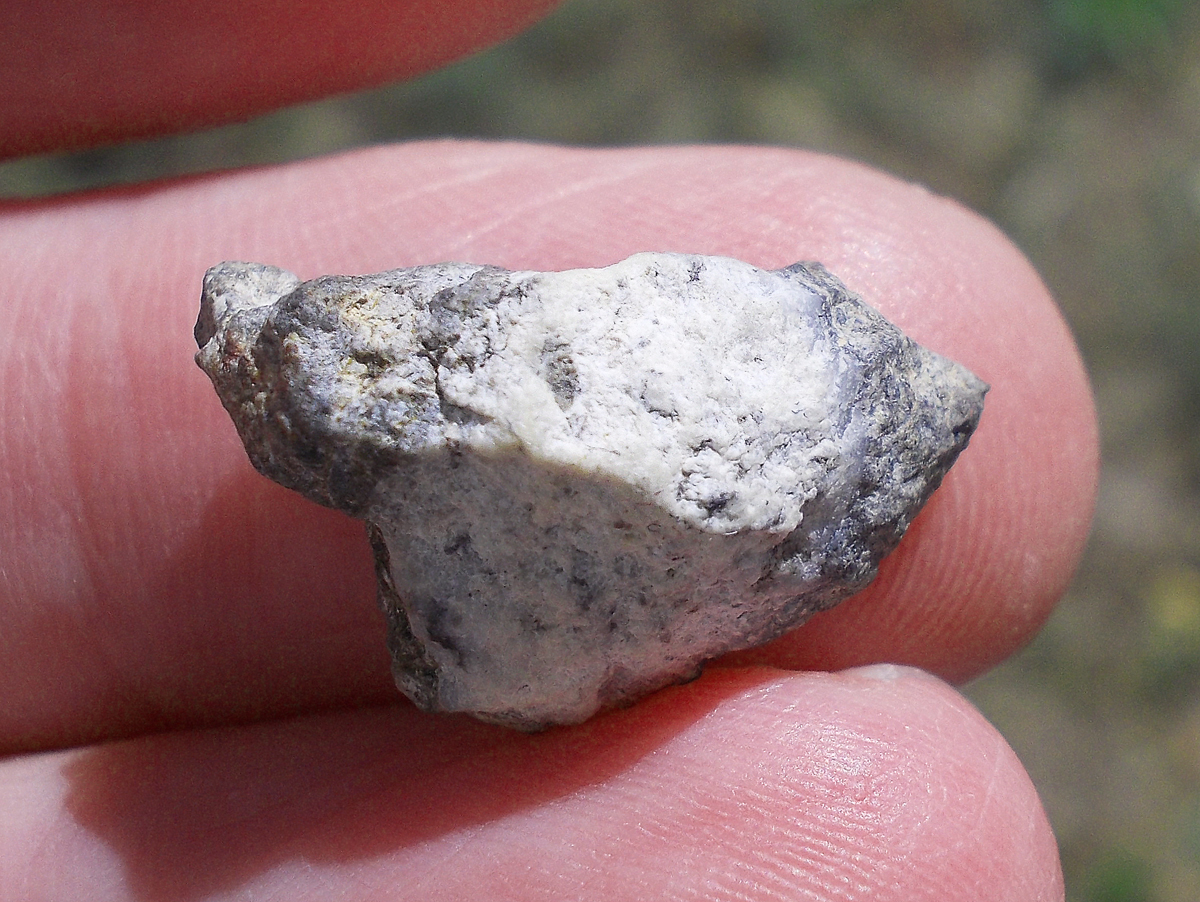
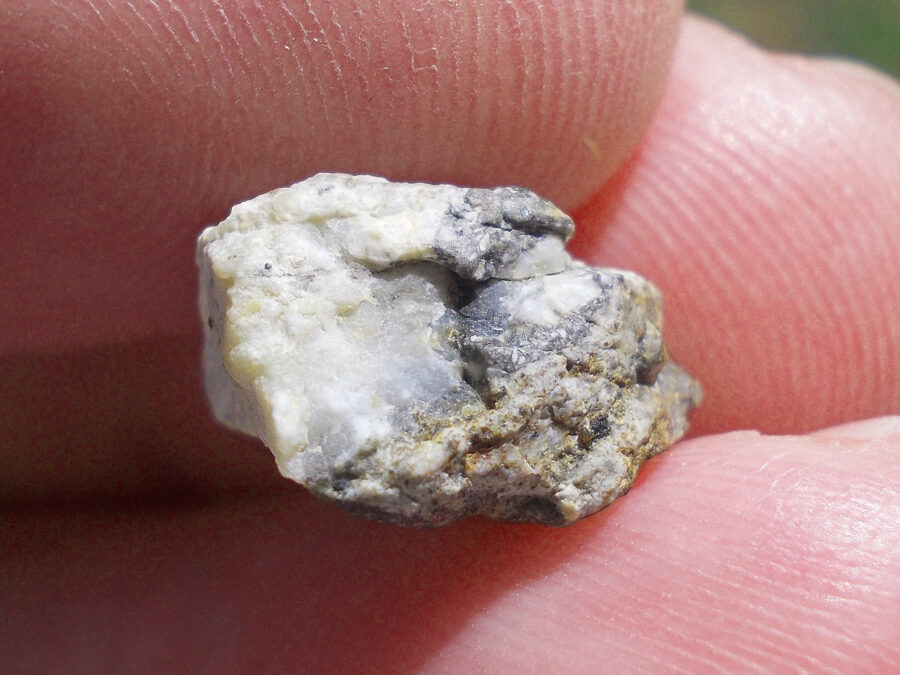
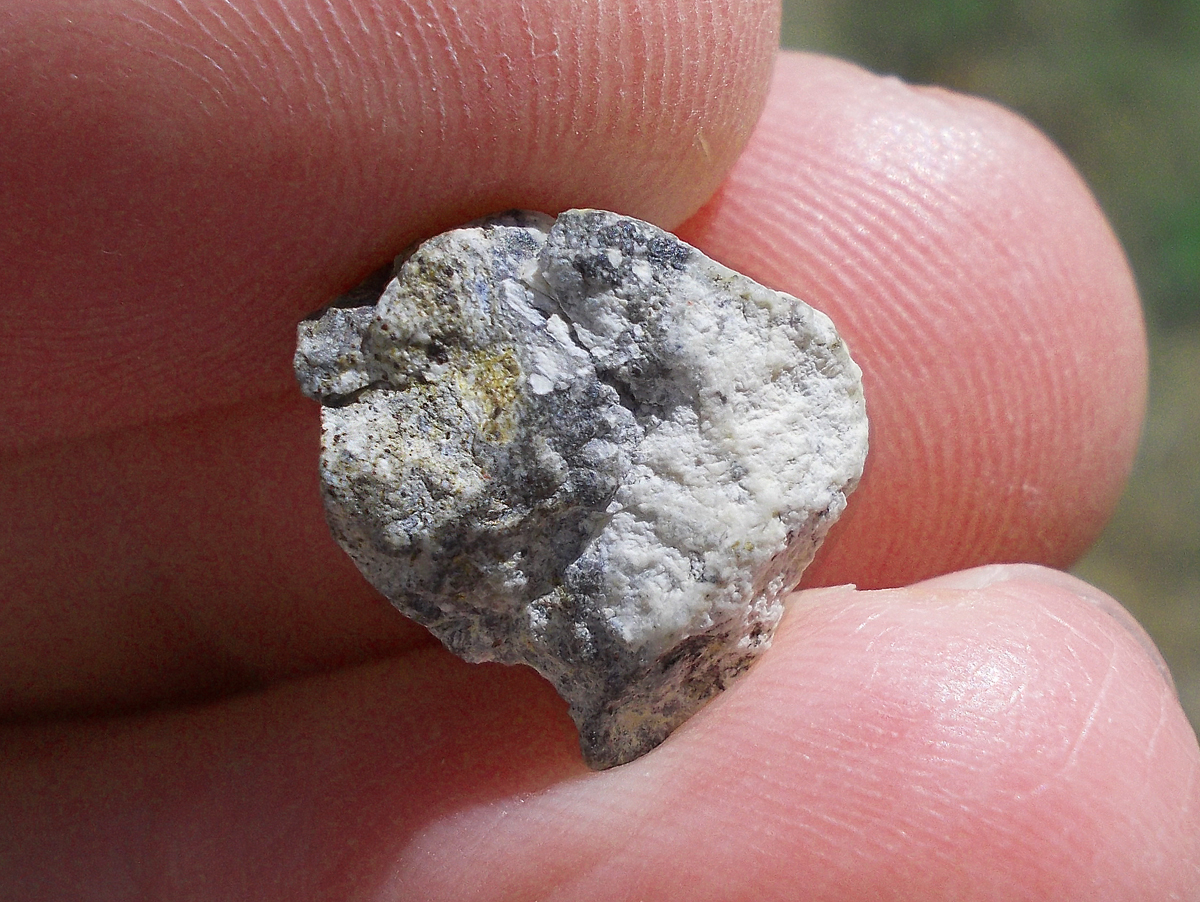
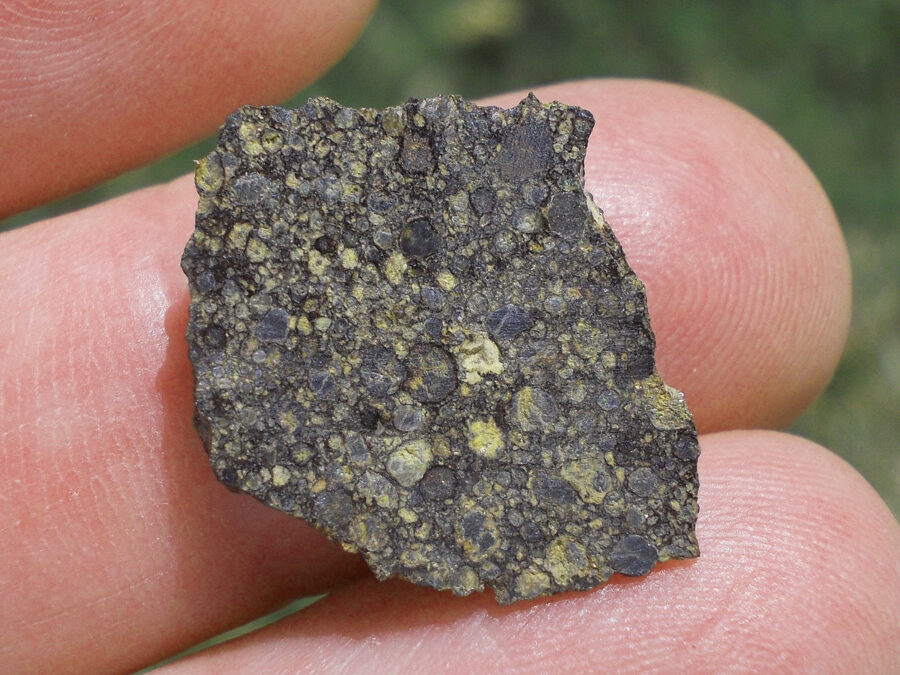
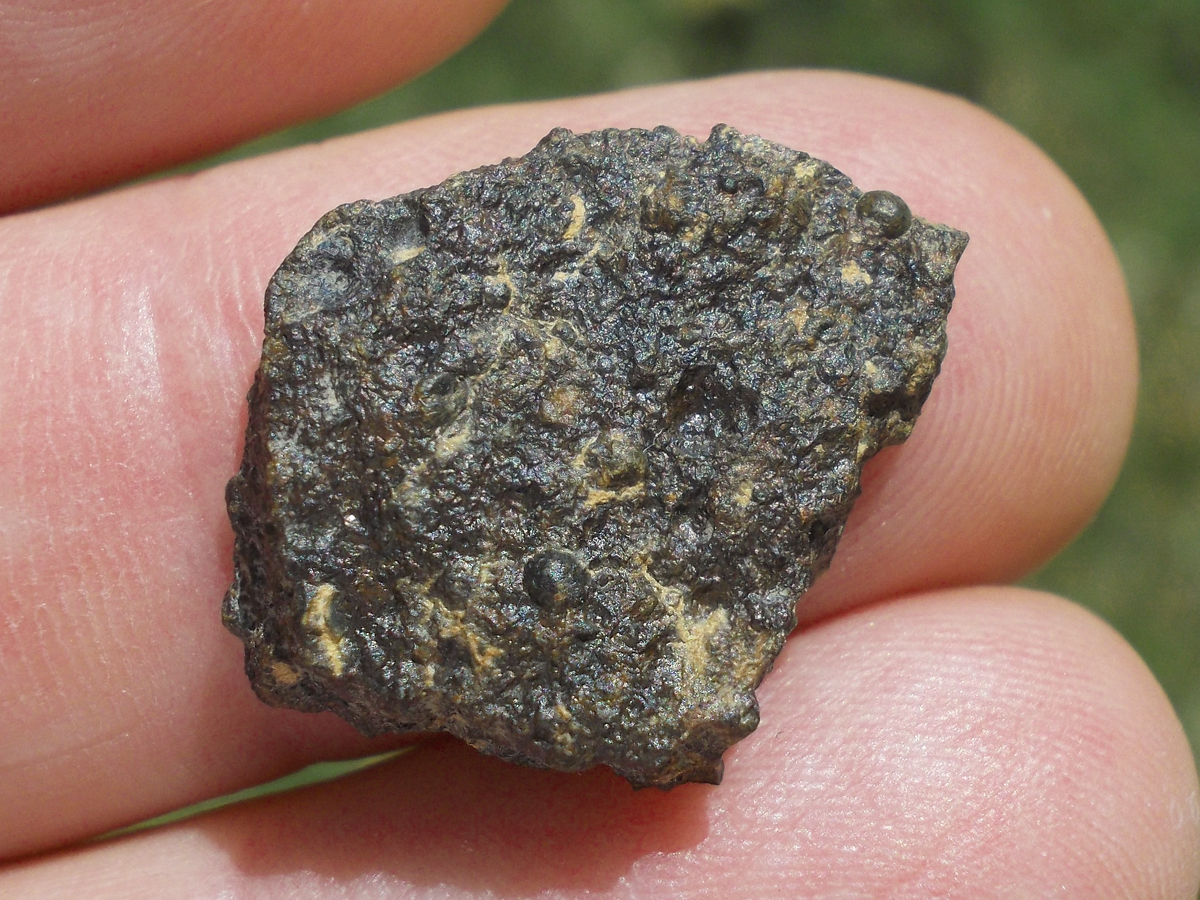
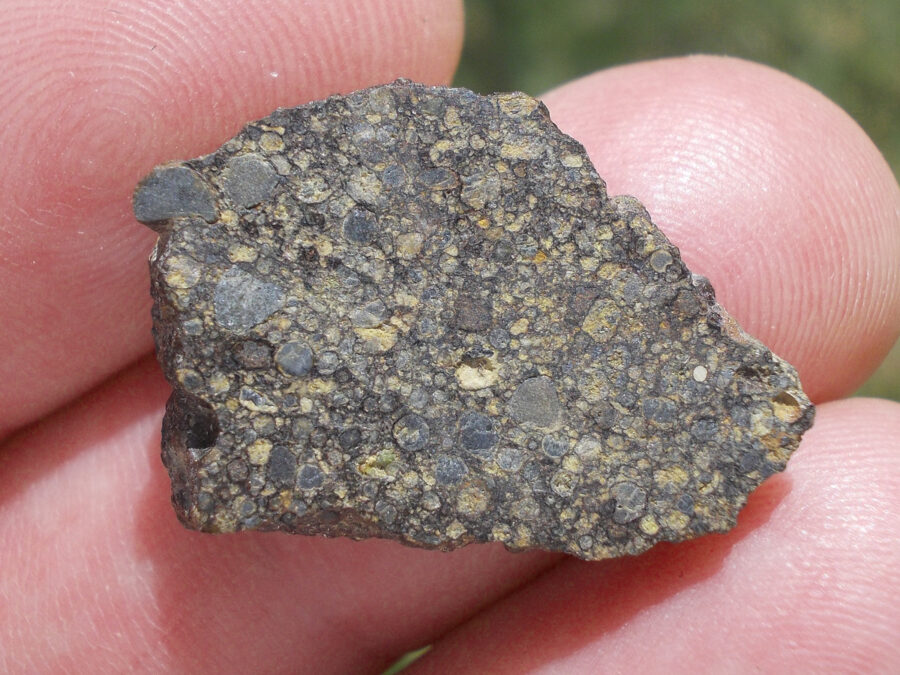
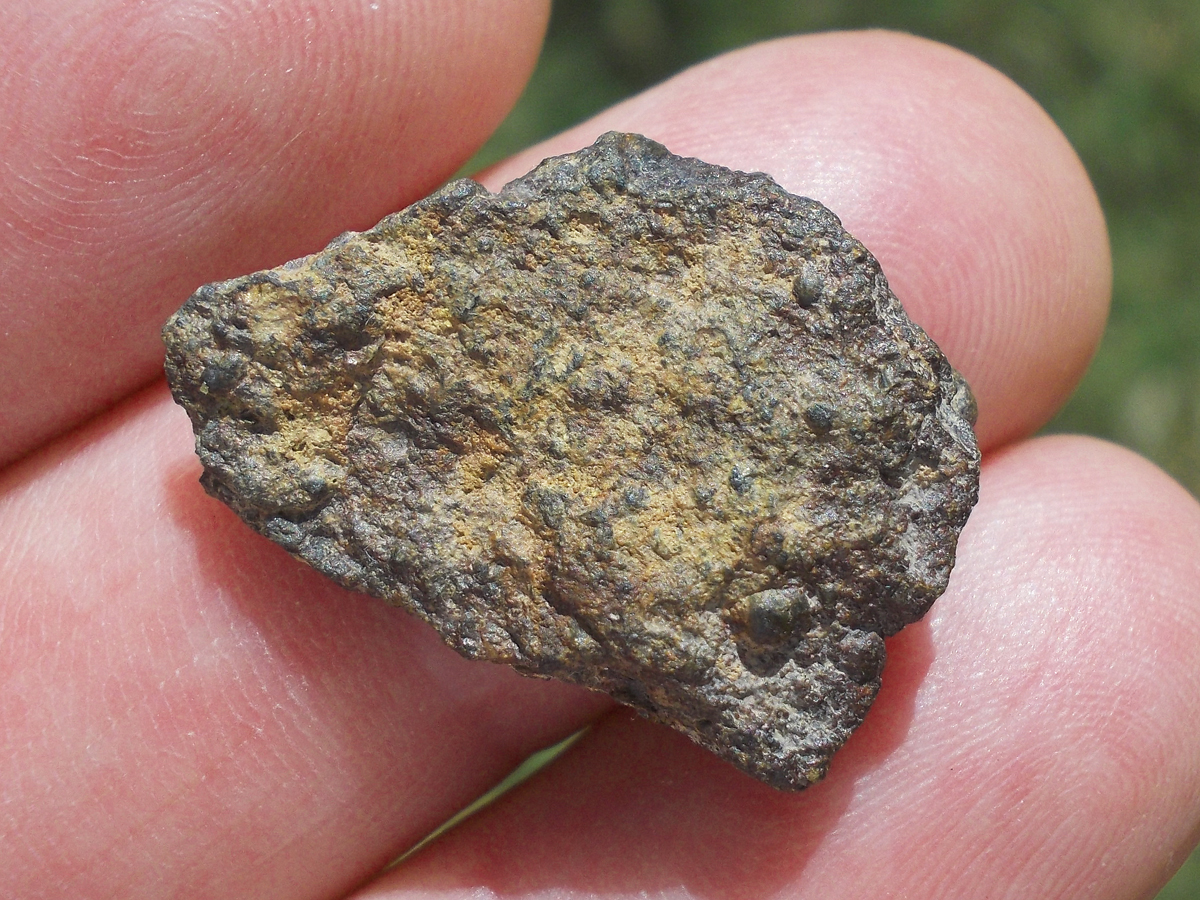
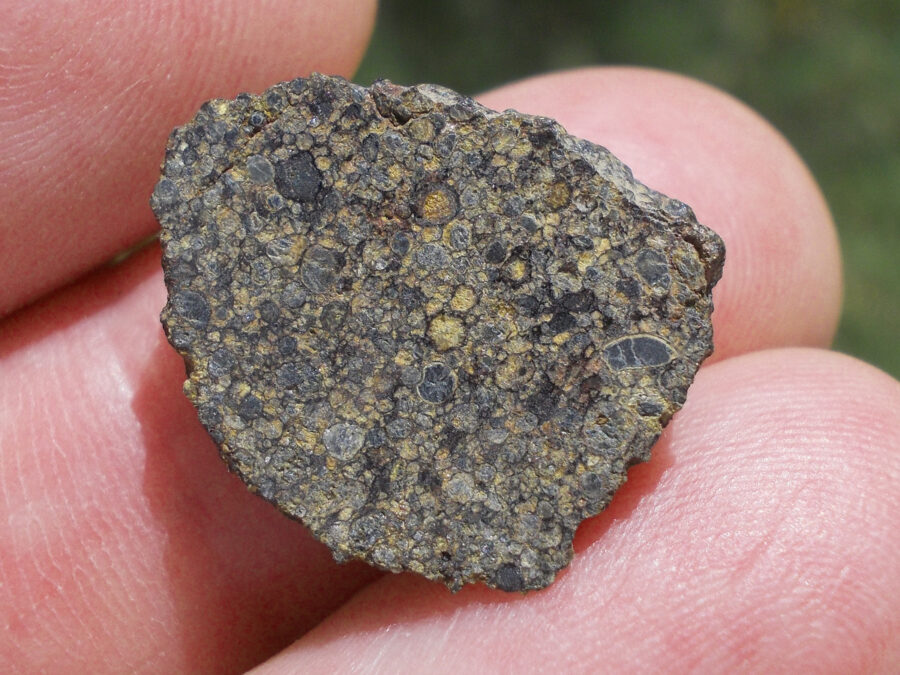
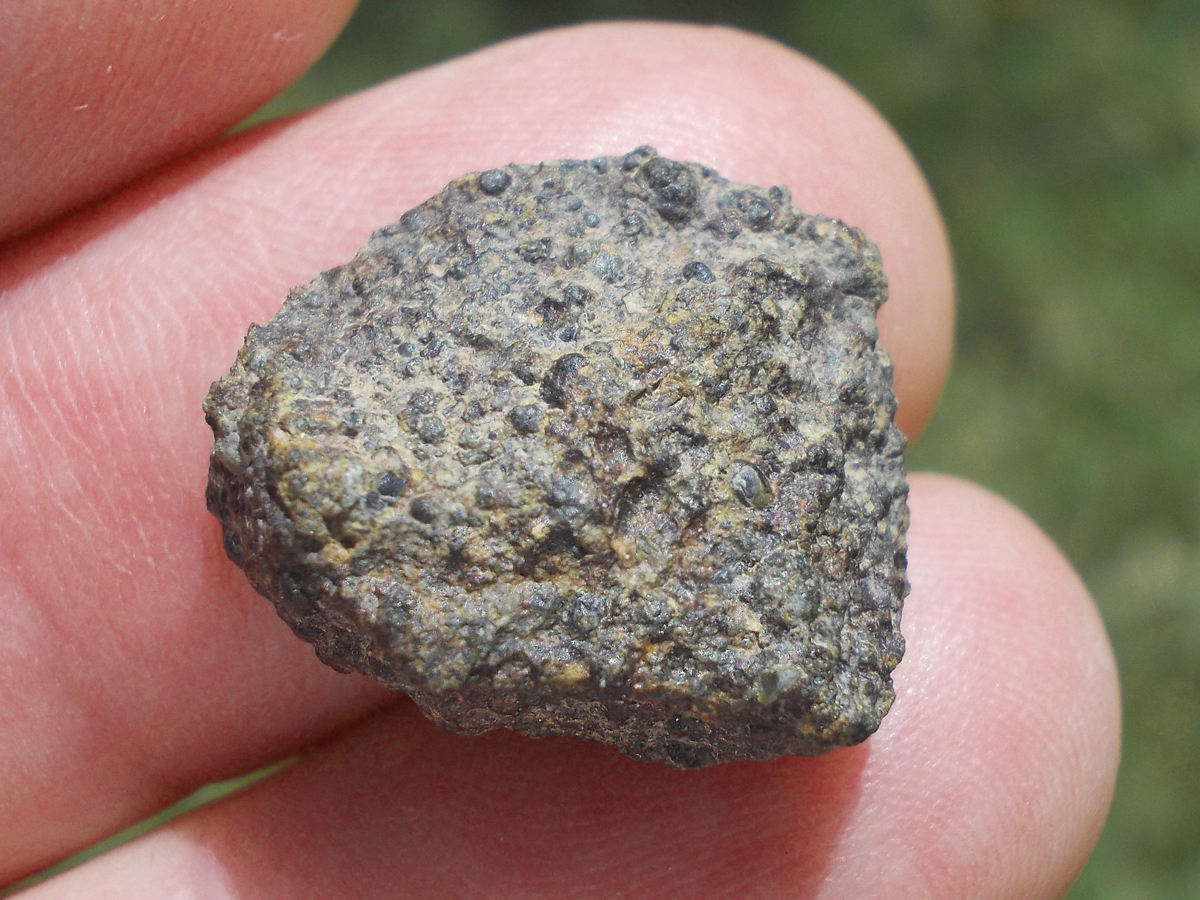
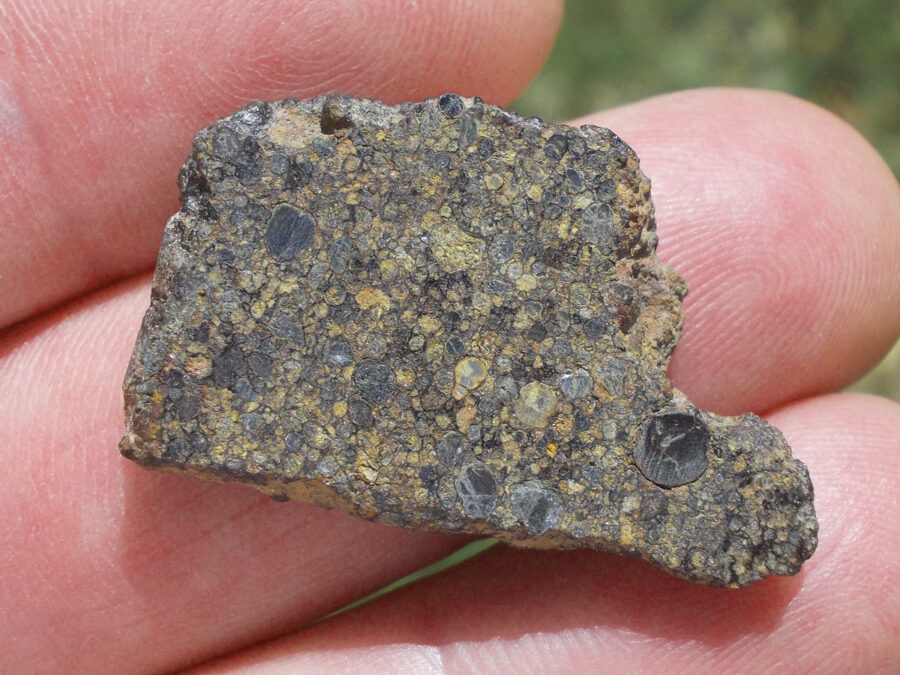
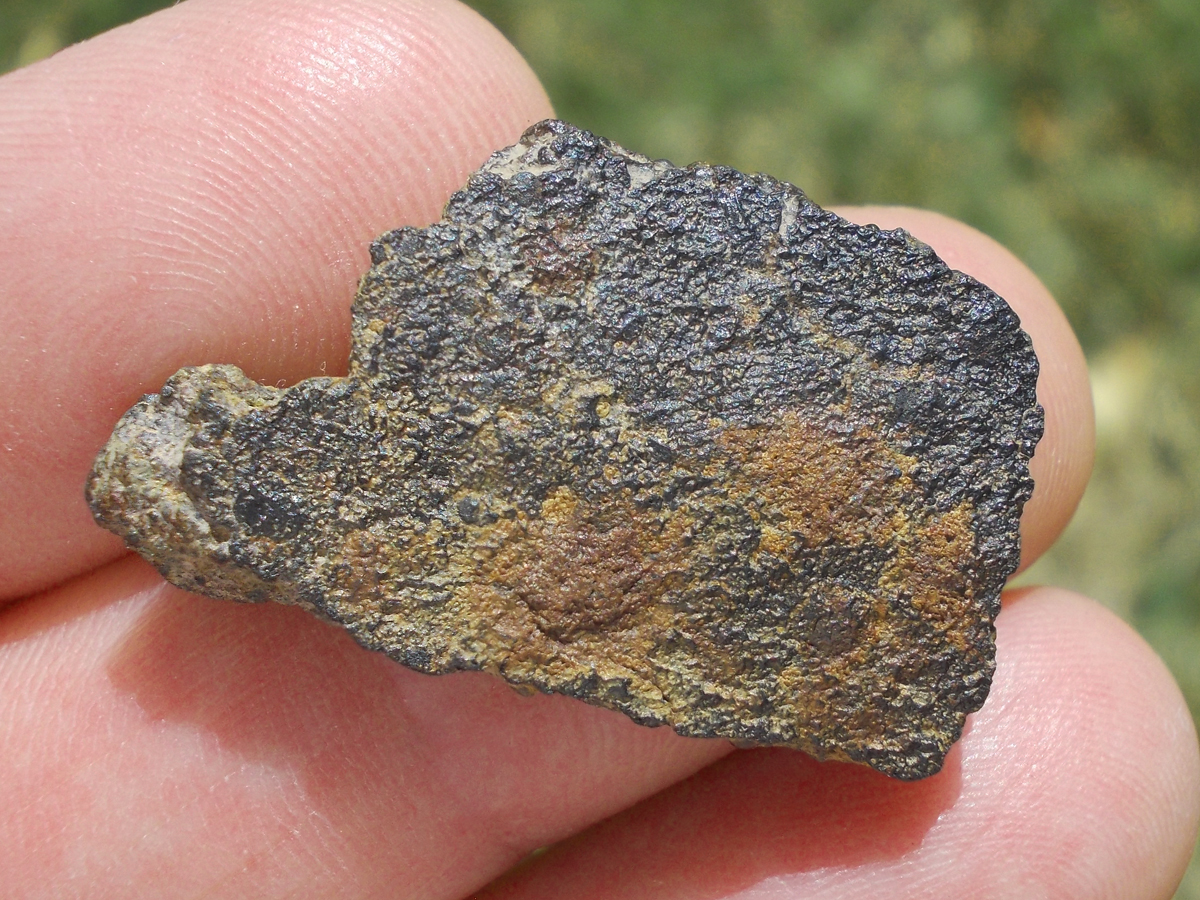
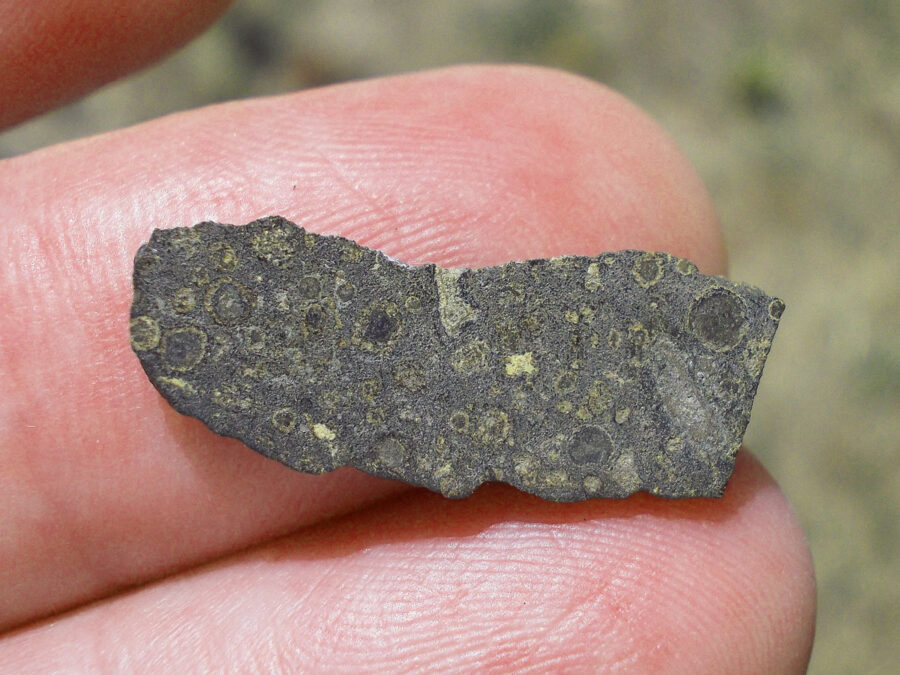
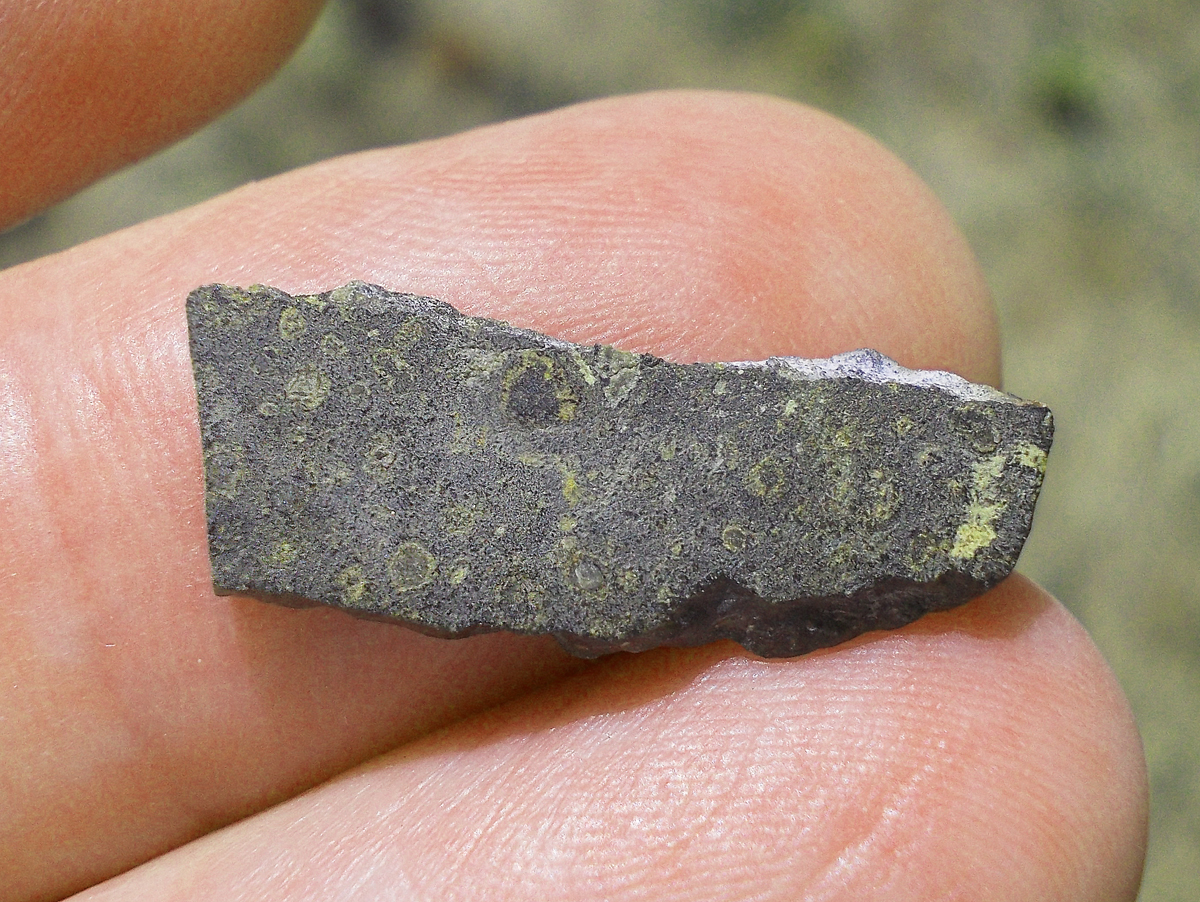
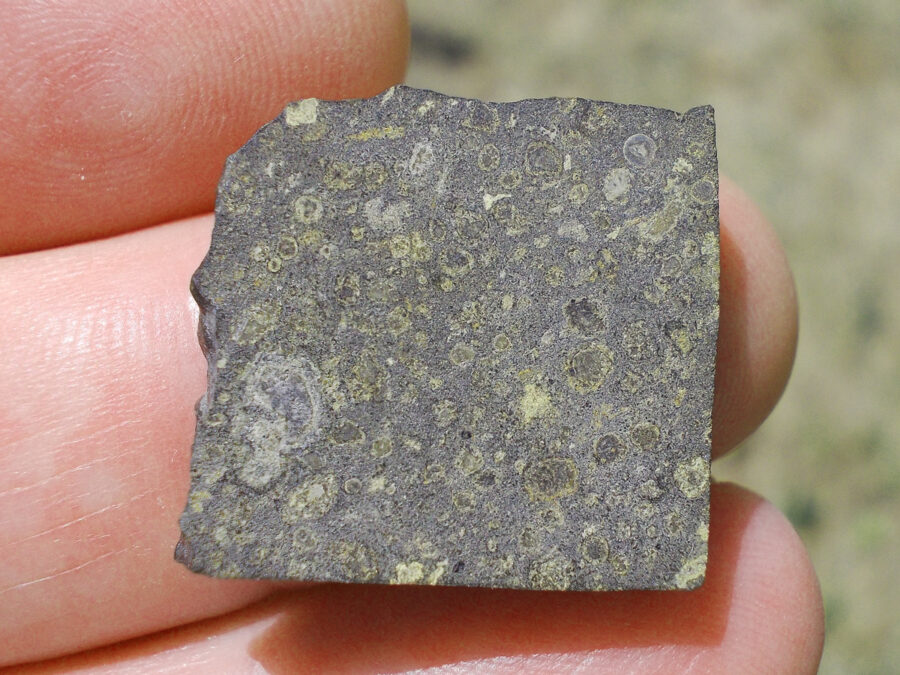
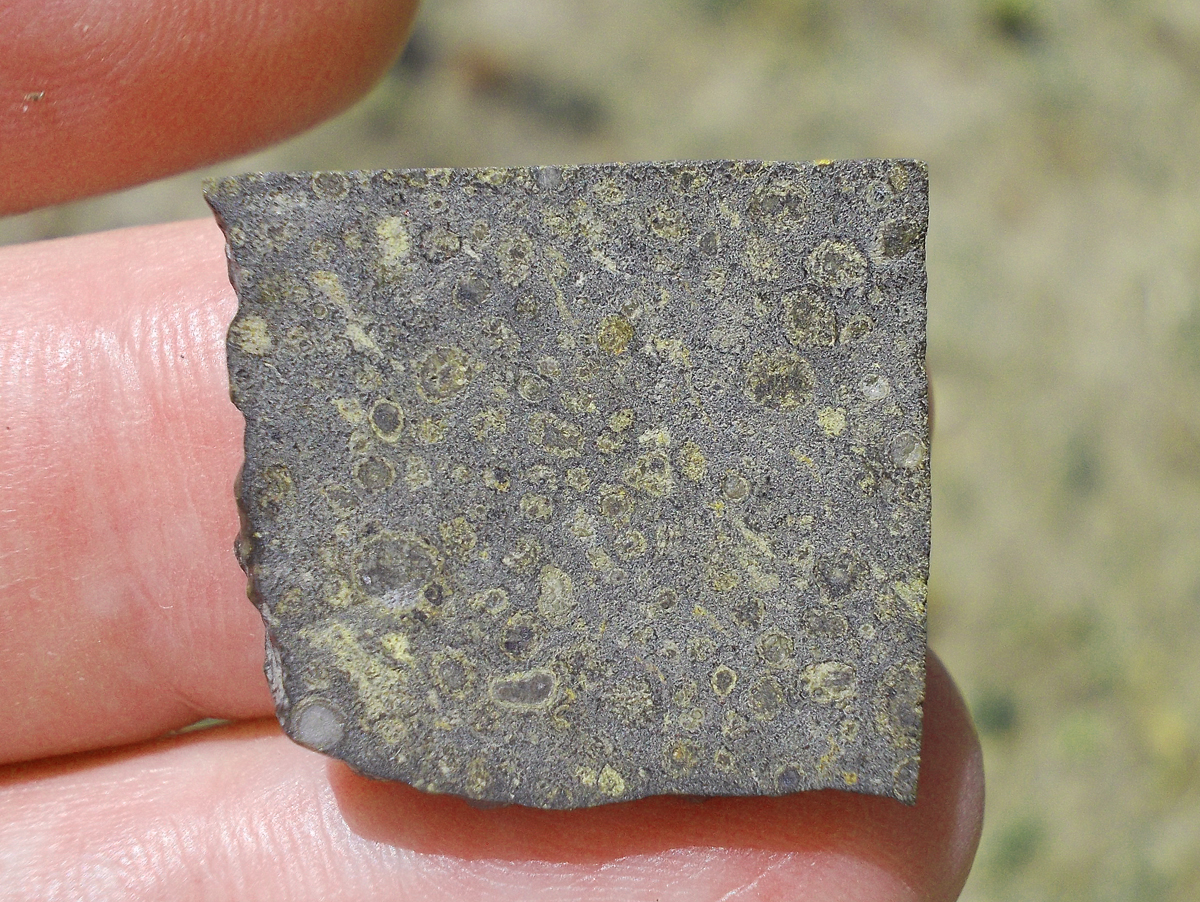
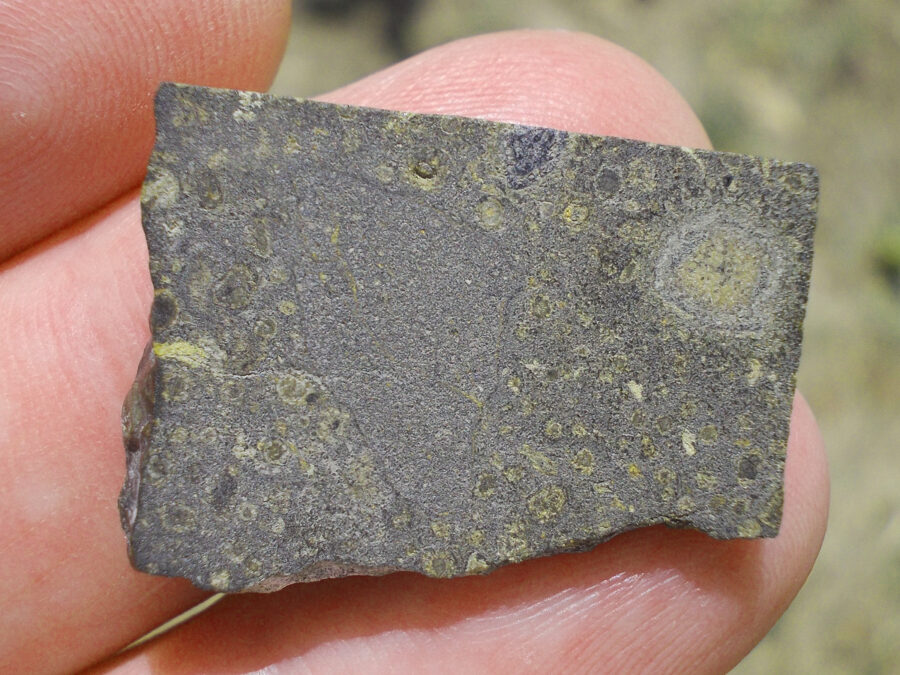
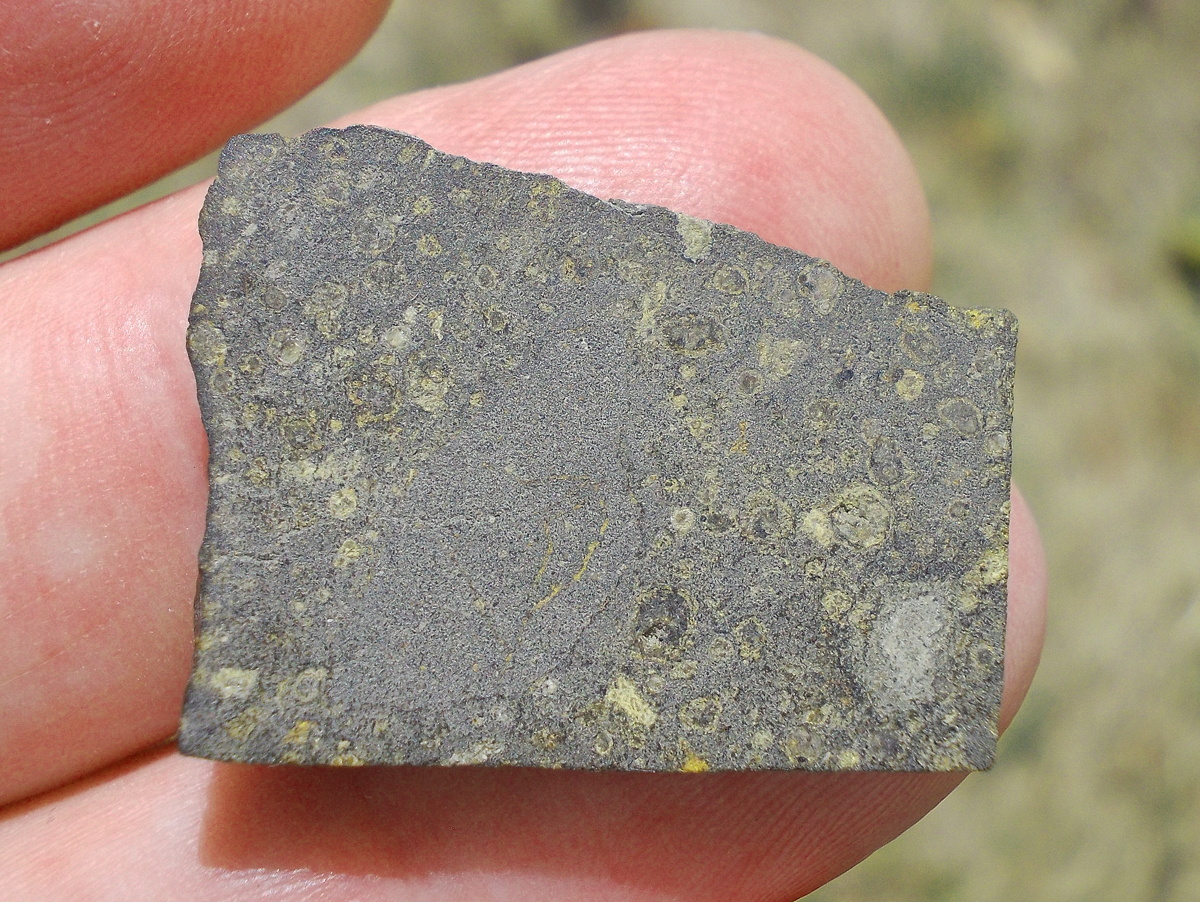
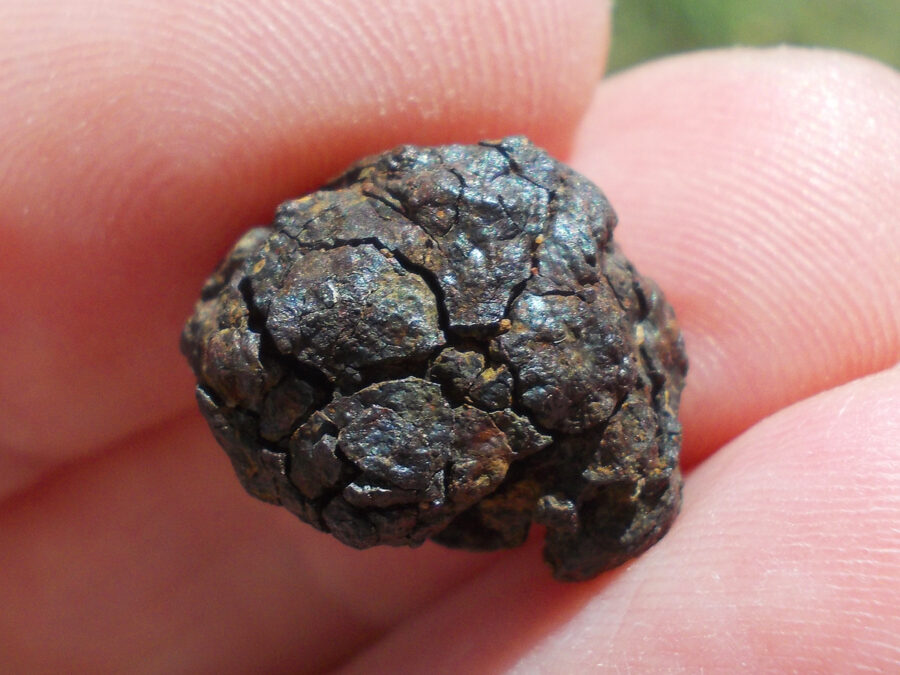
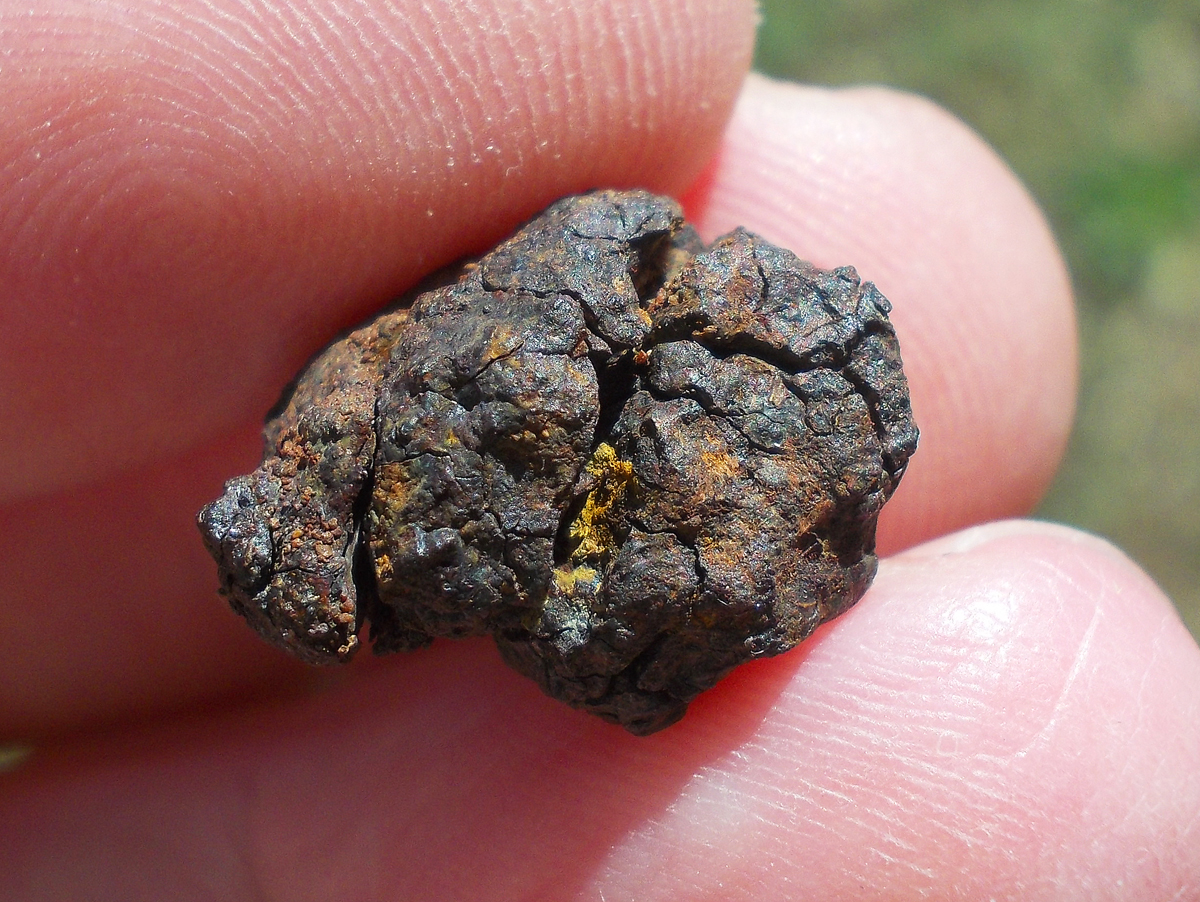
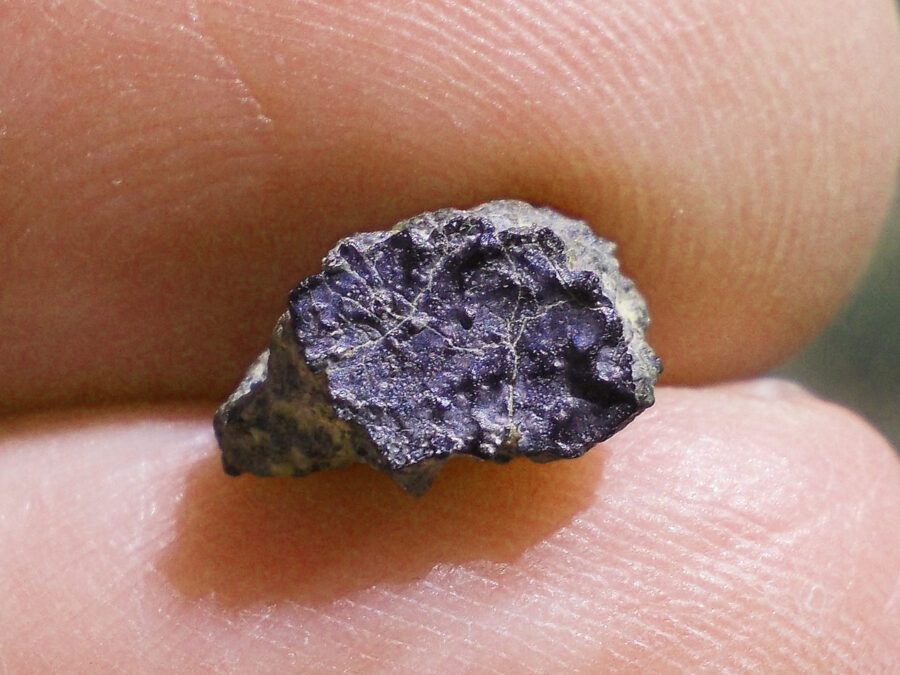
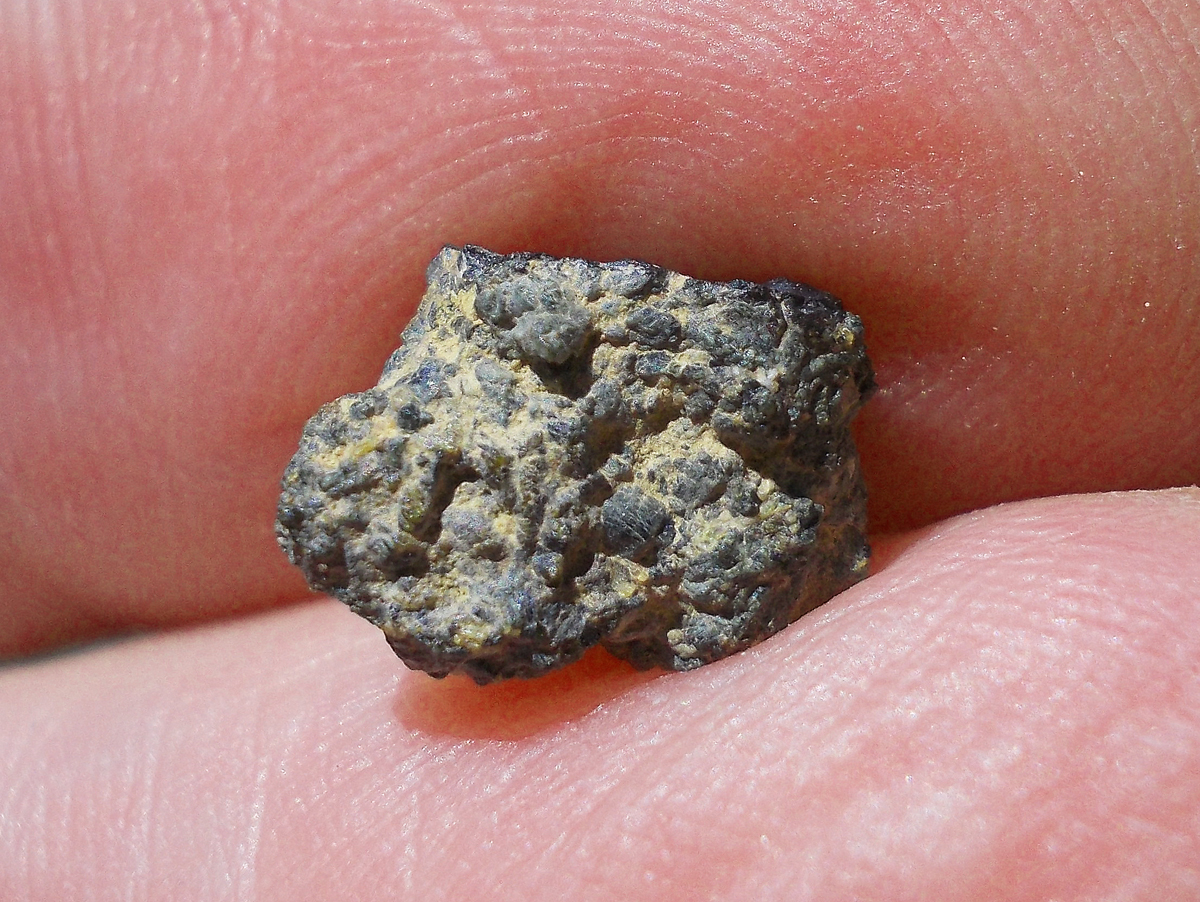
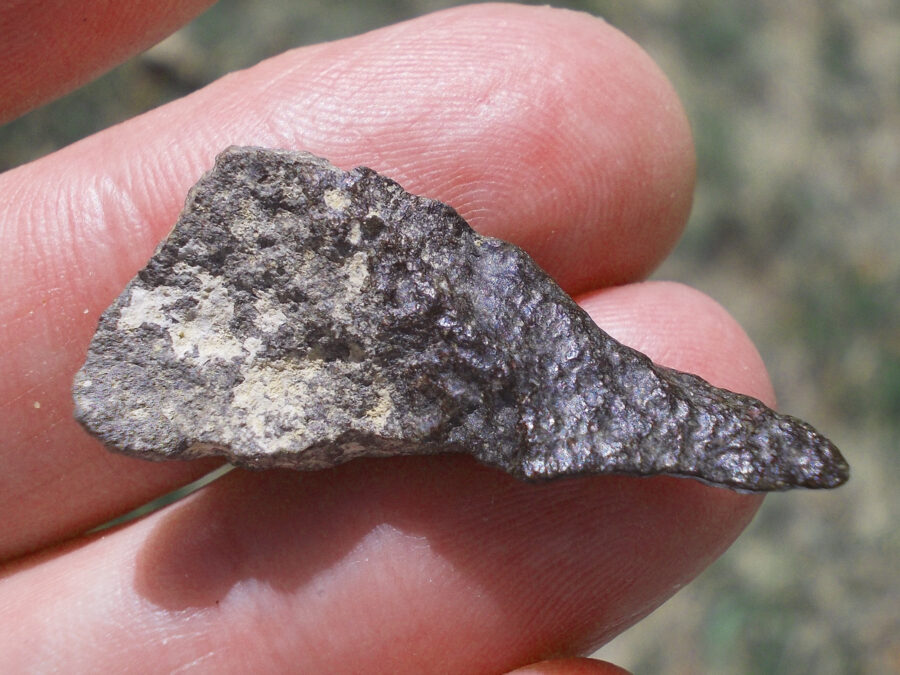
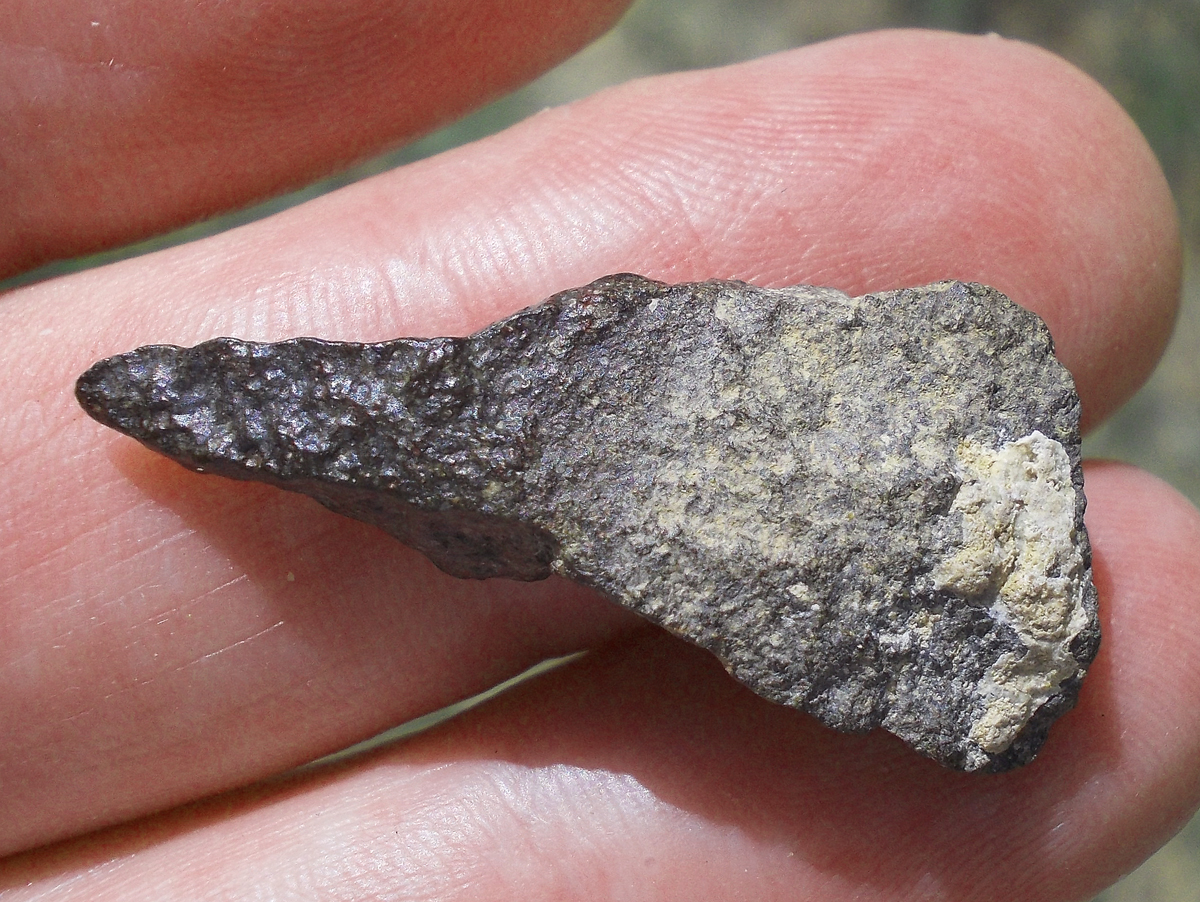
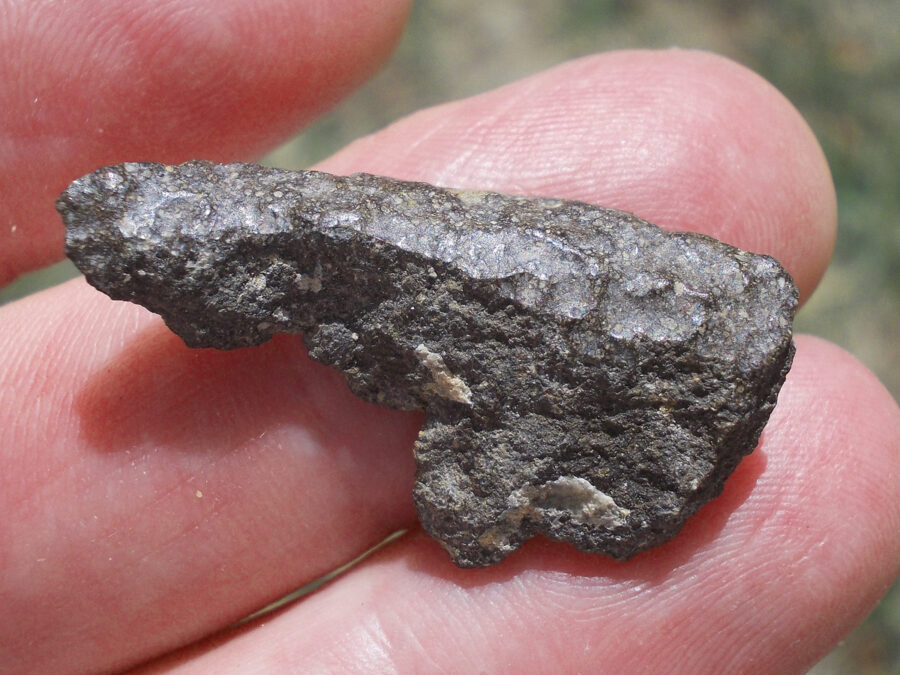
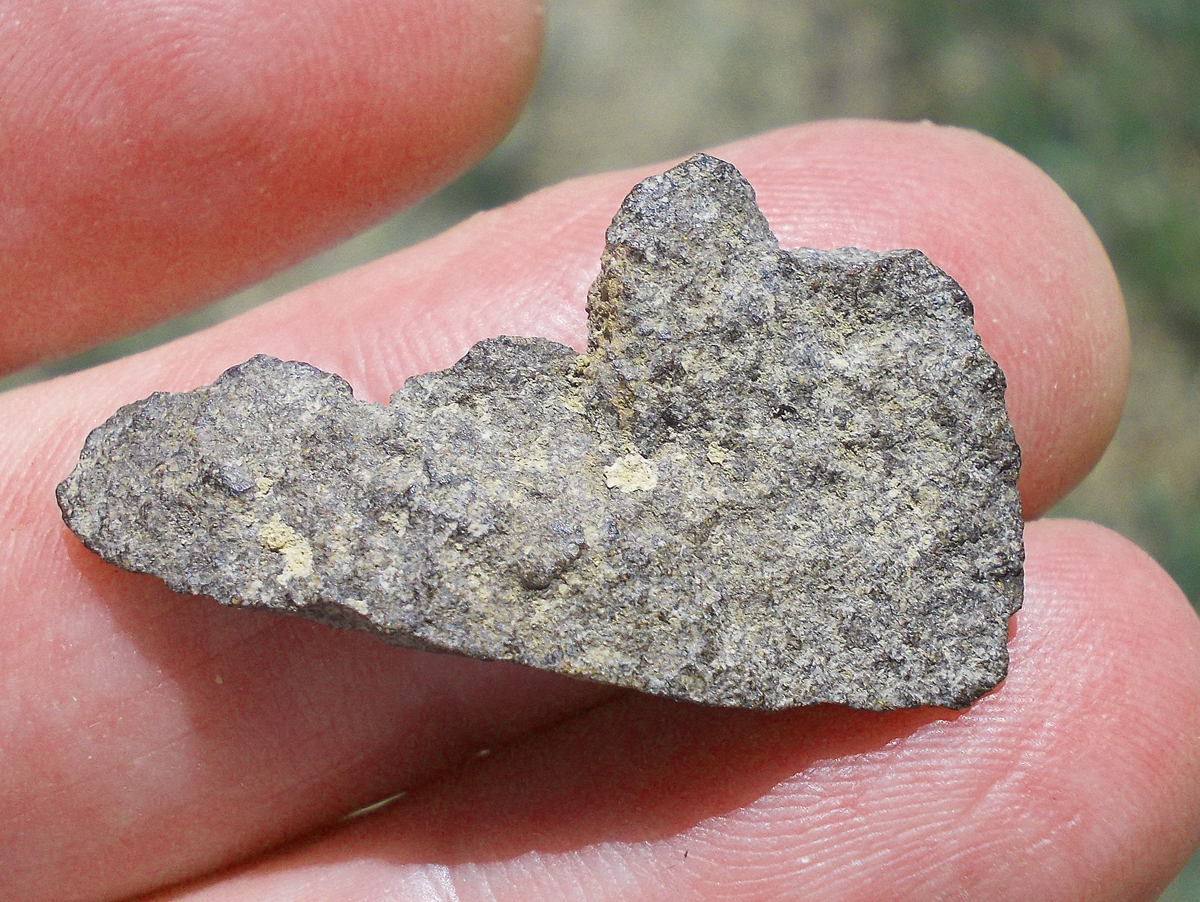
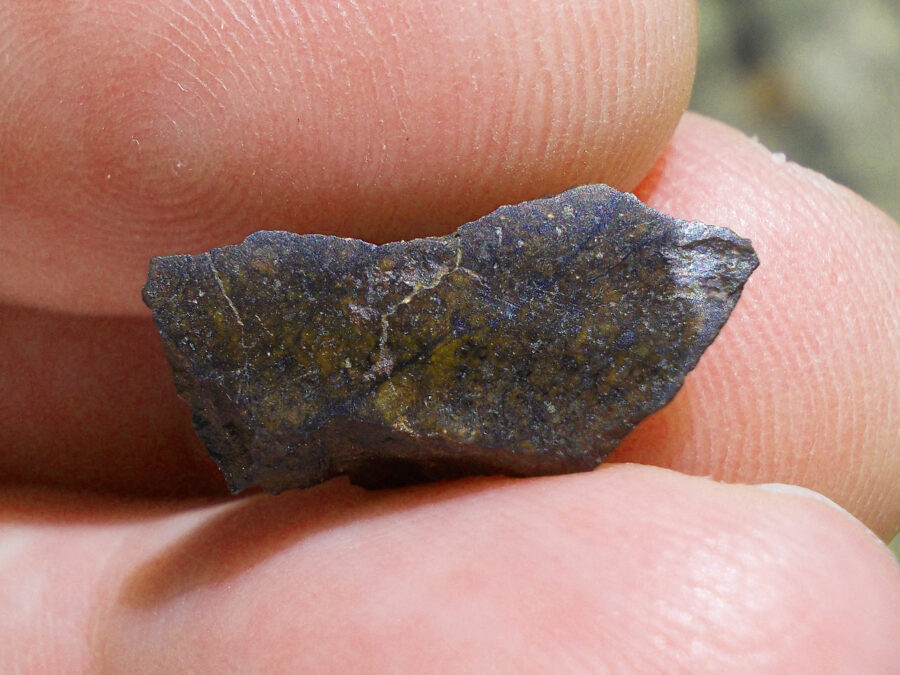
NWA 15169 est une météorite lunaire découverte en 2021 au Maroc près de Dakhla dans la zone de Wad Oum Sfia par Omar Ben Chaoud and Mouloud Oudinat.
NWA 15169 est une rare météorite lunaire (anorthosite).
Elle provient directement de la croûte ancienne de la Lune, plus précisément de la région des hauts plateaux lunaires.
C’est une très belle météorite lunaire très colorée proposée à un très bon prix.
Il y a une quinzaine d’années les météorites lunaires se vendaient presque 1000 euros le gramme !
Writeup from MB 112:
Northwest Africa 15169 (NWA 15169)
Morocco
Purchased: 2021
Classification: Lunar meteorite (anorth)
History: Found by Omar Ben Chaoud and Mouloud Oudinat in the Dakhla, Wad Oum Sfia area. Later bought by Jean Redelsperger from Mohamed Elguirah in 2021.
Physical characteristics: Several stones: a complete 50 g crusted stone, and several gray fragments without fusion crust, the largest one being 52 g.
Petrography: (J. Gattacceca, B. Devouard, CEREGE) Brecciated igneous rock composed primarily of anorthitic plagioclase, and mm-sized poikilitic microgabbroic clasts with plagioclase chadacrysts set in olivine and pyroxene. Accessory minerals: metal, ulvöspinel, chromite. Barite, from terrestrial weathering, is present as veins.
Classification: Lunar (anorthosite). Contains microgabbroic clasts. Olivine, pigeonite and plagioclase are within the ferroan anorthositic suite (FAS) field defined by Warren (1993). Olivine has been altered on Earth, as indicated by the low analytical totals.
Specimens: Type specimen at CEREGE. Main mass with Jean Redelsperger.
NWA 15169 est une météorite lunaire découverte en 2021 au Maroc près de Dakhla dans la zone de Wad Oum Sfia par Omar Ben Chaoud and Mouloud Oudinat.
NWA 15169 est une rare météorite lunaire (anorthosite).
Elle provient directement de la croûte ancienne de la Lune, plus précisément de la région des hauts plateaux lunaires.
C’est une très belle météorite lunaire très colorée proposée à un très bon prix.
Il y a une quinzaine d’années les météorites lunaires se vendaient presque 1000 euros le gramme !
Writeup from MB 112:
Northwest Africa 15169 (NWA 15169)
Morocco
Purchased: 2021
Classification: Lunar meteorite (anorth)
History: Found by Omar Ben Chaoud and Mouloud Oudinat in the Dakhla, Wad Oum Sfia area. Later bought by Jean Redelsperger from Mohamed Elguirah in 2021.
Physical characteristics: Several stones: a complete 50 g crusted stone, and several gray fragments without fusion crust, the largest one being 52 g.
Petrography: (J. Gattacceca, B. Devouard, CEREGE) Brecciated igneous rock composed primarily of anorthitic plagioclase, and mm-sized poikilitic microgabbroic clasts with plagioclase chadacrysts set in olivine and pyroxene. Accessory minerals: metal, ulvöspinel, chromite. Barite, from terrestrial weathering, is present as veins.
Classification: Lunar (anorthosite). Contains microgabbroic clasts. Olivine, pigeonite and plagioclase are within the ferroan anorthositic suite (FAS) field defined by Warren (1993). Olivine has been altered on Earth, as indicated by the low analytical totals.
Specimens: Type specimen at CEREGE. Main mass with Jean Redelsperger.
NWA 15169 est une météorite lunaire découverte en 2021 au Maroc près de Dakhla dans la zone de Wad Oum Sfia par Omar Ben Chaoud and Mouloud Oudinat.
NWA 15169 est une rare météorite lunaire (anorthosite).
Elle provient directement de la croûte ancienne de la Lune, plus précisément de la région des hauts plateaux lunaires.
C’est une très belle météorite lunaire très colorée proposée à un très bon prix.
Il y a une quinzaine d’années les météorites lunaires se vendaient presque 1000 euros le gramme !
Writeup from MB 112:
Northwest Africa 15169 (NWA 15169)
Morocco
Purchased: 2021
Classification: Lunar meteorite (anorth)
History: Found by Omar Ben Chaoud and Mouloud Oudinat in the Dakhla, Wad Oum Sfia area. Later bought by Jean Redelsperger from Mohamed Elguirah in 2021.
Physical characteristics: Several stones: a complete 50 g crusted stone, and several gray fragments without fusion crust, the largest one being 52 g.
Petrography: (J. Gattacceca, B. Devouard, CEREGE) Brecciated igneous rock composed primarily of anorthitic plagioclase, and mm-sized poikilitic microgabbroic clasts with plagioclase chadacrysts set in olivine and pyroxene. Accessory minerals: metal, ulvöspinel, chromite. Barite, from terrestrial weathering, is present as veins.
Classification: Lunar (anorthosite). Contains microgabbroic clasts. Olivine, pigeonite and plagioclase are within the ferroan anorthositic suite (FAS) field defined by Warren (1993). Olivine has been altered on Earth, as indicated by the low analytical totals.
Specimens: Type specimen at CEREGE. Main mass with Jean Redelsperger.
NWA 15169 est une météorite lunaire découverte en 2021 au Maroc près de Dakhla dans la zone de Wad Oum Sfia par Omar Ben Chaoud and Mouloud Oudinat.
NWA 15169 est une rare météorite lunaire (anorthosite).
Elle provient directement de la croûte ancienne de la Lune, plus précisément de la région des hauts plateaux lunaires.
C’est une très belle météorite lunaire très colorée proposée à un très bon prix.
Il y a une quinzaine d’années les météorites lunaires se vendaient presque 1000 euros le gramme !
Writeup from MB 112:
Northwest Africa 15169 (NWA 15169)
Morocco
Purchased: 2021
Classification: Lunar meteorite (anorth)
History: Found by Omar Ben Chaoud and Mouloud Oudinat in the Dakhla, Wad Oum Sfia area. Later bought by Jean Redelsperger from Mohamed Elguirah in 2021.
Physical characteristics: Several stones: a complete 50 g crusted stone, and several gray fragments without fusion crust, the largest one being 52 g.
Petrography: (J. Gattacceca, B. Devouard, CEREGE) Brecciated igneous rock composed primarily of anorthitic plagioclase, and mm-sized poikilitic microgabbroic clasts with plagioclase chadacrysts set in olivine and pyroxene. Accessory minerals: metal, ulvöspinel, chromite. Barite, from terrestrial weathering, is present as veins.
Classification: Lunar (anorthosite). Contains microgabbroic clasts. Olivine, pigeonite and plagioclase are within the ferroan anorthositic suite (FAS) field defined by Warren (1993). Olivine has been altered on Earth, as indicated by the low analytical totals.
Specimens: Type specimen at CEREGE. Main mass with Jean Redelsperger.
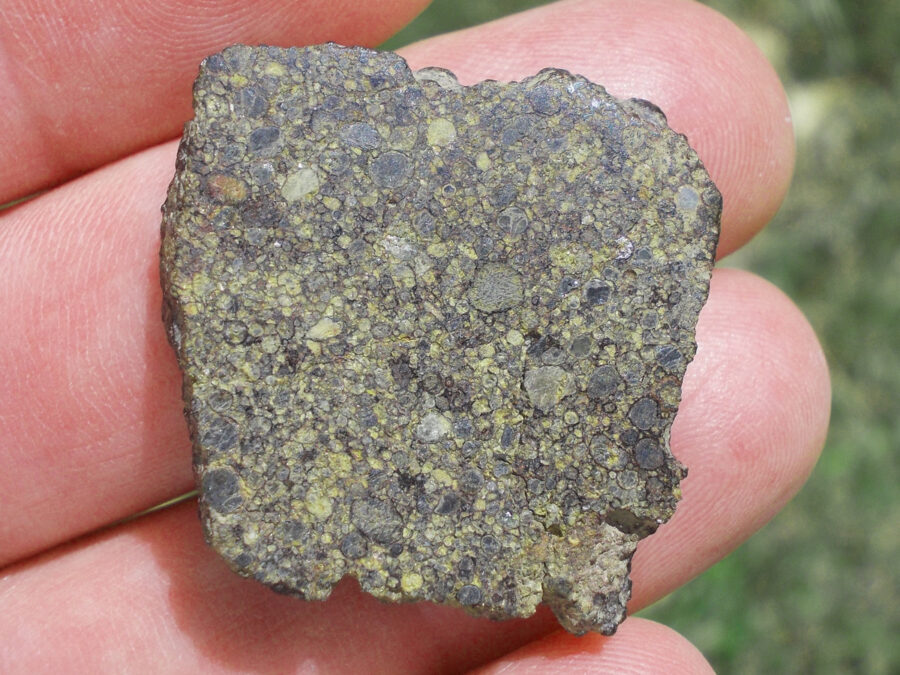
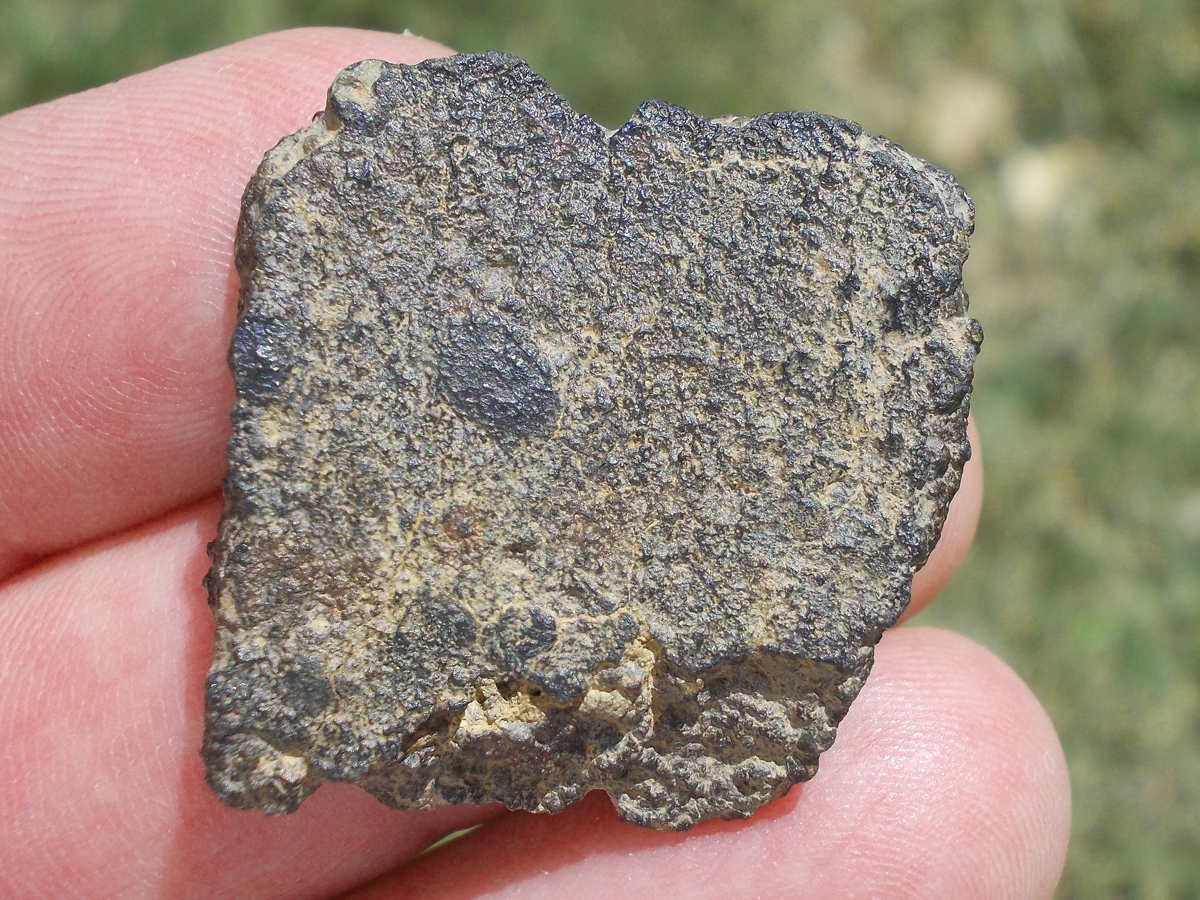
NWA 15972 est une belle chondrite de type chondrite LL3 de seulement 317 grammes.
Le sous type estimé est LL3.2, il n’y a pour l’instant uniquement 21 météorites de ce type au Monde.
Sur les plus de 80 000 météorites répertoriées sur Terre, ce chiffre infime confirme l’extrême rareté de ce type de roche primitive.
Les chondrites de sous-type LL3.2 sont considérées comme de véritables « capsules temporelles » de notre système solaire primitif.
Cette météorite a été analysée au Cerege par Jérôme Gattacceca.
Writeup from MB 112:
Northwest Africa 15972 (NWA 15972)
Morocco
Purchased: 2022
Classification: Ordinary chondrite (LL3)
History: Found in Morocco, and bought by Jean Redelsperger in Guelmim in 2022
Physical characteristics: Some fragments are partially crusted.
Petrography: (J. Gattacceca, CEREGE) Chondrite with packed chondrules ~800 µm set in a fine-grained matrix. Opaque minerals are metal and troilite.
Geochemistry: Olivine Fa14.2±8.1, range Fa0.4-29.9, Fa PMD 46% (n=18). Cr2O3 in ferroan olivine 0.157±0.089 wt% (n=17). Low-Ca pyroxene Fs8.4±3.5Wo1.8±1.4 (n=5).
Classification: Ordinary chondrite (LL3). LL group based on chodrule size and magnetic susceptibility. Subtype >=3.2 based on the Cr2O3 content of ferroan olivine. Estimated subtype 3.2 based on the olivine Fa PMD.
Specimens: Type specimen at CEREGE. Main mass with Jean Redelsperger.
NWA 15972 est une belle chondrite de type chondrite LL3 de seulement 317 grammes.
Le sous type estimé est LL3.2, il n’y a pour l’instant uniquement 21 météorites de ce type au Monde.
Sur les plus de 80 000 météorites répertoriées sur Terre, ce chiffre infime confirme l’extrême rareté de ce type de roche primitive.
Les chondrites de sous-type LL3.2 sont considérées comme de véritables « capsules temporelles » de notre système solaire primitif.
Cette météorite a été analysée au Cerege par Jérôme Gattacceca.
Writeup from MB 112:
Northwest Africa 15972 (NWA 15972)
Morocco
Purchased: 2022
Classification: Ordinary chondrite (LL3)
History: Found in Morocco, and bought by Jean Redelsperger in Guelmim in 2022
Physical characteristics: Some fragments are partially crusted.
Petrography: (J. Gattacceca, CEREGE) Chondrite with packed chondrules ~800 µm set in a fine-grained matrix. Opaque minerals are metal and troilite.
Geochemistry: Olivine Fa14.2±8.1, range Fa0.4-29.9, Fa PMD 46% (n=18). Cr2O3 in ferroan olivine 0.157±0.089 wt% (n=17). Low-Ca pyroxene Fs8.4±3.5Wo1.8±1.4 (n=5).
Classification: Ordinary chondrite (LL3). LL group based on chodrule size and magnetic susceptibility. Subtype >=3.2 based on the Cr2O3 content of ferroan olivine. Estimated subtype 3.2 based on the olivine Fa PMD.
Specimens: Type specimen at CEREGE. Main mass with Jean Redelsperger.
NWA 15972 est une belle chondrite de type chondrite LL3 de seulement 317 grammes.
Le sous type estimé est LL3.2, il n’y a pour l’instant uniquement 21 météorites de ce type au Monde.
Sur les plus de 80 000 météorites répertoriées sur Terre, ce chiffre infime confirme l’extrême rareté de ce type de roche primitive.
Les chondrites de sous-type LL3.2 sont considérées comme de véritables « capsules temporelles » de notre système solaire primitif.
Cette météorite a été analysée au Cerege par Jérôme Gattacceca.
Writeup from MB 112:
Northwest Africa 15972 (NWA 15972)
Morocco
Purchased: 2022
Classification: Ordinary chondrite (LL3)
History: Found in Morocco, and bought by Jean Redelsperger in Guelmim in 2022
Physical characteristics: Some fragments are partially crusted.
Petrography: (J. Gattacceca, CEREGE) Chondrite with packed chondrules ~800 µm set in a fine-grained matrix. Opaque minerals are metal and troilite.
Geochemistry: Olivine Fa14.2±8.1, range Fa0.4-29.9, Fa PMD 46% (n=18). Cr2O3 in ferroan olivine 0.157±0.089 wt% (n=17). Low-Ca pyroxene Fs8.4±3.5Wo1.8±1.4 (n=5).
Classification: Ordinary chondrite (LL3). LL group based on chodrule size and magnetic susceptibility. Subtype >=3.2 based on the Cr2O3 content of ferroan olivine. Estimated subtype 3.2 based on the olivine Fa PMD.
Specimens: Type specimen at CEREGE. Main mass with Jean Redelsperger.
NWA 15972 est une belle chondrite de type chondrite LL3 de seulement 317 grammes.
Le sous type estimé est LL3.2, il n’y a pour l’instant uniquement 21 météorites de ce type au Monde.
Sur les plus de 80 000 météorites répertoriées sur Terre, ce chiffre infime confirme l’extrême rareté de ce type de roche primitive.
Les chondrites de sous-type LL3.2 sont considérées comme de véritables « capsules temporelles » de notre système solaire primitif.
Cette météorite a été analysée au Cerege par Jérôme Gattacceca.
Writeup from MB 112:
Northwest Africa 15972 (NWA 15972)
Morocco
Purchased: 2022
Classification: Ordinary chondrite (LL3)
History: Found in Morocco, and bought by Jean Redelsperger in Guelmim in 2022
Physical characteristics: Some fragments are partially crusted.
Petrography: (J. Gattacceca, CEREGE) Chondrite with packed chondrules ~800 µm set in a fine-grained matrix. Opaque minerals are metal and troilite.
Geochemistry: Olivine Fa14.2±8.1, range Fa0.4-29.9, Fa PMD 46% (n=18). Cr2O3 in ferroan olivine 0.157±0.089 wt% (n=17). Low-Ca pyroxene Fs8.4±3.5Wo1.8±1.4 (n=5).
Classification: Ordinary chondrite (LL3). LL group based on chodrule size and magnetic susceptibility. Subtype >=3.2 based on the Cr2O3 content of ferroan olivine. Estimated subtype 3.2 based on the olivine Fa PMD.
Specimens: Type specimen at CEREGE. Main mass with Jean Redelsperger.
NWA 15972 est une belle chondrite de type chondrite LL3 de seulement 317 grammes.
Le sous type estimé est LL3.2, il n’y a pour l’instant uniquement 21 météorites de ce type au Monde.
Sur les plus de 80 000 météorites répertoriées sur Terre, ce chiffre infime confirme l’extrême rareté de ce type de roche primitive.
Les chondrites de sous-type LL3.2 sont considérées comme de véritables « capsules temporelles » de notre système solaire primitif.
Cette météorite a été analysée au Cerege par Jérôme Gattacceca.
Writeup from MB 112:
Northwest Africa 15972 (NWA 15972)
Morocco
Purchased: 2022
Classification: Ordinary chondrite (LL3)
History: Found in Morocco, and bought by Jean Redelsperger in Guelmim in 2022
Physical characteristics: Some fragments are partially crusted.
Petrography: (J. Gattacceca, CEREGE) Chondrite with packed chondrules ~800 µm set in a fine-grained matrix. Opaque minerals are metal and troilite.
Geochemistry: Olivine Fa14.2±8.1, range Fa0.4-29.9, Fa PMD 46% (n=18). Cr2O3 in ferroan olivine 0.157±0.089 wt% (n=17). Low-Ca pyroxene Fs8.4±3.5Wo1.8±1.4 (n=5).
Classification: Ordinary chondrite (LL3). LL group based on chodrule size and magnetic susceptibility. Subtype >=3.2 based on the Cr2O3 content of ferroan olivine. Estimated subtype 3.2 based on the olivine Fa PMD.
Specimens: Type specimen at CEREGE. Main mass with Jean Redelsperger.
NWA 16738 est une météorite carbonée de type carbonée CK3.
A ce jour uniquement 88 de ce type ont été classifiées.
La chute de référence est la météorite de Karoonda tombée en 1930 en Australie.
Les météorites de type CK ont des inclusions appelées CAI’s, (inclusions minérales riches en calcium et en aluminium), formées il y a 4 567 à 4 571 millions d’années, elles constituent les matériaux les plus anciens du Système solaire.
NWA 16738 est une météorite carbonée de type carbonée CK3.
A ce jour uniquement 88 de ce type ont été classifiées.
La chute de référence est la météorite de Karoonda tombée en 1930 en Australie.
Les météorites de type CK ont des inclusions appelées CAI’s, (inclusions minérales riches en calcium et en aluminium), formées il y a 4 567 à 4 571 millions d’années, elles constituent les matériaux les plus anciens du Système solaire.
NWA 16738 est une météorite carbonée de type carbonée CK3.
A ce jour uniquement 88 de ce type ont été classifiées.
La chute de référence est la météorite de Karoonda tombée en 1930 en Australie.
Les météorites de type CK ont des inclusions appelées CAI’s, (inclusions minérales riches en calcium et en aluminium), formées il y a 4 567 à 4 571 millions d’années, elles constituent les matériaux les plus anciens du Système solaire.
NWA 15364 est une très rare météorite martienne de type nakhlite.
A ce jour, seulement 31 météorites de ce type ont été découvertes.
Une étude a démontré que les nakhlites étaient imprégnés d’eau liquide il y a environ 620 millions d’années et qu’elles ont été éjectées de Mars il y a environ 10,75 millions d’années par un impact d’astéroïde.
Les météorites martiennes sont des roches martiennes qui ont été éjectées de Mars par des impacts et sont ensuite tombées sur la Terre sous forme de météorites. Les trois types les plus connus sont les shergottites (roches ignées basaltiques à lherzolitiques, nommées d’après la chute de Shergotty, en Inde, en 1865), les nakhlites (clinopyroxénites ou wehrlites, formées de roches cumulées, et nommées d’après la chute de Nakhla, en Égypte, en 1911), et les chassignites (roches cumulées dunitiques nommées d’après la chute de Chassigny, en France, en 1815).
Fezzou 001 est une météorite rare de type chondrite rumuruti R4.
Cette météorite de seulement 154 grammes a été découverte au Maroc par Rjdali Hmou and Mohamed Taouch le 1er août 2018.
Cette rumuruti a la particularité d’être un peu magnétique et non bréchique.
Fezzou 001 est une météorite rare de type chondrite rumuruti R4.
Cette météorite de seulement 154 grammes a été découverte au Maroc par Rjdali Hmou and Mohamed Taouch le 1er août 2018.
Cette rumuruti a la particularité d’être un peu magnétique et non bréchique.
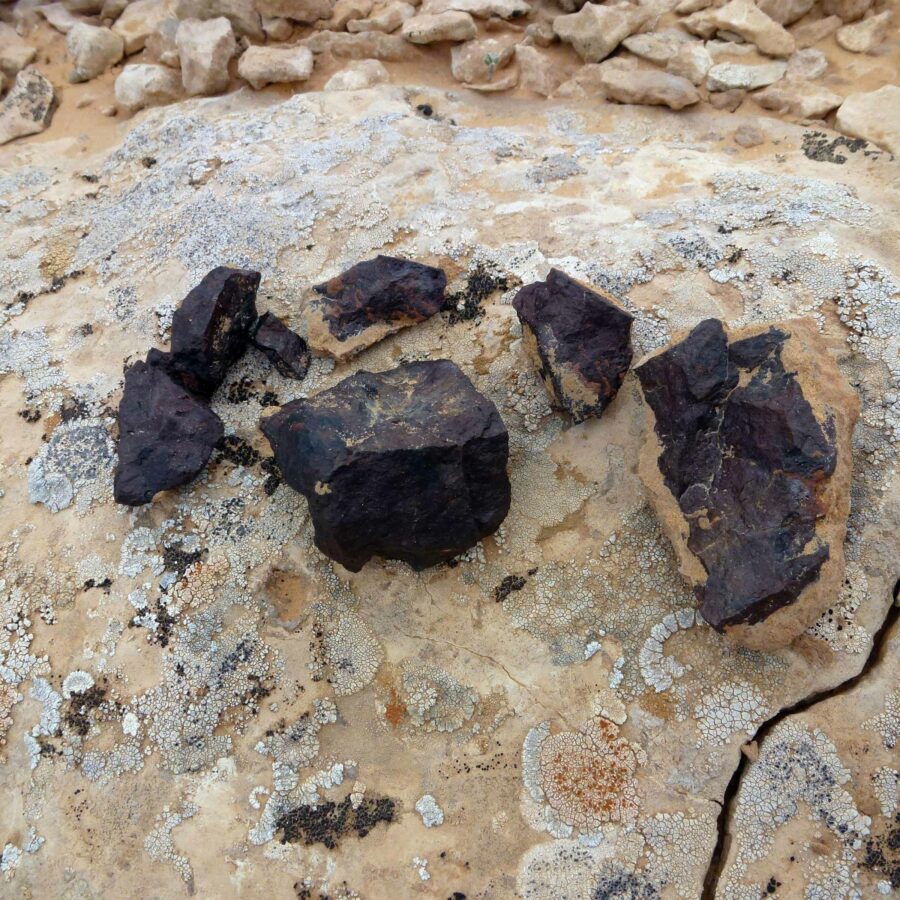
Ksar Ghilane 021 est une météorite de type H5 que j’ai trouvée avec mon ami de voyage Claude Roy lors d’une expédition en Tunisie près de l’Oasis de Ksar Ghilane le 13 février 2020, juste avant la pandémie de Covid 19.
A ce jour seulement 80 météorites ont été découvertes en Tunisie.
State/Prov/County:
Quibili
Date:
2020 Feb 13
Latitude:
32°53’28.9″N
Longitude:
09°54’46.3″E
Mass (g):
167
Pieces:
6
Class:
H5
Weathering grade:
W3
Fayalite (mol%):
19.0±0.1 (n=3)
Ferrosilite (mol%):
17.2 (n=1)
Wollastonite (mol%):
1.1
Magnetic suscept.:
4.68
Classifier:
J. Gattacceca, CEREGE
Type spec mass (g):
20
Type spec location:
CEREGE
Main mass:
Jean Redelsperger
Finder:
Jean Redelsperger and Claude Roy
Comments:
work name JR082. Six fragments without fusion crust.; submitted by Jérôme Gattacceca