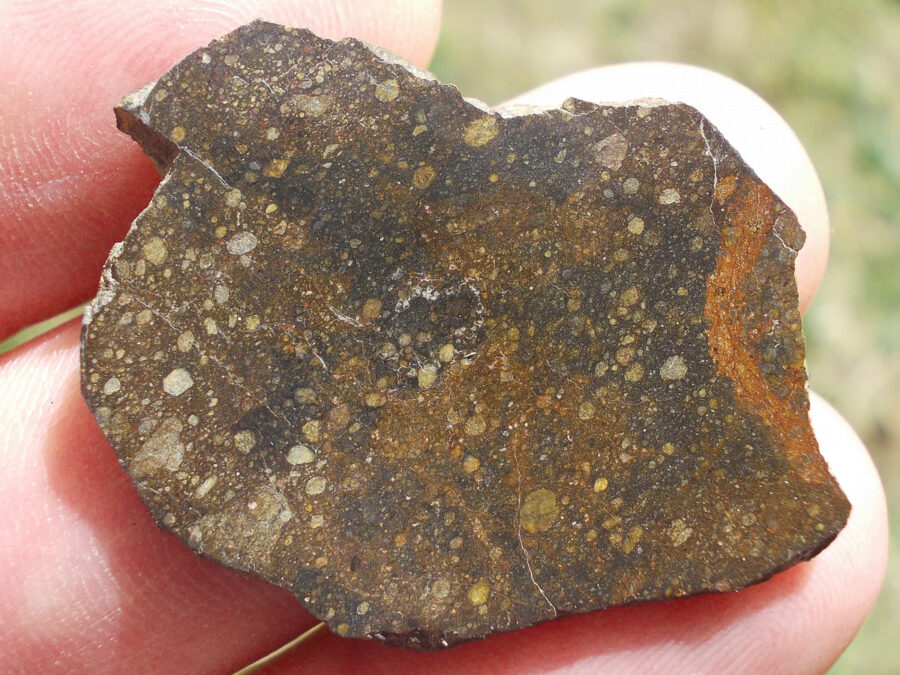
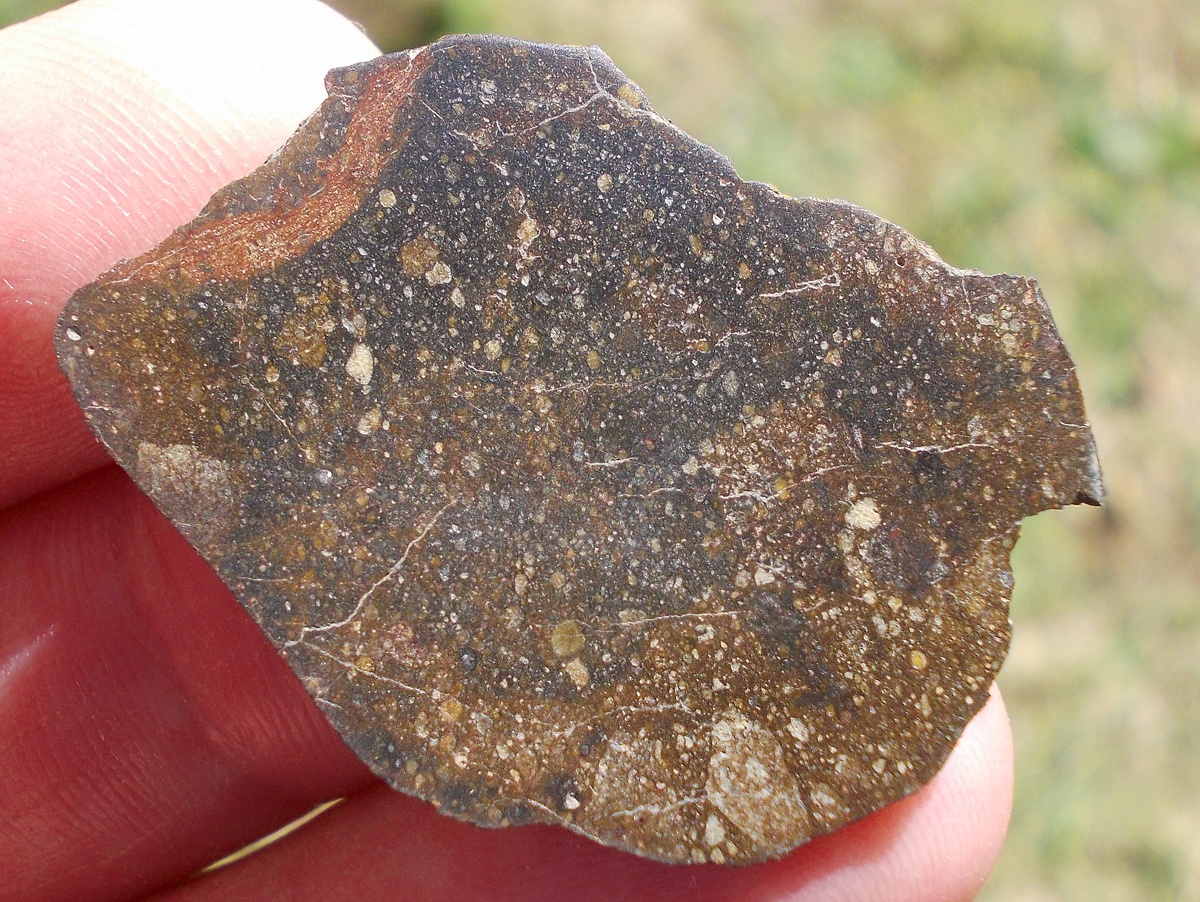
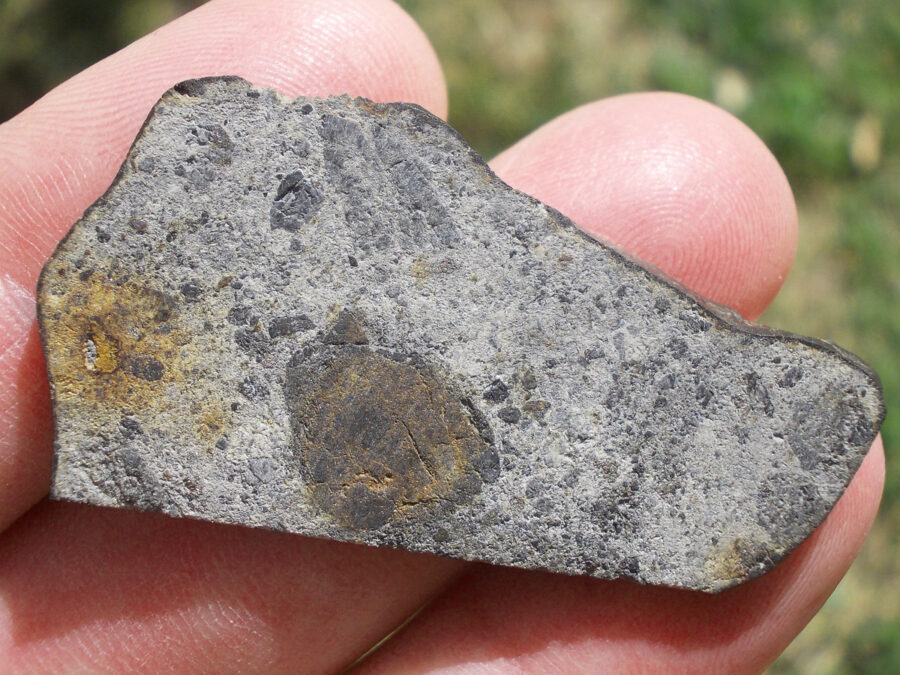
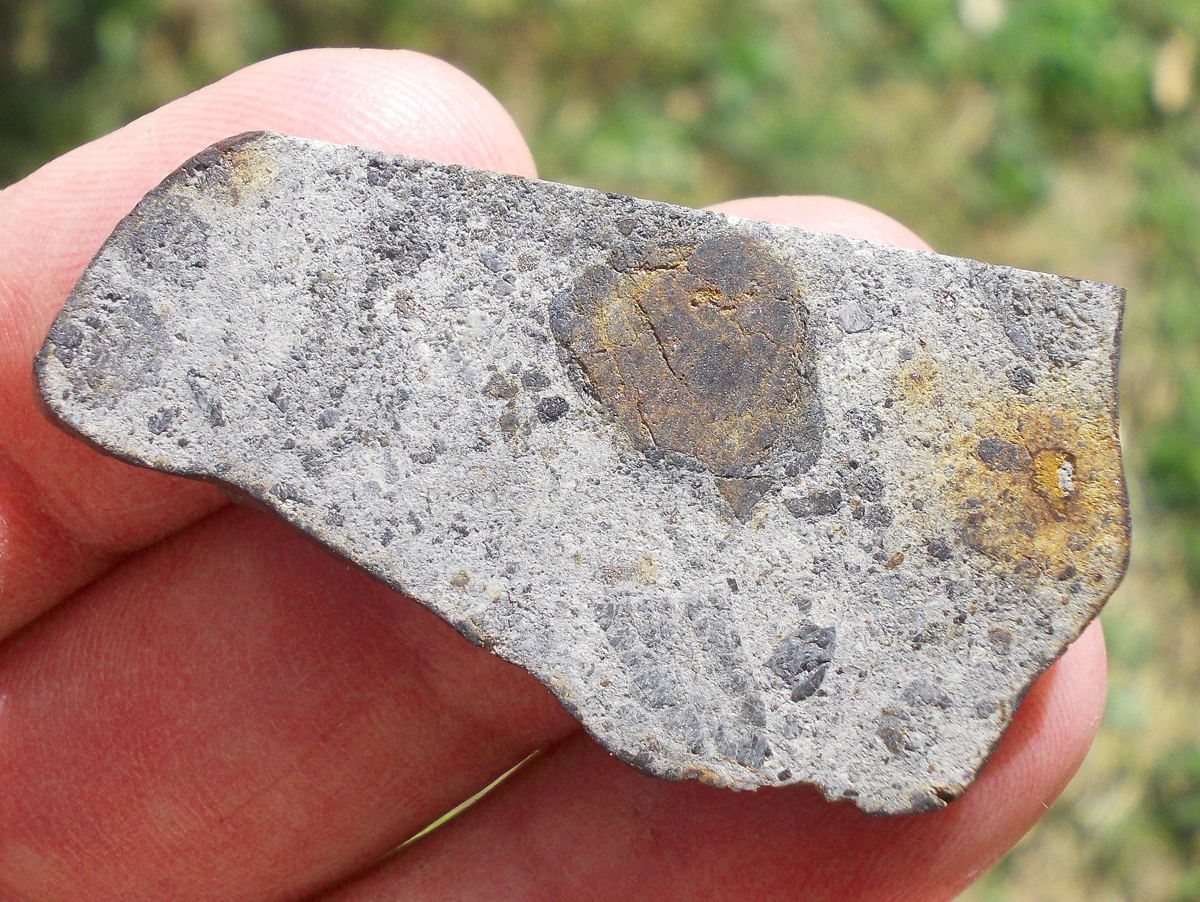
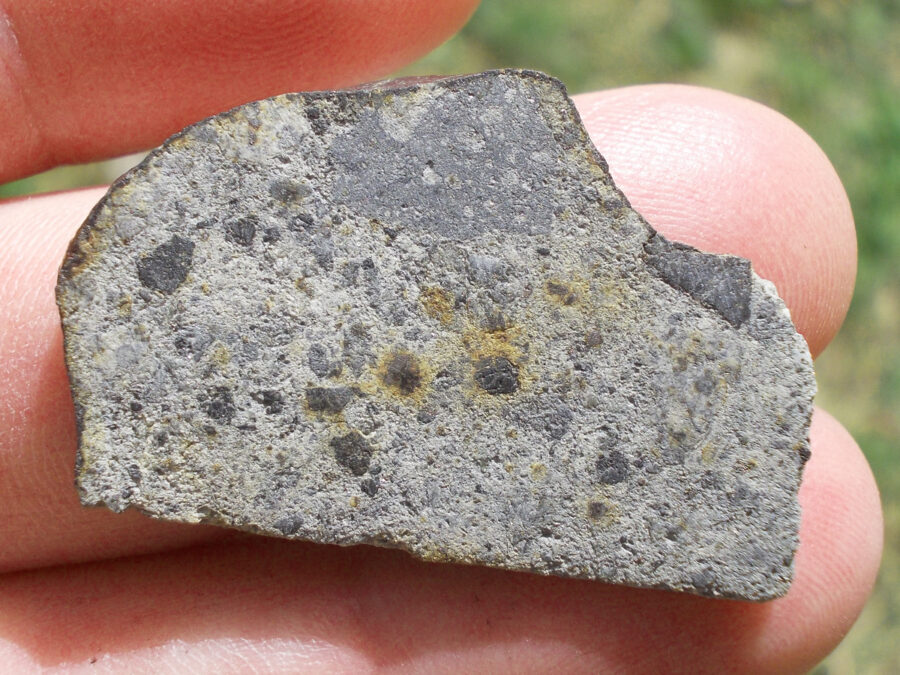
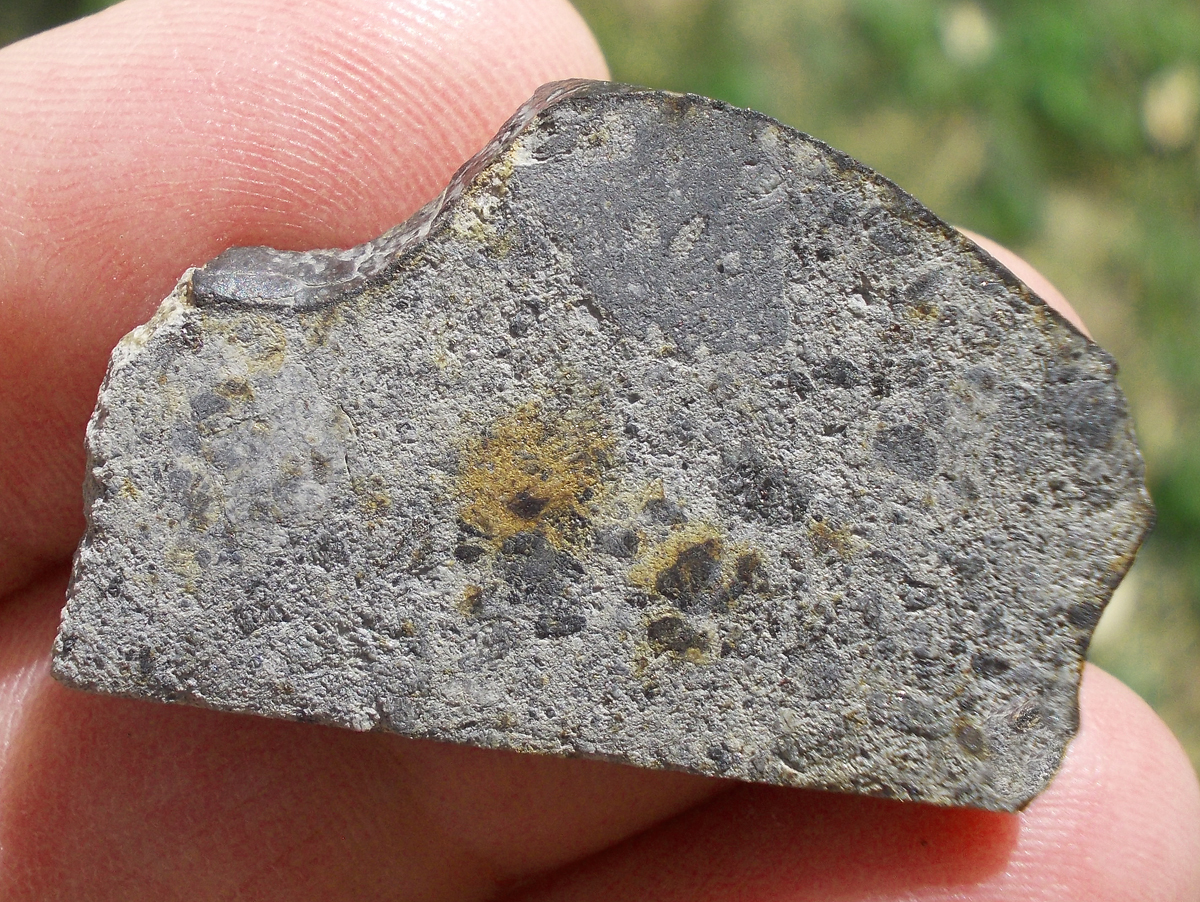
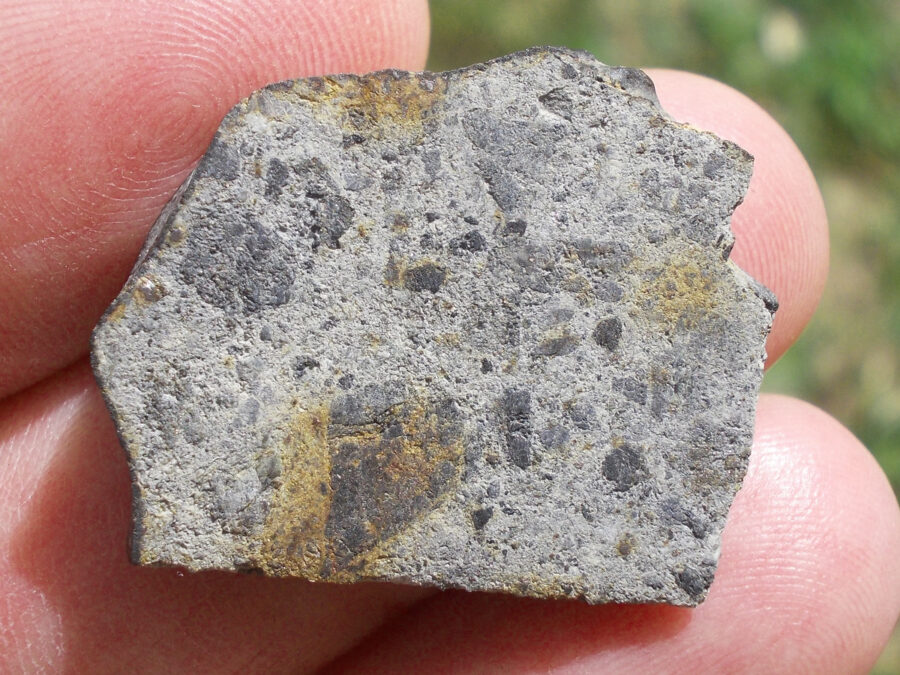
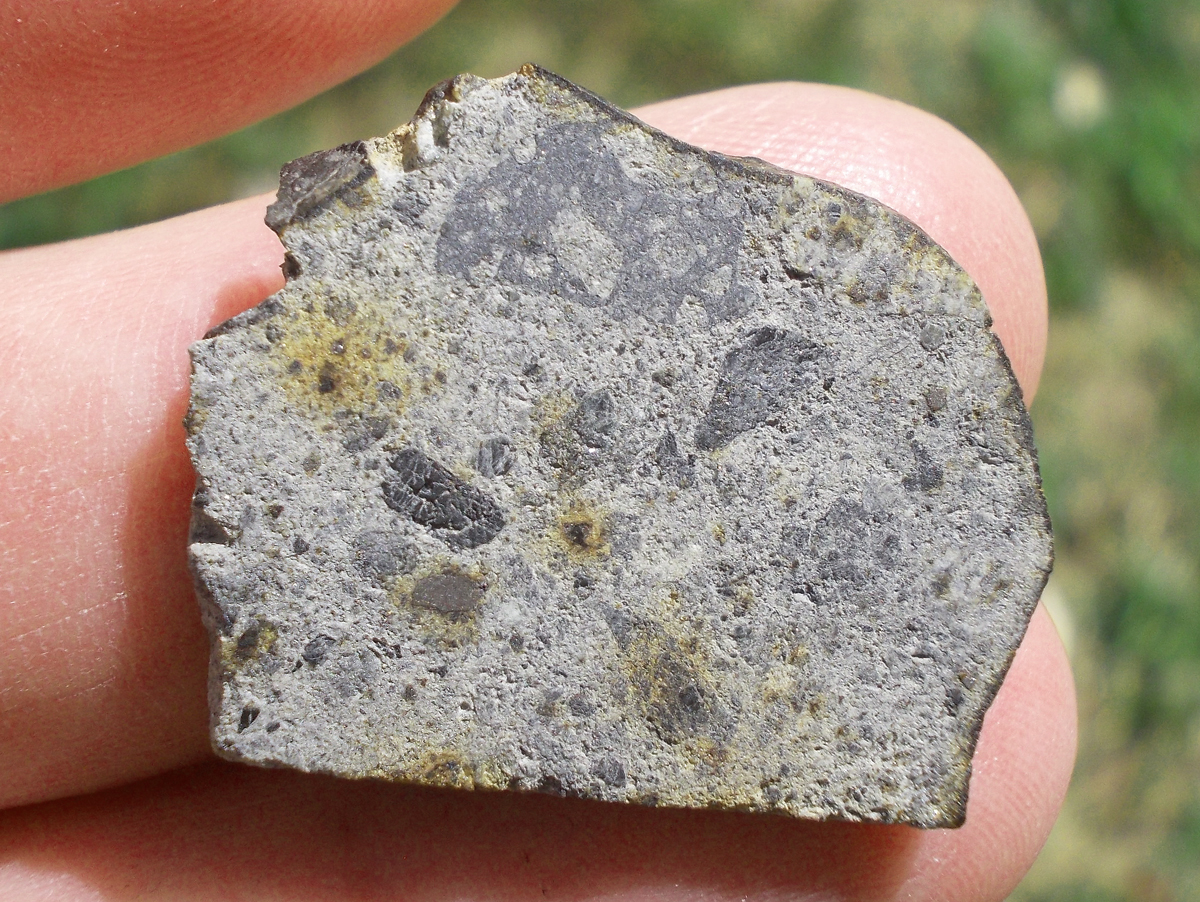
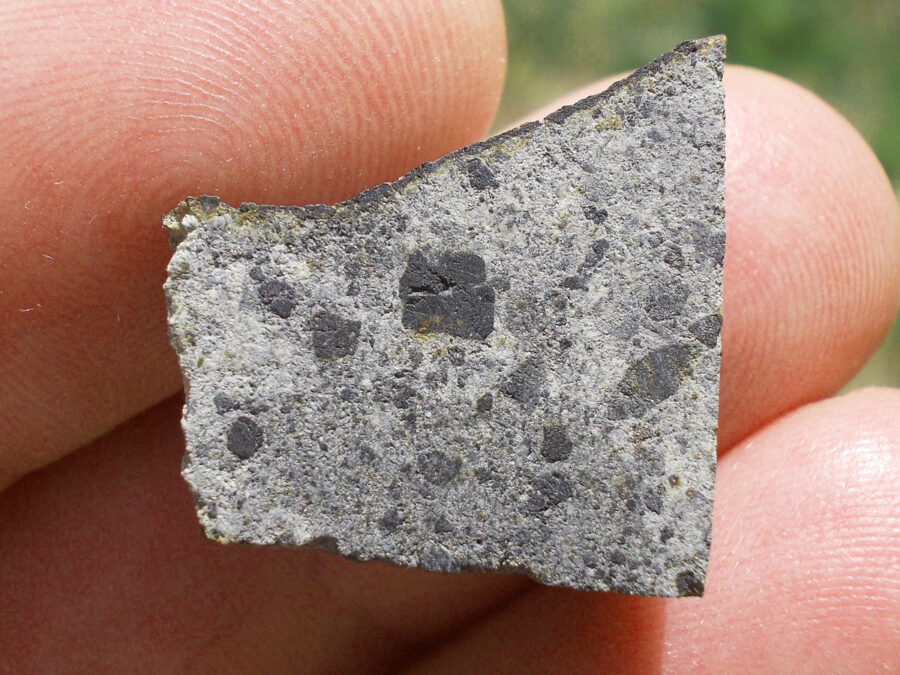
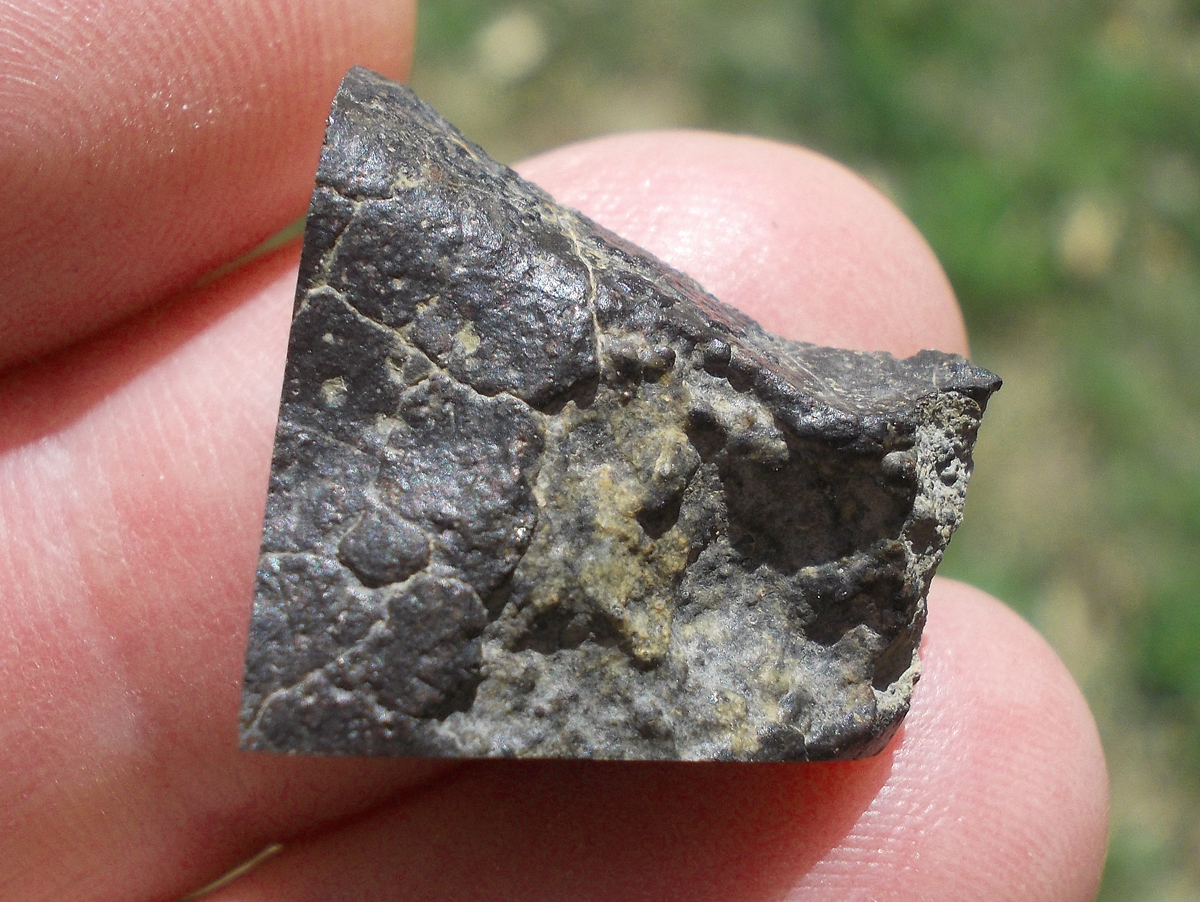
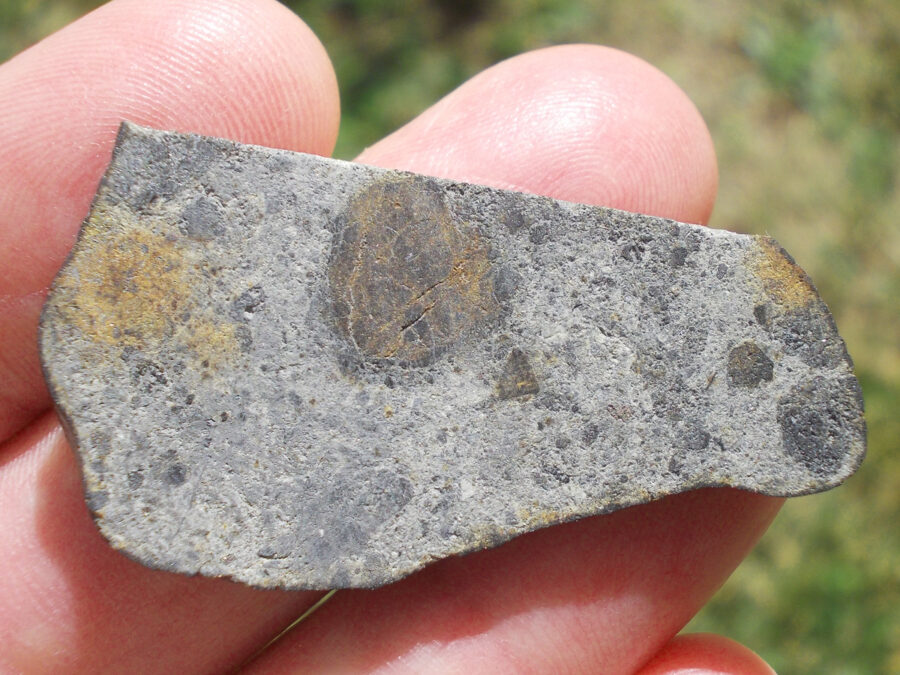
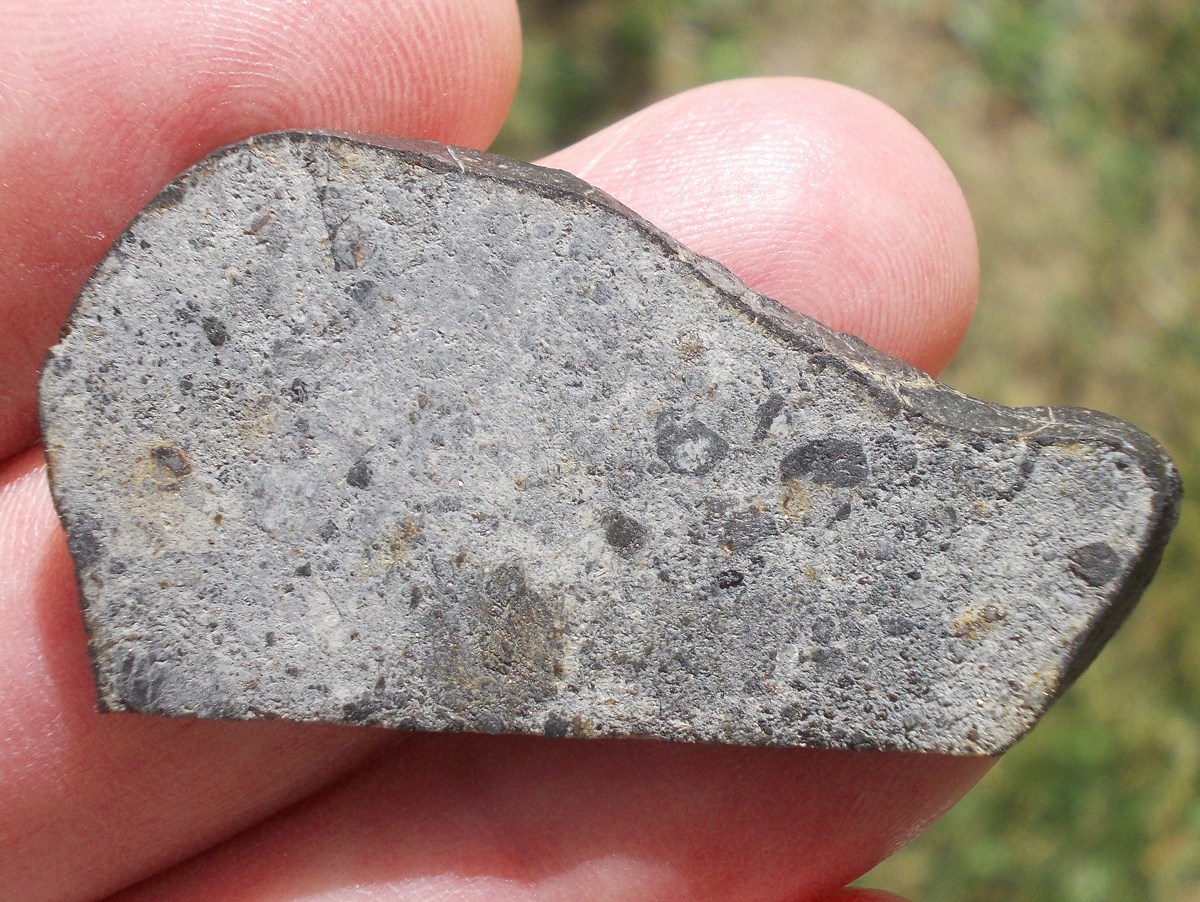
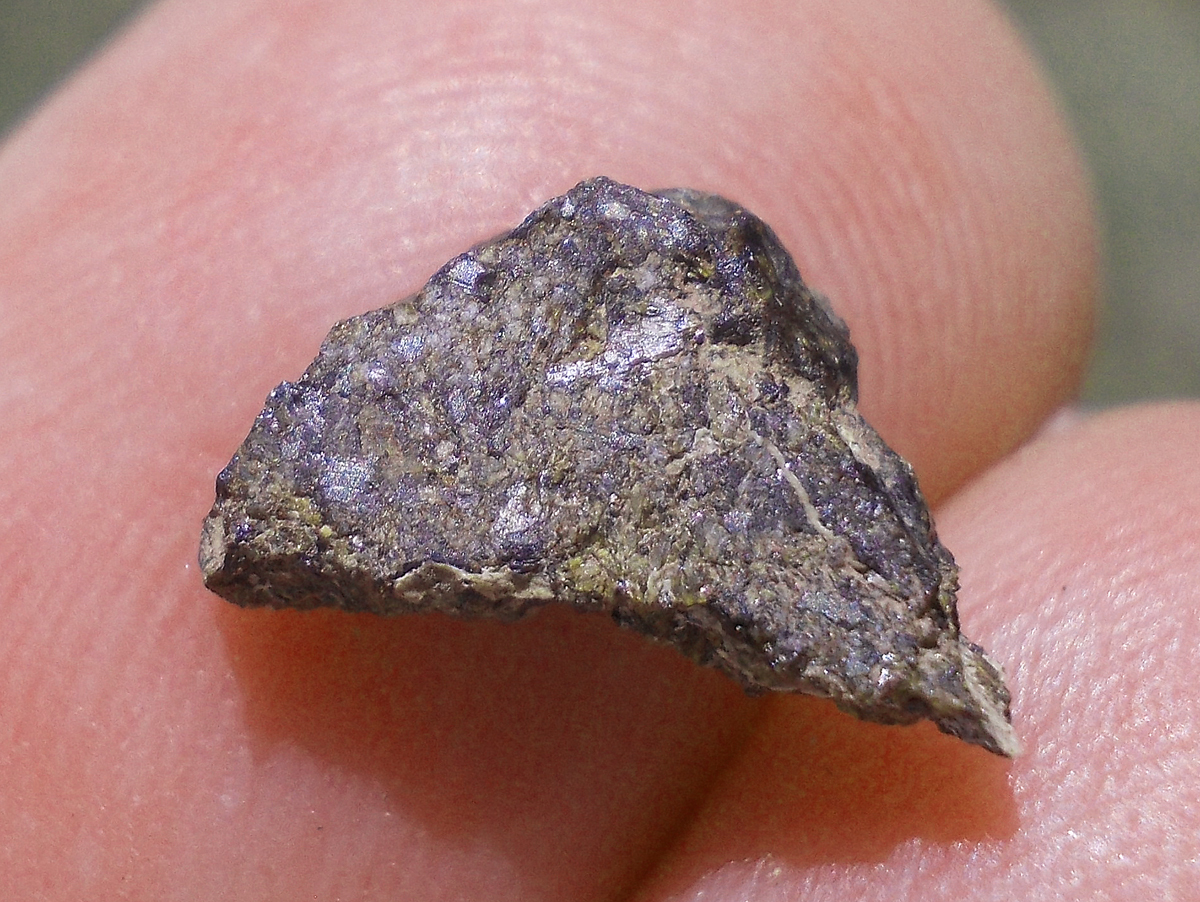
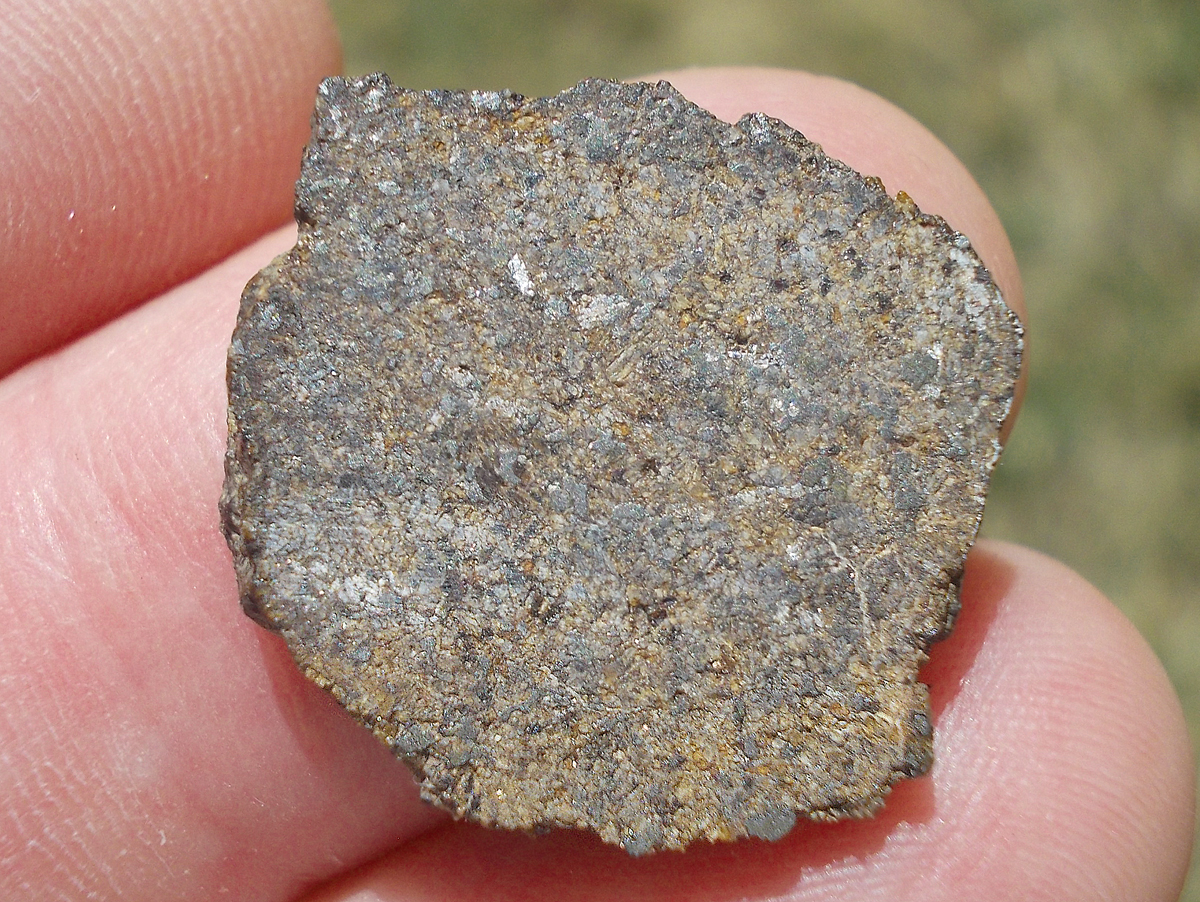
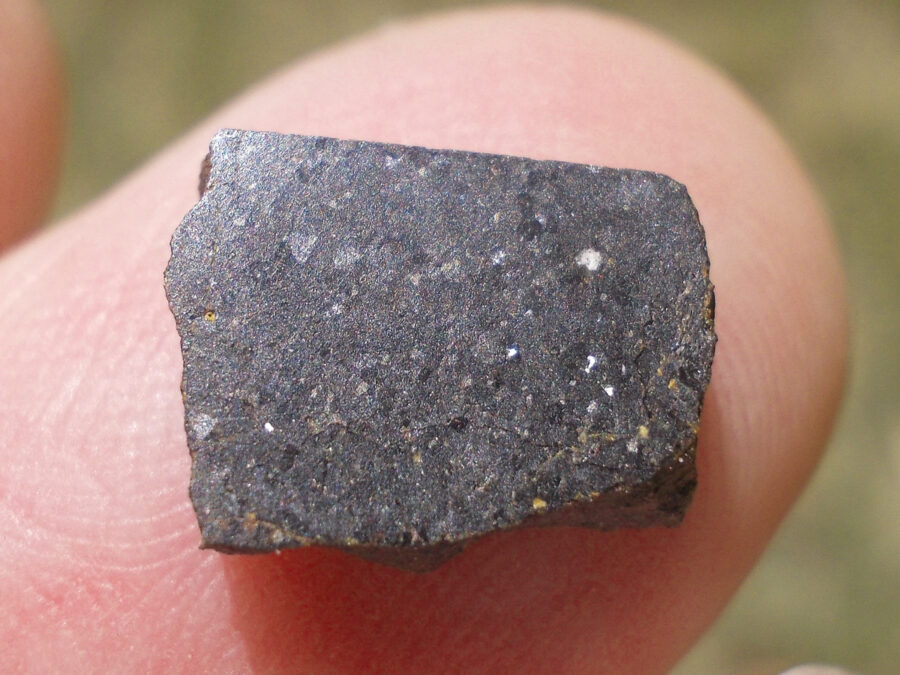
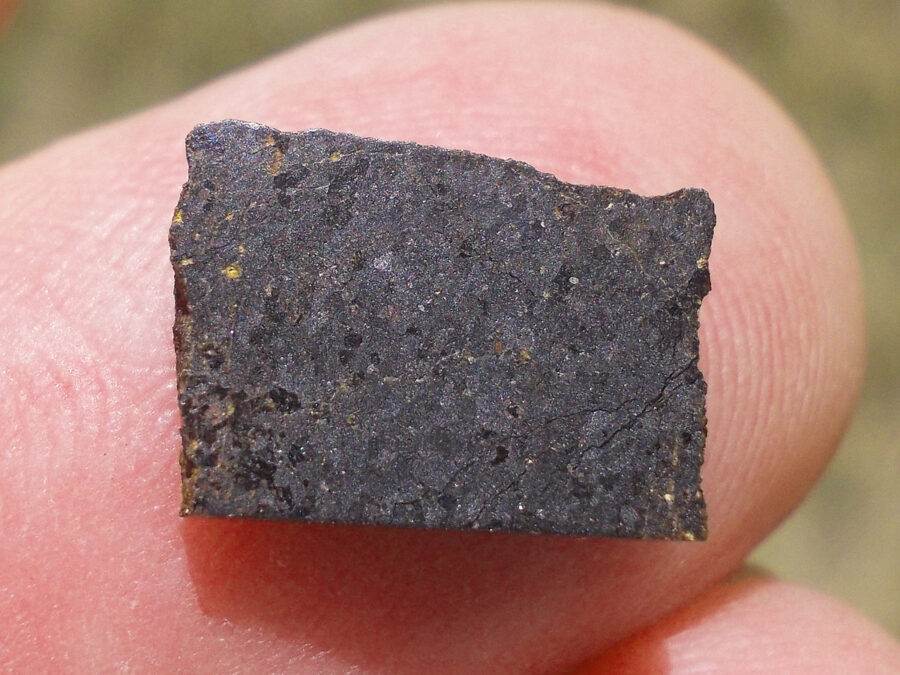
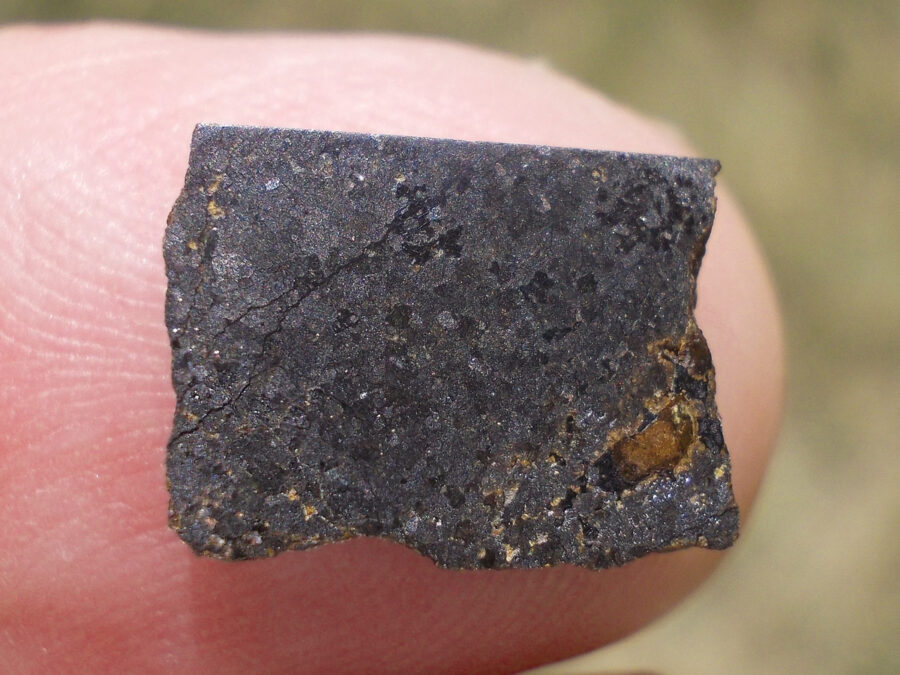
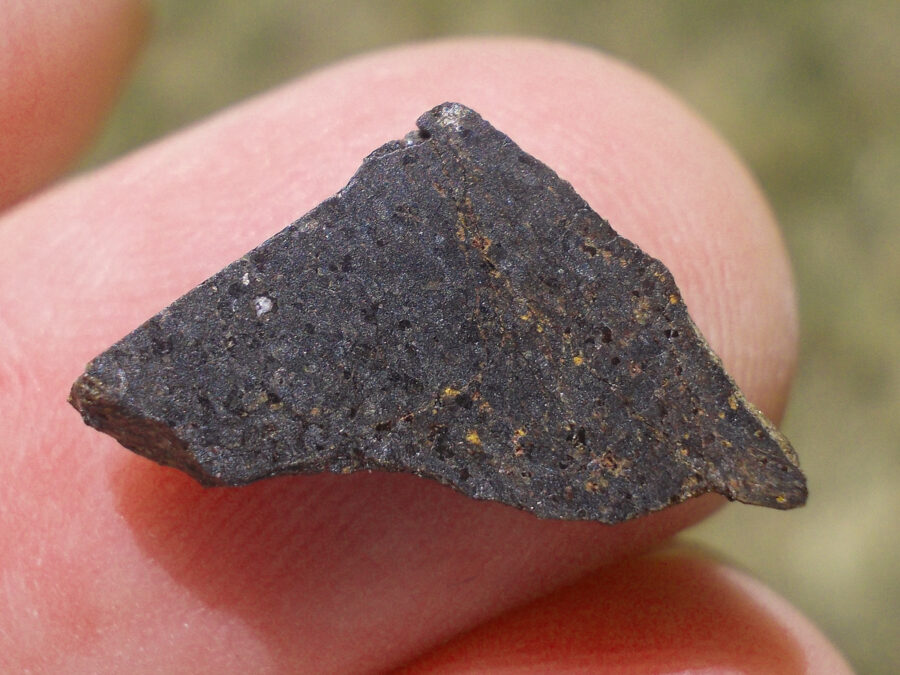
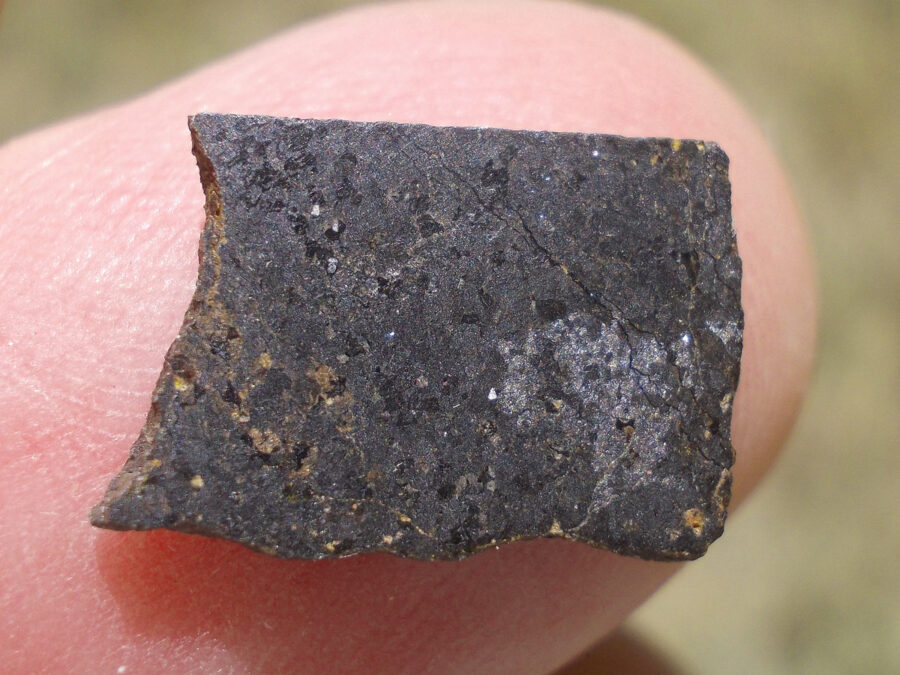
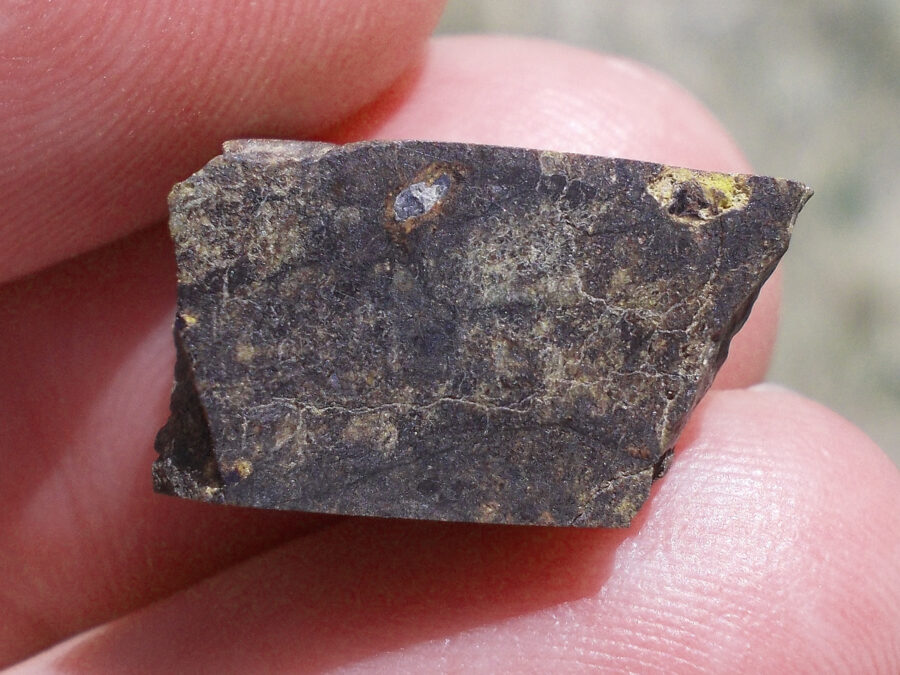
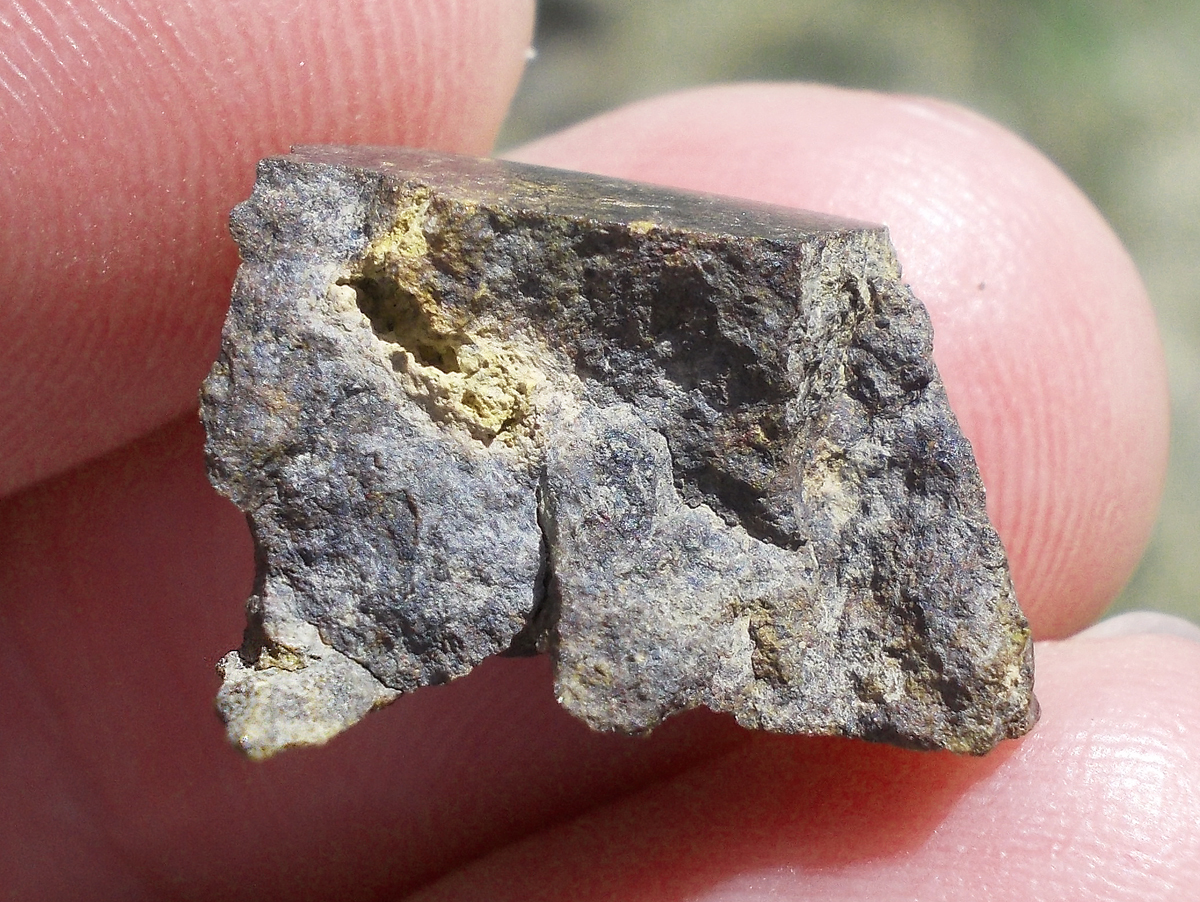
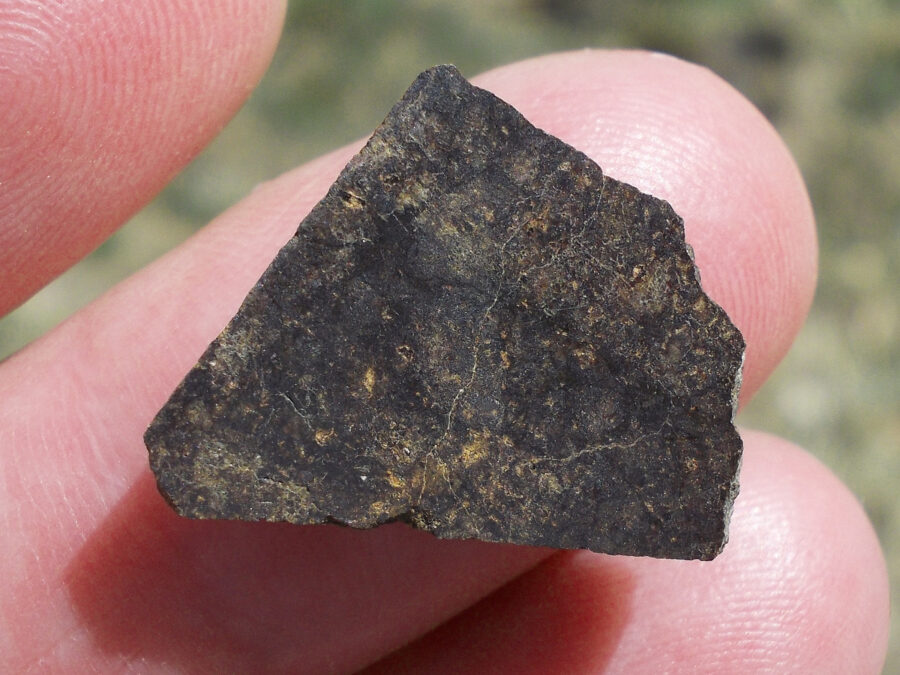
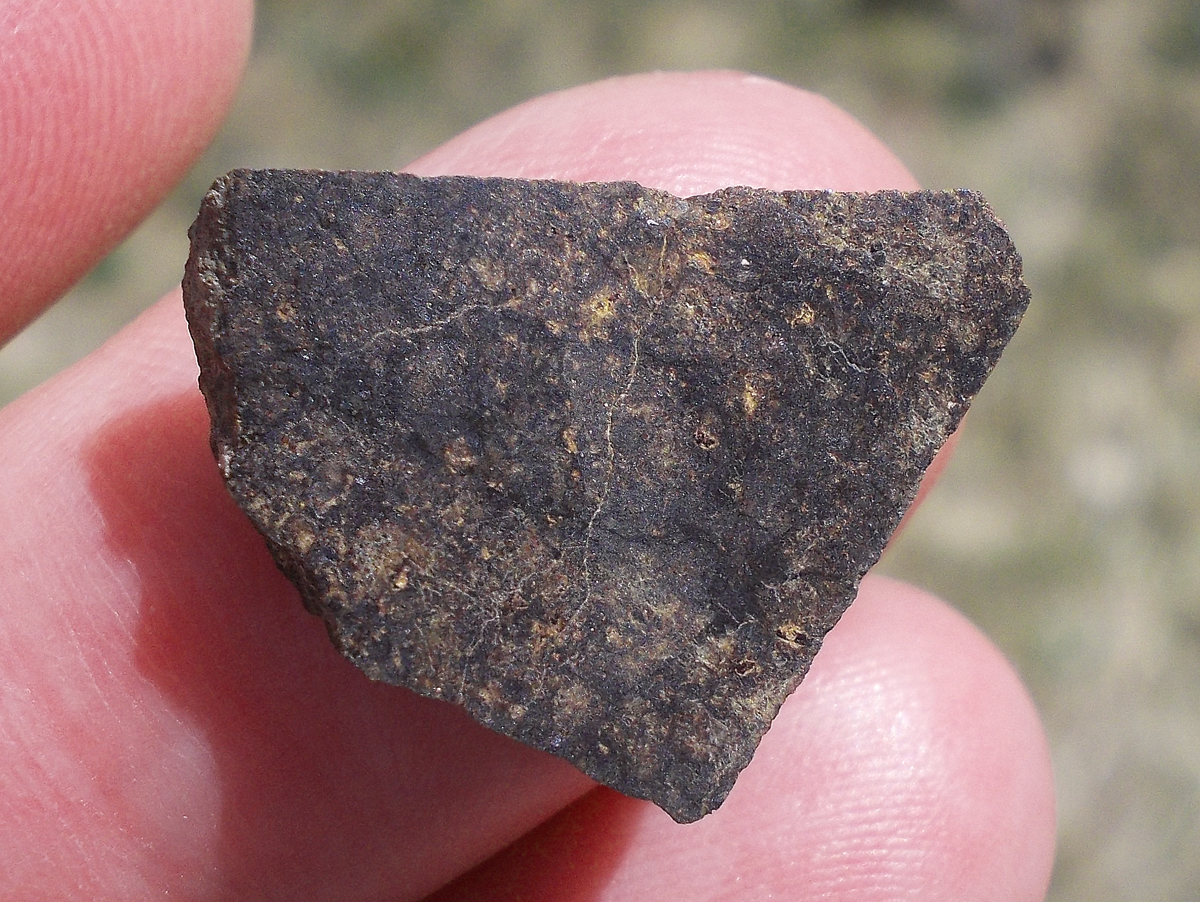
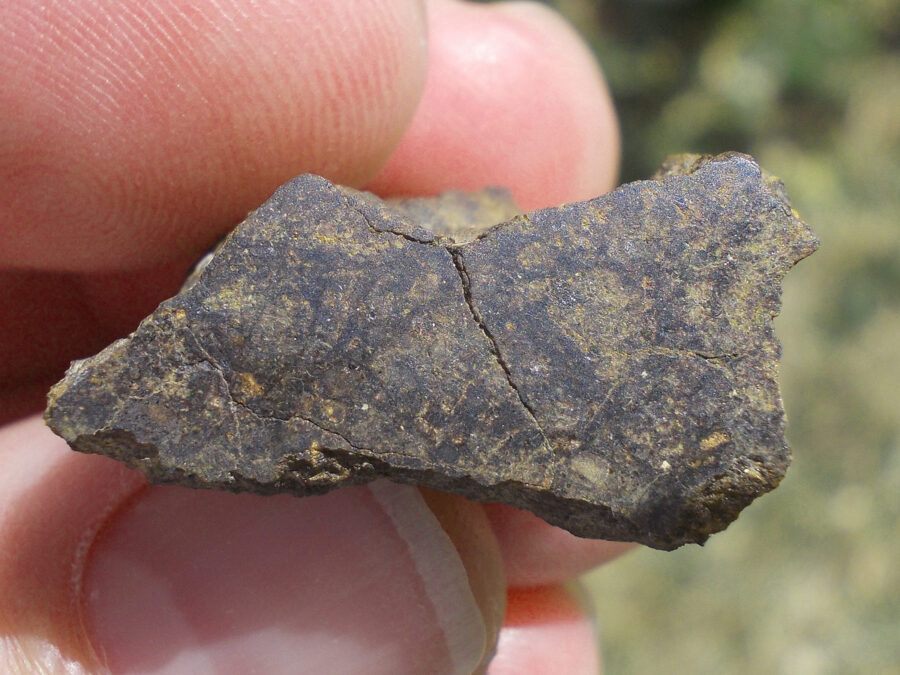
Amgala 001 Mars Shergottite (olivine-phyric) #37 - 0,7 gOut of stock

Amgala 001 Mars Shergottite (olivine-phyric) #37 – 0,7 g

60,00

Amgala est une rare météorite provenant de Mars, classifiée Shergottite (olivine-phyric).

Elle a été découverte dans le Sahara Occidental en 2022.

Une météorite d’un rapport qualité/prix exceptionnel !

Amgala 001        26.014°N, 11.020°W

Saguia el Hamra, Western Sahara

Purchased: 2022 Dec

Classification: Martian meteorite (Shergottite)

History: Multiple stones were found together in December 2022 near Meharrize. Said Muftah Bachir and Ziyao Wang bought 12 kg together from the finders, including the largest 5200 g individual; Mark Lyon acquired 19165 g from two different dealers; Aziz Habibi obtained 3500 g from another dealer.

Physical characteristics: Weathered exterior surfaces of the stones are brown with a distinctive knobby appearance. Fresh interiors are greenish-gray with darker olivine phenocrysts visible.

Petrography: (A. Irving, UWS, and P. Carpenter, WUSL) Zoned olivine phenocrysts (up to 2 mm in length) are set in a groundmass with variable grainsize composed predominantly of prismatic, zoned clinopyroxene and lath-like maskelynite, together with accessory alkali feldspar, pyrrhotite, ulvöspinel, chromite (with variable Ti content), ilmenite, baddeleyite and chlorapatite. Thin opaque shock veins crosscut the specimen as well as secondary calcite veinlets. Olivine phenocrysts contain small patches of alteration products (red-brown in thin section).

Geochemistry: Olivine (Fa31.7-56.6, FeO/MnO = 52-55, N = 5), pigeonite (Fs27.7-48.4Wo10.4-9.8, FeO/MnO = 29-35, N = 3), subcalcic augite (Fs20.7-30.4Wo32.5-34.6, FeO/MnO = 28-32, N = 2), maskelynite (An47.4-50.5Or2.2-1.7, N = 2), alkali feldspar (Ab49.4Or34.0An16.7).

Classification: Shergottite (olivine-phyric).

Specimens: 68.3 g including one polished thin section at UWB; remainder with Mr. S. Bachir/WangZ (12 kg), Mr. M. Lyon (19165 g) and Mr. A. Habibi (3500 g).

St Pierre-le-Viger L5-6 #1 - 2,128 g

St Pierre-le-Viger L5-6 #1 – 2,128 g

2560,00

2023 CX1, est un astéroïde qui est entré dans l’atmosphère terrestre le 13 février 2023 dans le nord de la France.

Il a été découvert, sept heures avant l’impact, par l’astronome hongrois Krisztián Sárneczky.

La première pierre trouvée de cette astéroïde fait 92,6 g, elle a été découverte le 15 février vers St Pierre-le-Viger par une étudiante en Art faisant partie du groupe Fripon/Vigie Ciel.

Le total trouvé s’élève à 1200 grammes.

Thierry Monter a découvert 490 grammes sur un cours de tennis à Autigny.

La pièce en vente est un des fragments découvert par Thierry Monter.

C’est une pièce unique au Monde, les chutes observées en France sont rares et c’est la première fois qu’un morceau d’astéroïde suivi depuis l’espace est tombée sur un cours de tennis, occasionnant un mini cratère.


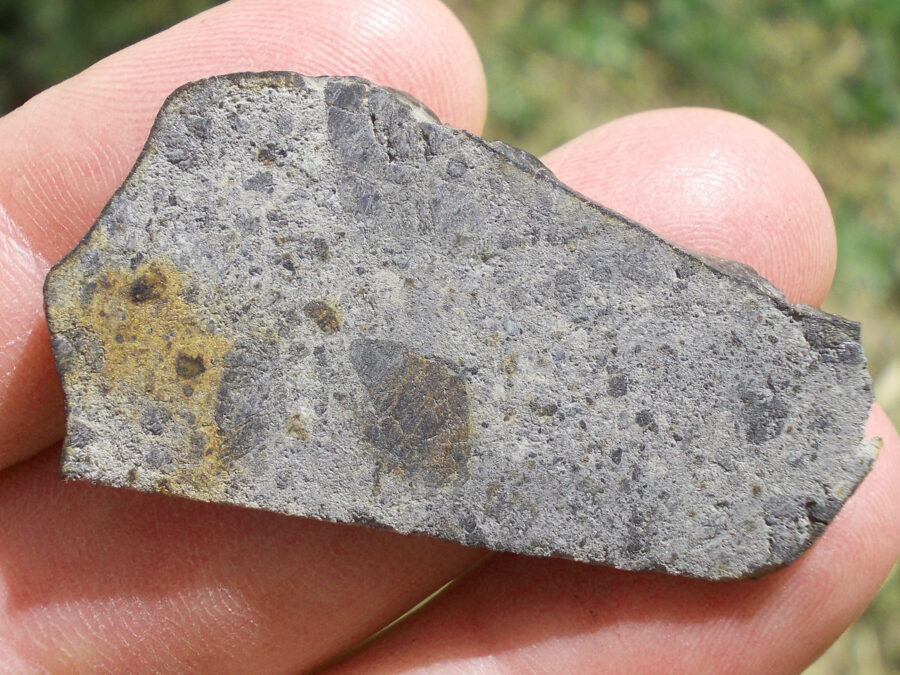
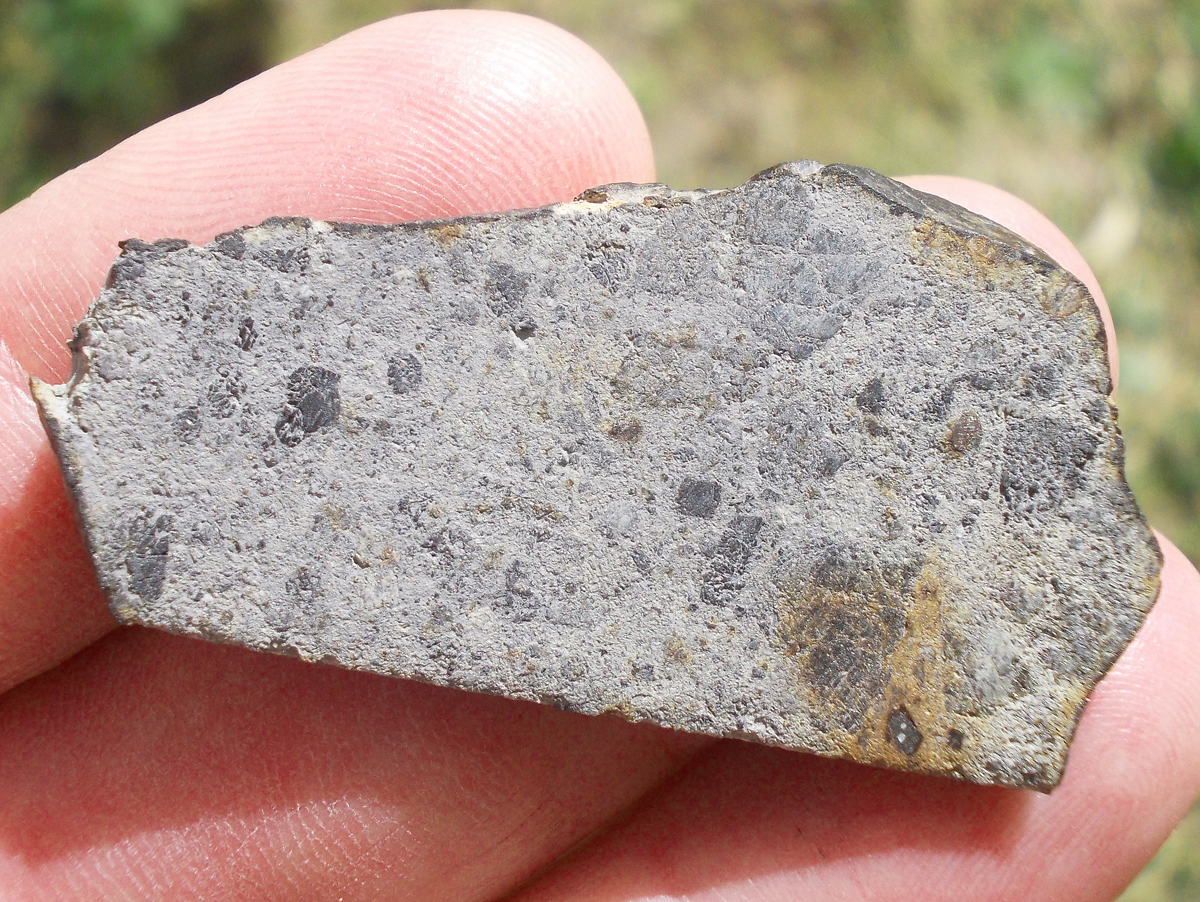
Plateau du Tademait 008 Mars Shergottite (olivine-phyric basalt) #2 - 0,2 gOut of stock

Plateau du Tademait 008 Mars Shergottite (olivine-phyric basalt) #2 – 0,2 g

30,00

Plateau du Tademait 008 est une météorite provenant de Mars, classifiée Shergottite (olivine-phyric basalt).

Elle a été découverte en Algérie en 2022.

Une météorite rare et très esthétique.

Plateau du Tademait 008        28°55’03.8″N, 0°59’05.6″E

Adrar, Algeria

Purchased: 2022

Classification: Martian meteorite (Shergottite)

History: Purchased from Algerian dealer Ali Mftah Mftah by Mark Lyon in 2022.

Physical characteristics: Single stone with patches of black fusion crust, sandblasted surfaces show exposed olivine phenocrysts. A polished slice reveals numerous pale green olivine phenocrysts up to ~1 cm in diameter that poikilitically enclose smaller pyroxene grains. The groundmass consists of dark gray pyroxene grains up to 500 μm and smaller olivine grains.

Petrography: (C. Agee, UNM) This meteorite has the approximate modal abundances: 50% clinopyroxene, 25% olivine, 10% maskelynite, with accessory ilmenite, chromite, Ti-Cr spinel, and pyrite. Clinopyroxene shows a tightly bound, continuous calcium enrichment trend. Olivine phenocrysts show a narrow compositional range from low Ca-pyroxene to pigeonite to subcalcic augite. Maskelynite is usually observed occupying pyroxene and olivine grain boundary pockets. Small vesicles are scattered throughout.

Geochemistry: (M. Spilde, UNM) Olivine Fa40.4±0.9, Fe/Mn=50±2, CaO=0.25±0.05, (wt%), n=6; clinopyroxene Fs26.3±4.6Wo17.6±9.2, Fe/Mn=29±2, n=12; maskelynite An51.0±3.2Ab47.2±3.4Or1.8±0.5, n=7.

Classification: Martian shergottite (olivine-phyric basalt).

Specimens: 45 g on deposit at UNM, Mark Lyon holds the main mass

Plateau du Tademait 008 Mars Shergottite (olivine-phyric basalt) #1 - 2,6 gOut of stock

Plateau du Tademait 008 Mars Shergottite (olivine-phyric basalt) #1 – 2,6 g

360,00

Plateau du Tademait 008 est une météorite provenant de Mars, classifiée Shergottite (olivine-phyric basalt).

Elle a été découverte en Algérie en 2022.

Une météorite rare et très esthétique.

Plateau du Tademait 008        28°55’03.8″N, 0°59’05.6″E

Adrar, Algeria

Purchased: 2022

Classification: Martian meteorite (Shergottite)

History: Purchased from Algerian dealer Ali Mftah Mftah by Mark Lyon in 2022.

Physical characteristics: Single stone with patches of black fusion crust, sandblasted surfaces show exposed olivine phenocrysts. A polished slice reveals numerous pale green olivine phenocrysts up to ~1 cm in diameter that poikilitically enclose smaller pyroxene grains. The groundmass consists of dark gray pyroxene grains up to 500 μm and smaller olivine grains.

Petrography: (C. Agee, UNM) This meteorite has the approximate modal abundances: 50% clinopyroxene, 25% olivine, 10% maskelynite, with accessory ilmenite, chromite, Ti-Cr spinel, and pyrite. Clinopyroxene shows a tightly bound, continuous calcium enrichment trend. Olivine phenocrysts show a narrow compositional range from low Ca-pyroxene to pigeonite to subcalcic augite. Maskelynite is usually observed occupying pyroxene and olivine grain boundary pockets. Small vesicles are scattered throughout.

Geochemistry: (M. Spilde, UNM) Olivine Fa40.4±0.9, Fe/Mn=50±2, CaO=0.25±0.05, (wt%), n=6; clinopyroxene Fs26.3±4.6Wo17.6±9.2, Fe/Mn=29±2, n=12; maskelynite An51.0±3.2Ab47.2±3.4Or1.8±0.5, n=7.

Classification: Martian shergottite (olivine-phyric basalt).

Specimens: 45 g on deposit at UNM, Mark Lyon holds the main mass

Camel Donga Eucrite #2 - 8,2 gOut of stock

Camel Donga Eucrite #2 – 8,2 g

288,00

Camel Donga est une très belle eucrite découverte en Australie en 1984 dans la plaine du Nullarbor près de Camel Donga.

Les eucrites proviennent de l’Astéroïde Vesta.

Une très belle acquisition pour votre collection !

NWA 10158 Mésosidérite #29 - 12,4 g

NWA 10158 Mésosidérite #29 – 12,4 g

87,00

NWA 10158 est une météorite de type mésosidérite.

C’est un type rare, mais la particularité de NWA 10158 c’est qu’elle a du arriver sur Terre il y a fort longtemps pour preuve sa terrestrialisation.
NWA 10158 ne ressemble donc plus à une mésosidérite classique et ce n’est qu’avec une analyse scientifique que son type exact a été déterminé.

Cette météorite n’en reste pas moins une météorite esthétique, et chaque tranche coupée est différente.

NWA 10158 Mésosidérite #27 - 2,3 g

NWA 10158 Mésosidérite #27 – 2,3 g

18,00

NWA 10158 est une météorite de type mésosidérite.

C’est un type rare, mais la particularité de NWA 10158 c’est qu’elle a du arriver sur Terre il y a fort longtemps pour preuve sa terrestrialisation.
NWA 10158 ne ressemble donc plus à une mésosidérite classique et ce n’est qu’avec une analyse scientifique que son type exact a été déterminé.

Cette météorite n’en reste pas moins une météorite esthétique, et chaque tranche coupée est différente.

NWA 10158 Mésosidérite #25 - 19,3 g

NWA 10158 Mésosidérite #25 – 19,3 g

130,00

NWA 10158 est une météorite de type mésosidérite.

C’est un type rare, mais la particularité de NWA 10158 c’est qu’elle a du arriver sur Terre il y a fort longtemps pour preuve sa terrestrialisation.
NWA 10158 ne ressemble donc plus à une mésosidérite classique et ce n’est qu’avec une analyse scientifique que son type exact a été déterminé.

Cette météorite n’en reste pas moins une météorite esthétique, et chaque tranche coupée est différente.

NWA 10158 Mésosidérite #24 - 8,7 g

NWA 10158 Mésosidérite #24 – 8,7 g

61,00

NWA 10158 est une météorite de type mésosidérite.

C’est un type rare, mais la particularité de NWA 10158 c’est qu’elle a du arriver sur Terre il y a fort longtemps pour preuve sa terrestrialisation.
NWA 10158 ne ressemble donc plus à une mésosidérite classique et ce n’est qu’avec une analyse scientifique que son type exact a été déterminé.

Cette météorite n’en reste pas moins une météorite esthétique, et chaque tranche coupée est différente.

NWA 13351 #9 Ach Ung – 34,2 g

NWA 13351 #9 Ach Ung – 34,2 g

360,00
NWA 13351 est une rare météorite de type achondrite non groupée avec une texture poikilitic ignée.
Elle a été achetée en 2020 en Mauritanie par deux marchands marocains, et a été classifiée par Anthony Irving.


Chwichiya 002 C3.00 Ung #44 - 2,7 gOut of stock

Chwichiya 002 C3.00 Ung #44 – 2,7 g

724,00

Chwichiya 002 est une chondrite ordinaire carbonée de type C3.00 ungrouped, c’est le type le plus primitif que l’on est jamais trouvé à ce jour, elle n’a subi aucune phase hydratée et aucun échauffement avant son expulsion du corps parent.
Cette météorite est peut-être l’une des météorites les plus importantes au niveau scientifique de tous les temps, nul doute que la connaissance de notre système solaire va avancer grâce à elle.

Elle a été découverte dans le Sahara Occidental.
Un must pour une collection !

Nwa 13512 #13 Aubrite - 2,2 g

Nwa 13512 #13 Aubrite – 2,2 g

185,00

Nwa 13512 est une météorite de type Aubrite découverte au Maroc près de Boudnib en 2019.

A ce jour seulement 72 météorites de ce type ont été classifiées.
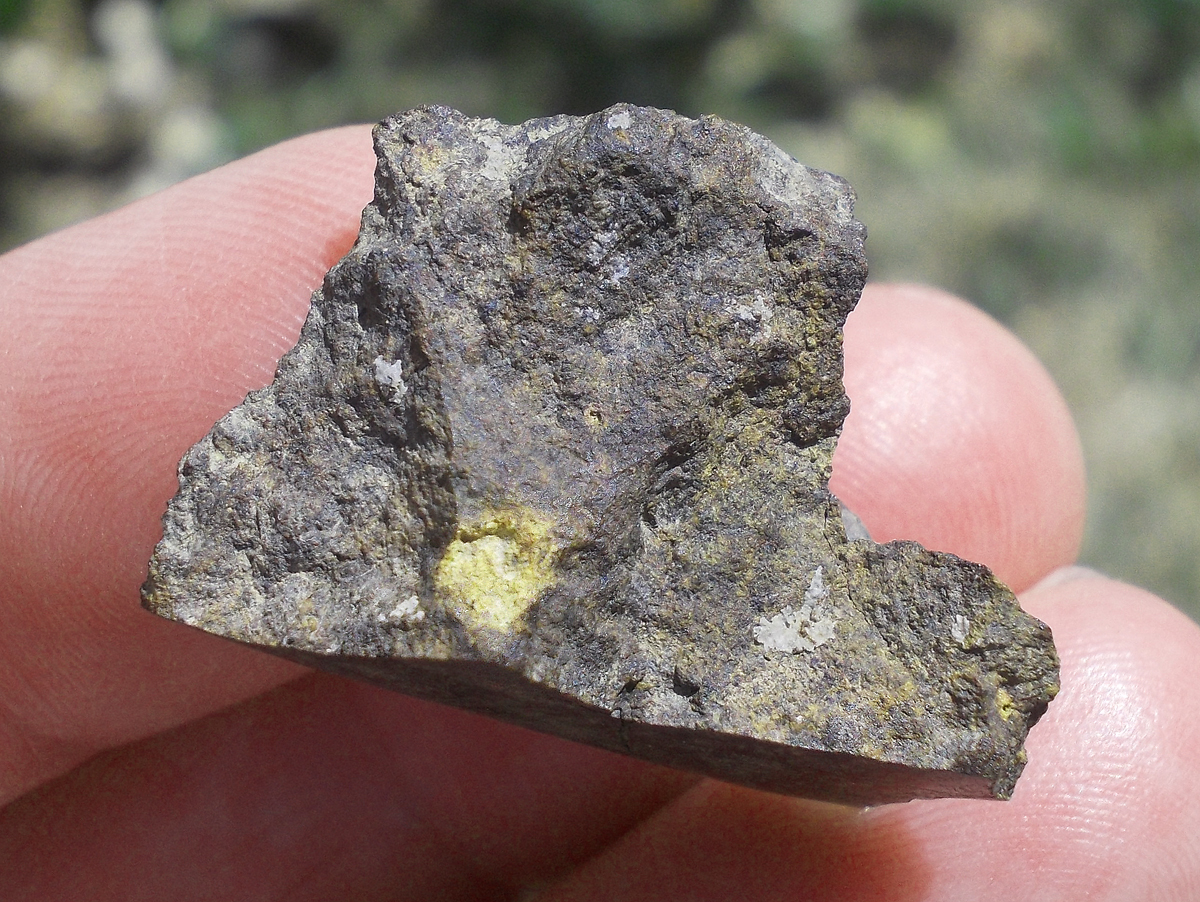
C’est un type de météorite rare, difficile à trouver sur le marché.

Le nom des Aubrites est lié à la chute d’une météorite en France à Aubres en 1836. Elles sont composées principalement d’orthopyroxène à enstatite.

History : Three visually-similar specimens (total weight 105 g)

found together near Boudnib, Morocco were purchased by Mohammed Hmani in December 2019.

Petrography: (A. Irving, UWS and P. Carpenter, WUSL) The specimen has a mean grainsize of ~400 µm and is composed predominantly of equant grains of enstatite with subordinate sodic plagioclase and accessory altered Si-bearing kamacite, altered Cr-troilite and schreibersite.

Geochemistry: Enstatite (Fs0.2±0.0Wo0.6-0.7, N = 3), plagioclase (Ab91.4An2.6Or6.0; Ab76.4An21.4Or2.3; N = 2), kamacite (Si = 1.5 wt.%, Ni = 7.9 wt.%).

Classification: Aubrite.

Specimens: 20.5 g including one polished thin section at UWB; remainder with Mr. M. Hmani.


Nwa 13512 #12 Aubrite - 3,4 g

Nwa 13512 #12 Aubrite – 3,4 g

286,00

Nwa 13512 est une météorite de type Aubrite découverte au Maroc près de Boudnib en 2019.

A ce jour seulement 72 météorites de ce type ont été classifiées.

C’est un type de météorite rare, difficile à trouver sur le marché.

Le nom des Aubrites est lié à la chute d’une météorite en France à Aubres en 1836. Elles sont composées principalement d’orthopyroxène à enstatite.

History : Three visually-similar specimens (total weight 105 g)

found together near Boudnib, Morocco were purchased by Mohammed Hmani in December 2019.

Petrography: (A. Irving, UWS and P. Carpenter, WUSL) The specimen has a mean grainsize of ~400 µm and is composed predominantly of equant grains of enstatite with subordinate sodic plagioclase and accessory altered Si-bearing kamacite, altered Cr-troilite and schreibersite.

Geochemistry: Enstatite (Fs0.2±0.0Wo0.6-0.7, N = 3), plagioclase (Ab91.4An2.6Or6.0; Ab76.4An21.4Or2.3; N = 2), kamacite (Si = 1.5 wt.%, Ni = 7.9 wt.%).

Classification: Aubrite.

Specimens: 20.5 g including one polished thin section at UWB; remainder with Mr. M. Hmani.


Nwa 13512 #11 Aubrite - 2,1 g

Nwa 13512 #11 Aubrite – 2,1 g

176,00

Nwa 13512 est une météorite de type Aubrite découverte au Maroc près de Boudnib en 2019.

A ce jour seulement 72 météorites de ce type ont été classifiées.

C’est un type de météorite rare, difficile à trouver sur le marché.

Le nom des Aubrites est lié à la chute d’une météorite en France à Aubres en 1836. Elles sont composées principalement d’orthopyroxène à enstatite.

History : Three visually-similar specimens (total weight 105 g)

found together near Boudnib, Morocco were purchased by Mohammed Hmani in December 2019.

Petrography: (A. Irving, UWS and P. Carpenter, WUSL) The specimen has a mean grainsize of ~400 µm and is composed predominantly of equant grains of enstatite with subordinate sodic plagioclase and accessory altered Si-bearing kamacite, altered Cr-troilite and schreibersite.

Geochemistry: Enstatite (Fs0.2±0.0Wo0.6-0.7, N = 3), plagioclase (Ab91.4An2.6Or6.0; Ab76.4An21.4Or2.3; N = 2), kamacite (Si = 1.5 wt.%, Ni = 7.9 wt.%).

Classification: Aubrite.

Specimens: 20.5 g including one polished thin section at UWB; remainder with Mr. M. Hmani.


Nwa 13512 #10 Aubrite - 2 g

Nwa 13512 #10 Aubrite – 2 g

168,00

Nwa 13512 est une météorite de type Aubrite découverte au Maroc près de Boudnib en 2019.

A ce jour seulement 72 météorites de ce type ont été classifiées.

C’est un type de météorite rare, difficile à trouver sur le marché.

Le nom des Aubrites est lié à la chute d’une météorite en France à Aubres en 1836. Elles sont composées principalement d’orthopyroxène à enstatite.

History : Three visually-similar specimens (total weight 105 g)

found together near Boudnib, Morocco were purchased by Mohammed Hmani in December 2019.

Petrography: (A. Irving, UWS and P. Carpenter, WUSL) The specimen has a mean grainsize of ~400 µm and is composed predominantly of equant grains of enstatite with subordinate sodic plagioclase and accessory altered Si-bearing kamacite, altered Cr-troilite and schreibersite.

Geochemistry: Enstatite (Fs0.2±0.0Wo0.6-0.7, N = 3), plagioclase (Ab91.4An2.6Or6.0; Ab76.4An21.4Or2.3; N = 2), kamacite (Si = 1.5 wt.%, Ni = 7.9 wt.%).

Classification: Aubrite.

Specimens: 20.5 g including one polished thin section at UWB; remainder with Mr. M. Hmani.


Nwa 13512 #9 Aubrite - 1,2 gOut of stock

Nwa 13512 #9 Aubrite – 1,2 g

101,00

Nwa 13512 est une météorite de type Aubrite découverte au Maroc près de Boudnib en 2019.

A ce jour seulement 72 météorites de ce type ont été classifiées.

C’est un type de météorite rare, difficile à trouver sur le marché.

Le nom des Aubrites est lié à la chute d’une météorite en France à Aubres en 1836. Elles sont composées principalement d’orthopyroxène à enstatite.

History : Three visually-similar specimens (total weight 105 g)

found together near Boudnib, Morocco were purchased by Mohammed Hmani in December 2019.

Petrography: (A. Irving, UWS and P. Carpenter, WUSL) The specimen has a mean grainsize of ~400 µm and is composed predominantly of equant grains of enstatite with subordinate sodic plagioclase and accessory altered Si-bearing kamacite, altered Cr-troilite and schreibersite.

Geochemistry: Enstatite (Fs0.2±0.0Wo0.6-0.7, N = 3), plagioclase (Ab91.4An2.6Or6.0; Ab76.4An21.4Or2.3; N = 2), kamacite (Si = 1.5 wt.%, Ni = 7.9 wt.%).

Classification: Aubrite.

Specimens: 20.5 g including one polished thin section at UWB; remainder with Mr. M. Hmani.


Nwa 13512 #8 Aubrite - 3,2 gOut of stock

Nwa 13512 #8 Aubrite – 3,2 g

270,00

Nwa 13512 est une météorite de type Aubrite découverte au Maroc près de Boudnib en 2019.

A ce jour seulement 72 météorites de ce type ont été classifiées.

C’est un type de météorite rare, difficile à trouver sur le marché.

Le nom des Aubrites est lié à la chute d’une météorite en France à Aubres en 1836. Elles sont composées principalement d’orthopyroxène à enstatite.

History : Three visually-similar specimens (total weight 105 g)

found together near Boudnib, Morocco were purchased by Mohammed Hmani in December 2019.

Petrography: (A. Irving, UWS and P. Carpenter, WUSL) The specimen has a mean grainsize of ~400 µm and is composed predominantly of equant grains of enstatite with subordinate sodic plagioclase and accessory altered Si-bearing kamacite, altered Cr-troilite and schreibersite.

Geochemistry: Enstatite (Fs0.2±0.0Wo0.6-0.7, N = 3), plagioclase (Ab91.4An2.6Or6.0; Ab76.4An21.4Or2.3; N = 2), kamacite (Si = 1.5 wt.%, Ni = 7.9 wt.%).

Classification: Aubrite.

Specimens: 20.5 g including one polished thin section at UWB; remainder with Mr. M. Hmani.


NWA 15176 CO3 #2- 42,7 g

NWA 15176 CO3 #2- 42,7 g

170,00

NWA 15176 est une météorite de type carbonée CO3 de seulement 125 grammes.

Les météorites carbonées CO3 ont de petits chondres et quelques grains de métal.

Chute de référence :

Météorite d’Ornans (France) tombée le 11 juillet 1868 (6kg).