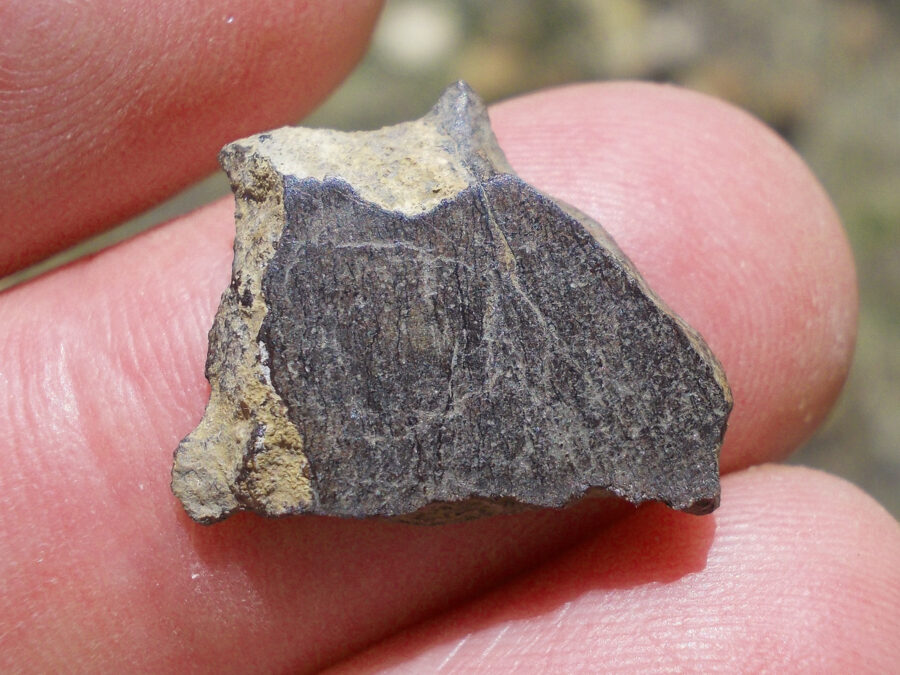
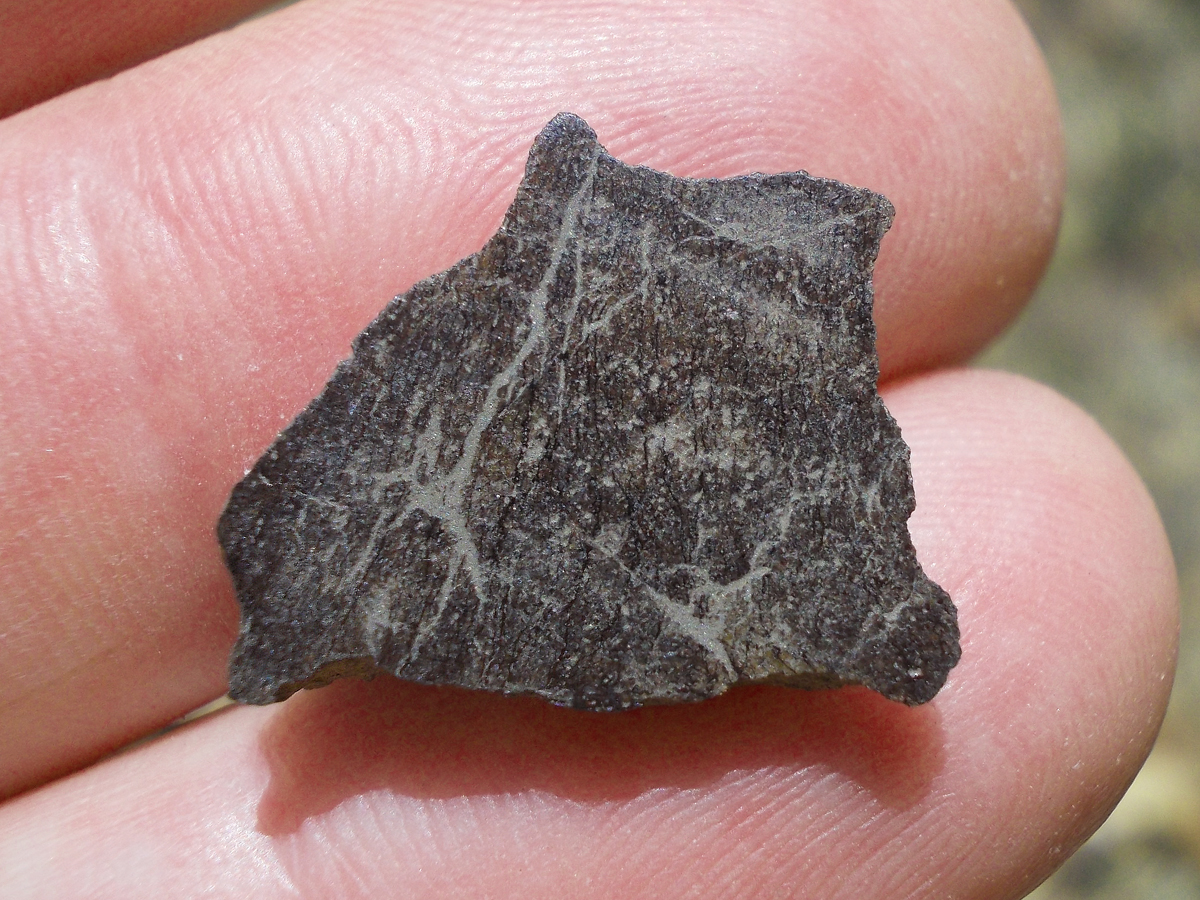
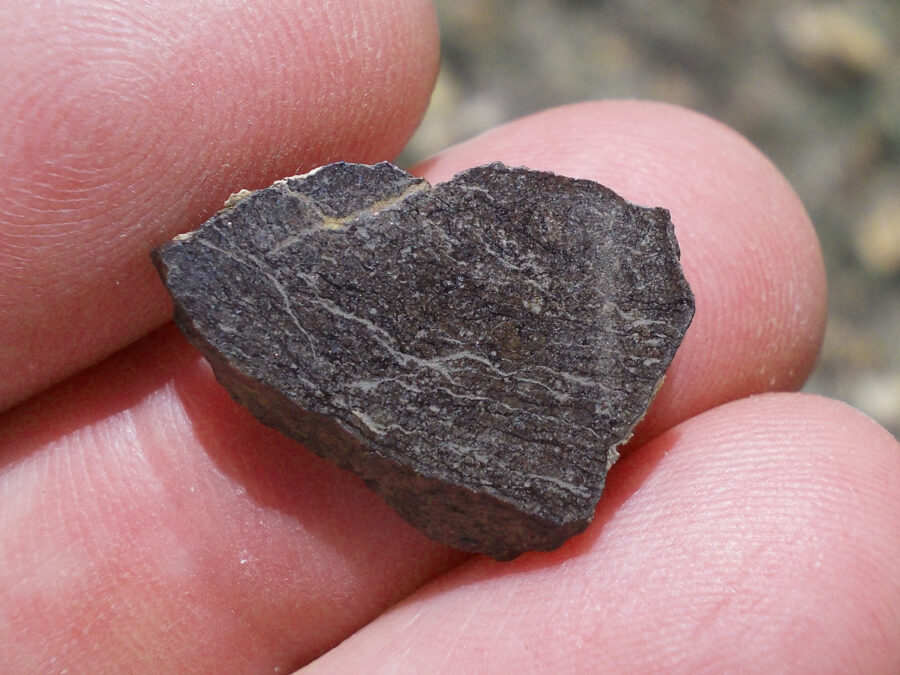
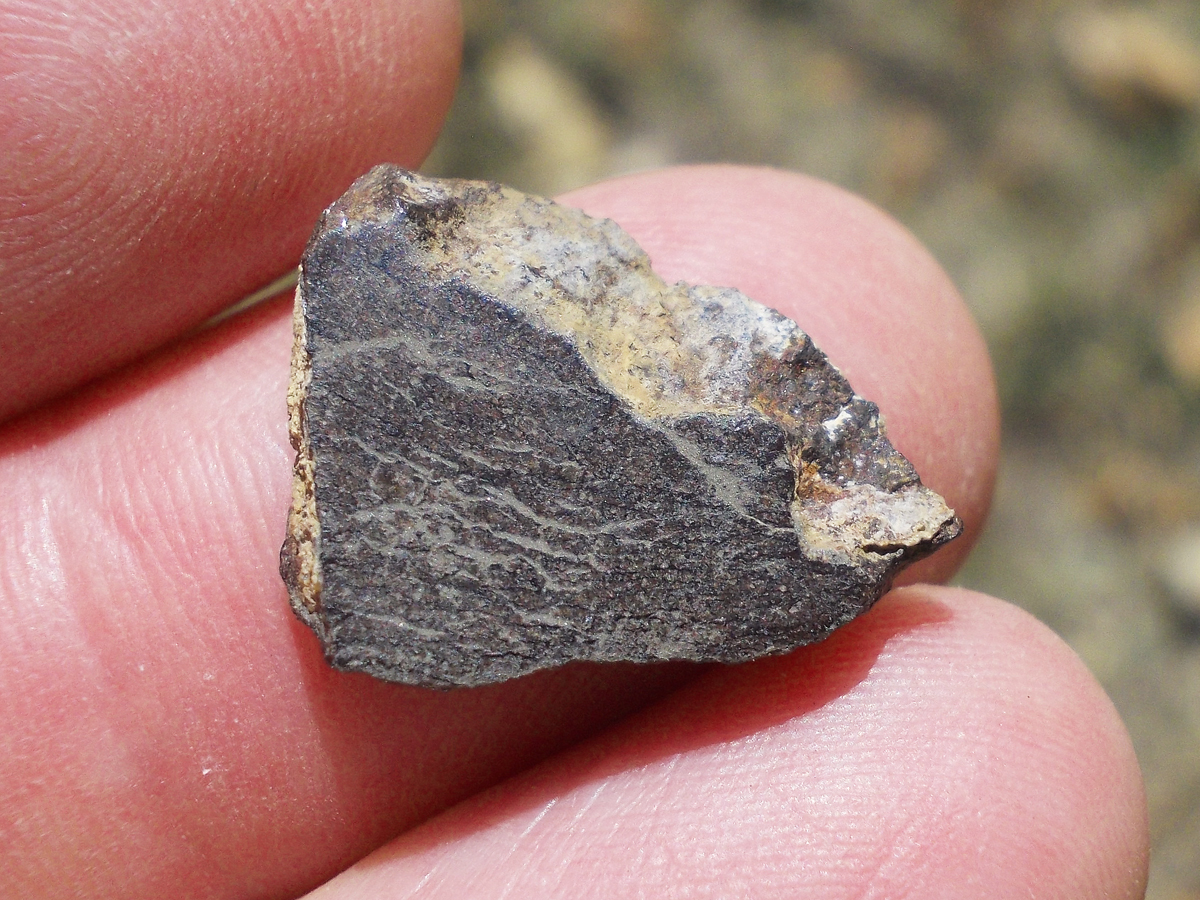
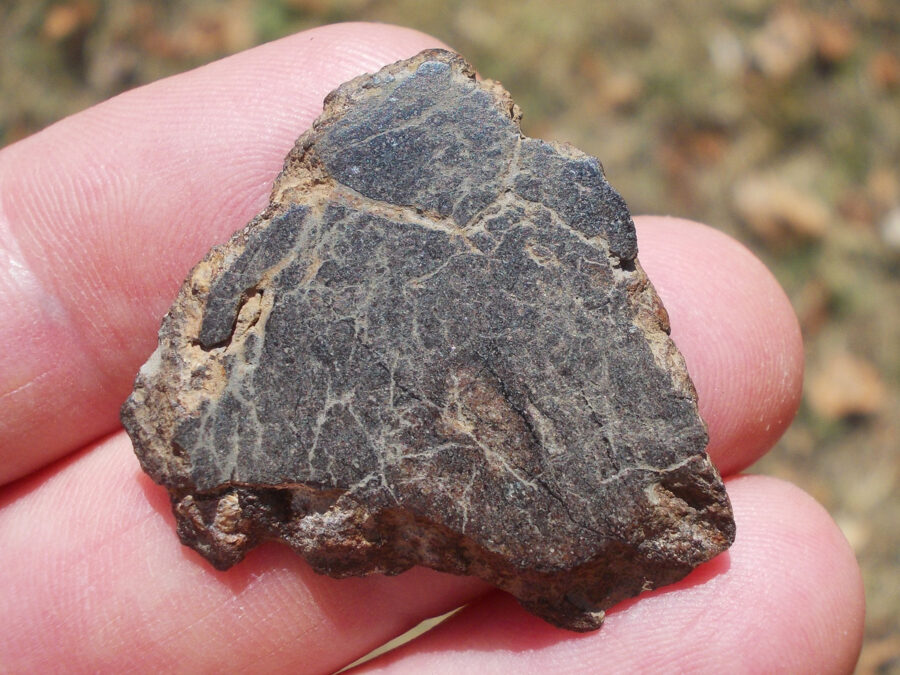
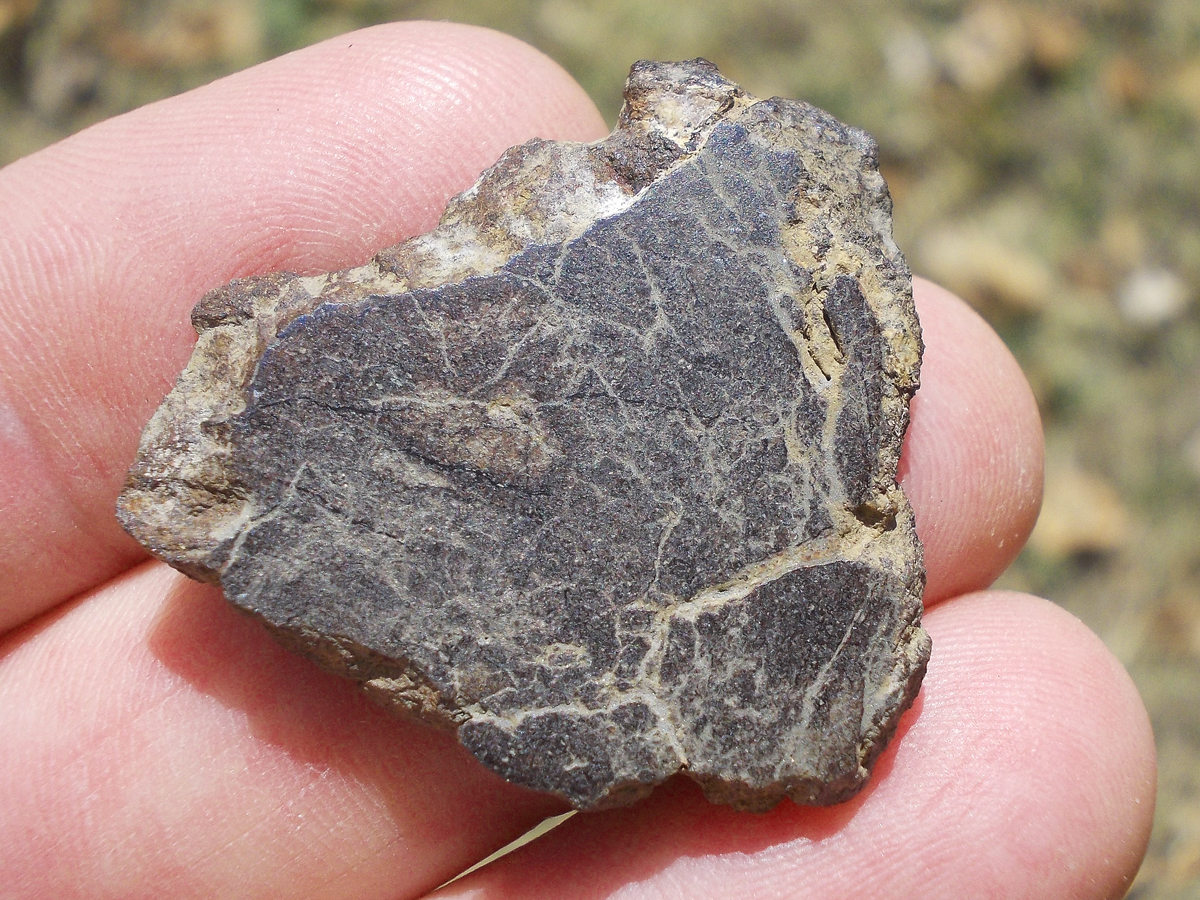
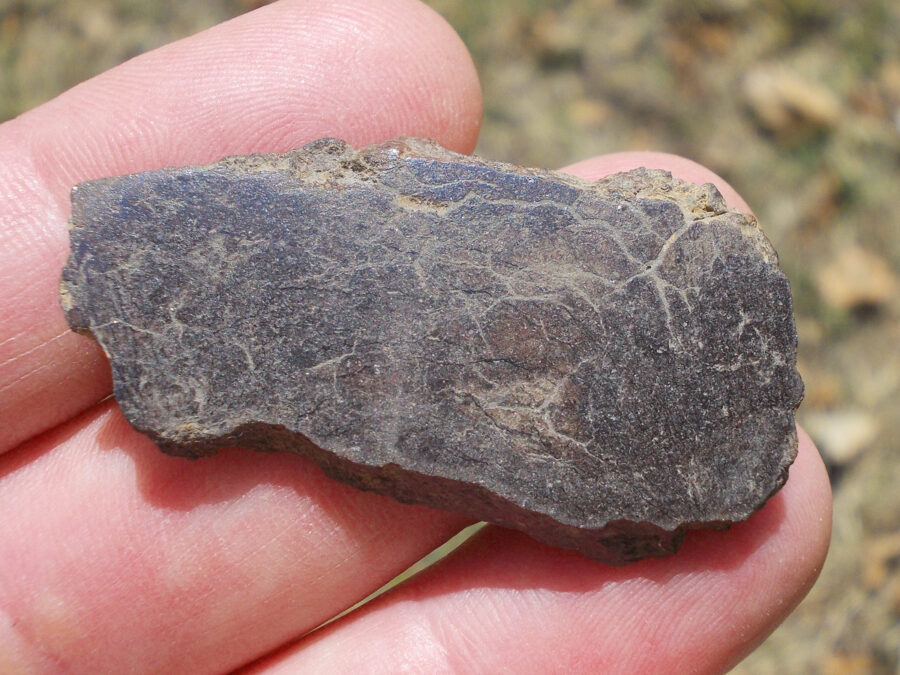
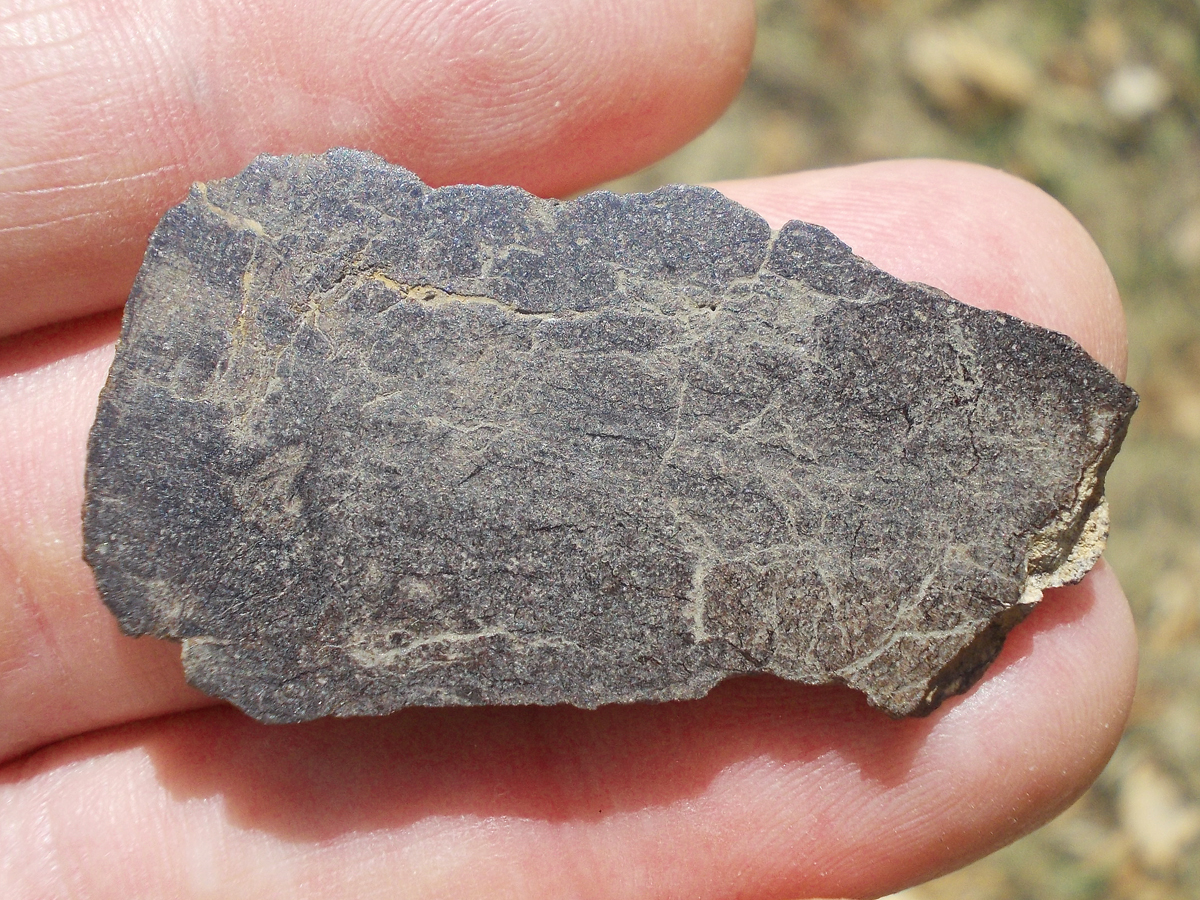
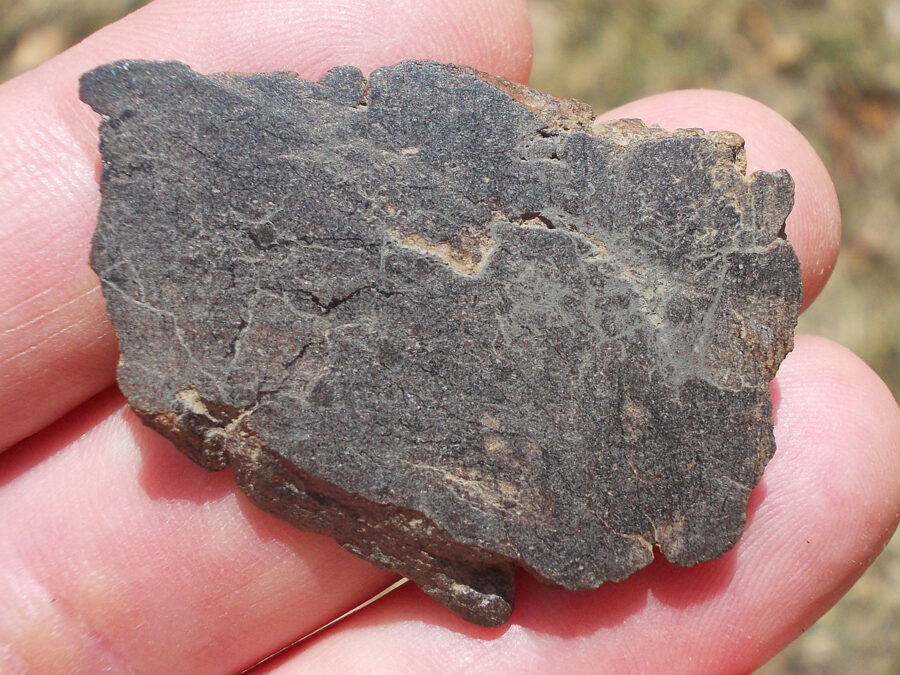
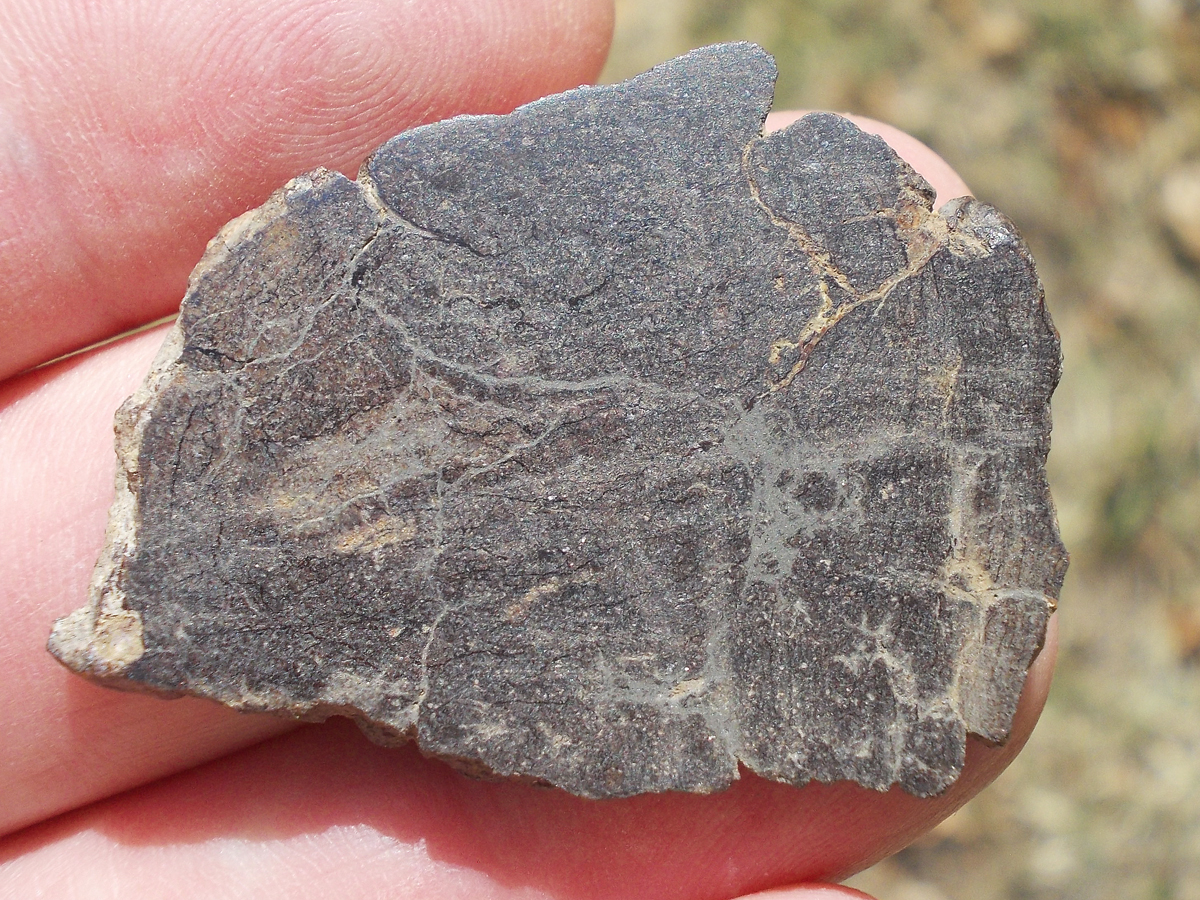
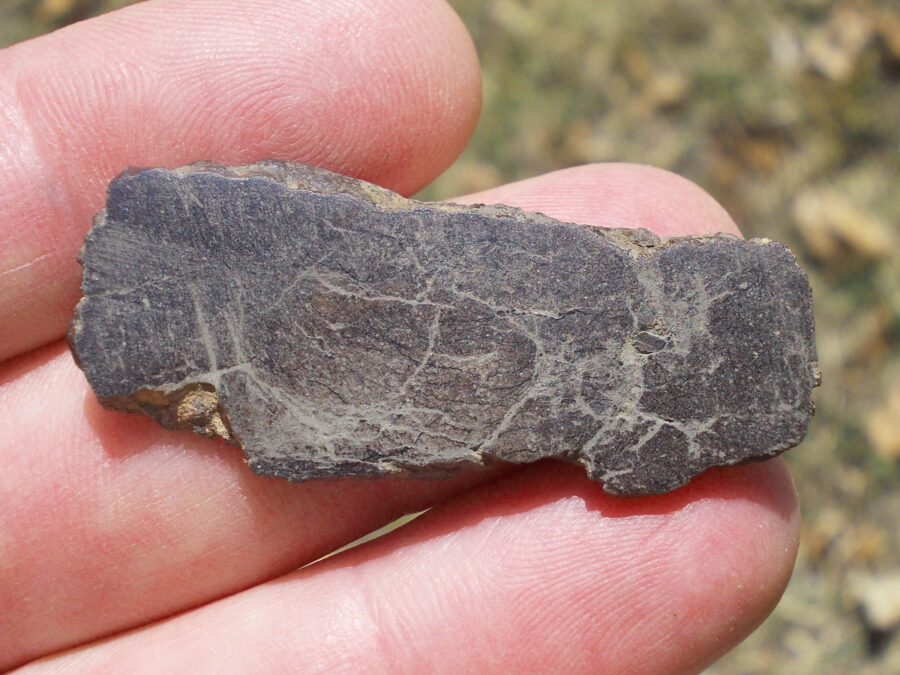
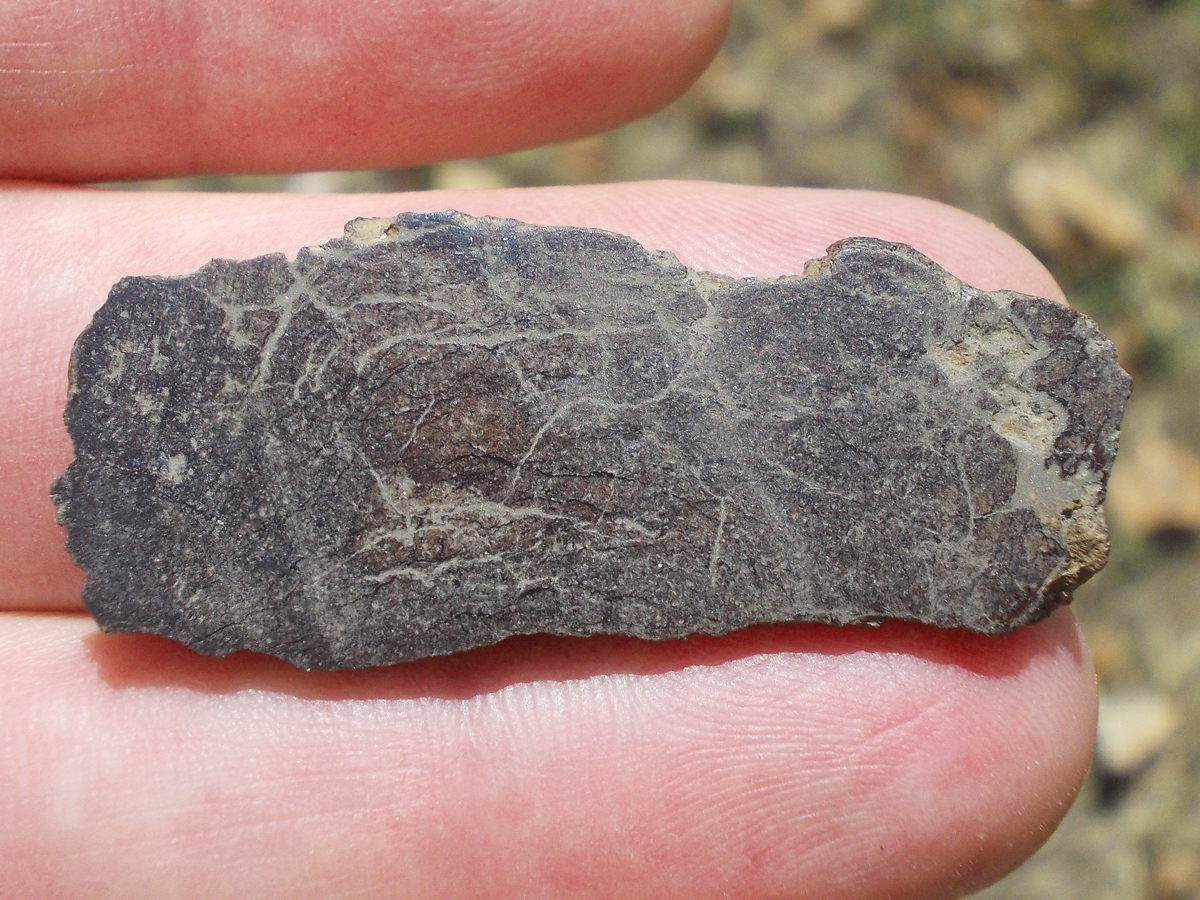
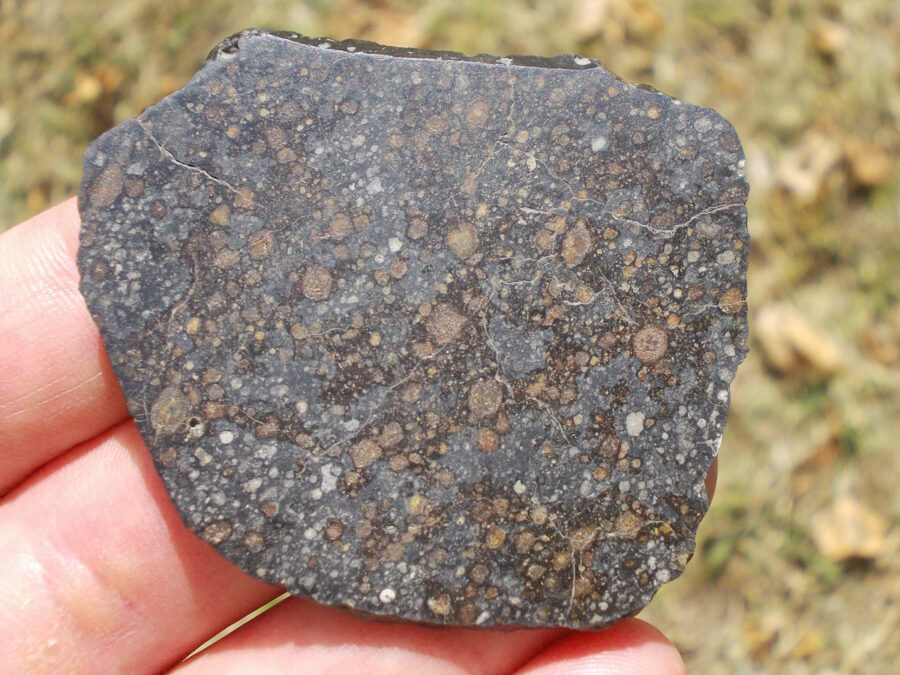
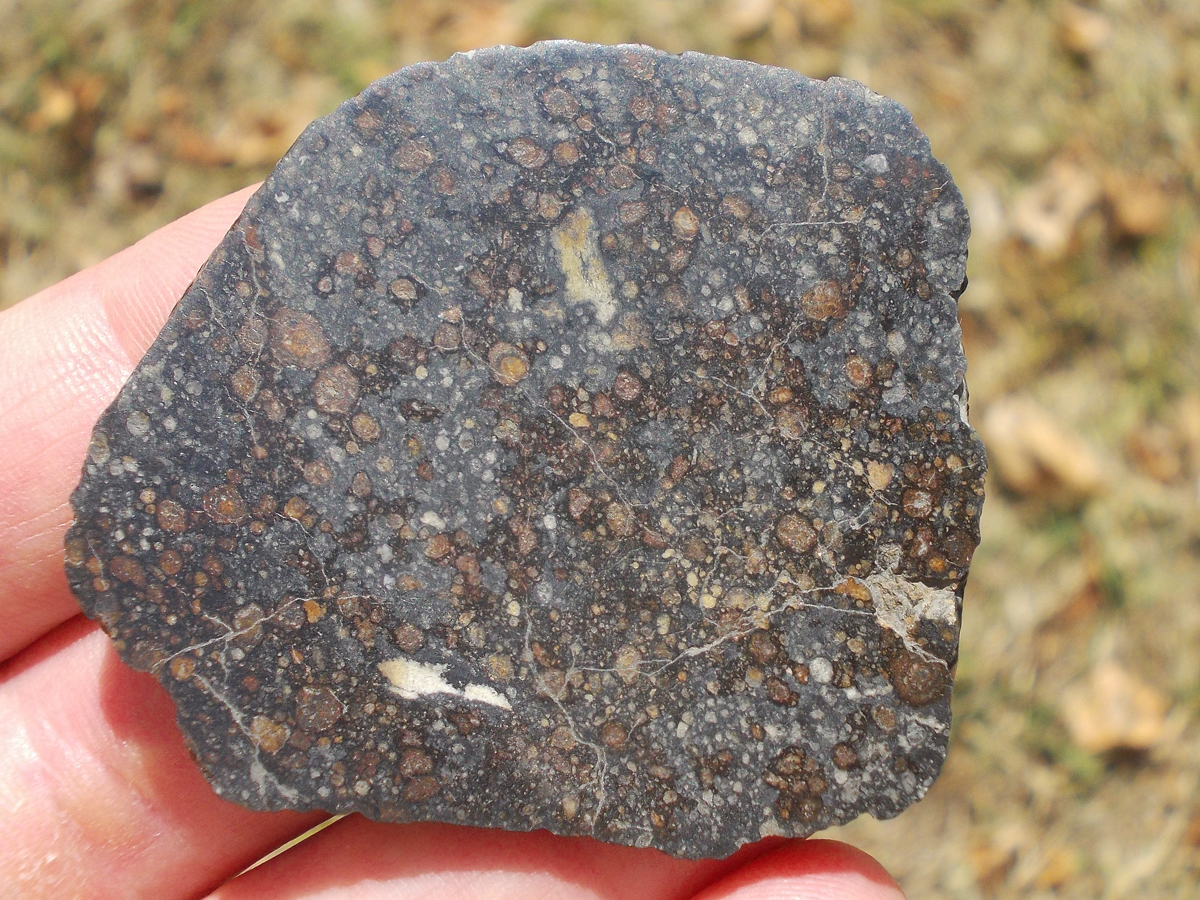
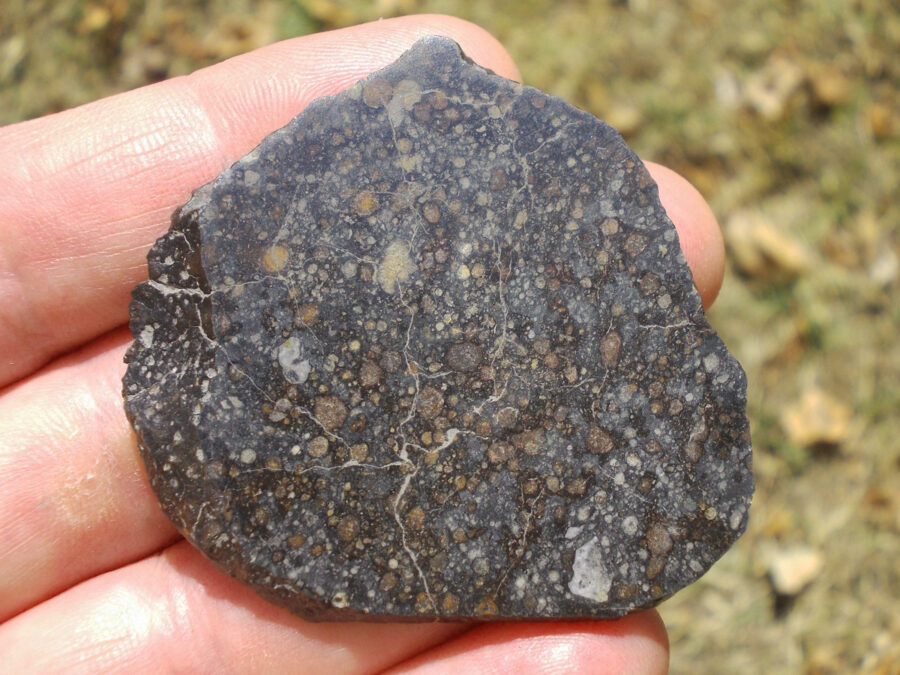
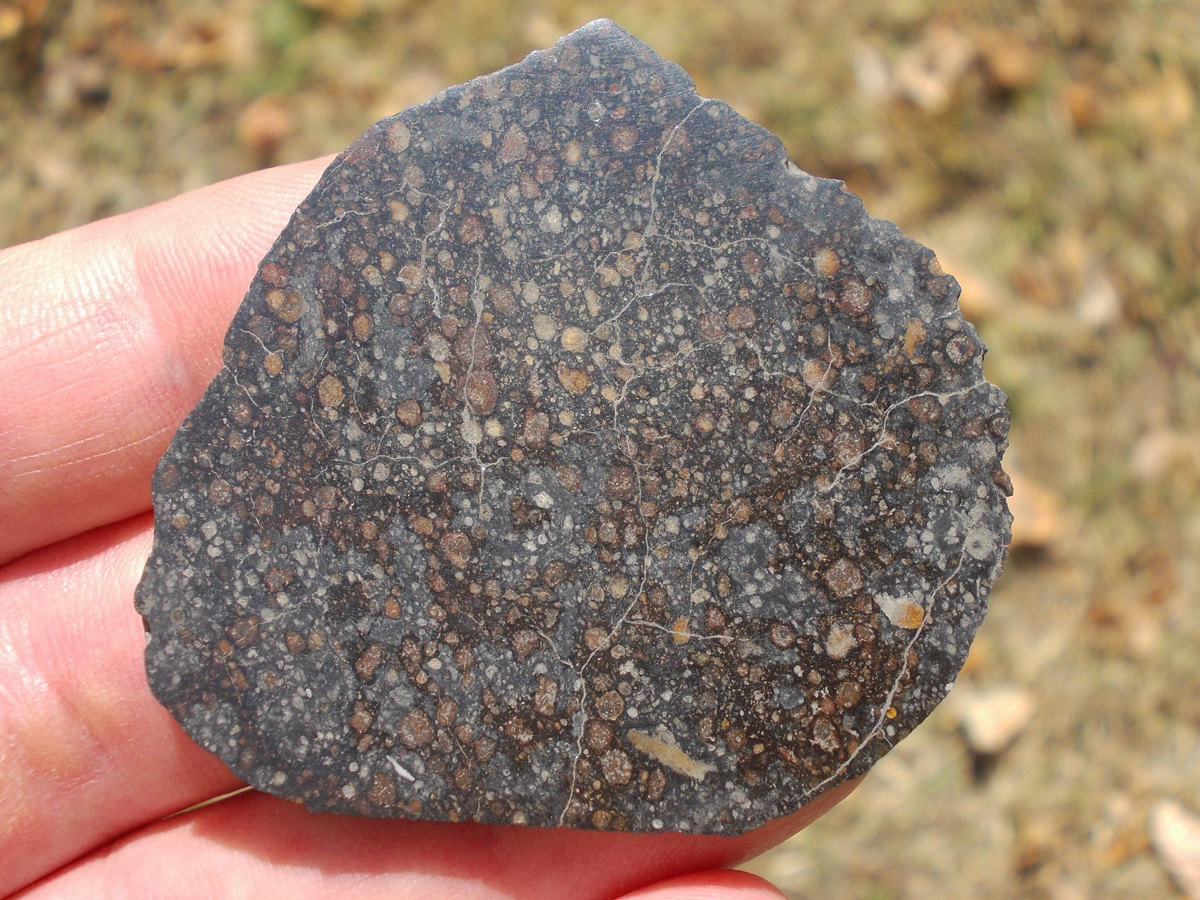
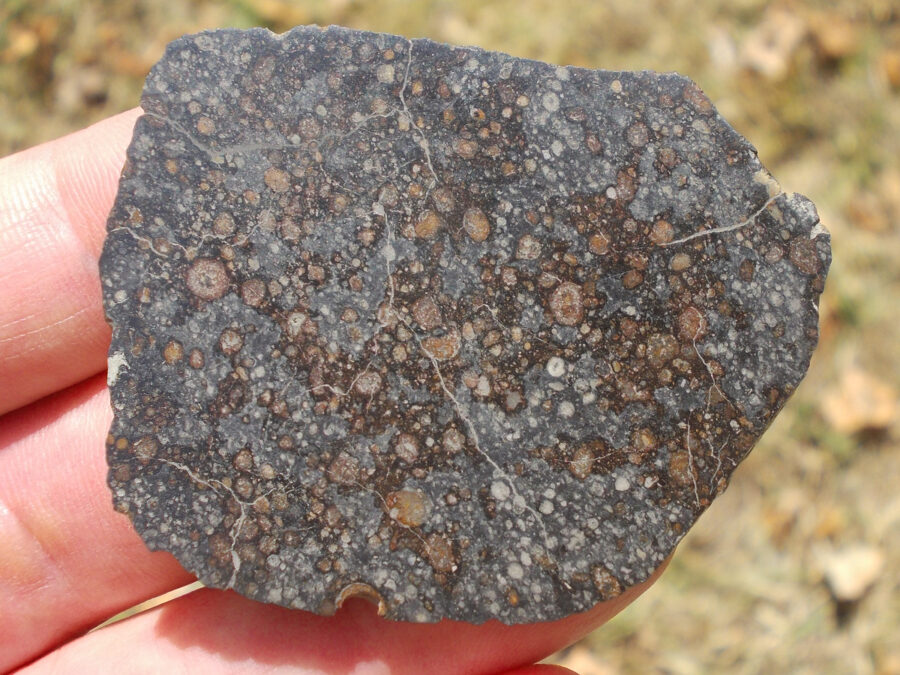
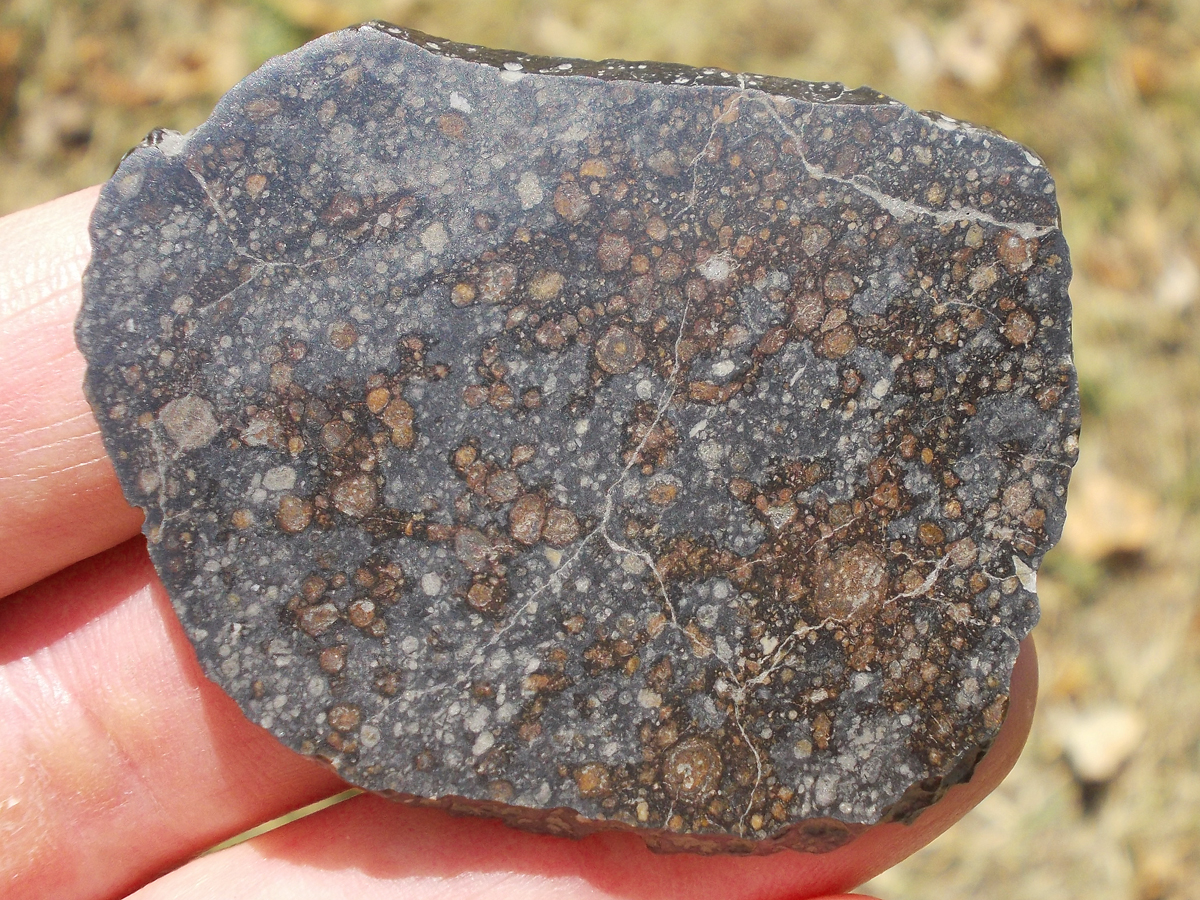
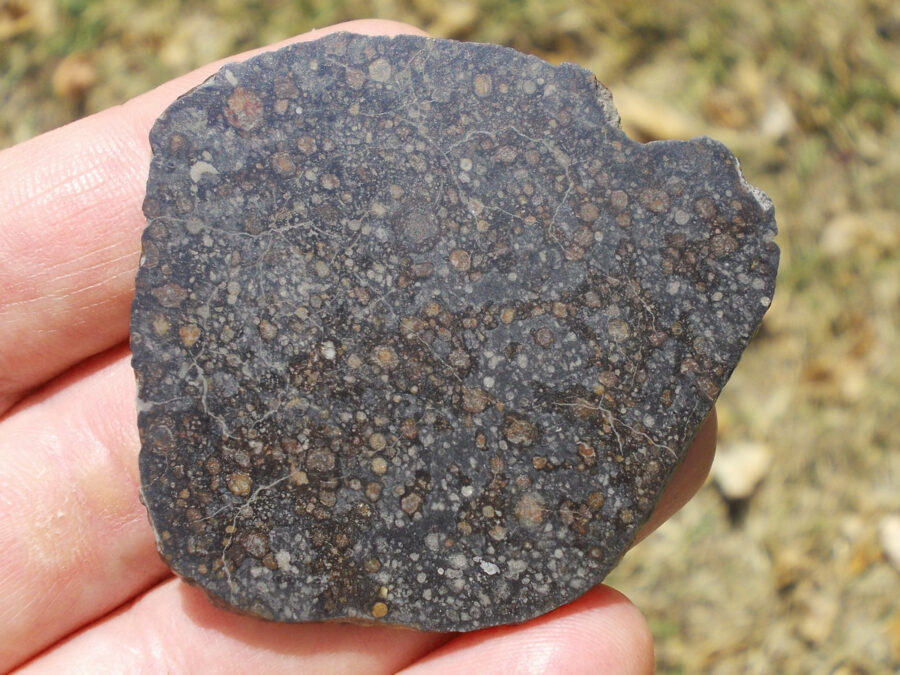
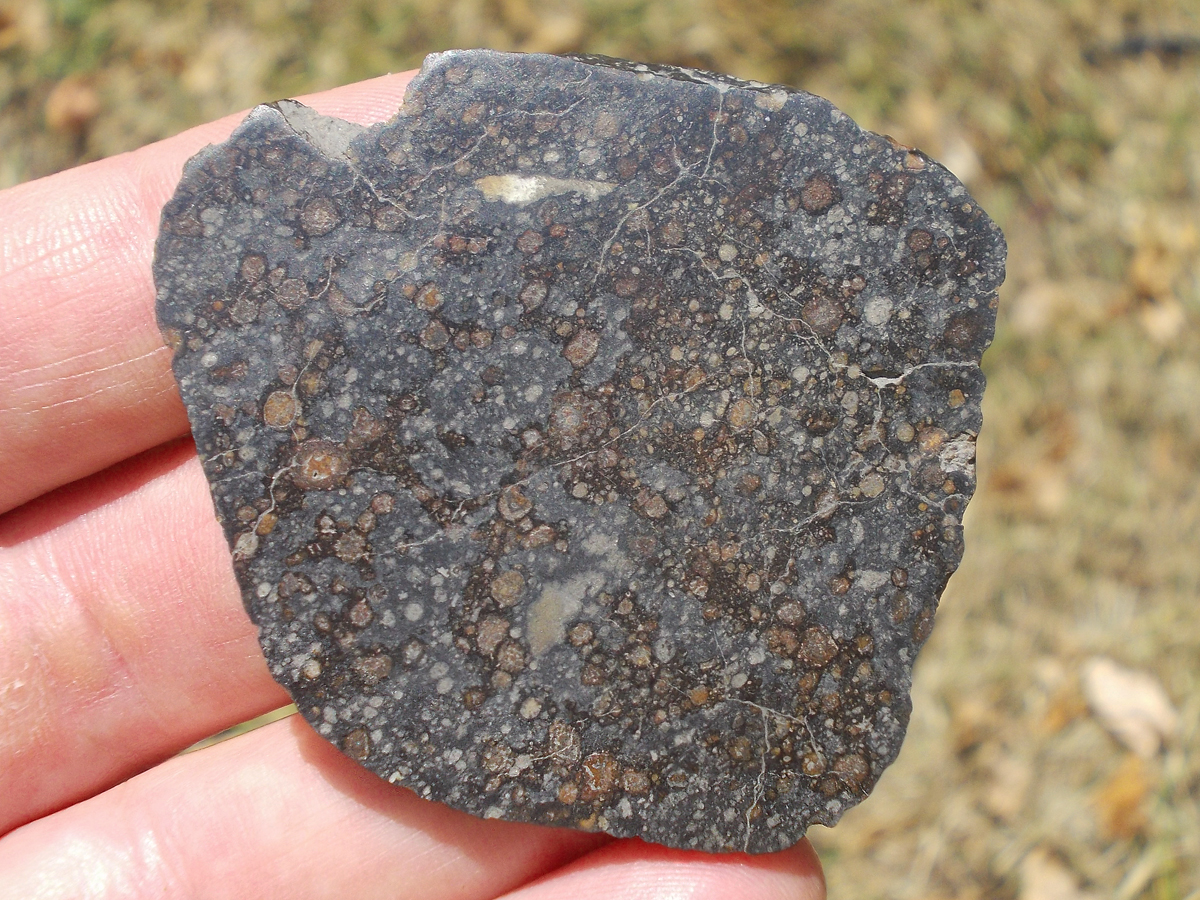
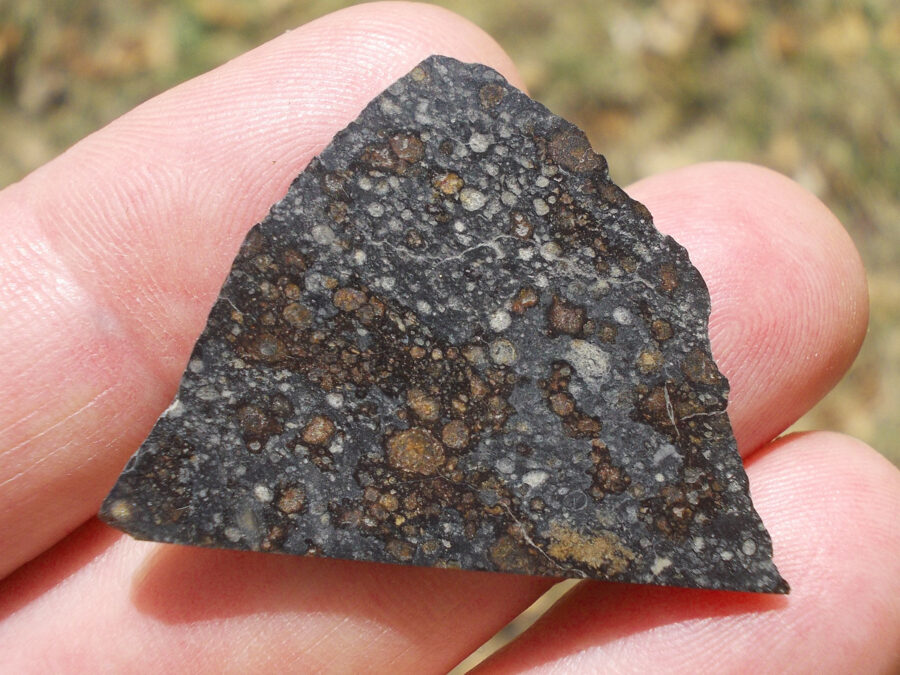
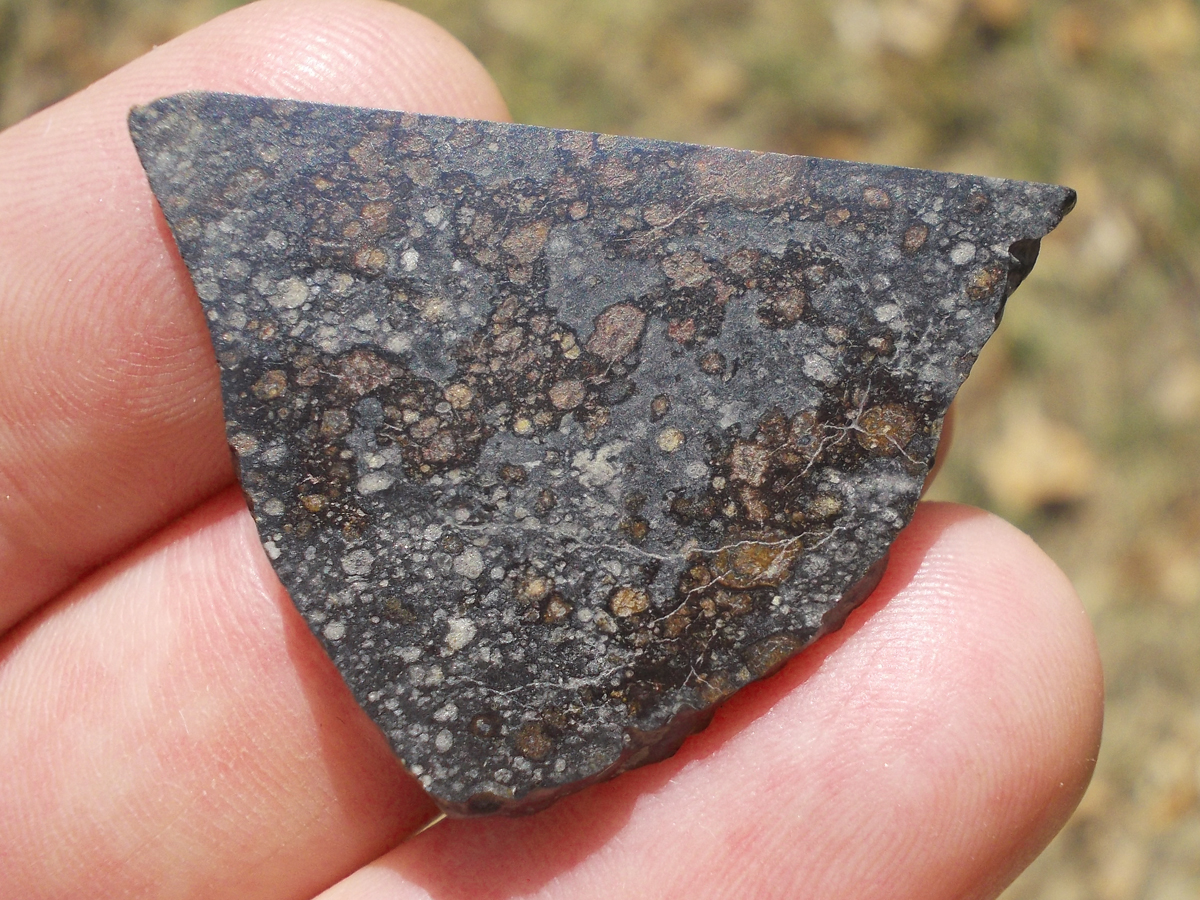
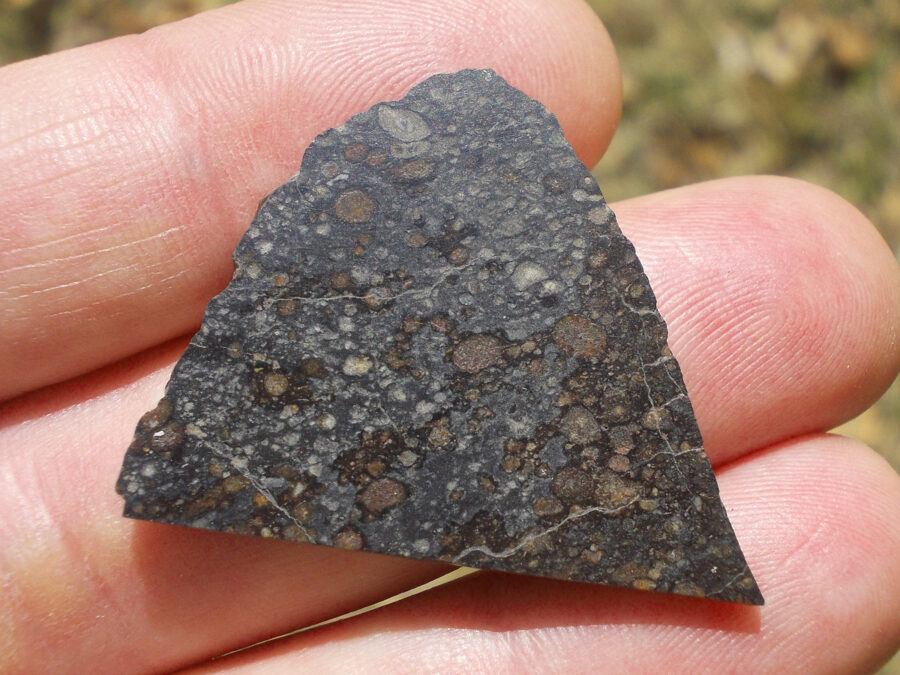
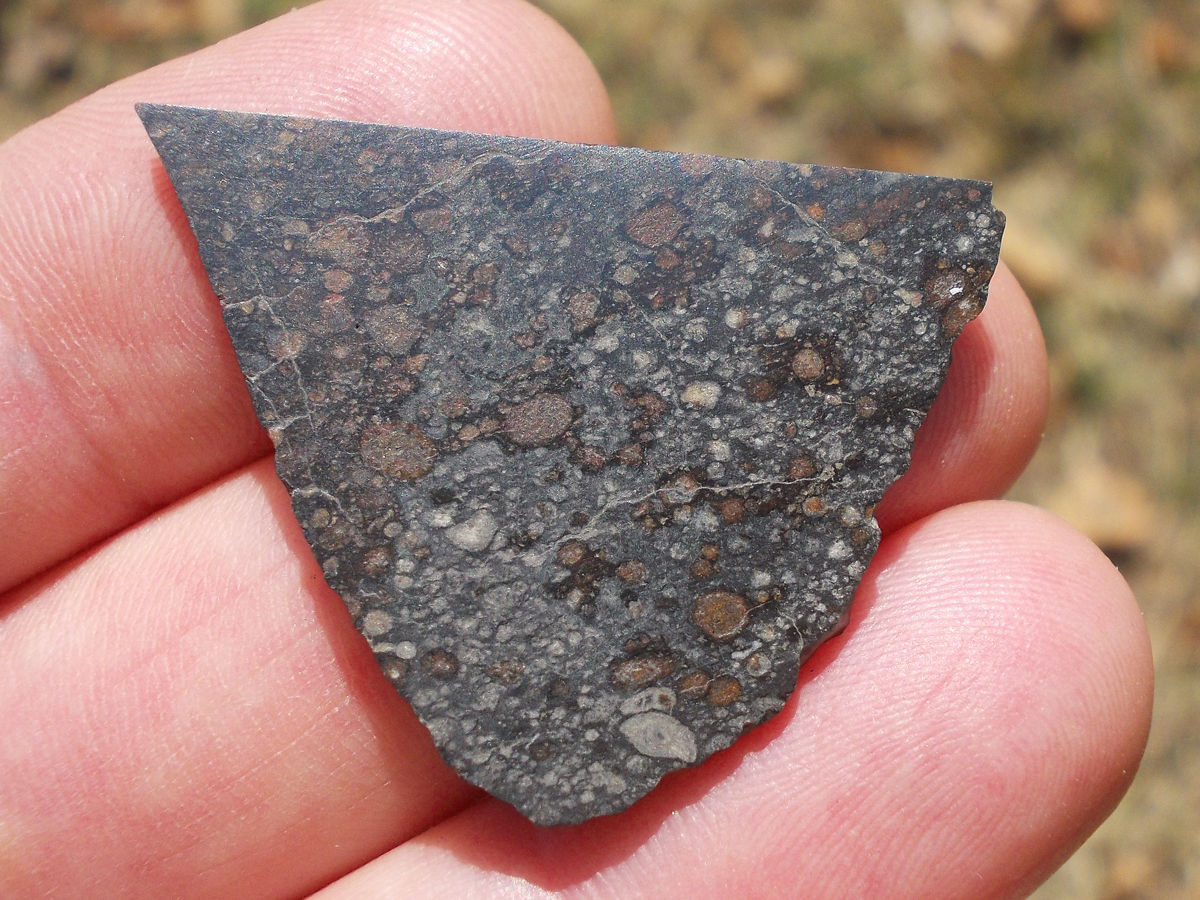
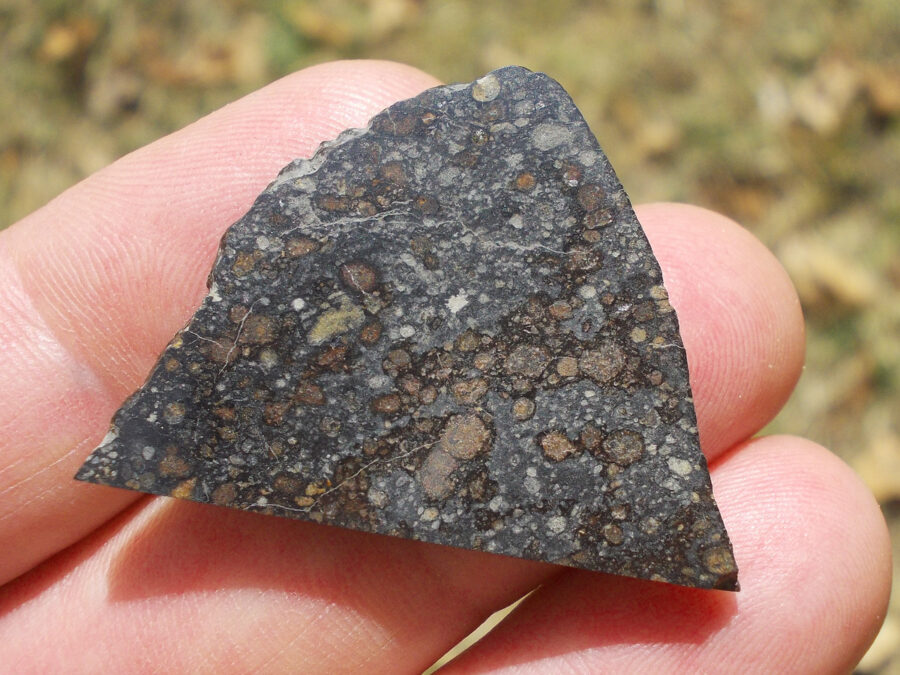
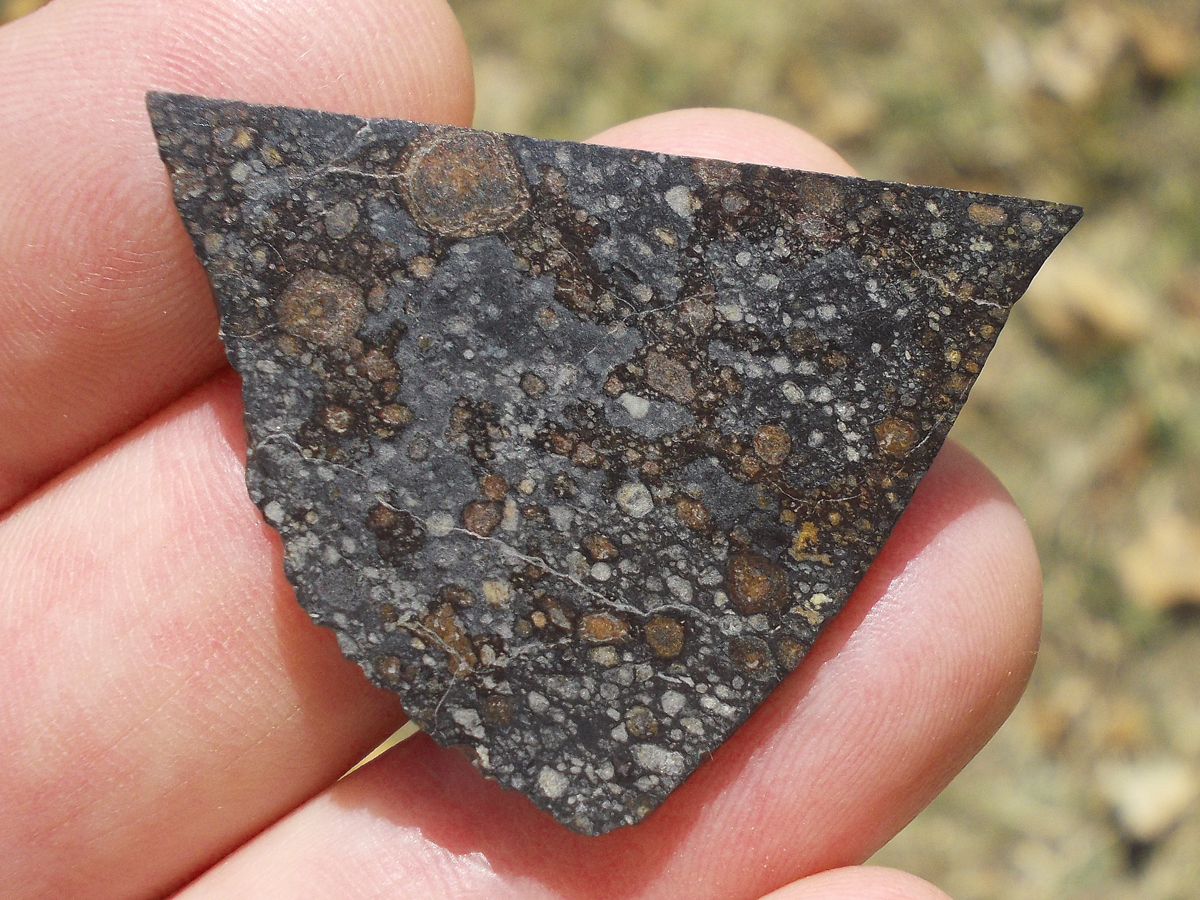
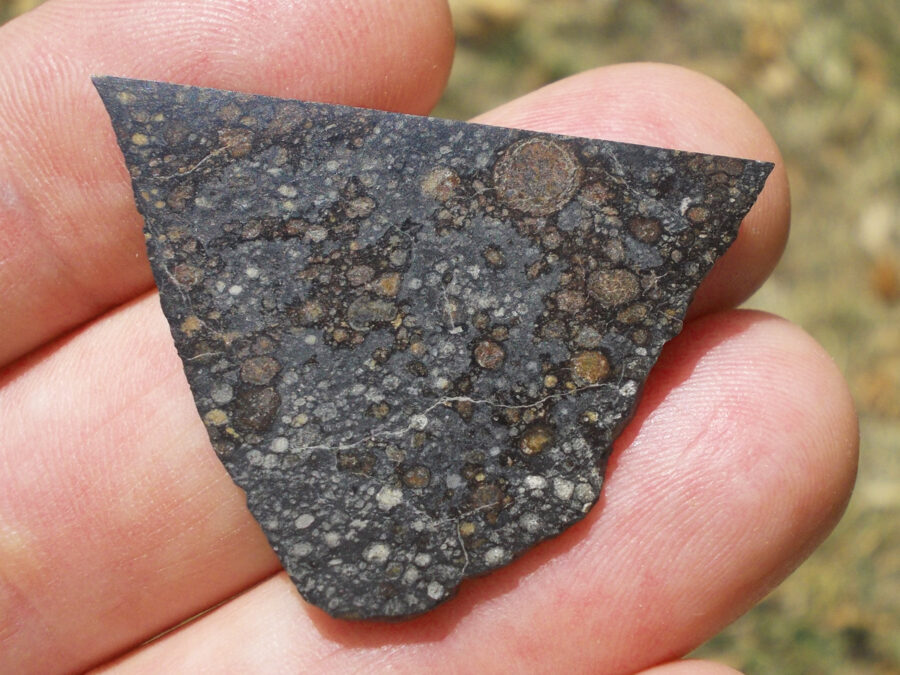
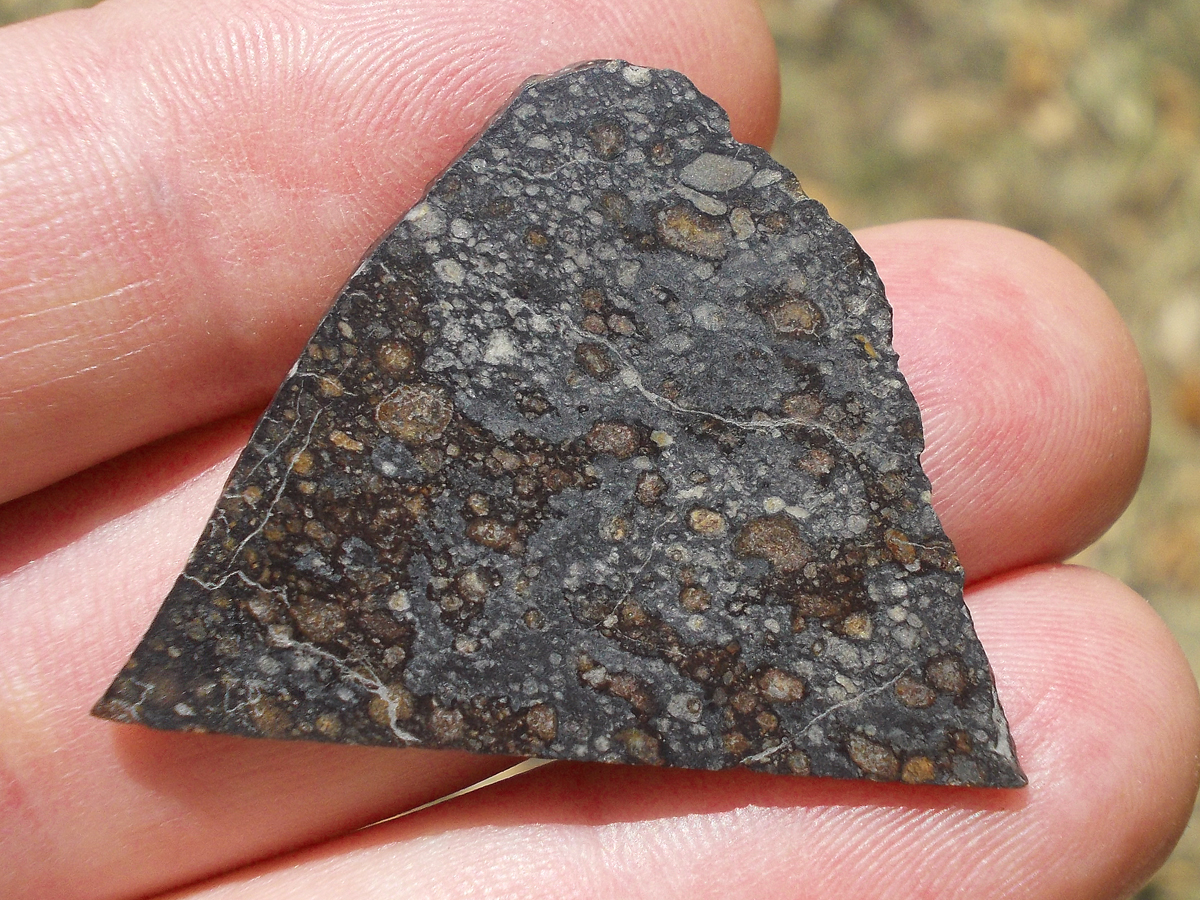
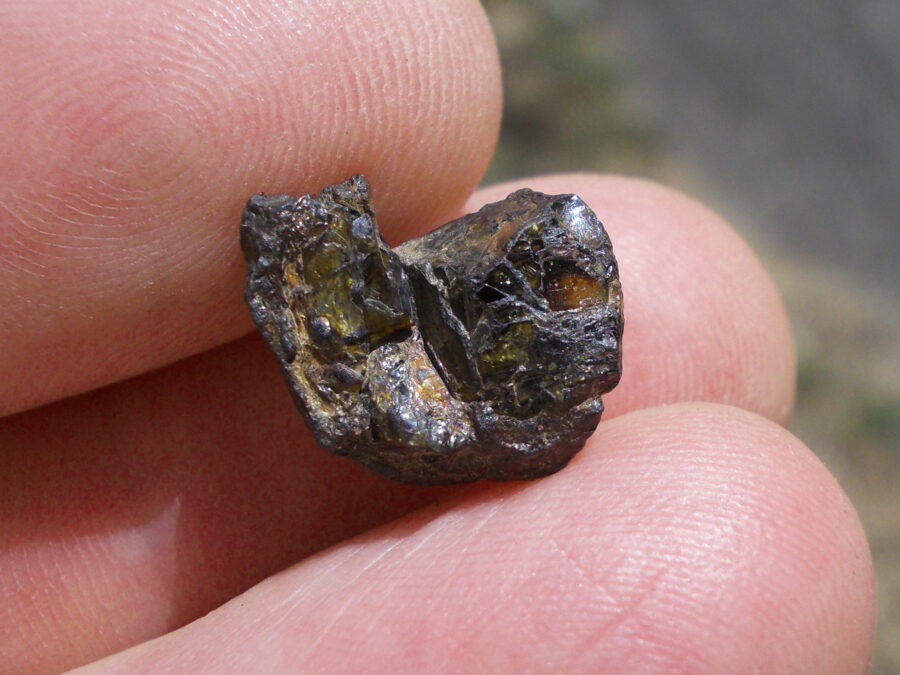
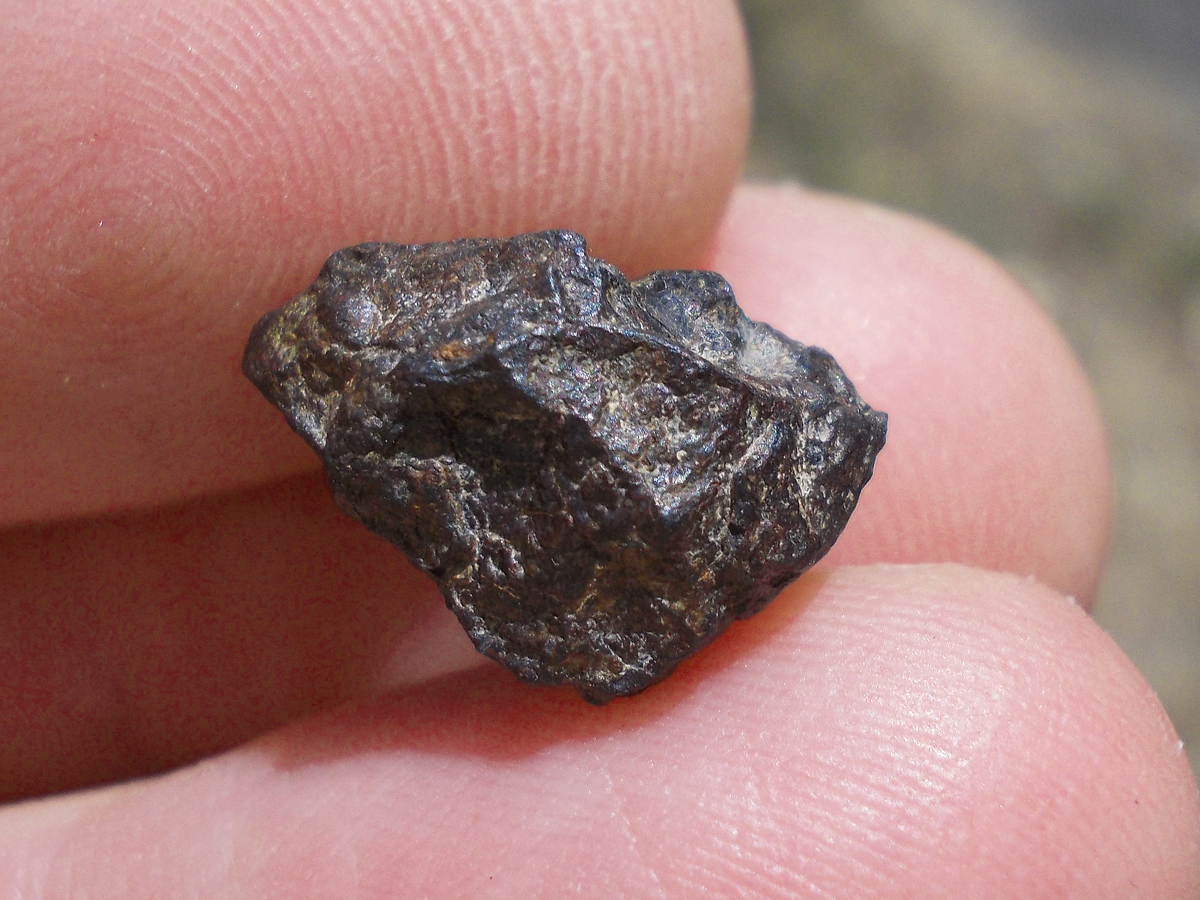
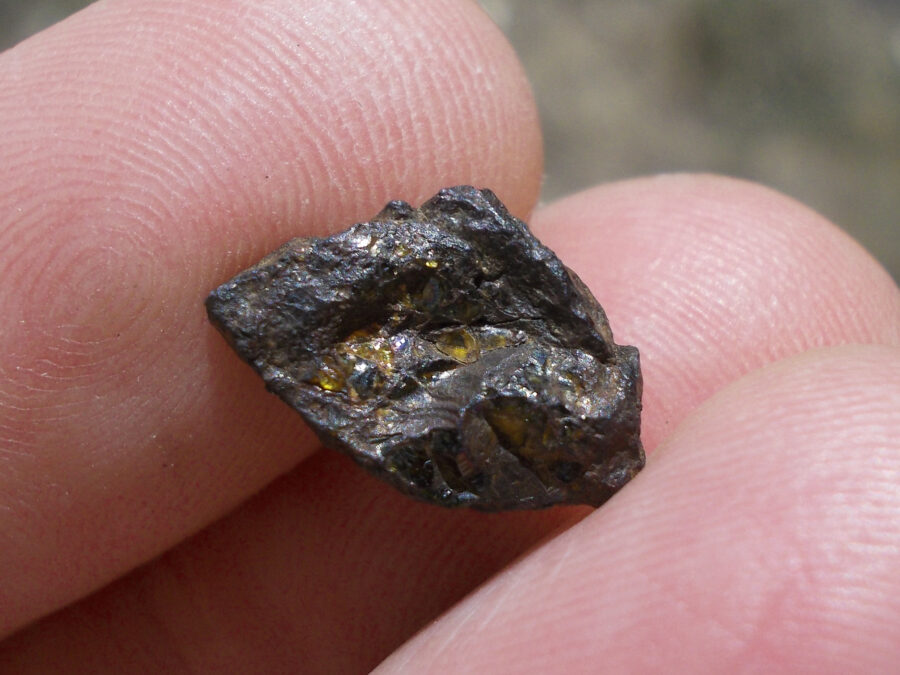
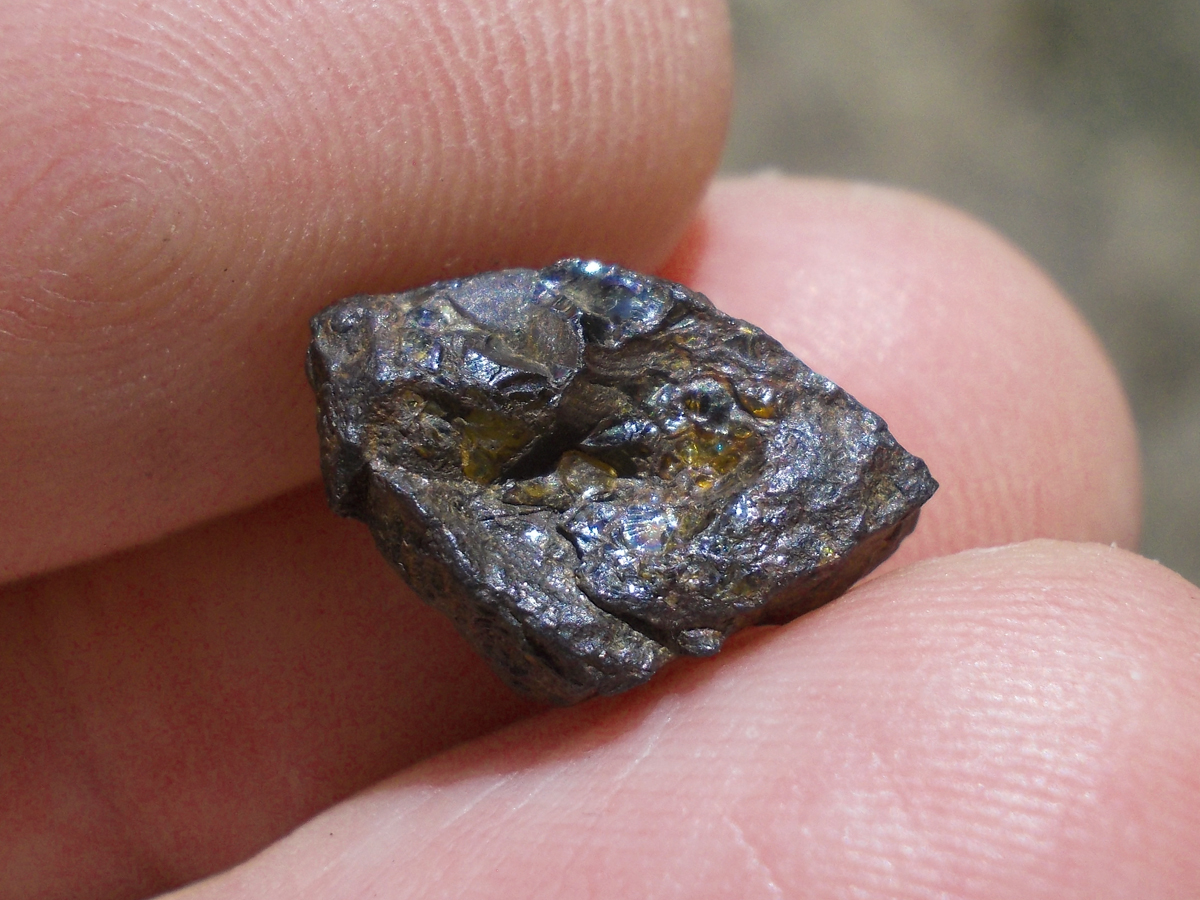
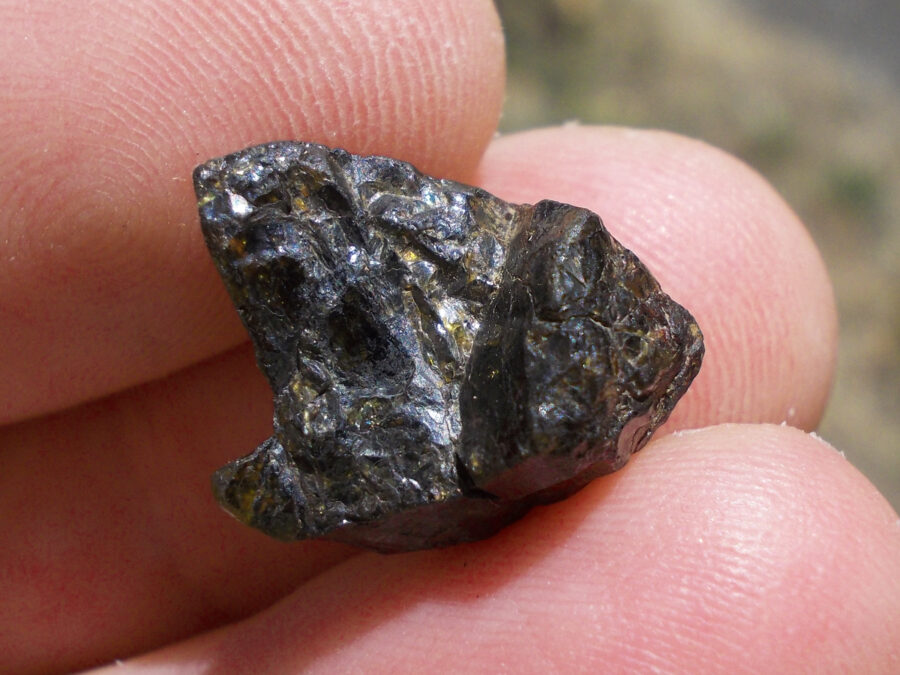
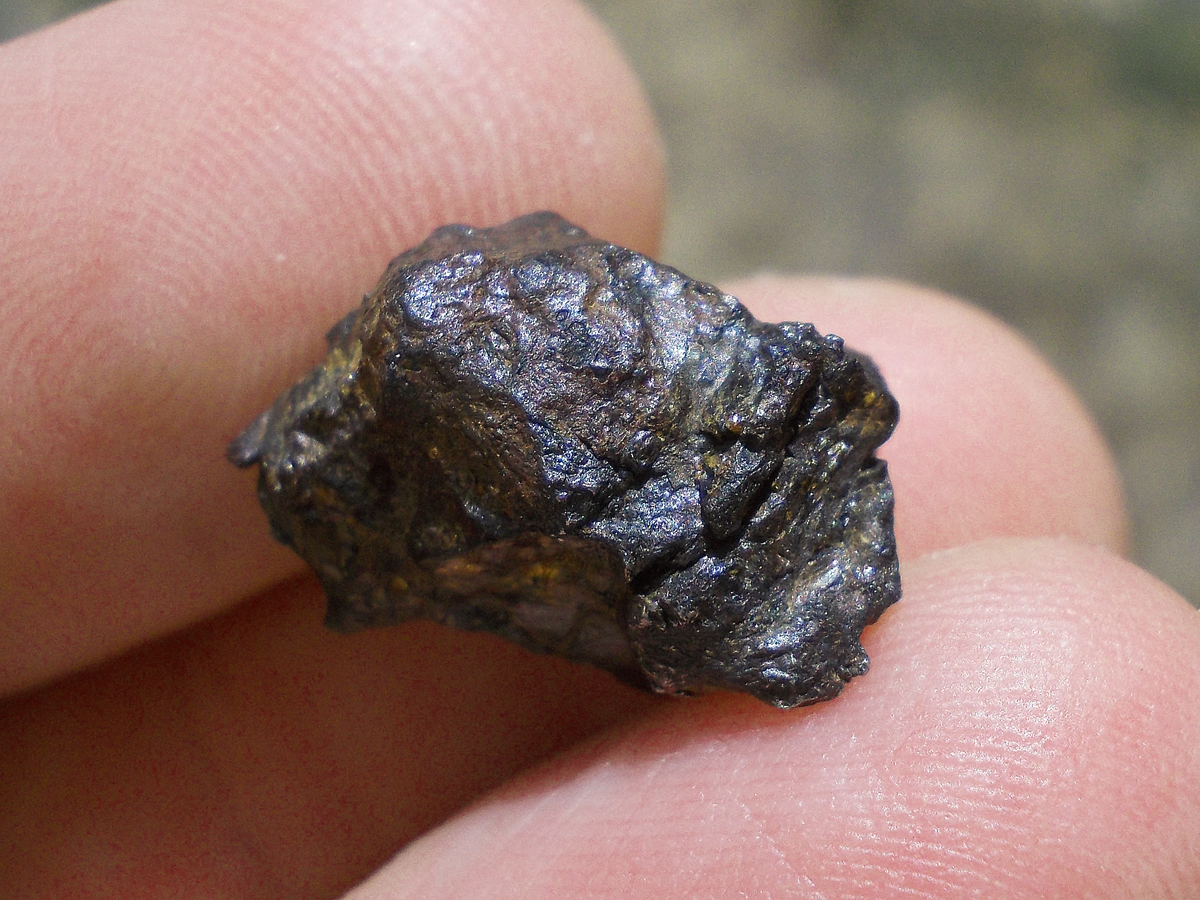
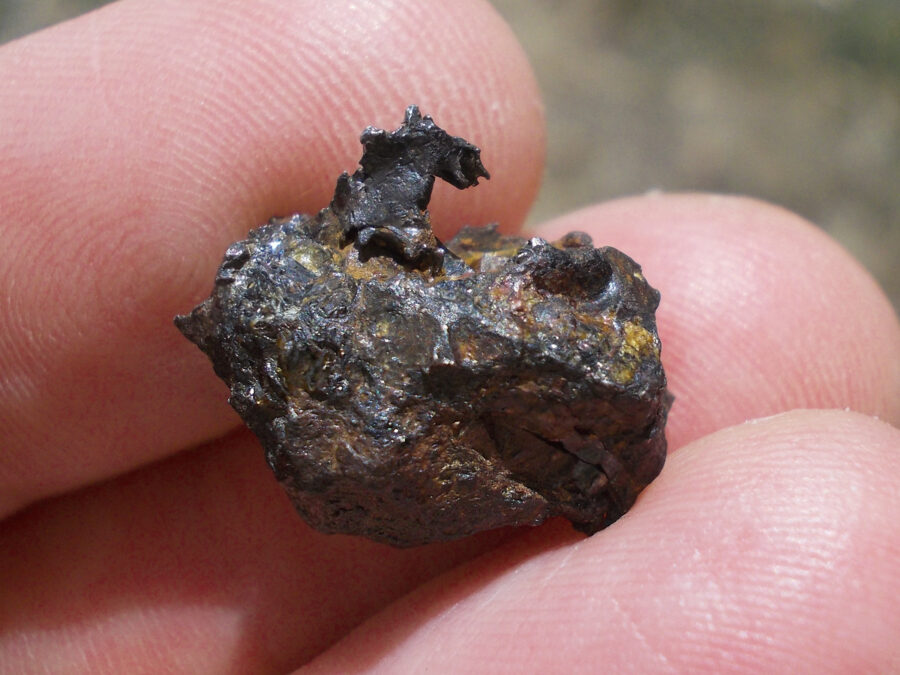
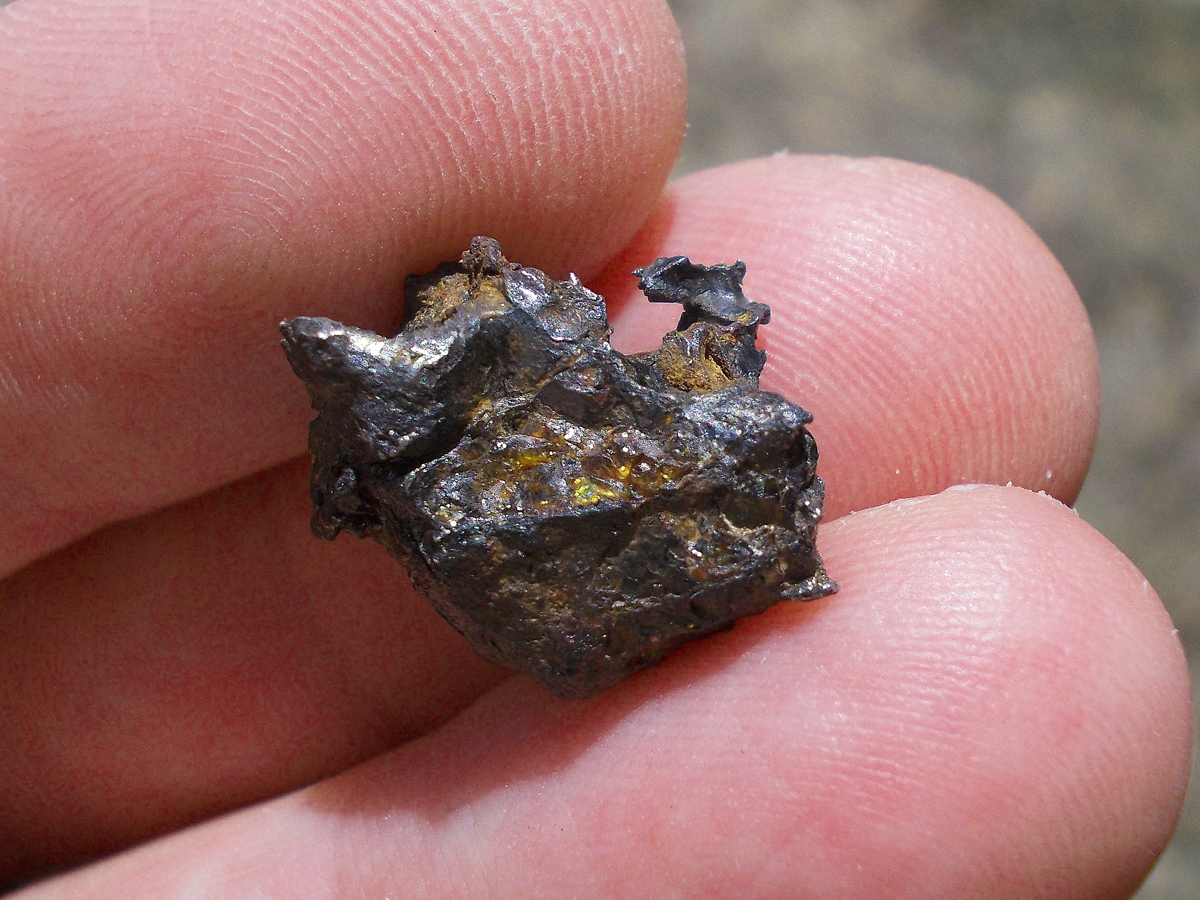
TARDA est une météorite tombée au Maroc le 25 août 2020.
Cette météorite a été classifiée C2 non groupée, un type rare de carbonée très primitive.
Tagish lake est une météorite du même type et se vend à plus de 1000 euros le gramme.
Cette météorite est composée de beaucoup de tout petits fragments, les belles pièces avec croûtes sont rares.
Des analyses isotopiques montrent que des pièces ont des valeurs proches des chondrites CI, et d’autres pièces des valeurs de type Yamato (CY).
Une météorite importante au niveau scientifique dans les années à venir.
Classification : (C. Agee, UNM; K. Ziegler, UNM; A. Irving, UWS; L. Garvie, ASU; D. Sheikh, FSU; P. Carpenter, WUSL; H. Chennaoui Aoudjehane, FSAC; M. Zolensky, JSC; P. Schmitt-Kopplin, HZM) Carbonaceous chondrite (C2-ungrouped). The bulk mineralogy is consistent with a petrologic grade 2, based on the predominance of smectite and serpentine together with the presence of anhydrous mafic silicates, AOA, and chondrules. The oxygen isotopes give a bimodal distribution of the δ18O-values, with one group having values somewhat like those of the CI chondrites, and the other group like values for the Yamato-type (CY) carbonaceous chondrites (King et al., 2019). However, Δ17O values are lower than those for CI and CY chondrites, and plot below the TFL. These isotopic values do not overlap with those of any established carbonaceous chondrite group, hence the ungrouped designation.
Specimens : 18.4 g including one polished thin section and one polished thick section at UWB; 21g and one polished thin section at UNM; 7 g provided by A. Aaronson and 6 g provided by J. Redelsperger at FSAC; 20 g at the Ministry of Energy, Mines and Environment, Rabat, Morocco provided by A. Aaronson; total 628 g with A. Aaronson (including 99 g, 82.4 g and 52.6 g stones); 540 g with M. Farmer and A. Karl, 260 g with J. Poblador; 480 g with D. Dickens; 145 g with M. Oulkouch; 146 g with J. Redelsperger; 31 g with B. Hoefnagels.
NWA 15169 est une météorite lunaire découverte en 2021 au Maroc près de Dakhla dans la zone de Wad Oum Sfia par Omar Ben Chaoud and Mouloud Oudinat.
NWA 15169 est une rare météorite lunaire (anorthosite).
C’est une très belle météorite lunaire très colorée proposée à un très bon prix.
Il y a une quinzaine d’années les météorites lunaires se vendaient presque 1000 euros le gramme !
Writeup from MB 112:
Northwest Africa 15169 (NWA 15169)
Morocco
Purchased: 2021
Classification: Lunar meteorite (anorth)
History: Found by Omar Ben Chaoud and Mouloud Oudinat in the Dakhla, Wad Oum Sfia area. Later bought by Jean Redelsperger from Mohamed Elguirah in 2021.
Physical characteristics: Several stones: a complete 50 g crusted stone, and several gray fragments without fusion crust, the largest one being 52 g.
Petrography: (J. Gattacceca, B. Devouard, CEREGE) Brecciated igneous rock composed primarily of anorthitic plagioclase, and mm-sized poikilitic microgabbroic clasts with plagioclase chadacrysts set in olivine and pyroxene. Accessory minerals: metal, ulvöspinel, chromite. Barite, from terrestrial weathering, is present as veins.
Classification: Lunar (anorthosite). Contains microgabbroic clasts. Olivine, pigeonite and plagioclase are within the ferroan anorthositic suite (FAS) field defined by Warren (1993). Olivine has been altered on Earth, as indicated by the low analytical totals.
Specimens: Type specimen at CEREGE. Main mass with Jean Redelsperger.
NWA 15169 est une météorite lunaire découverte en 2021 au Maroc près de Dakhla dans la zone de Wad Oum Sfia par Omar Ben Chaoud and Mouloud Oudinat.
NWA 15169 est une rare météorite lunaire (anorthosite).
C’est une très belle météorite lunaire très colorée proposée à un très bon prix.
Il y a une quinzaine d’années les météorites lunaires se vendaient presque 1000 euros le gramme !
Writeup from MB 112:
Northwest Africa 15169 (NWA 15169)
Morocco
Purchased: 2021
Classification: Lunar meteorite (anorth)
History: Found by Omar Ben Chaoud and Mouloud Oudinat in the Dakhla, Wad Oum Sfia area. Later bought by Jean Redelsperger from Mohamed Elguirah in 2021.
Physical characteristics: Several stones: a complete 50 g crusted stone, and several gray fragments without fusion crust, the largest one being 52 g.
Petrography: (J. Gattacceca, B. Devouard, CEREGE) Brecciated igneous rock composed primarily of anorthitic plagioclase, and mm-sized poikilitic microgabbroic clasts with plagioclase chadacrysts set in olivine and pyroxene. Accessory minerals: metal, ulvöspinel, chromite. Barite, from terrestrial weathering, is present as veins.
Classification: Lunar (anorthosite). Contains microgabbroic clasts. Olivine, pigeonite and plagioclase are within the ferroan anorthositic suite (FAS) field defined by Warren (1993). Olivine has been altered on Earth, as indicated by the low analytical totals.
Specimens: Type specimen at CEREGE. Main mass with Jean Redelsperger.
NWA 15169 est une météorite lunaire découverte en 2021 au Maroc près de Dakhla dans la zone de Wad Oum Sfia par Omar Ben Chaoud and Mouloud Oudinat.
NWA 15169 est une rare météorite lunaire (anorthosite).
C’est une très belle météorite lunaire très colorée proposée à un très bon prix.
Il y a une quinzaine d’années les météorites lunaires se vendaient presque 1000 euros le gramme !
Writeup from MB 112:
Northwest Africa 15169 (NWA 15169)
Morocco
Purchased: 2021
Classification: Lunar meteorite (anorth)
History: Found by Omar Ben Chaoud and Mouloud Oudinat in the Dakhla, Wad Oum Sfia area. Later bought by Jean Redelsperger from Mohamed Elguirah in 2021.
Physical characteristics: Several stones: a complete 50 g crusted stone, and several gray fragments without fusion crust, the largest one being 52 g.
Petrography: (J. Gattacceca, B. Devouard, CEREGE) Brecciated igneous rock composed primarily of anorthitic plagioclase, and mm-sized poikilitic microgabbroic clasts with plagioclase chadacrysts set in olivine and pyroxene. Accessory minerals: metal, ulvöspinel, chromite. Barite, from terrestrial weathering, is present as veins.
Classification: Lunar (anorthosite). Contains microgabbroic clasts. Olivine, pigeonite and plagioclase are within the ferroan anorthositic suite (FAS) field defined by Warren (1993). Olivine has been altered on Earth, as indicated by the low analytical totals.
Specimens: Type specimen at CEREGE. Main mass with Jean Redelsperger.
NWA 15169 est une météorite lunaire découverte en 2021 au Maroc près de Dakhla dans la zone de Wad Oum Sfia par Omar Ben Chaoud and Mouloud Oudinat.
NWA 15169 est une rare météorite lunaire (anorthosite).
C’est une très belle météorite lunaire très colorée proposée à un très bon prix.
Il y a une quinzaine d’années les météorites lunaires se vendaient presque 1000 euros le gramme !
Writeup from MB 112:
Northwest Africa 15169 (NWA 15169)
Morocco
Purchased: 2021
Classification: Lunar meteorite (anorth)
History: Found by Omar Ben Chaoud and Mouloud Oudinat in the Dakhla, Wad Oum Sfia area. Later bought by Jean Redelsperger from Mohamed Elguirah in 2021.
Physical characteristics: Several stones: a complete 50 g crusted stone, and several gray fragments without fusion crust, the largest one being 52 g.
Petrography: (J. Gattacceca, B. Devouard, CEREGE) Brecciated igneous rock composed primarily of anorthitic plagioclase, and mm-sized poikilitic microgabbroic clasts with plagioclase chadacrysts set in olivine and pyroxene. Accessory minerals: metal, ulvöspinel, chromite. Barite, from terrestrial weathering, is present as veins.
Classification: Lunar (anorthosite). Contains microgabbroic clasts. Olivine, pigeonite and plagioclase are within the ferroan anorthositic suite (FAS) field defined by Warren (1993). Olivine has been altered on Earth, as indicated by the low analytical totals.
Specimens: Type specimen at CEREGE. Main mass with Jean Redelsperger.
NWA 15169 est une météorite lunaire découverte en 2021 au Maroc près de Dakhla dans la zone de Wad Oum Sfia par Omar Ben Chaoud and Mouloud Oudinat.
NWA 15169 est une rare météorite lunaire (anorthosite).
C’est une très belle météorite lunaire très colorée proposée à un très bon prix.
Il y a une quinzaine d’années les météorites lunaires se vendaient presque 1000 euros le gramme !
Writeup from MB 112:
Northwest Africa 15169 (NWA 15169)
Morocco
Purchased: 2021
Classification: Lunar meteorite (anorth)
History: Found by Omar Ben Chaoud and Mouloud Oudinat in the Dakhla, Wad Oum Sfia area. Later bought by Jean Redelsperger from Mohamed Elguirah in 2021.
Physical characteristics: Several stones: a complete 50 g crusted stone, and several gray fragments without fusion crust, the largest one being 52 g.
Petrography: (J. Gattacceca, B. Devouard, CEREGE) Brecciated igneous rock composed primarily of anorthitic plagioclase, and mm-sized poikilitic microgabbroic clasts with plagioclase chadacrysts set in olivine and pyroxene. Accessory minerals: metal, ulvöspinel, chromite. Barite, from terrestrial weathering, is present as veins.
Classification: Lunar (anorthosite). Contains microgabbroic clasts. Olivine, pigeonite and plagioclase are within the ferroan anorthositic suite (FAS) field defined by Warren (1993). Olivine has been altered on Earth, as indicated by the low analytical totals.
Specimens: Type specimen at CEREGE. Main mass with Jean Redelsperger.
NWA 15169 est une météorite lunaire découverte en 2021 au Maroc près de Dakhla dans la zone de Wad Oum Sfia par Omar Ben Chaoud and Mouloud Oudinat.
NWA 15169 est une rare météorite lunaire (anorthosite).
C’est une très belle météorite lunaire très colorée proposée à un très bon prix.
Il y a une quinzaine d’années les météorites lunaires se vendaient presque 1000 euros le gramme !
Writeup from MB 112:
Northwest Africa 15169 (NWA 15169)
Morocco
Purchased: 2021
Classification: Lunar meteorite (anorth)
History: Found by Omar Ben Chaoud and Mouloud Oudinat in the Dakhla, Wad Oum Sfia area. Later bought by Jean Redelsperger from Mohamed Elguirah in 2021.
Physical characteristics: Several stones: a complete 50 g crusted stone, and several gray fragments without fusion crust, the largest one being 52 g.
Petrography: (J. Gattacceca, B. Devouard, CEREGE) Brecciated igneous rock composed primarily of anorthitic plagioclase, and mm-sized poikilitic microgabbroic clasts with plagioclase chadacrysts set in olivine and pyroxene. Accessory minerals: metal, ulvöspinel, chromite. Barite, from terrestrial weathering, is present as veins.
Classification: Lunar (anorthosite). Contains microgabbroic clasts. Olivine, pigeonite and plagioclase are within the ferroan anorthositic suite (FAS) field defined by Warren (1993). Olivine has been altered on Earth, as indicated by the low analytical totals.
Specimens: Type specimen at CEREGE. Main mass with Jean Redelsperger.
NWA 15169 est une météorite lunaire découverte en 2021 au Maroc près de Dakhla dans la zone de Wad Oum Sfia par Omar Ben Chaoud and Mouloud Oudinat.
NWA 15169 est une rare météorite lunaire (anorthosite).
C’est une très belle météorite lunaire très colorée proposée à un très bon prix.
Il y a une quinzaine d’années les météorites lunaires se vendaient presque 1000 euros le gramme !
Writeup from MB 112:
Northwest Africa 15169 (NWA 15169)
Morocco
Purchased: 2021
Classification: Lunar meteorite (anorth)
History: Found by Omar Ben Chaoud and Mouloud Oudinat in the Dakhla, Wad Oum Sfia area. Later bought by Jean Redelsperger from Mohamed Elguirah in 2021.
Physical characteristics: Several stones: a complete 50 g crusted stone, and several gray fragments without fusion crust, the largest one being 52 g.
Petrography: (J. Gattacceca, B. Devouard, CEREGE) Brecciated igneous rock composed primarily of anorthitic plagioclase, and mm-sized poikilitic microgabbroic clasts with plagioclase chadacrysts set in olivine and pyroxene. Accessory minerals: metal, ulvöspinel, chromite. Barite, from terrestrial weathering, is present as veins.
Classification: Lunar (anorthosite). Contains microgabbroic clasts. Olivine, pigeonite and plagioclase are within the ferroan anorthositic suite (FAS) field defined by Warren (1993). Olivine has been altered on Earth, as indicated by the low analytical totals.
Specimens: Type specimen at CEREGE. Main mass with Jean Redelsperger.
NWA 15169 est une météorite lunaire découverte en 2021 au Maroc près de Dakhla dans la zone de Wad Oum Sfia par Omar Ben Chaoud and Mouloud Oudinat.
NWA 15169 est une rare météorite lunaire (anorthosite).
C’est une très belle météorite lunaire très colorée proposée à un très bon prix.
Il y a une quinzaine d’années les météorites lunaires se vendaient presque 1000 euros le gramme !
Writeup from MB 112:
Northwest Africa 15169 (NWA 15169)
Morocco
Purchased: 2021
Classification: Lunar meteorite (anorth)
History: Found by Omar Ben Chaoud and Mouloud Oudinat in the Dakhla, Wad Oum Sfia area. Later bought by Jean Redelsperger from Mohamed Elguirah in 2021.
Physical characteristics: Several stones: a complete 50 g crusted stone, and several gray fragments without fusion crust, the largest one being 52 g.
Petrography: (J. Gattacceca, B. Devouard, CEREGE) Brecciated igneous rock composed primarily of anorthitic plagioclase, and mm-sized poikilitic microgabbroic clasts with plagioclase chadacrysts set in olivine and pyroxene. Accessory minerals: metal, ulvöspinel, chromite. Barite, from terrestrial weathering, is present as veins.
Classification: Lunar (anorthosite). Contains microgabbroic clasts. Olivine, pigeonite and plagioclase are within the ferroan anorthositic suite (FAS) field defined by Warren (1993). Olivine has been altered on Earth, as indicated by the low analytical totals.
Specimens: Type specimen at CEREGE. Main mass with Jean Redelsperger.
NWA 15169 est une météorite lunaire découverte en 2021 au Maroc près de Dakhla dans la zone de Wad Oum Sfia par Omar Ben Chaoud and Mouloud Oudinat.
NWA 15169 est une rare météorite lunaire (anorthosite).
C’est une très belle météorite lunaire très colorée proposée à un très bon prix.
Il y a une quinzaine d’années les météorites lunaires se vendaient presque 1000 euros le gramme !
Writeup from MB 112:
Northwest Africa 15169 (NWA 15169)
Morocco
Purchased: 2021
Classification: Lunar meteorite (anorth)
History: Found by Omar Ben Chaoud and Mouloud Oudinat in the Dakhla, Wad Oum Sfia area. Later bought by Jean Redelsperger from Mohamed Elguirah in 2021.
Physical characteristics: Several stones: a complete 50 g crusted stone, and several gray fragments without fusion crust, the largest one being 52 g.
Petrography: (J. Gattacceca, B. Devouard, CEREGE) Brecciated igneous rock composed primarily of anorthitic plagioclase, and mm-sized poikilitic microgabbroic clasts with plagioclase chadacrysts set in olivine and pyroxene. Accessory minerals: metal, ulvöspinel, chromite. Barite, from terrestrial weathering, is present as veins.
Classification: Lunar (anorthosite). Contains microgabbroic clasts. Olivine, pigeonite and plagioclase are within the ferroan anorthositic suite (FAS) field defined by Warren (1993). Olivine has been altered on Earth, as indicated by the low analytical totals.
Specimens: Type specimen at CEREGE. Main mass with Jean Redelsperger.
NWA 15169 est une météorite lunaire découverte en 2021 au Maroc près de Dakhla dans la zone de Wad Oum Sfia par Omar Ben Chaoud and Mouloud Oudinat.
NWA 15169 est une rare météorite lunaire (anorthosite).
C’est une très belle météorite lunaire très colorée proposée à un très bon prix.
Il y a une quinzaine d’années les météorites lunaires se vendaient presque 1000 euros le gramme !
Writeup from MB 112:
Northwest Africa 15169 (NWA 15169)
Morocco
Purchased: 2021
Classification: Lunar meteorite (anorth)
History: Found by Omar Ben Chaoud and Mouloud Oudinat in the Dakhla, Wad Oum Sfia area. Later bought by Jean Redelsperger from Mohamed Elguirah in 2021.
Physical characteristics: Several stones: a complete 50 g crusted stone, and several gray fragments without fusion crust, the largest one being 52 g.
Petrography: (J. Gattacceca, B. Devouard, CEREGE) Brecciated igneous rock composed primarily of anorthitic plagioclase, and mm-sized poikilitic microgabbroic clasts with plagioclase chadacrysts set in olivine and pyroxene. Accessory minerals: metal, ulvöspinel, chromite. Barite, from terrestrial weathering, is present as veins.
Classification: Lunar (anorthosite). Contains microgabbroic clasts. Olivine, pigeonite and plagioclase are within the ferroan anorthositic suite (FAS) field defined by Warren (1993). Olivine has been altered on Earth, as indicated by the low analytical totals.
Specimens: Type specimen at CEREGE. Main mass with Jean Redelsperger.
NWA 15169 est une météorite lunaire découverte en 2021 au Maroc près de Dakhla dans la zone de Wad Oum Sfia par Omar Ben Chaoud and Mouloud Oudinat.
NWA 15169 est une rare météorite lunaire (anorthosite).
C’est une très belle météorite lunaire très colorée proposée à un très bon prix.
Il y a une quinzaine d’années les météorites lunaires se vendaient presque 1000 euros le gramme !
Writeup from MB 112:
Northwest Africa 15169 (NWA 15169)
Morocco
Purchased: 2021
Classification: Lunar meteorite (anorth)
History: Found by Omar Ben Chaoud and Mouloud Oudinat in the Dakhla, Wad Oum Sfia area. Later bought by Jean Redelsperger from Mohamed Elguirah in 2021.
Physical characteristics: Several stones: a complete 50 g crusted stone, and several gray fragments without fusion crust, the largest one being 52 g.
Petrography: (J. Gattacceca, B. Devouard, CEREGE) Brecciated igneous rock composed primarily of anorthitic plagioclase, and mm-sized poikilitic microgabbroic clasts with plagioclase chadacrysts set in olivine and pyroxene. Accessory minerals: metal, ulvöspinel, chromite. Barite, from terrestrial weathering, is present as veins.
Classification: Lunar (anorthosite). Contains microgabbroic clasts. Olivine, pigeonite and plagioclase are within the ferroan anorthositic suite (FAS) field defined by Warren (1993). Olivine has been altered on Earth, as indicated by the low analytical totals.
Specimens: Type specimen at CEREGE. Main mass with Jean Redelsperger.
NWA 15170 est une météorite de type lodranite de seulement 89 grammes.
Les lodranites sont un type de météorites formant un groupe au sein des achondrites primitives.
La chute de référence est la météorite de Lodran tombée en 1868 au Pakistan.
Ces rares météorites sont composées pour une grande part d’orthopyroxène (45 à 55 %), d’olivine magnésienne (40 %), d’alliage Fe-Ni, de troïlite, de clinopyroxène, de daubréelite, schreibersite, chromite et, accessoirement, feldspaths plagioclase et orthoclase, alabandite, graphite et apatite.
NWA 15170 est une météorite de type lodranite de seulement 89 grammes.
Les lodranites sont un type de météorites formant un groupe au sein des achondrites primitives.
La chute de référence est la météorite de Lodran tombée en 1868 au Pakistan.
Ces rares météorites sont composées pour une grande part d’orthopyroxène (45 à 55 %), d’olivine magnésienne (40 %), d’alliage Fe-Ni, de troïlite, de clinopyroxène, de daubréelite, schreibersite, chromite et, accessoirement, feldspaths plagioclase et orthoclase, alabandite, graphite et apatite.
NWA 15170 est une météorite de type lodranite de seulement 89 grammes.
Les lodranites sont un type de météorites formant un groupe au sein des achondrites primitives.
La chute de référence est la météorite de Lodran tombée en 1868 au Pakistan.
Ces rares météorites sont composées pour une grande part d’orthopyroxène (45 à 55 %), d’olivine magnésienne (40 %), d’alliage Fe-Ni, de troïlite, de clinopyroxène, de daubréelite, schreibersite, chromite et, accessoirement, feldspaths plagioclase et orthoclase, alabandite, graphite et apatite.
NWA 15170 est une météorite de type lodranite de seulement 89 grammes.
Les lodranites sont un type de météorites formant un groupe au sein des achondrites primitives.
La chute de référence est la météorite de Lodran tombée en 1868 au Pakistan.
Ces rares météorites sont composées pour une grande part d’orthopyroxène (45 à 55 %), d’olivine magnésienne (40 %), d’alliage Fe-Ni, de troïlite, de clinopyroxène, de daubréelite, schreibersite, chromite et, accessoirement, feldspaths plagioclase et orthoclase, alabandite, graphite et apatite.
NWA 15170 est une météorite de type lodranite de seulement 89 grammes.
Les lodranites sont un type de météorites formant un groupe au sein des achondrites primitives.
La chute de référence est la météorite de Lodran tombée en 1868 au Pakistan.
Ces rares météorites sont composées pour une grande part d’orthopyroxène (45 à 55 %), d’olivine magnésienne (40 %), d’alliage Fe-Ni, de troïlite, de clinopyroxène, de daubréelite, schreibersite, chromite et, accessoirement, feldspaths plagioclase et orthoclase, alabandite, graphite et apatite.