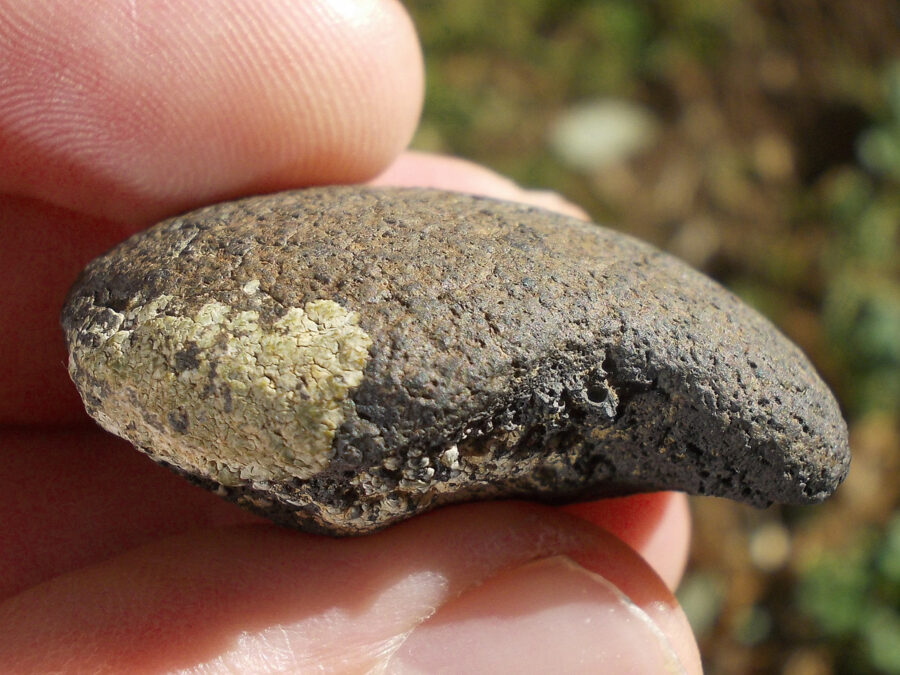
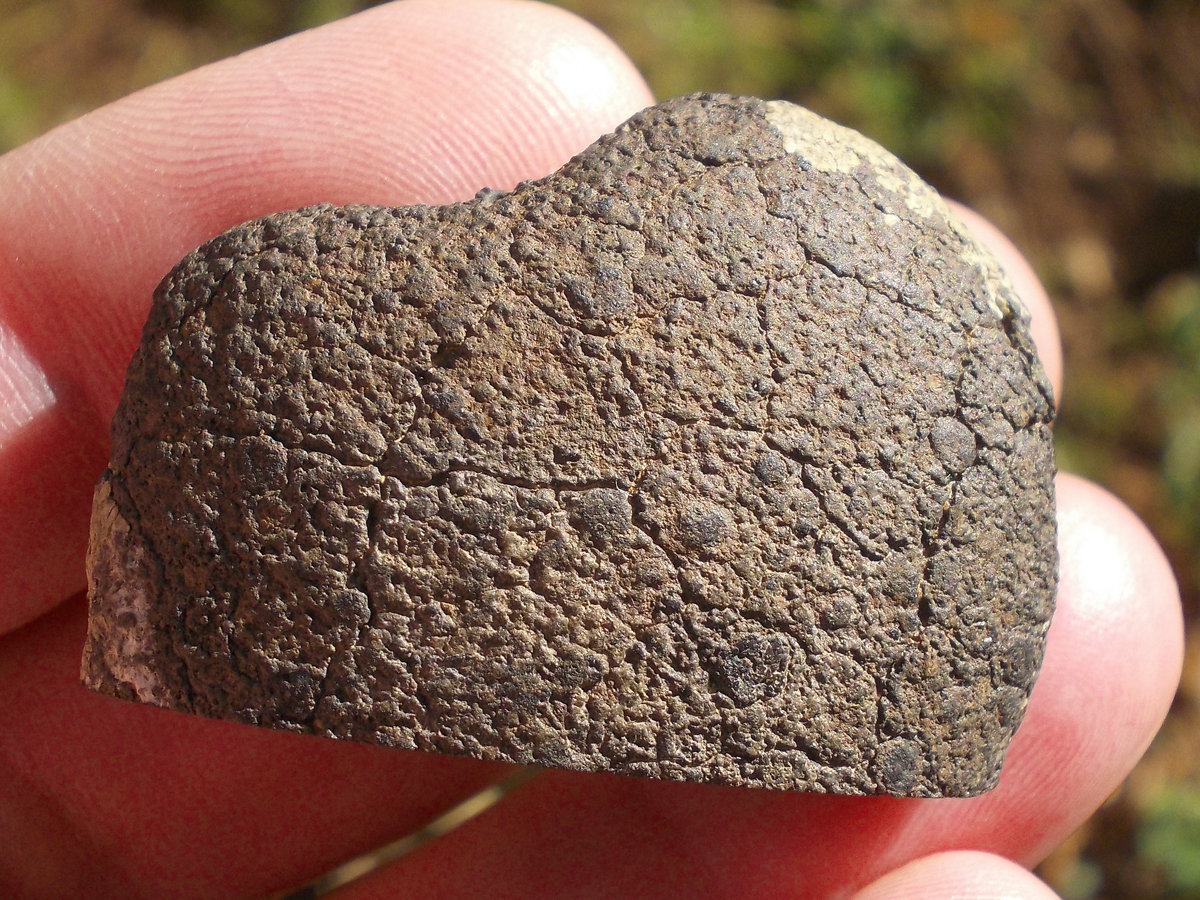
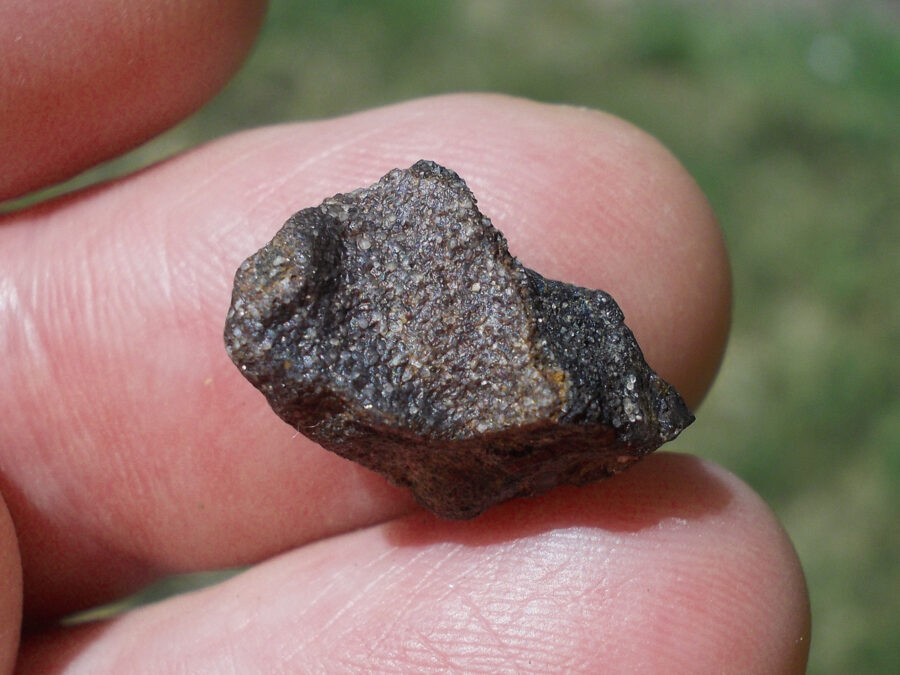
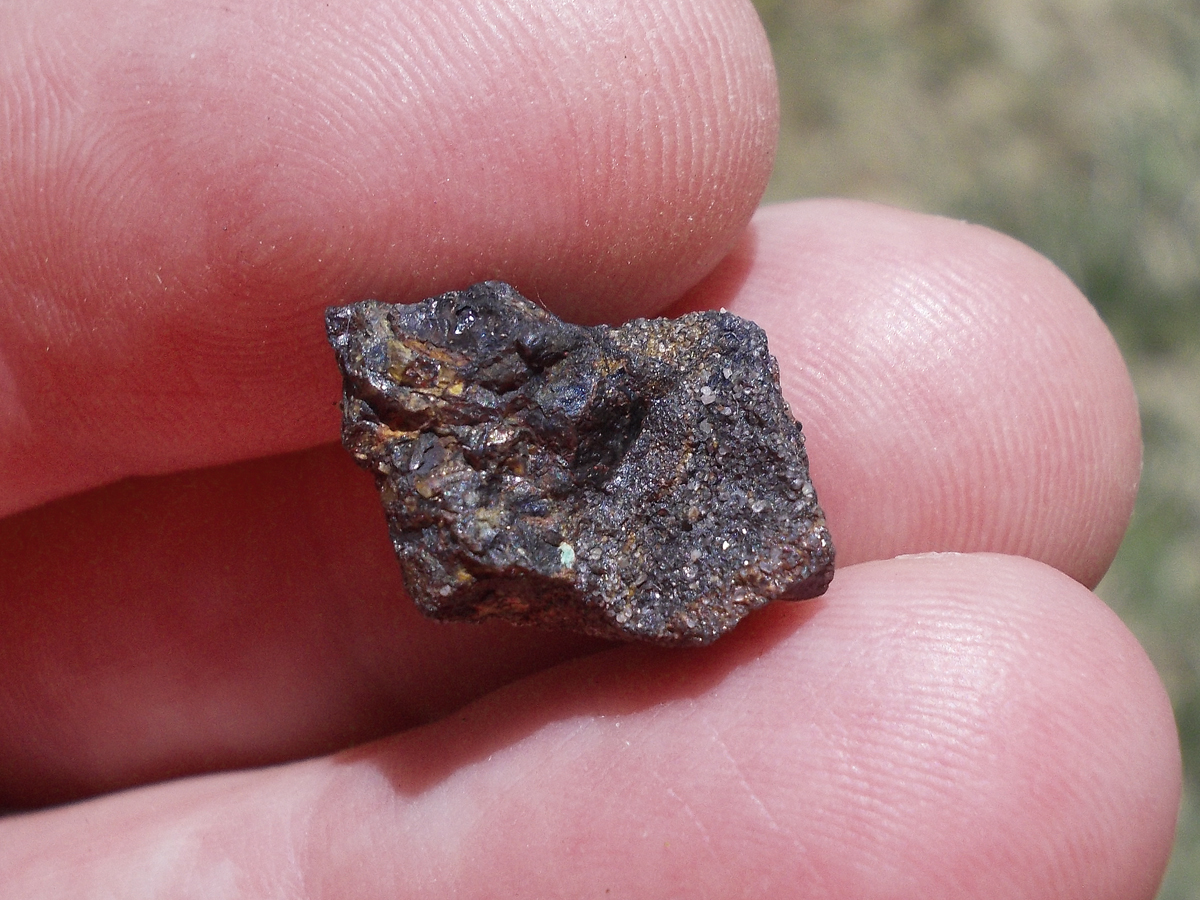
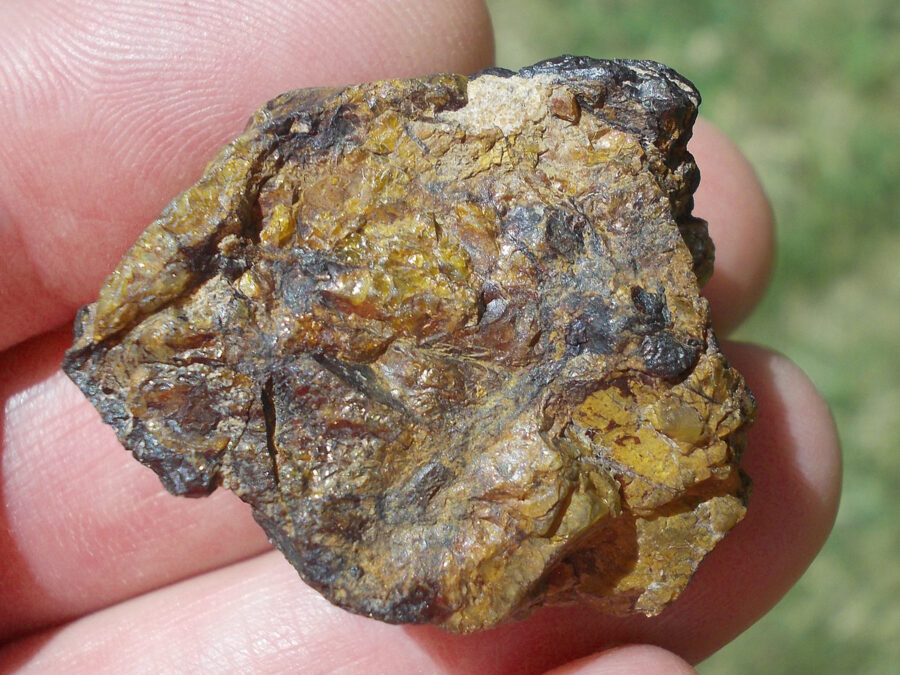
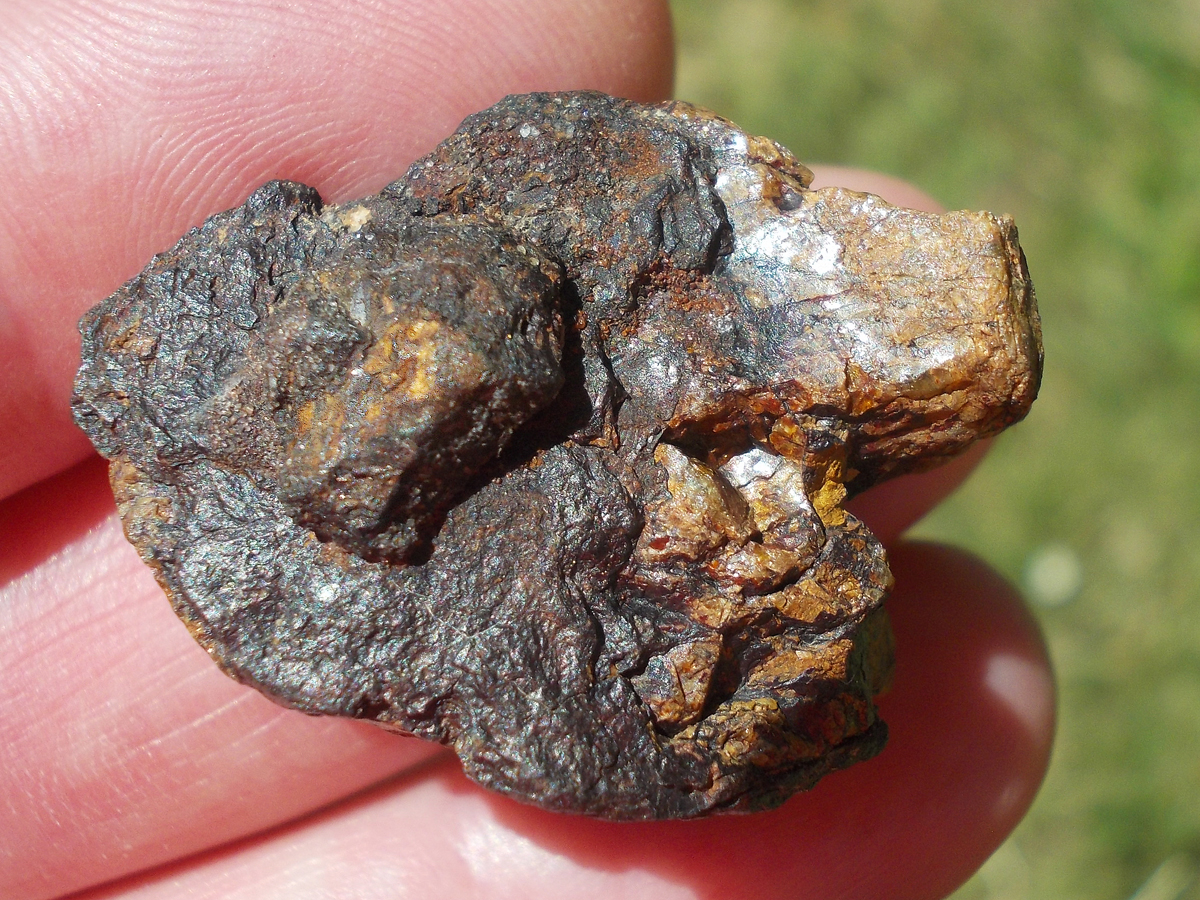
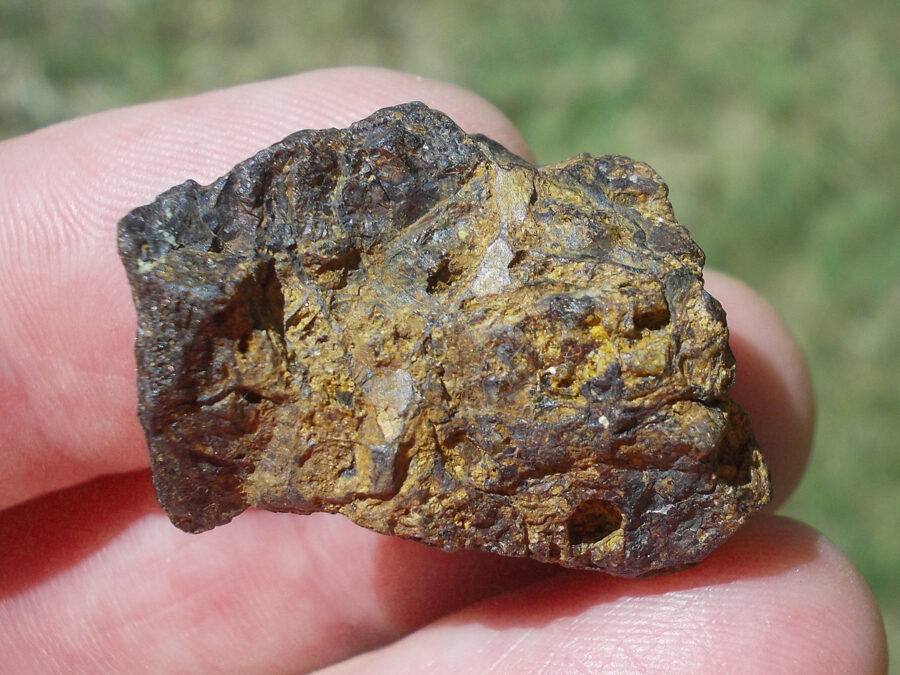
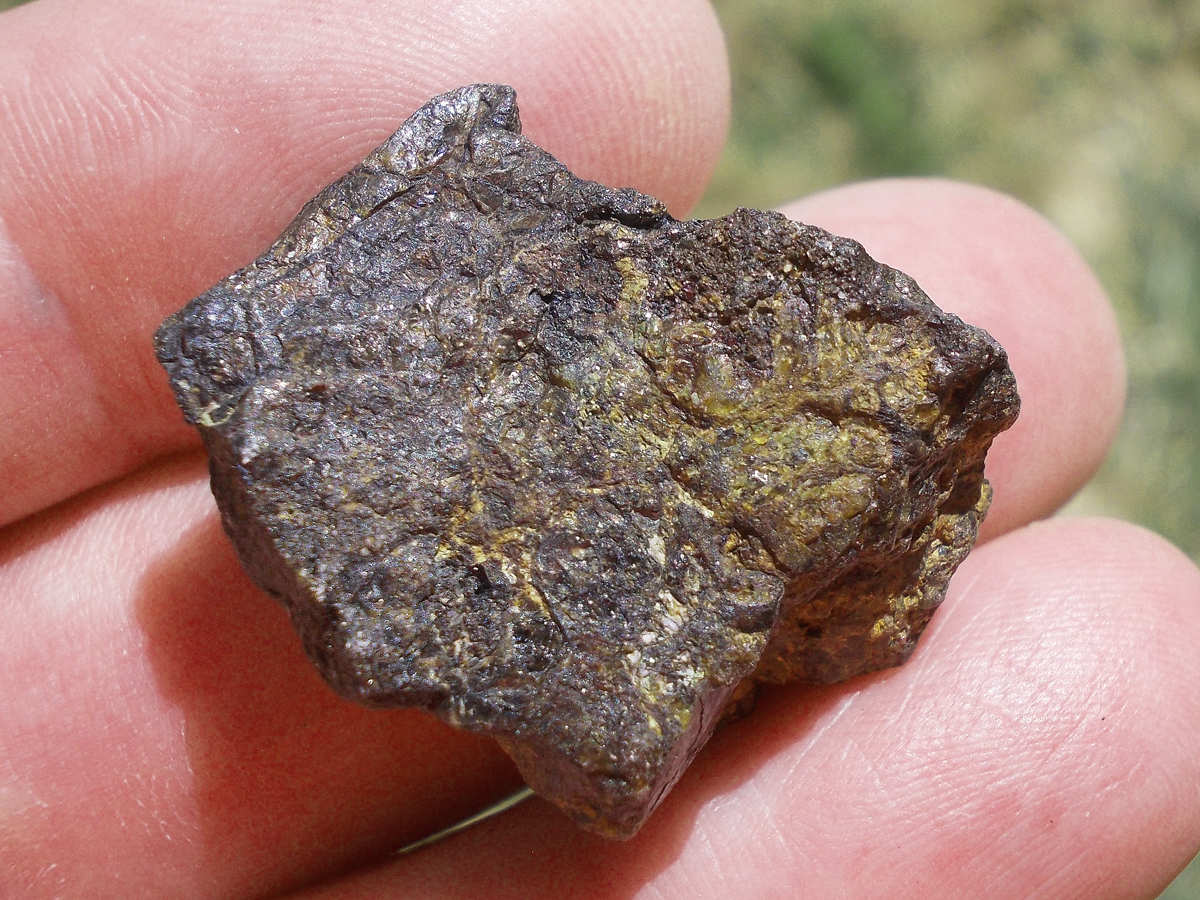
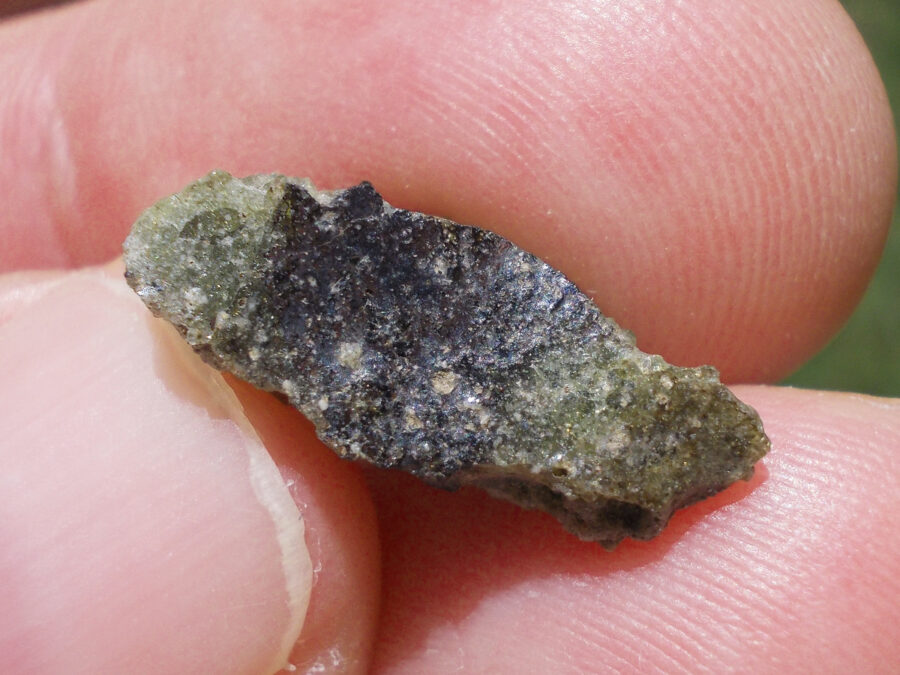
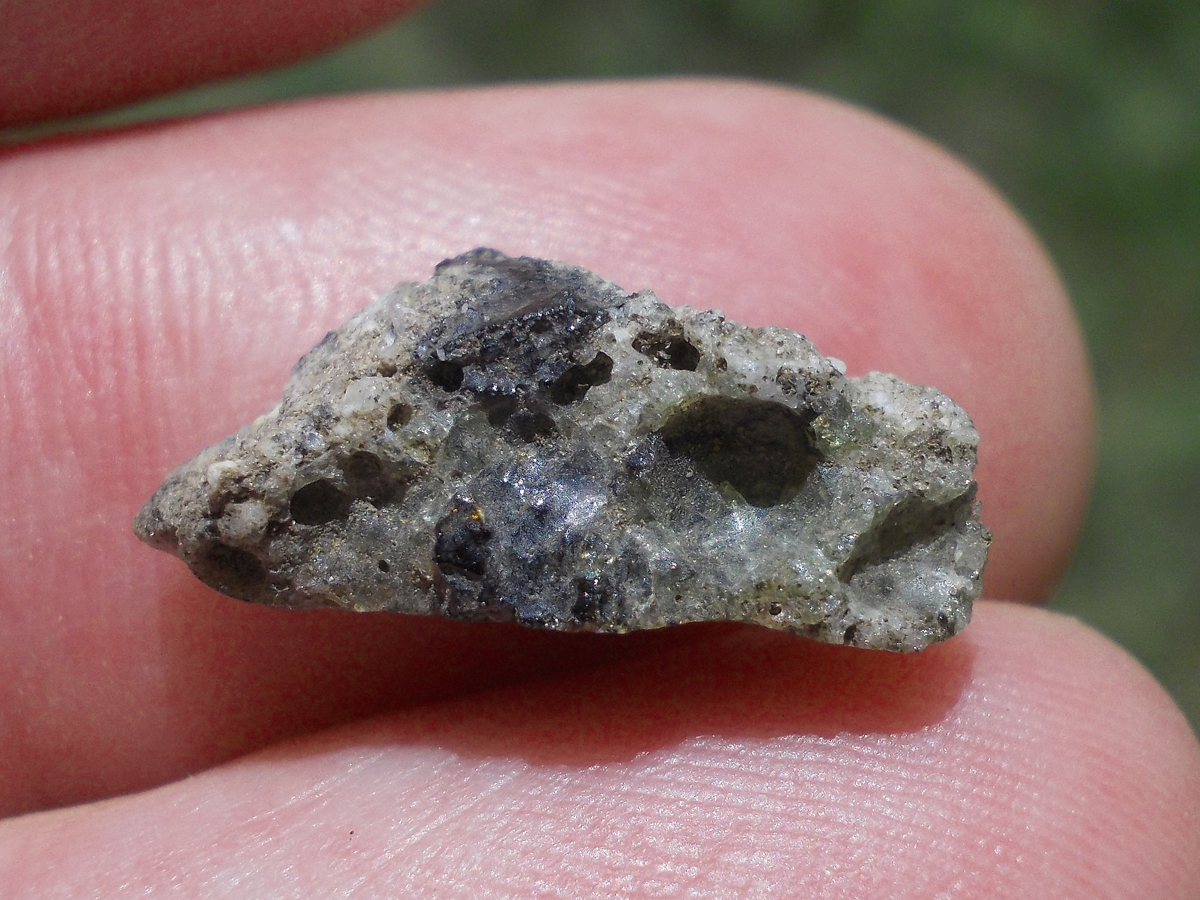
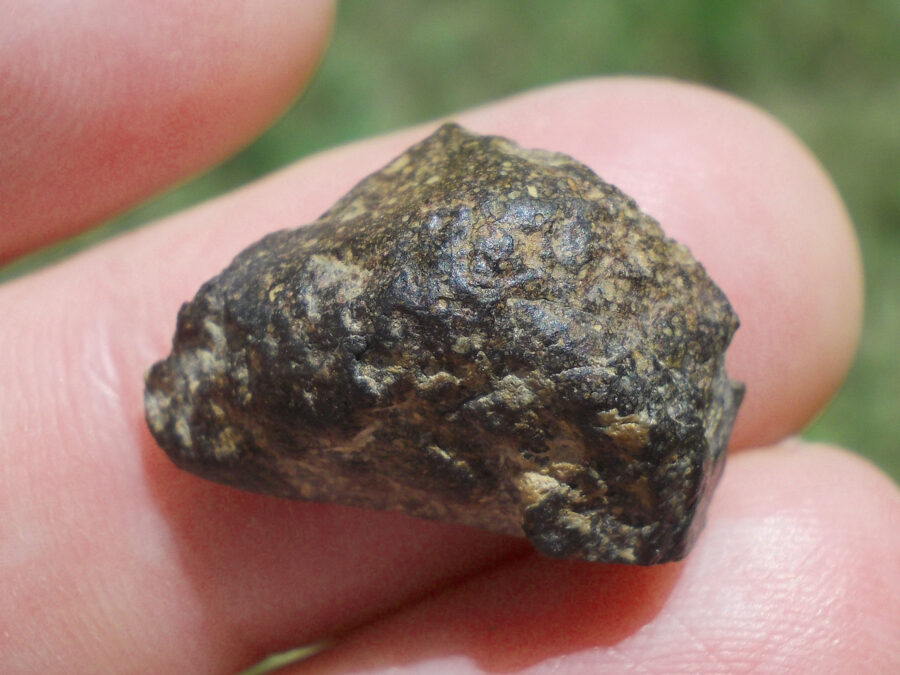
Abteh 002 is a CK6 weighing just 41 grams, discovered in the Western Sahara in the Chwichiya region by Aadi Ouhamdouch in 2023.
This carbonaceous meteorite is oriented. It is also covered with lichens on the fusion crust.
A rare and unique piece !
Writeup from MB 113:
Abteh 002 27°40’52.89″N, 11°52’01.72″W
South, Morocco
Find: 2023 Feb
Classification: Carbonaceous chondrite (CK6)
History: The meteorite was found by Aadi Ouhamdouch in February 2023 in the Chwichiya region of Morocco. It was later bought by Jean Redelsperger from Zaid Oualguirah in 2023.
Physical characteristics: Single oriented crusted stone. Lichen covers part of the fusion crust.
Petrography: (J. Gattacceca, CEREGE) Chondrite with large chondrules set in a recrystallized matrix containing plagioclase with average size >50 µm. Opaque minerals are abundant magnetite, and troilite.
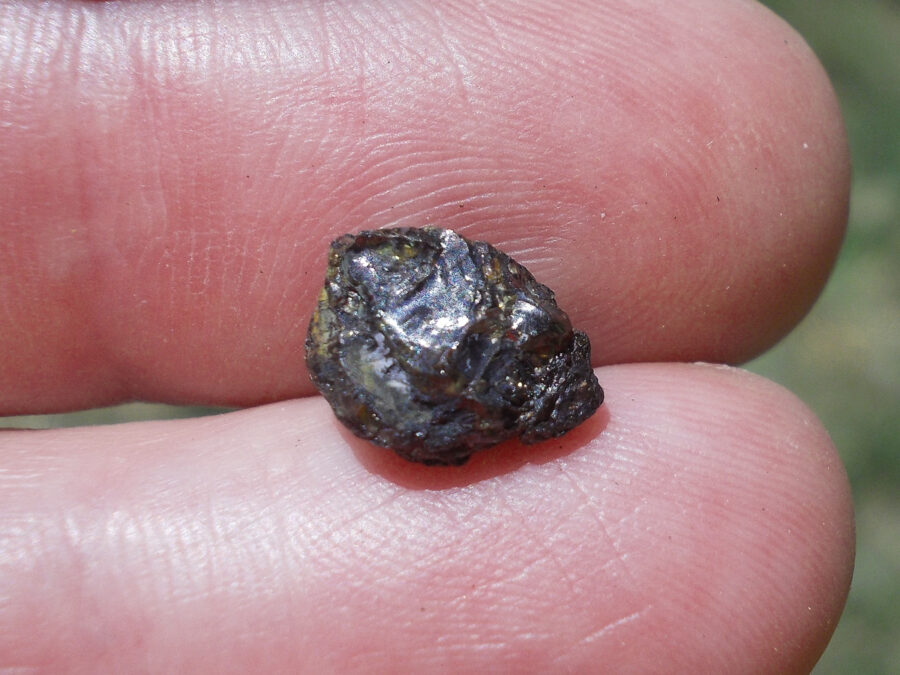
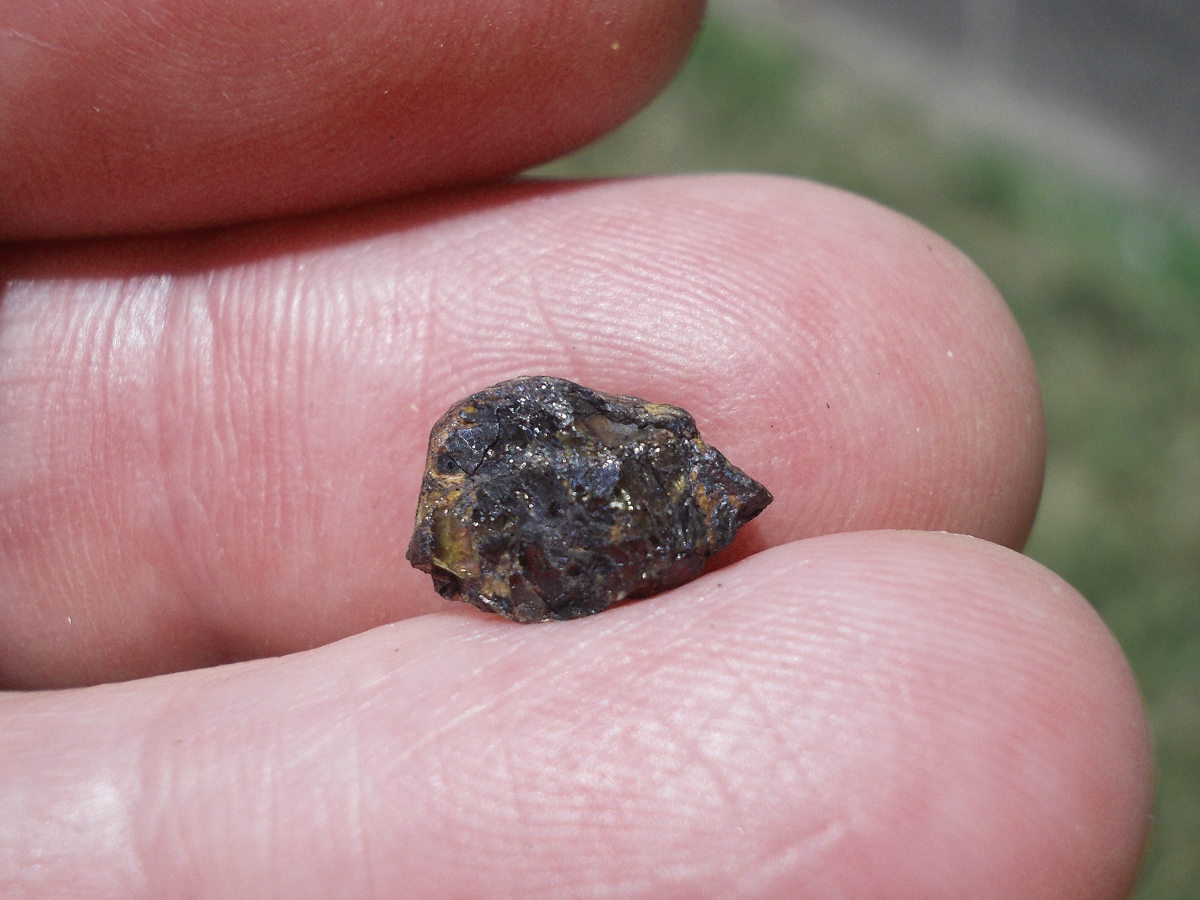
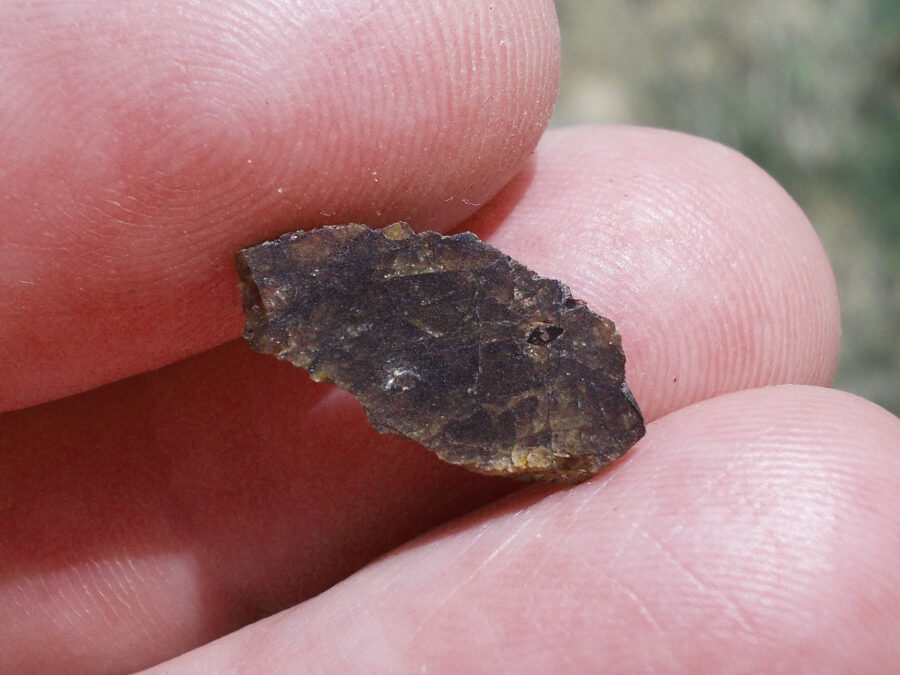
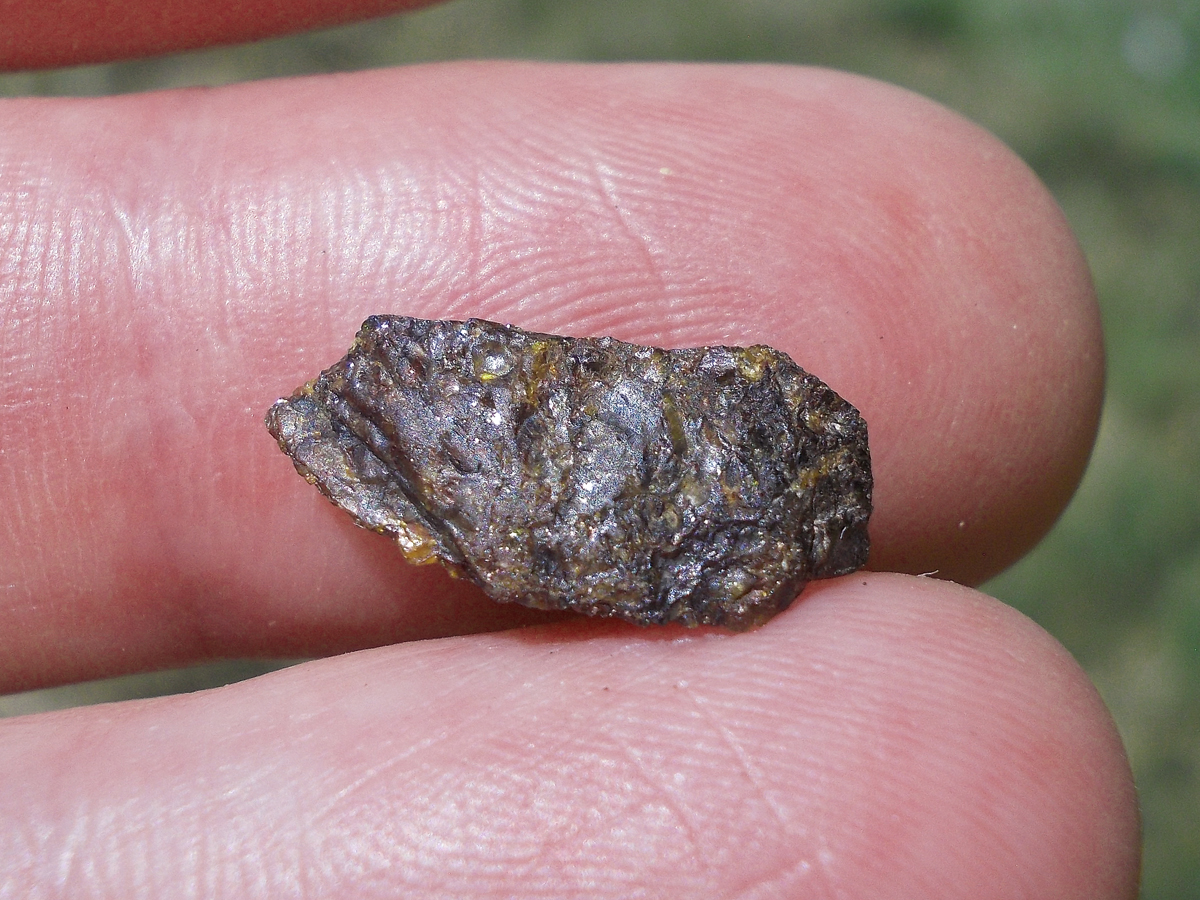
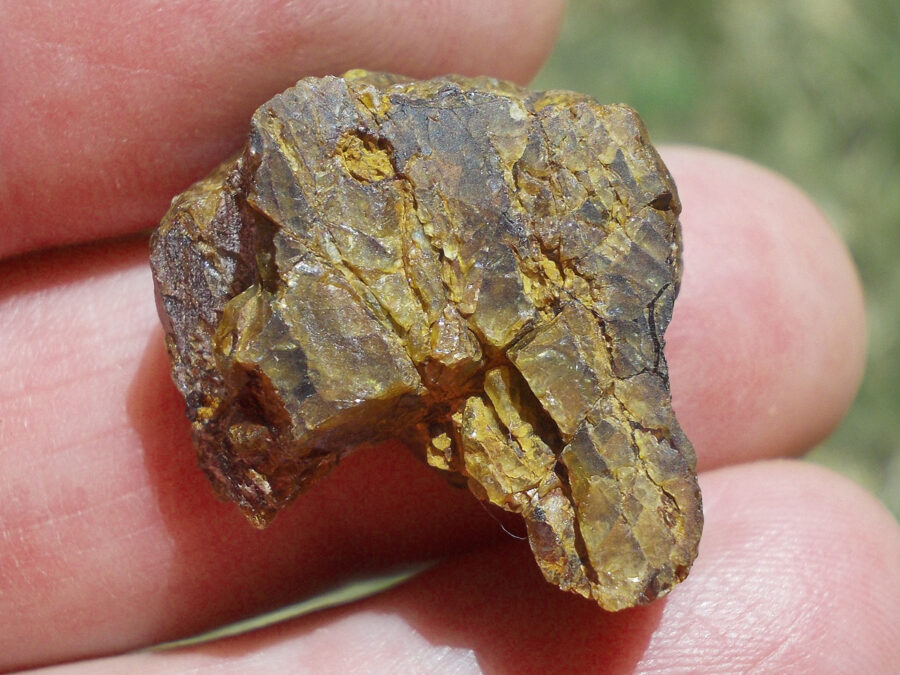
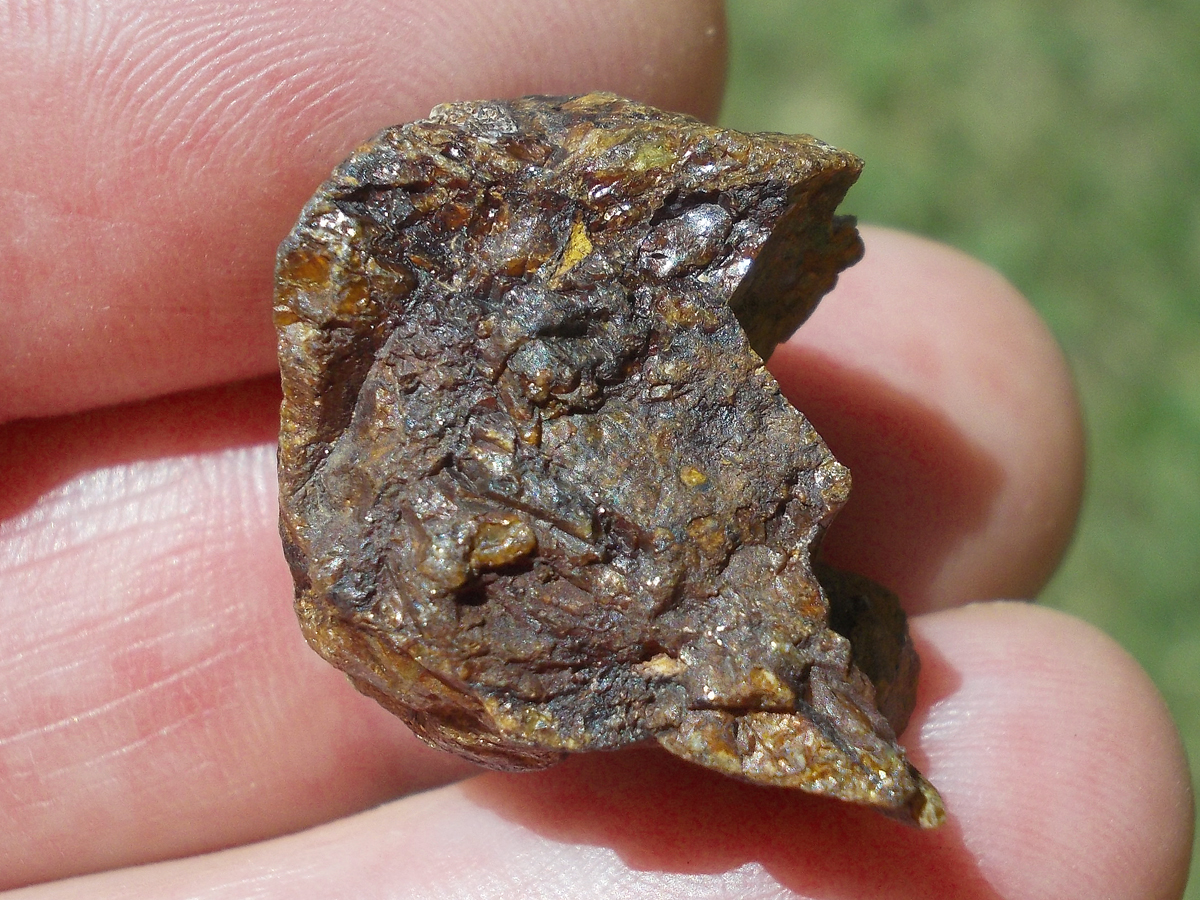
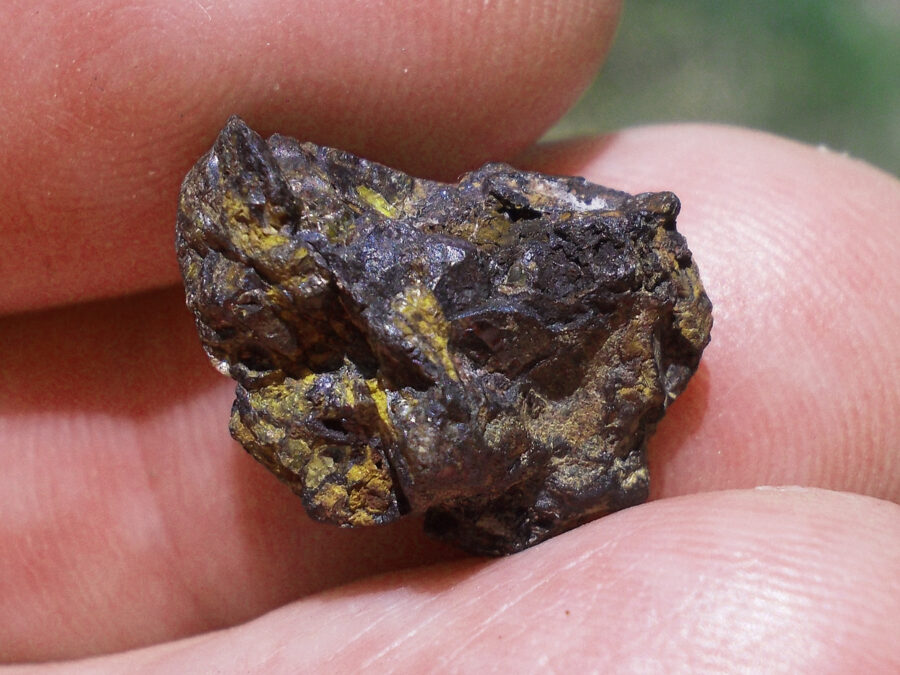
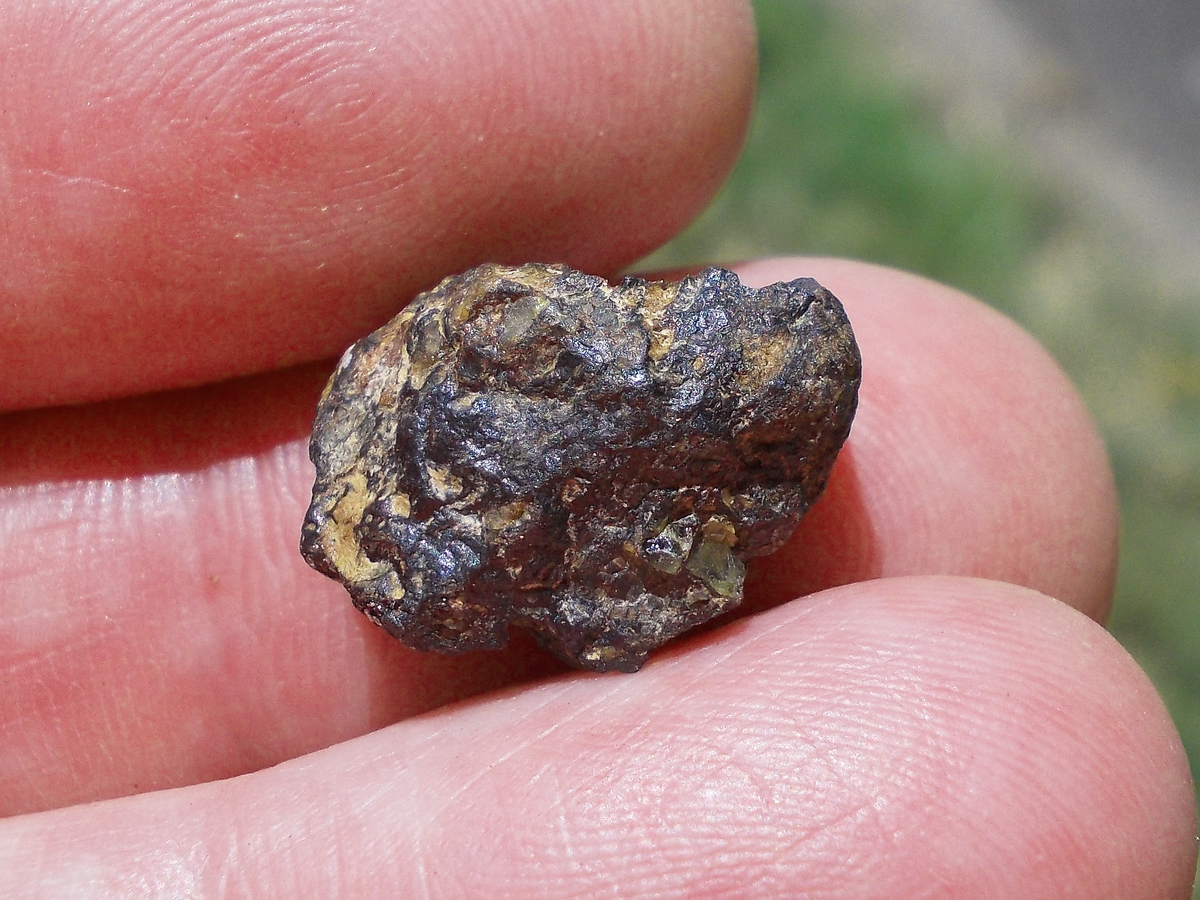
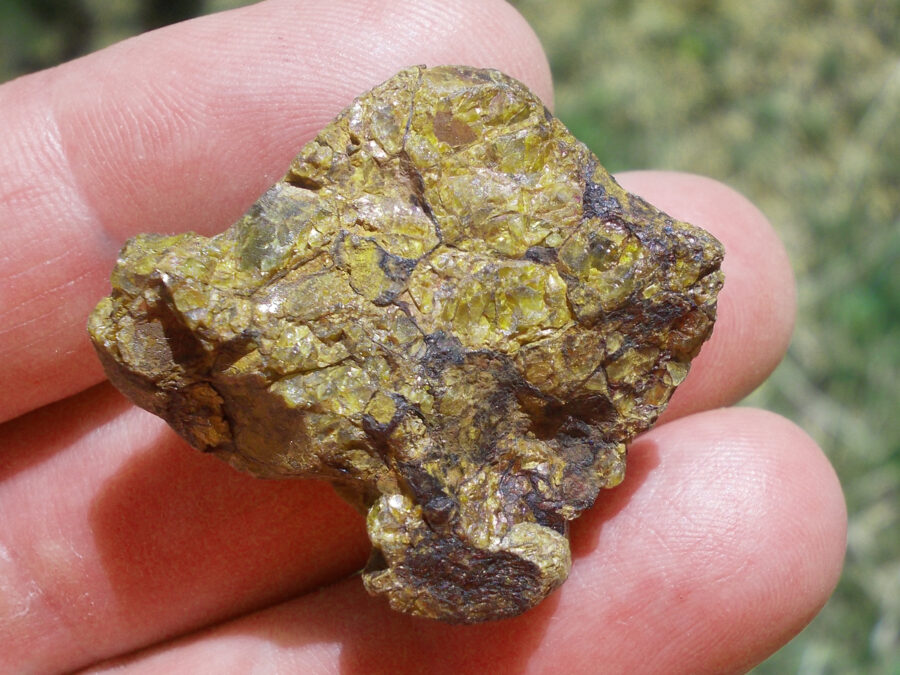
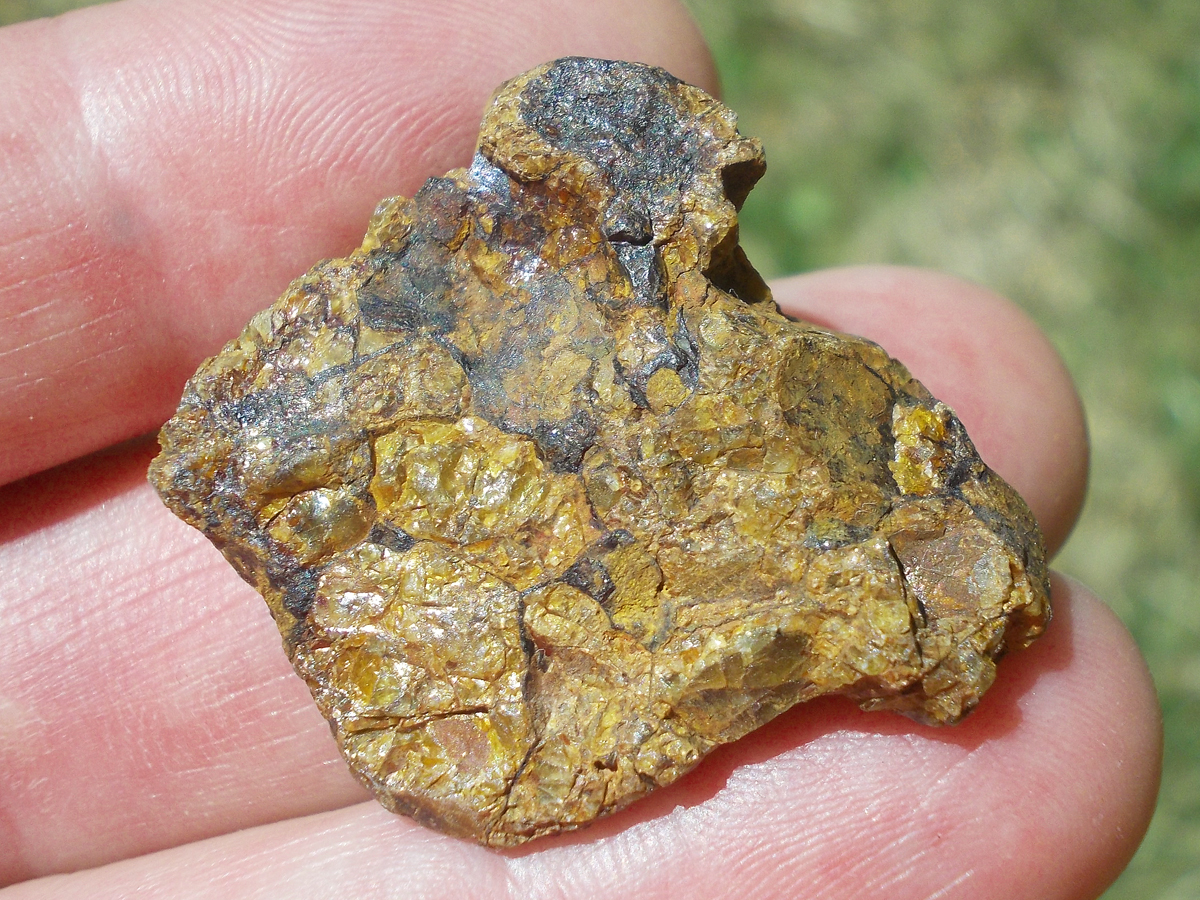
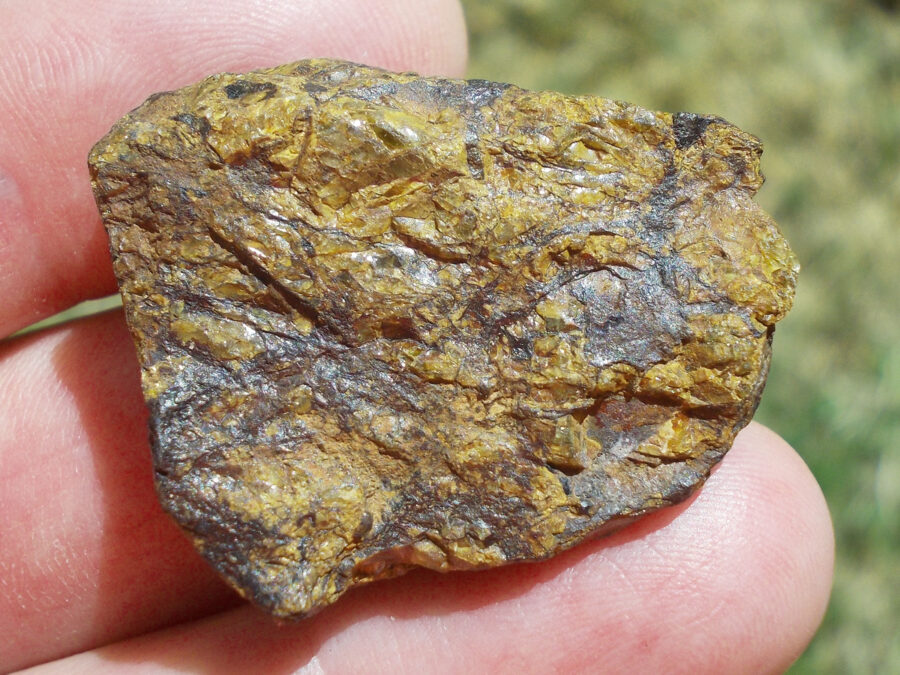
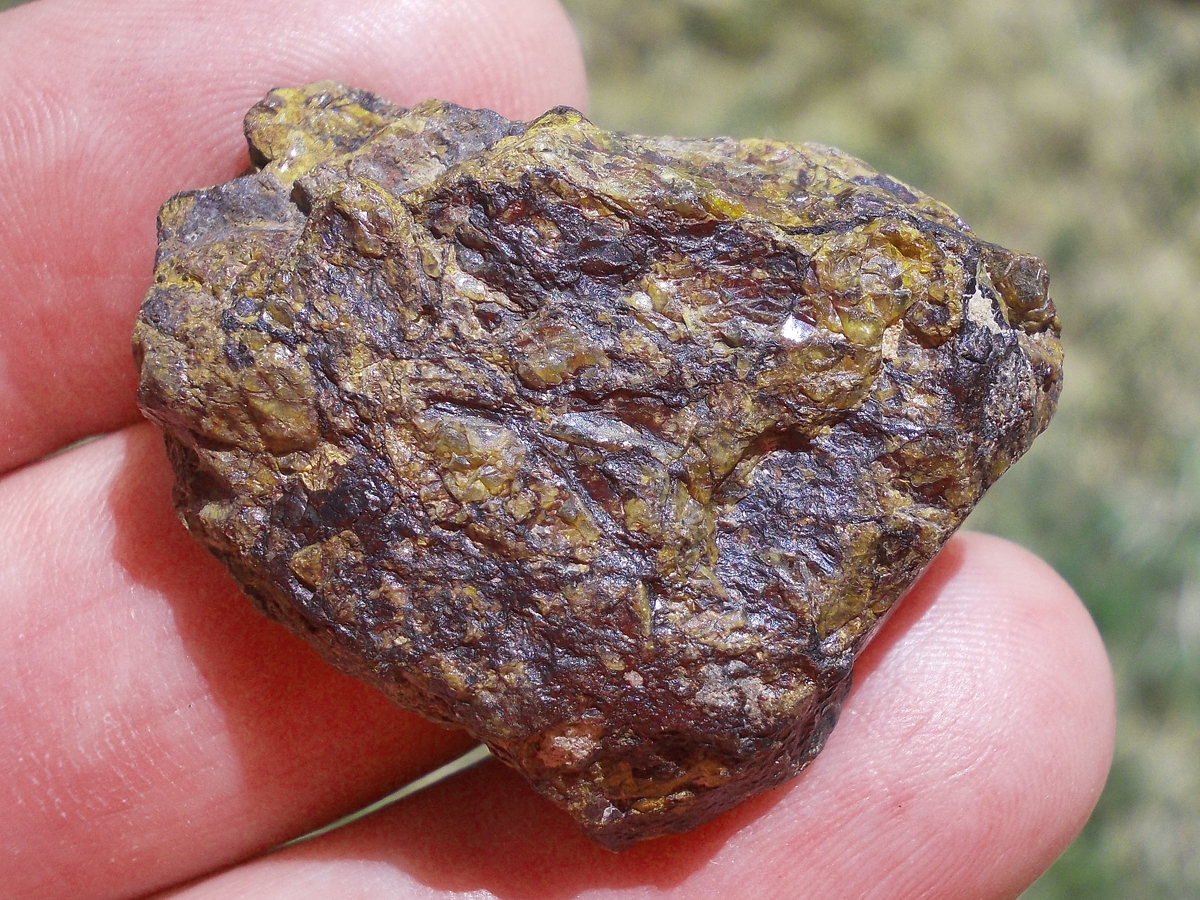
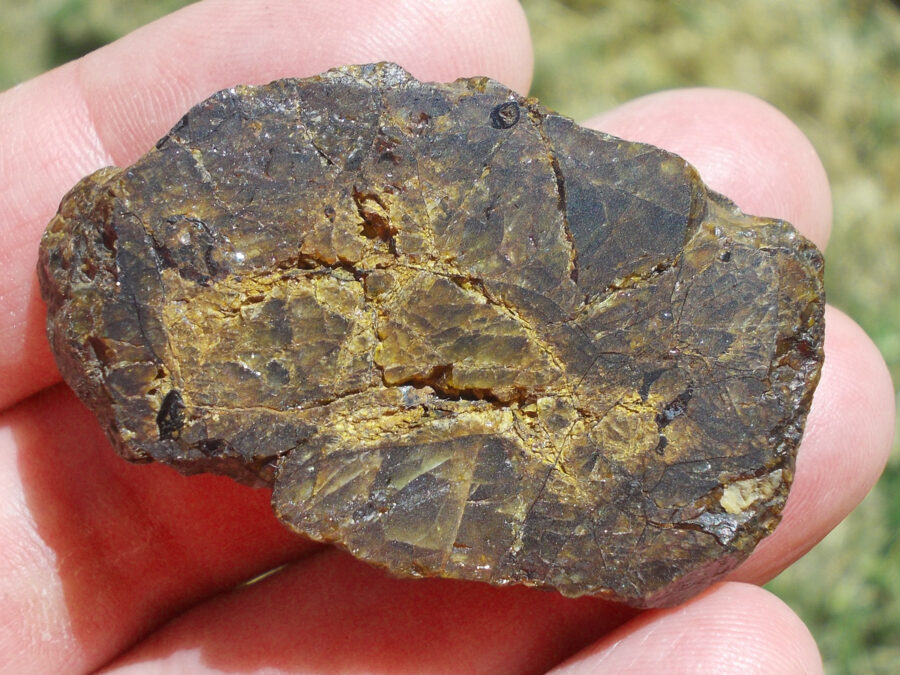
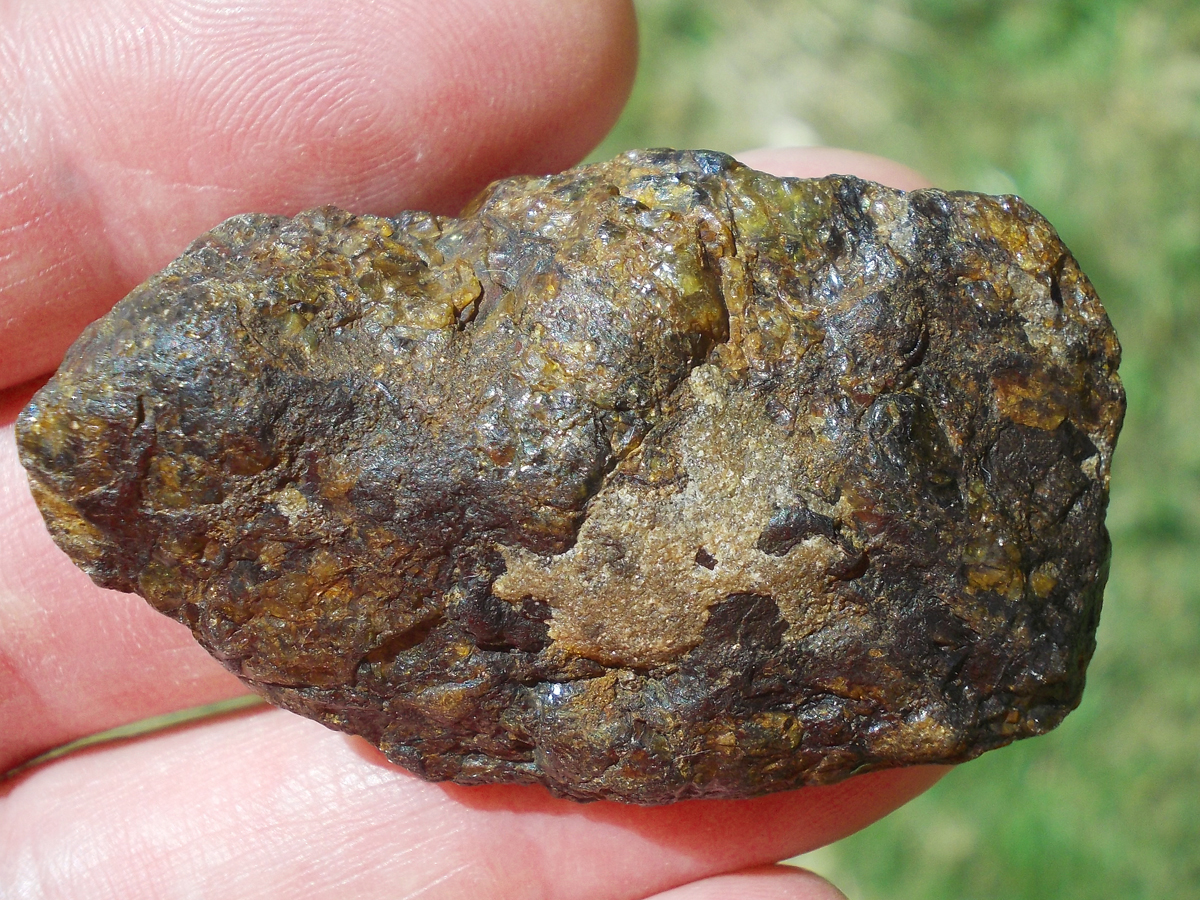
Oued Chebeika 003 is a pallasite-type meteorite discovered in Morocco near Tan Tan in 2024.
This meteorite with a total weight of 174 grams was bought in June 2024 at Ensisheim.
Pallasites are meteorites composed of olivine crystals embedded in an iron-nickel matrix.
Pallasites are among the most aesthetically pleasing of meteorites.
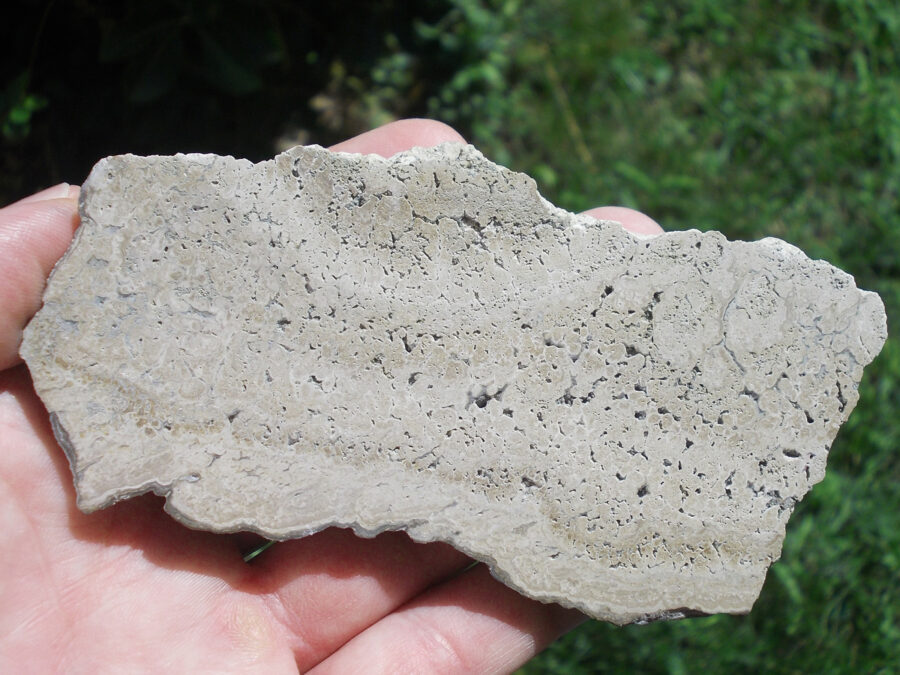
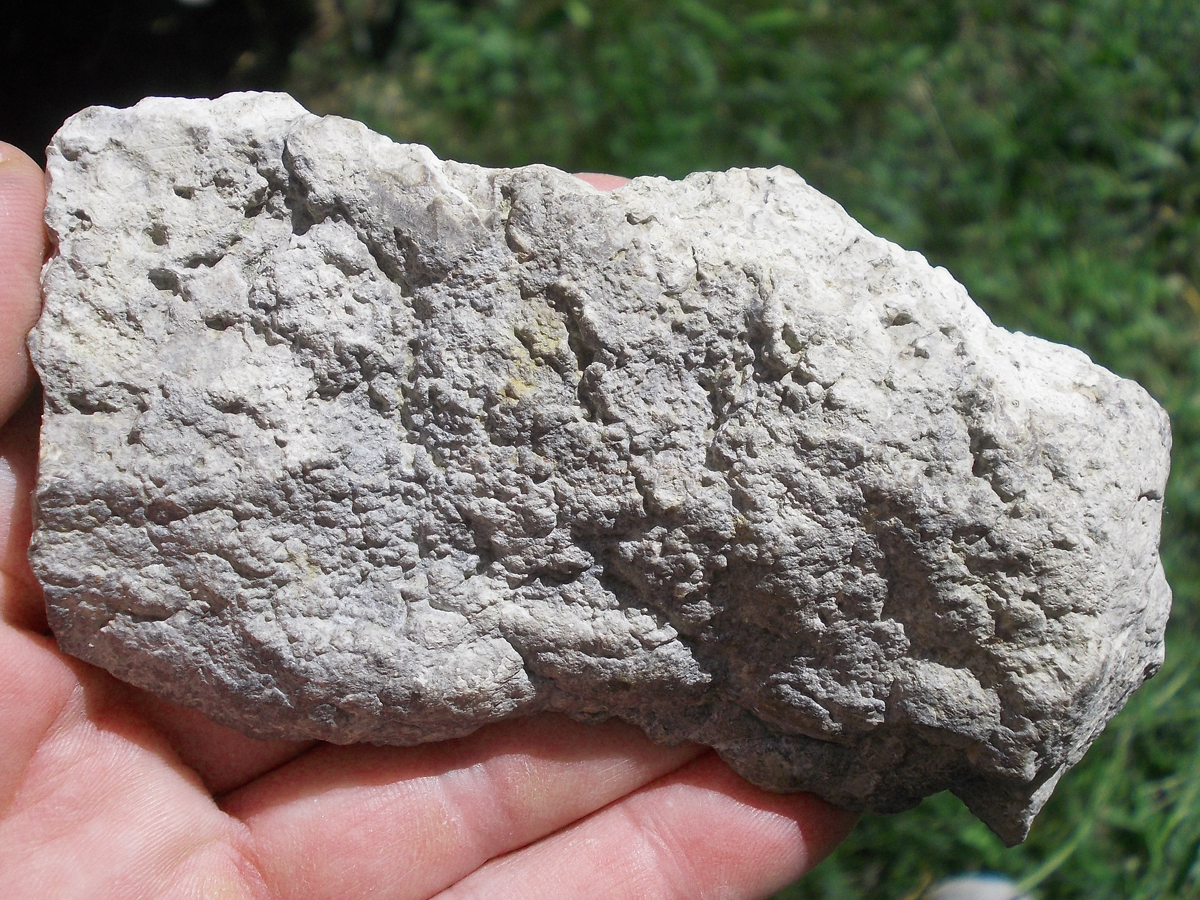
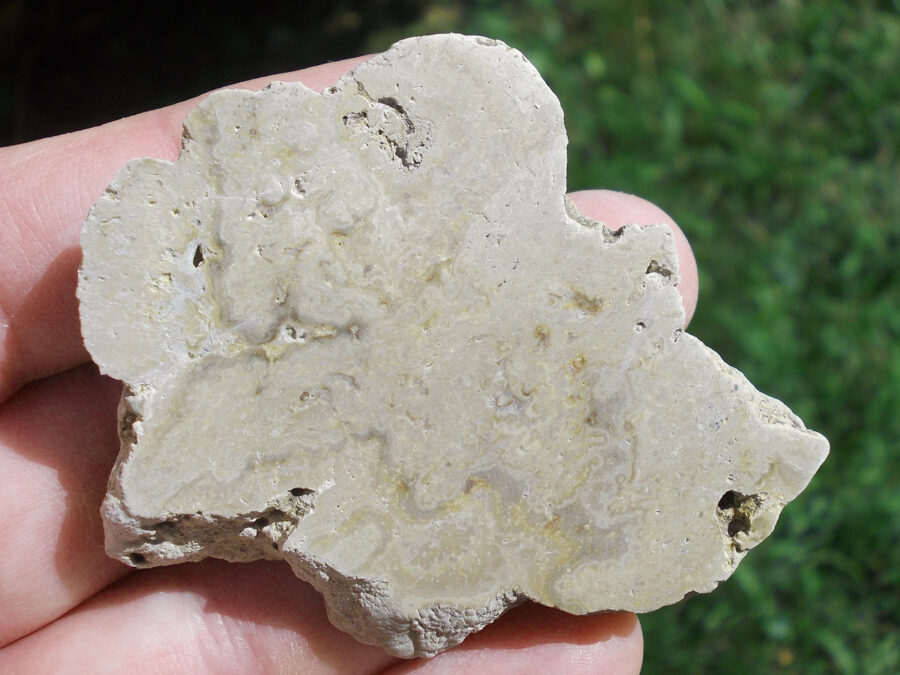
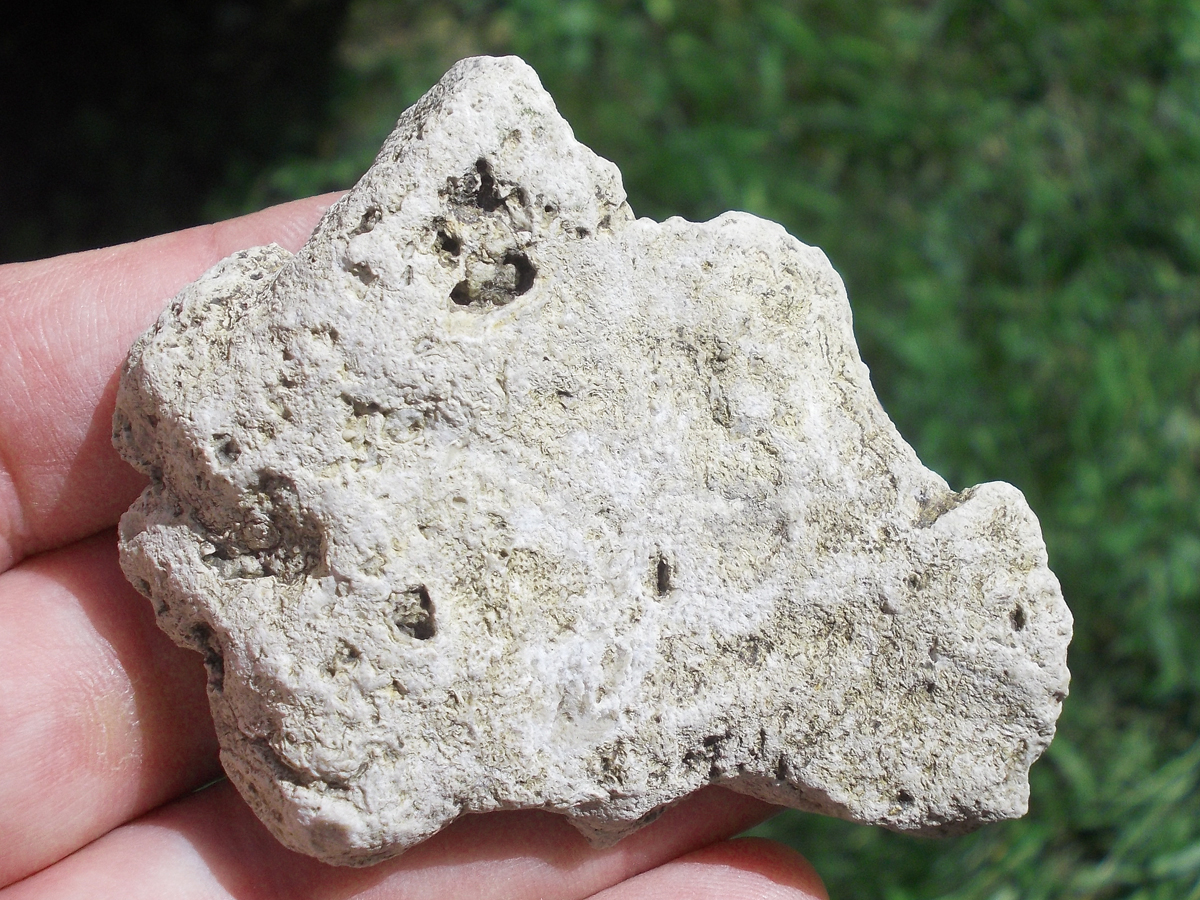
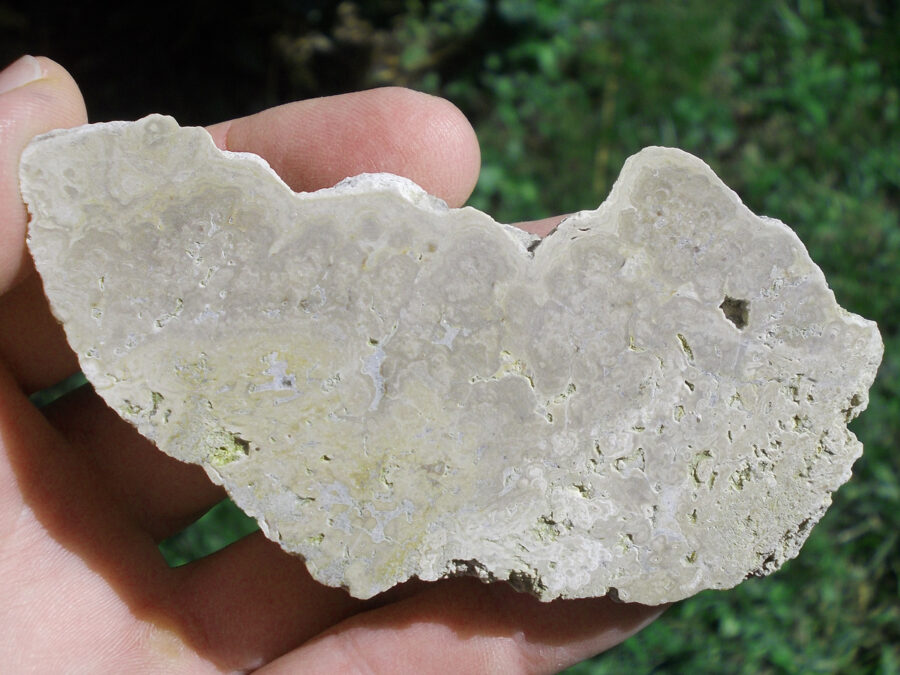
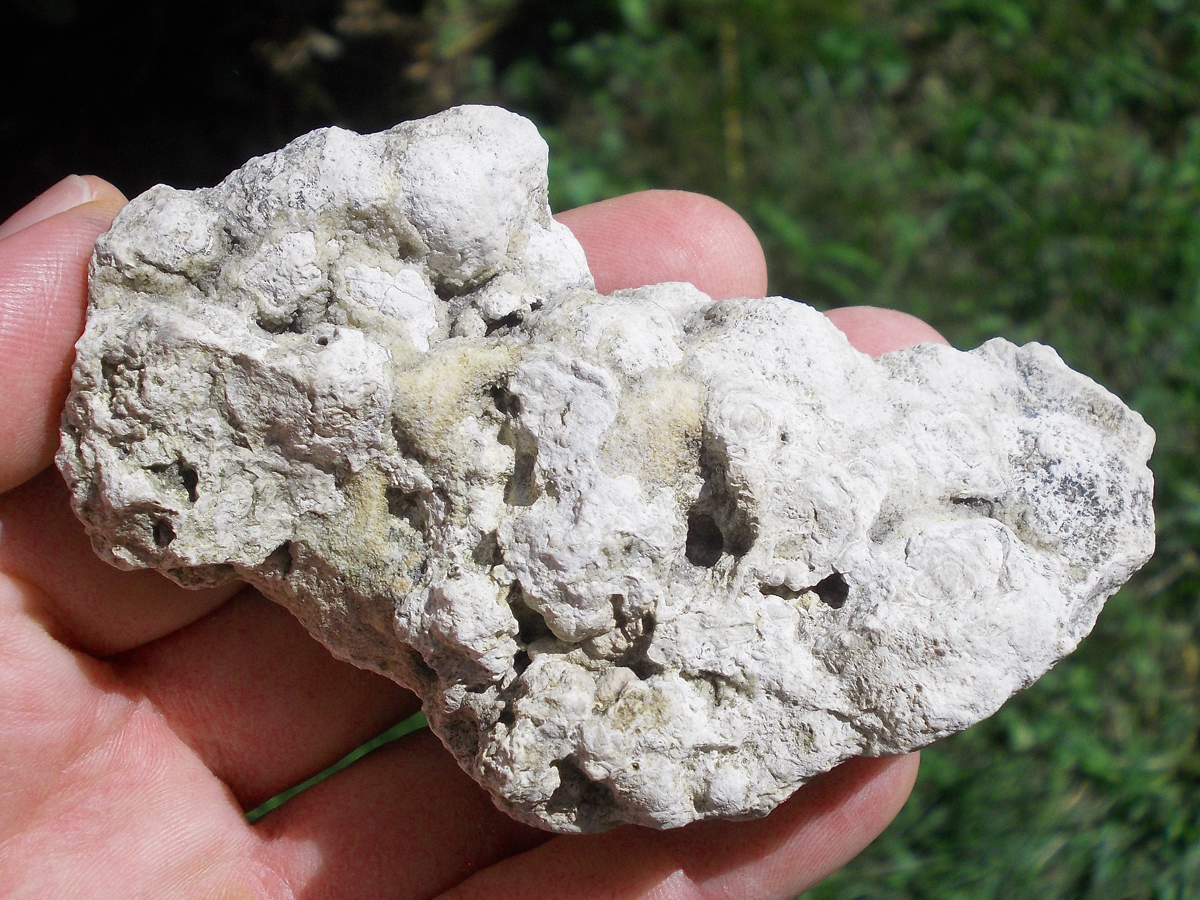
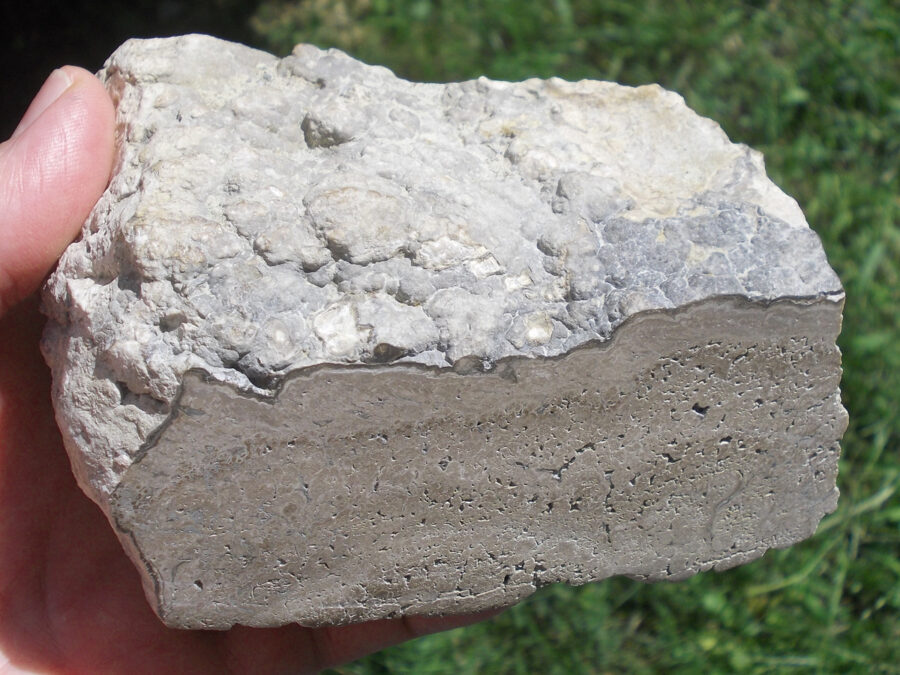
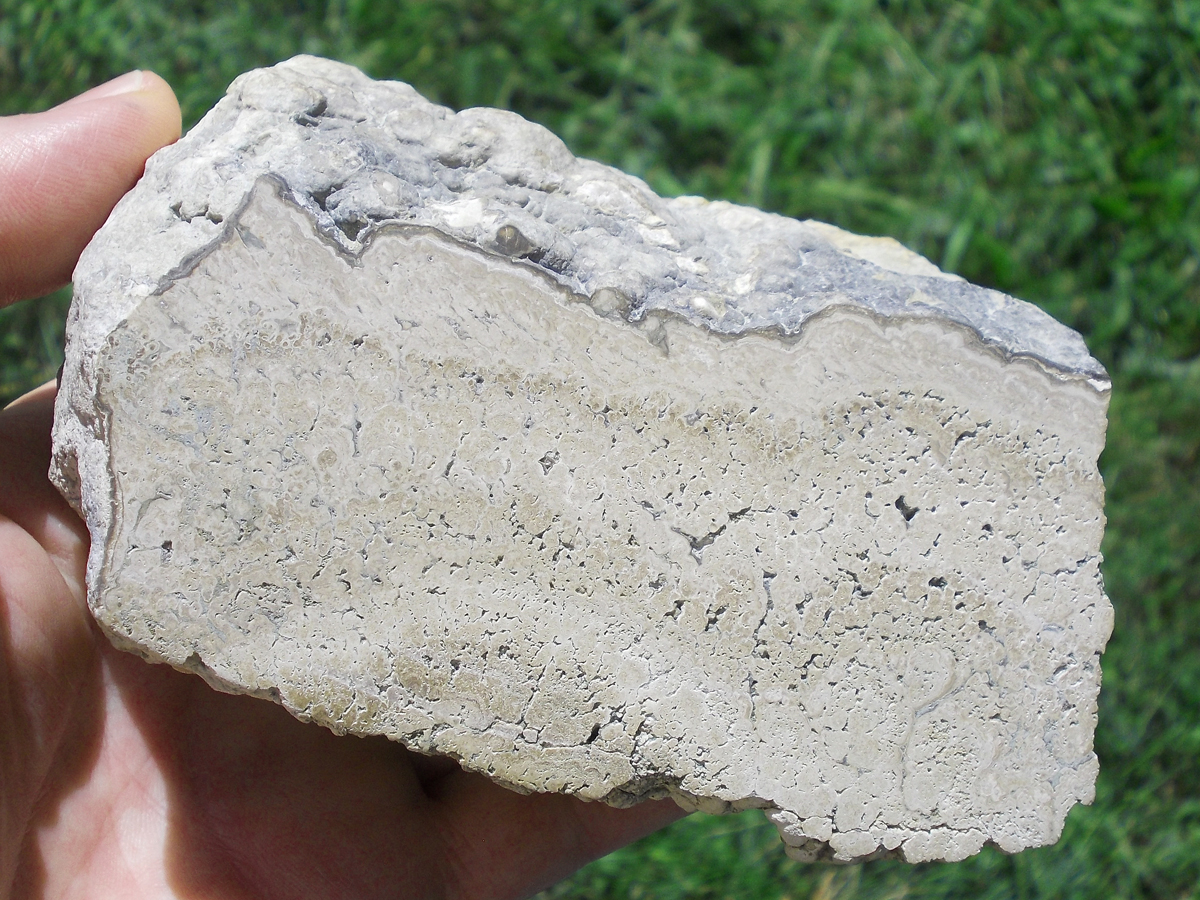
Stromatolites are fossilized carbonate structures.
These are among the oldest known fossils, dating back to 3.5 Ga (in Australia). They were formed by cyanobacteria (“blue-green algae”). Using the sun to harness energy, they produced and increased the oxygen content of the earth’s atmosphere to around 20%, enabling life to flourish.
These 25 million-year-old stromatolites were found in France, in the heart of the city of Clermont-Ferrand, at the summit of a volcano called Montjuzet.
Stromatolites are fossilized carbonate structures.
These are among the oldest known fossils, dating back to 3.5 Ga (in Australia). They were formed by cyanobacteria (“blue-green algae”). Using the sun to harness energy, they produced and increased the oxygen content of the earth’s atmosphere to around 20%, enabling life to flourish.
These 25 million-year-old stromatolites were found in France, in the heart of the city of Clermont-Ferrand, at the summit of a volcano called Montjuzet.
Stromatolites are fossilized carbonate structures.
These are among the oldest known fossils, dating back to 3.5 Ga (in Australia). They were formed by cyanobacteria (“blue-green algae”). Using the sun to harness energy, they produced and increased the oxygen content of the earth’s atmosphere to around 20%, enabling life to flourish.
These 25 million-year-old stromatolites were found in France, in the heart of the city of Clermont-Ferrand, at the summit of a volcano called Montjuzet.
Stromatolites are fossilized carbonate structures.
These are among the oldest known fossils, dating back to 3.5 Ga (in Australia). They were formed by cyanobacteria (“blue-green algae”). Using the sun to harness energy, they produced and increased the oxygen content of the earth’s atmosphere to around 20%, enabling life to flourish.
These 25 million-year-old stromatolites were found in France, in the heart of the city of Clermont-Ferrand, at the summit of a volcano called Montjuzet.
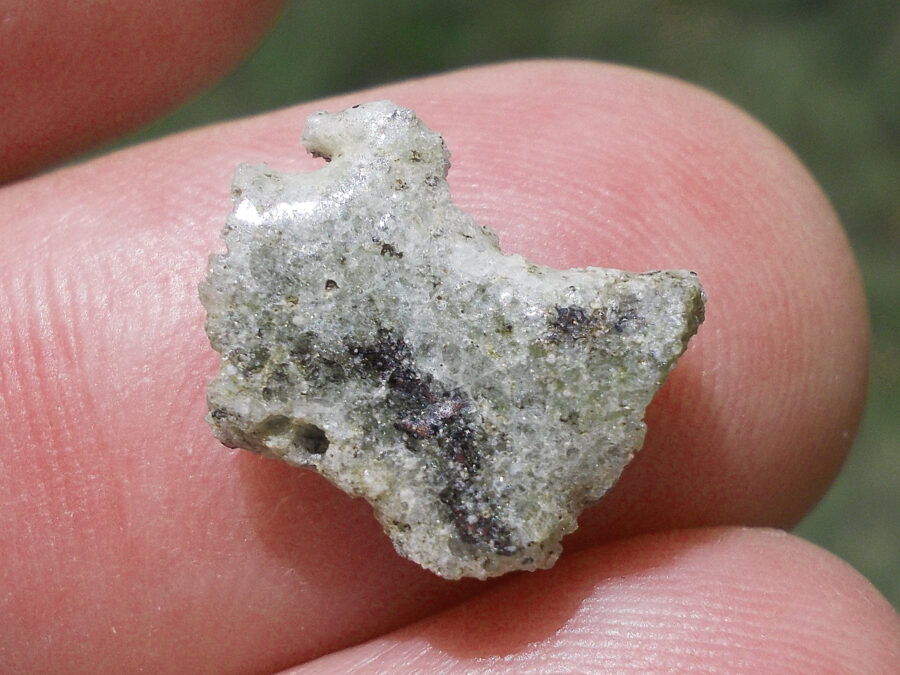
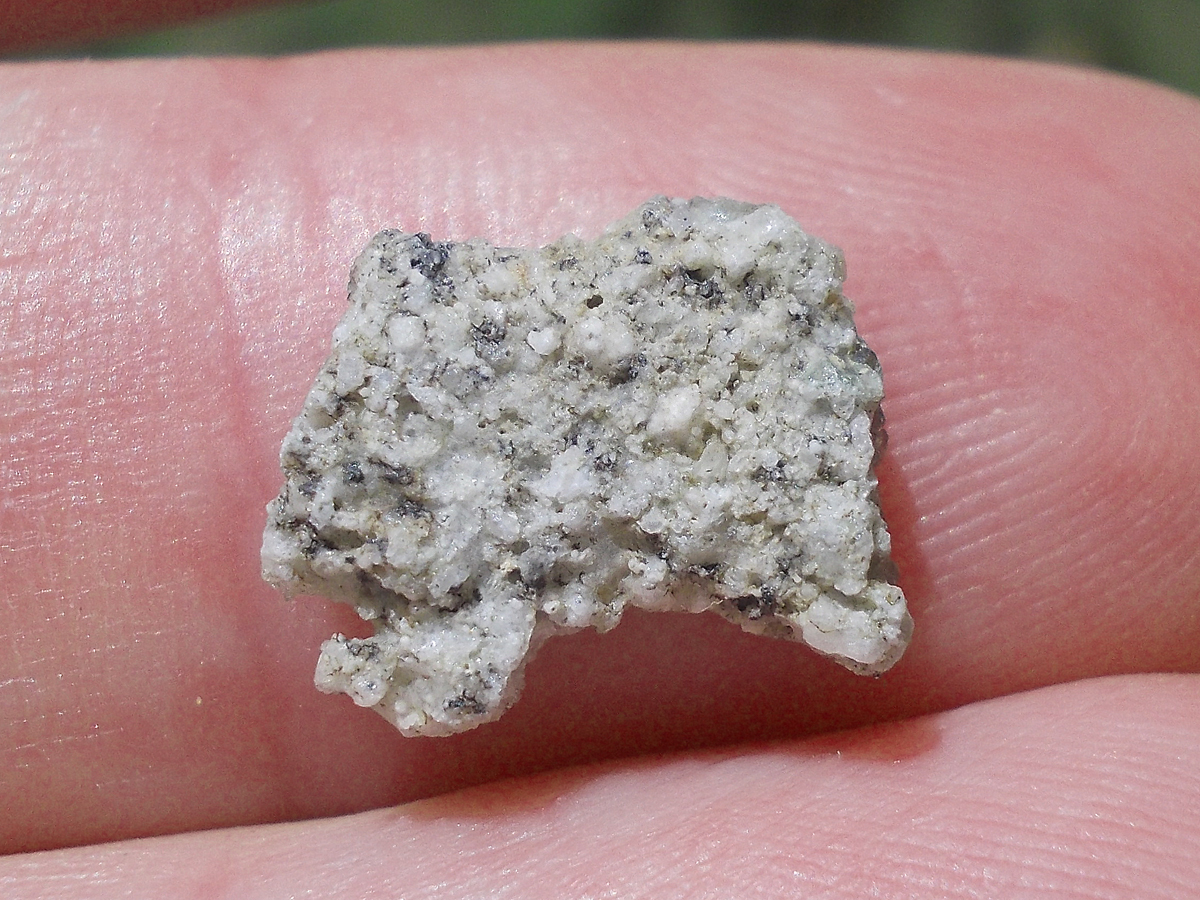
Trinitite is a glass made during the first nuclear explosion called Trinity, in Alamogordo, New Mexico on July 16, 1945.
Trinitite is made from the vitrification of the desert sand linked to the different elements of the structure on which the bomb rested and the bomb itself. Recently, researchers discovered that a piece of red Trinitrite took the form of a quasicrystal.
First discovered in the laboratory in the 1980s, quasicrystals also occur in nature, notably in meteorites.
Trinitite is a glass made during the first nuclear explosion called Trinity, in Alamogordo, New Mexico on July 16, 1945.
Trinitite is made from the vitrification of the desert sand linked to the different elements of the structure on which the bomb rested and the bomb itself. Recently, researchers discovered that a piece of red Trinitrite took the form of a quasicrystal.
First discovered in the laboratory in the 1980s, quasicrystals also occur in nature, notably in meteorites.