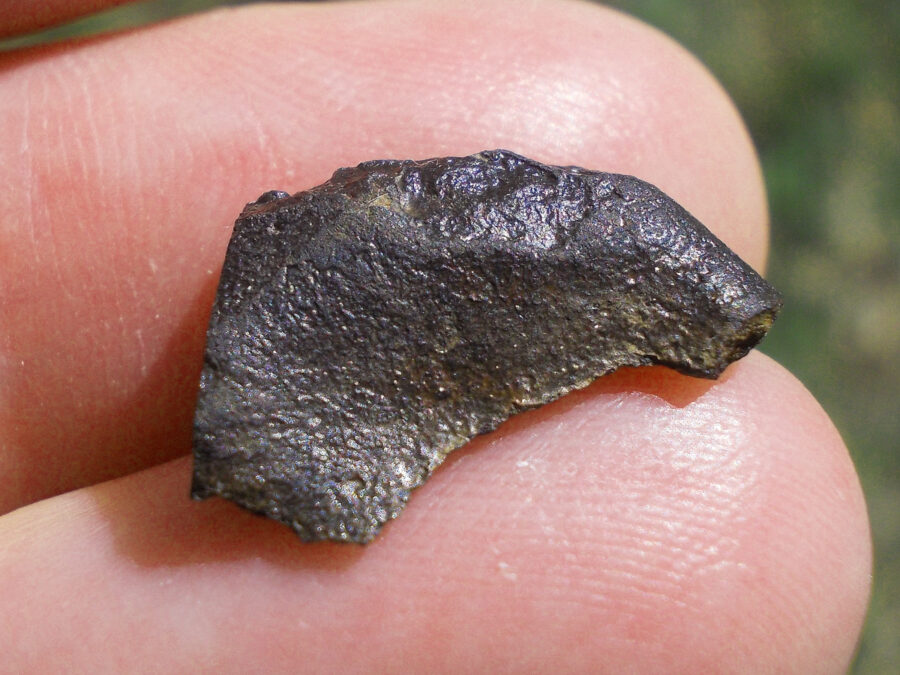
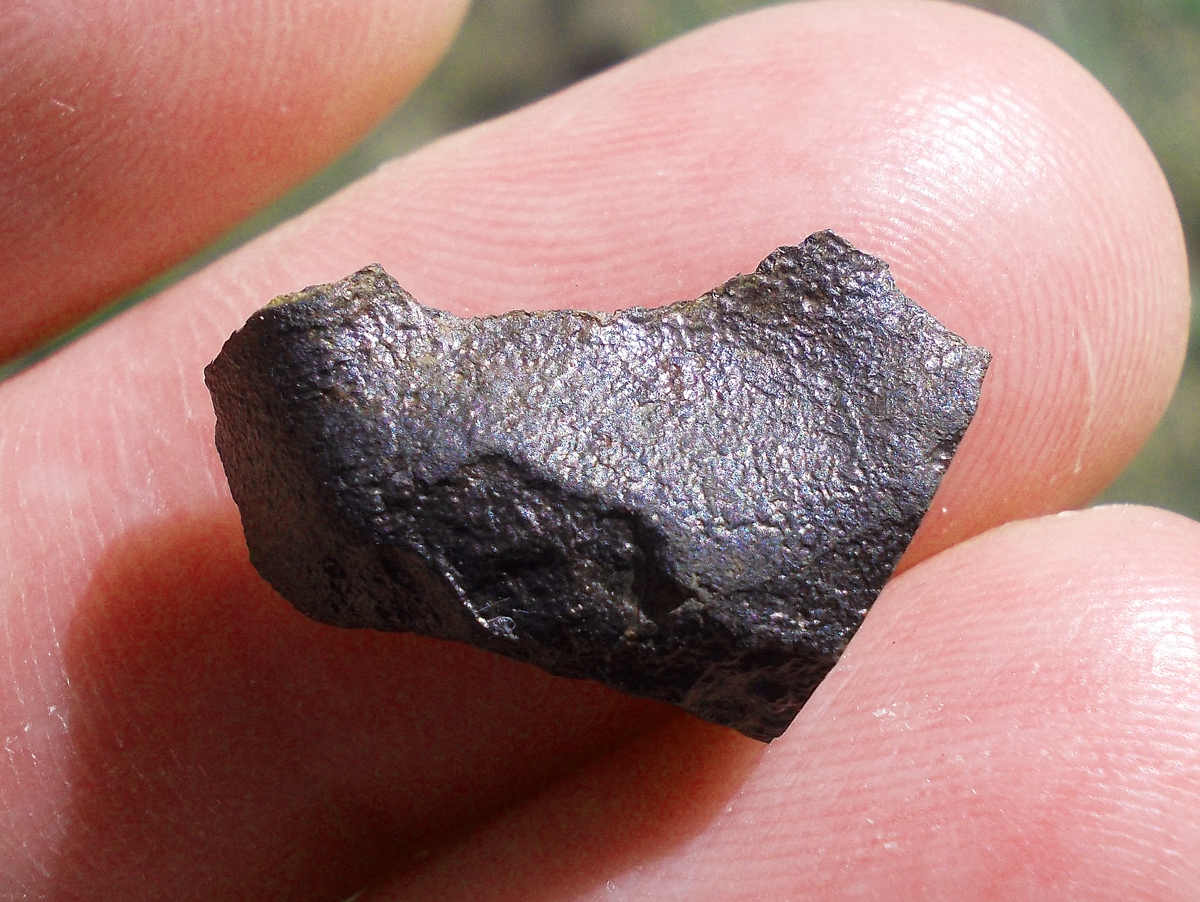
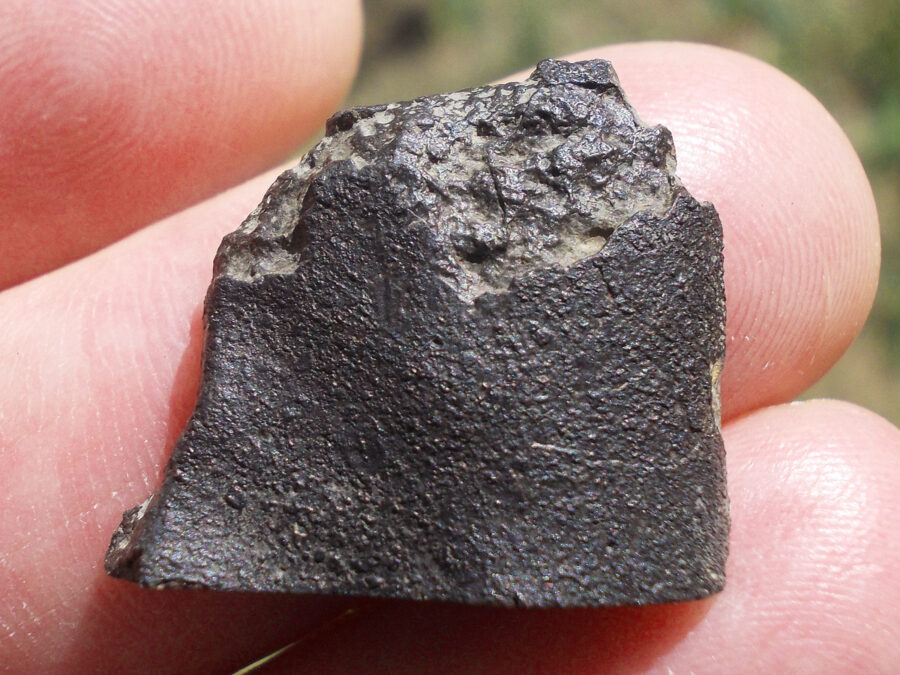
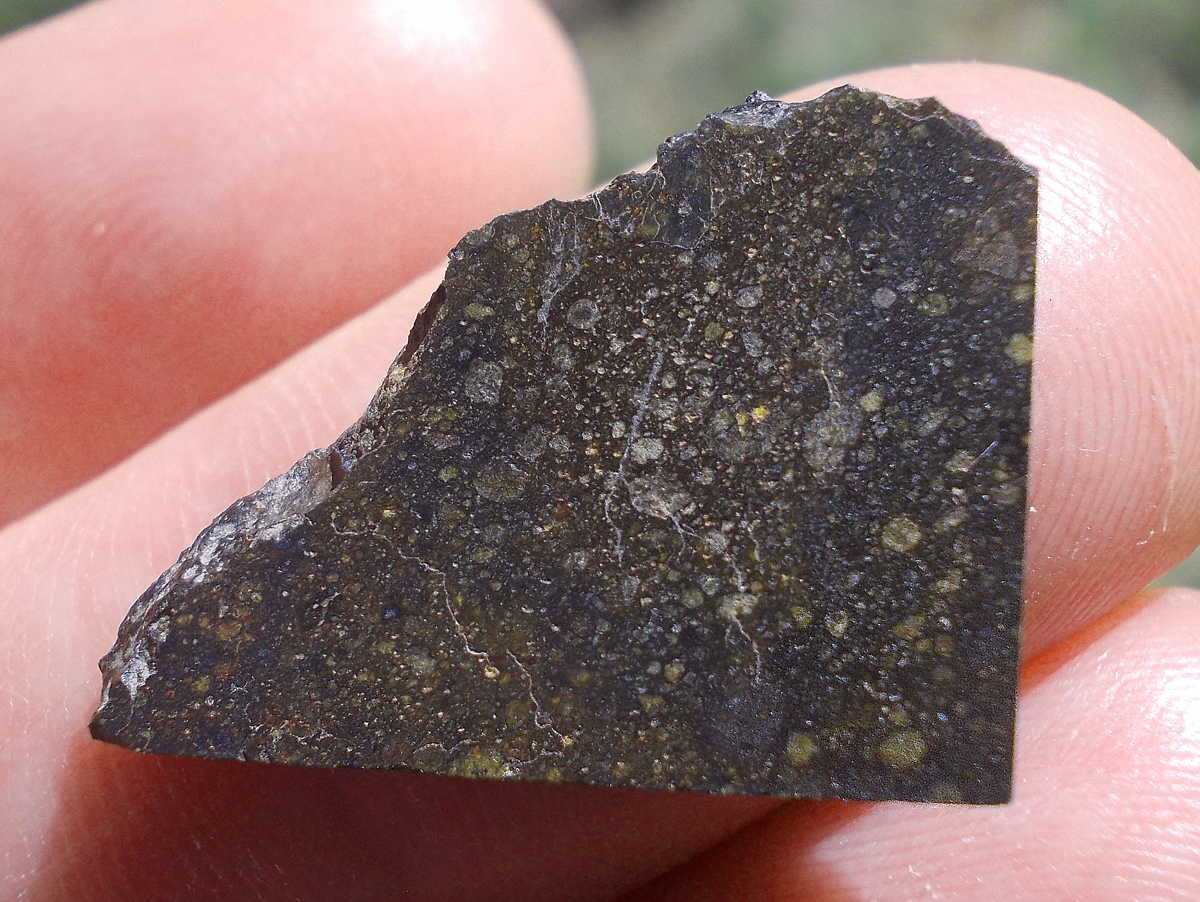
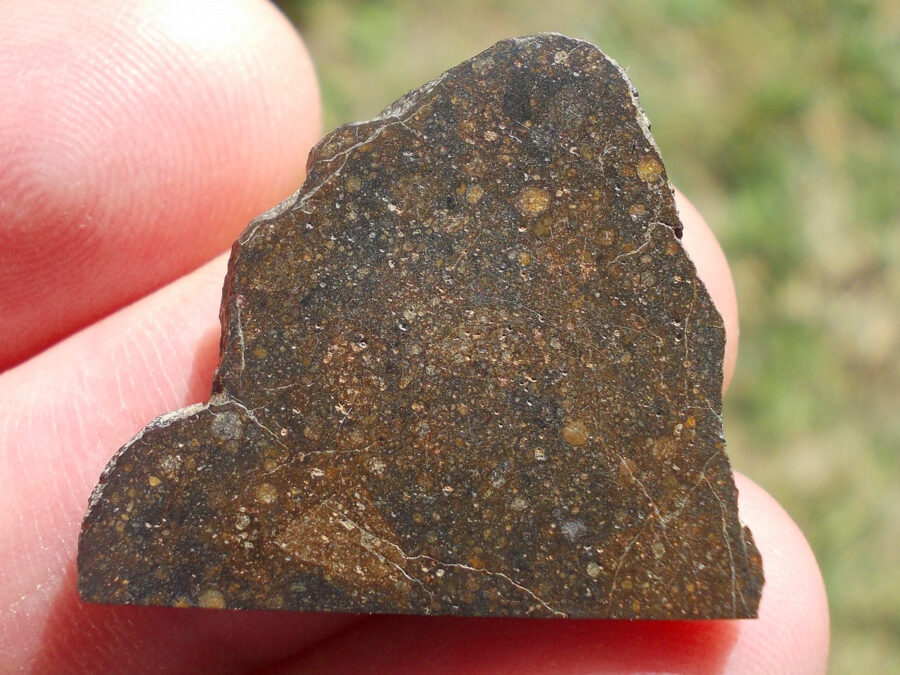
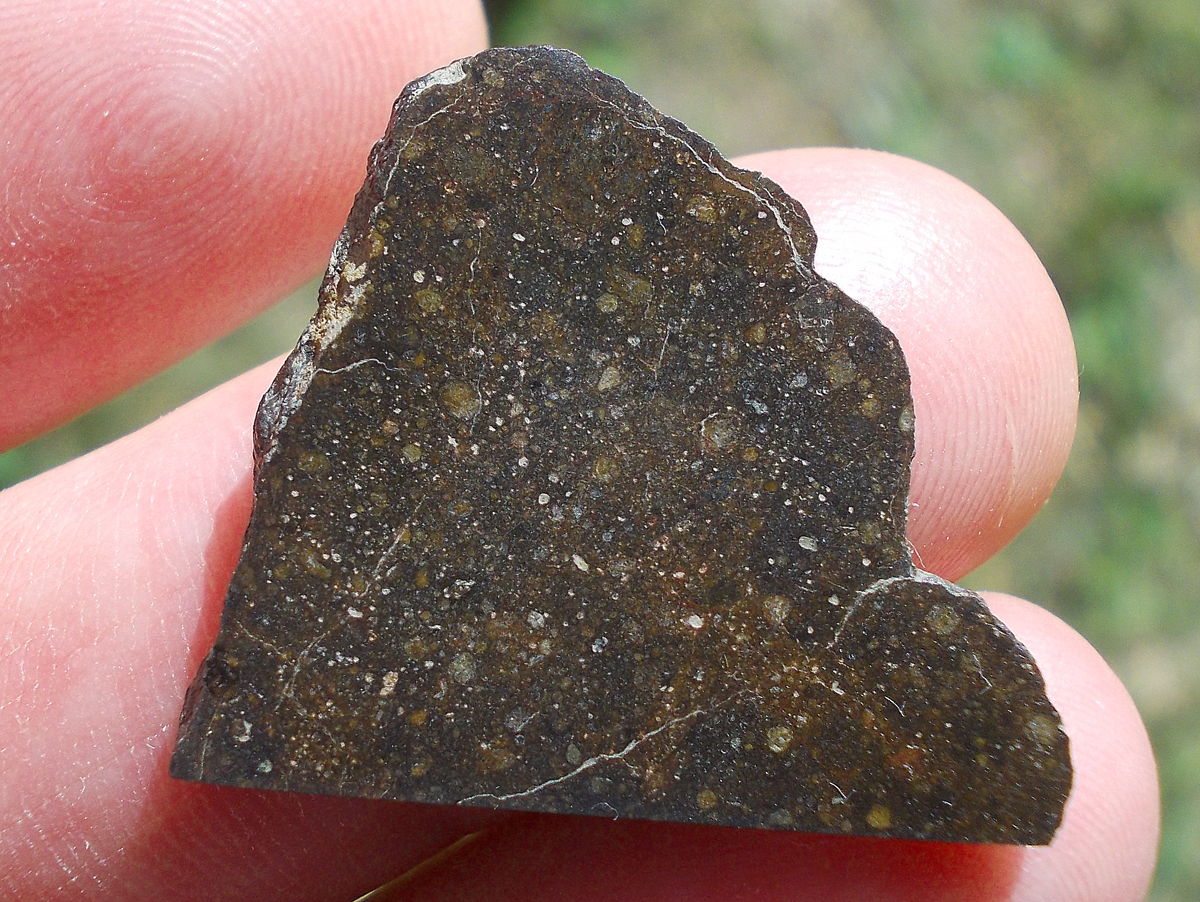
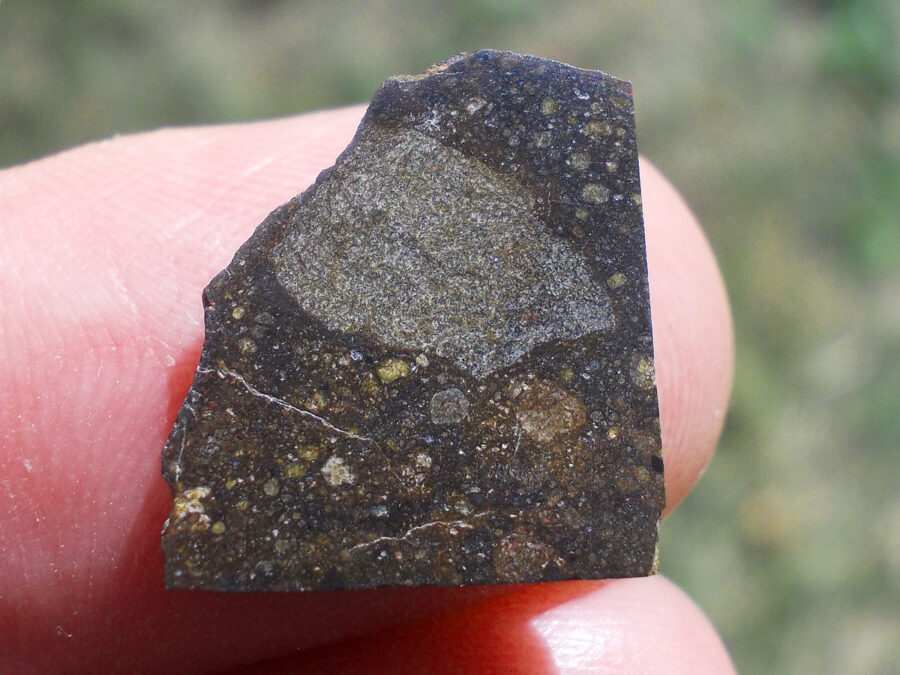
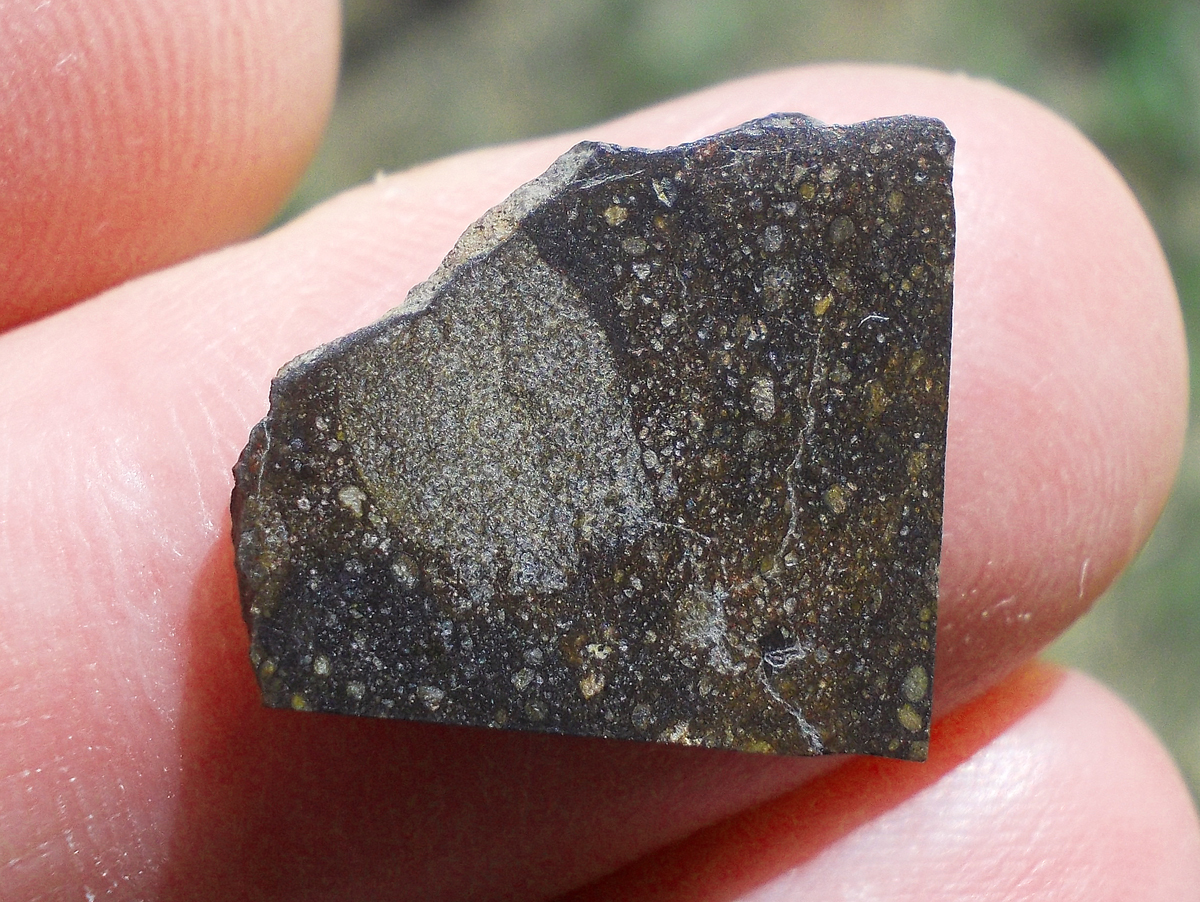
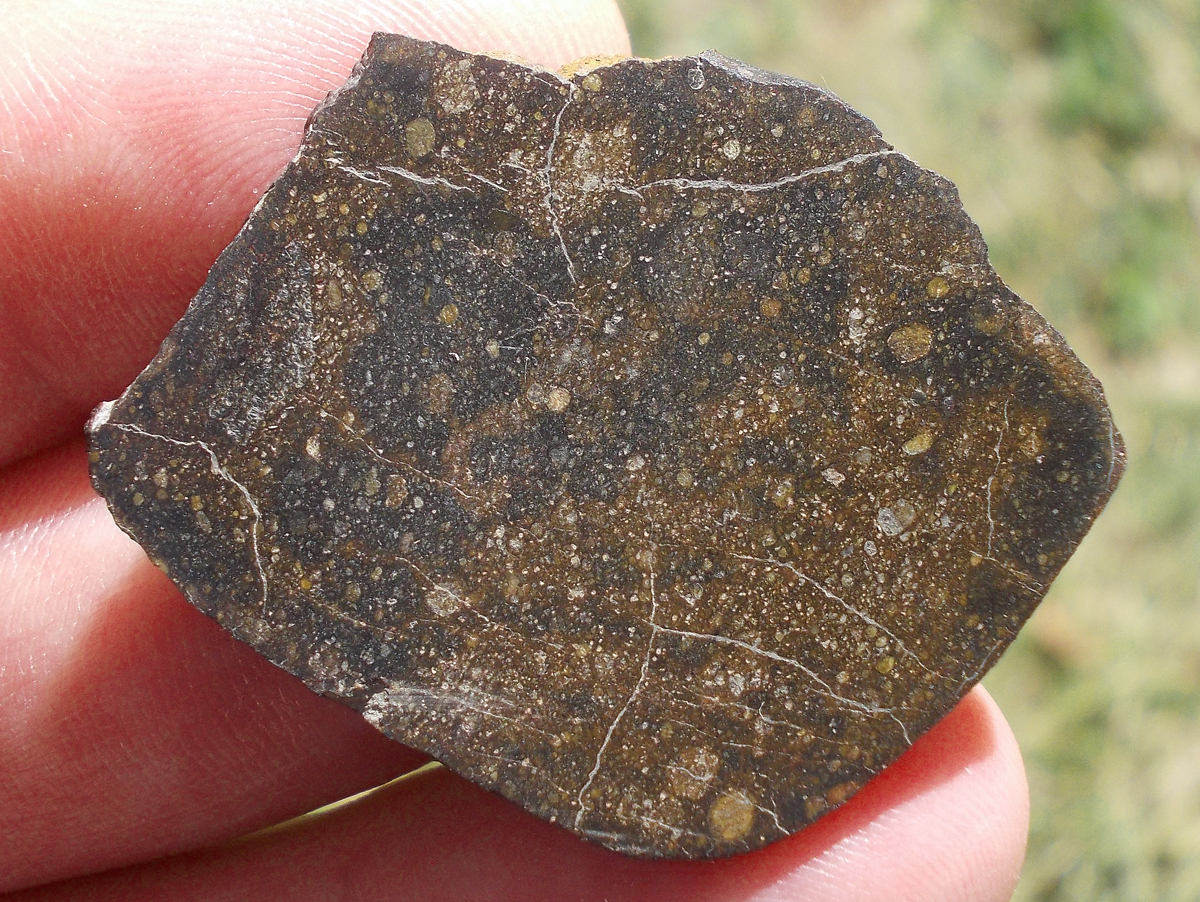
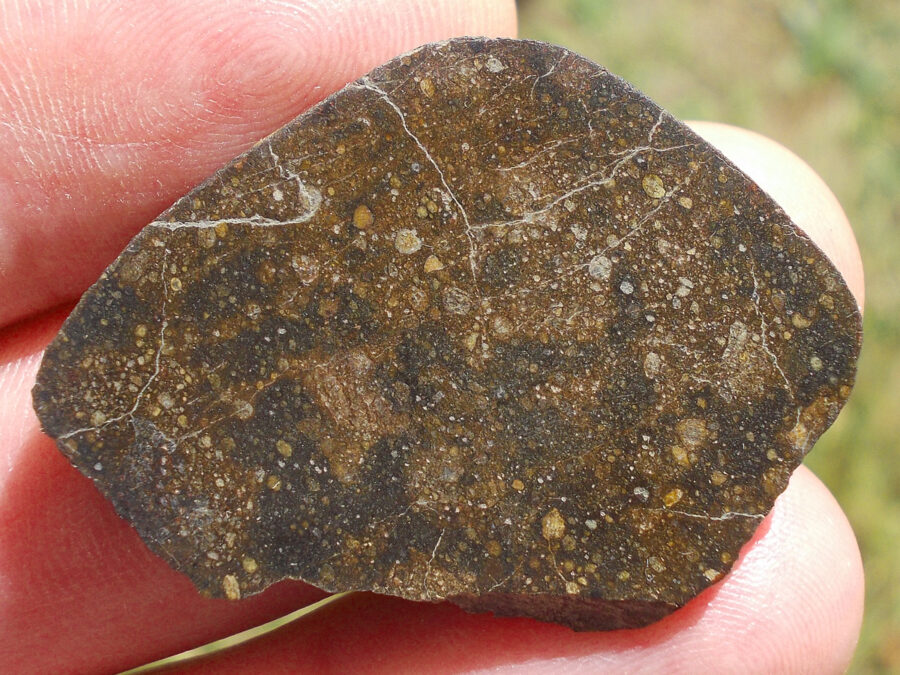
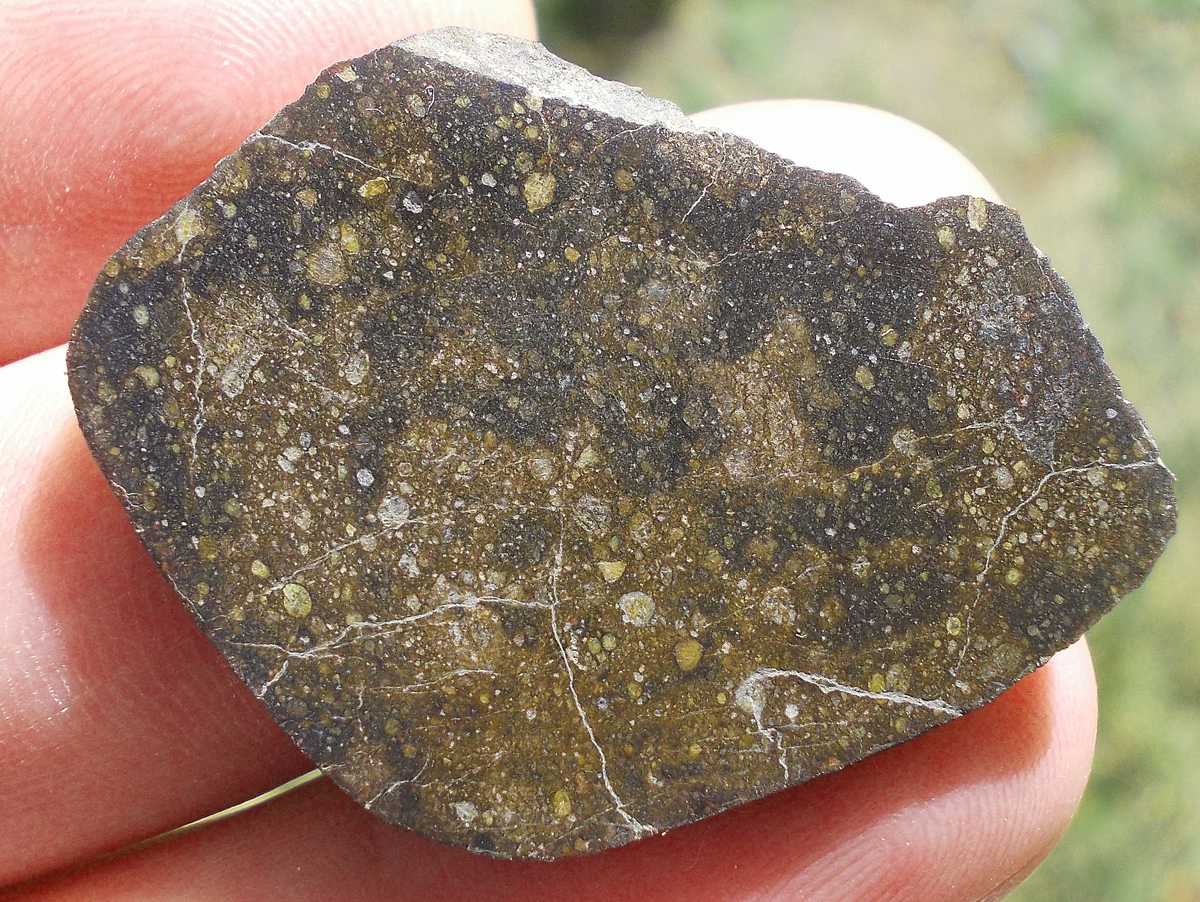
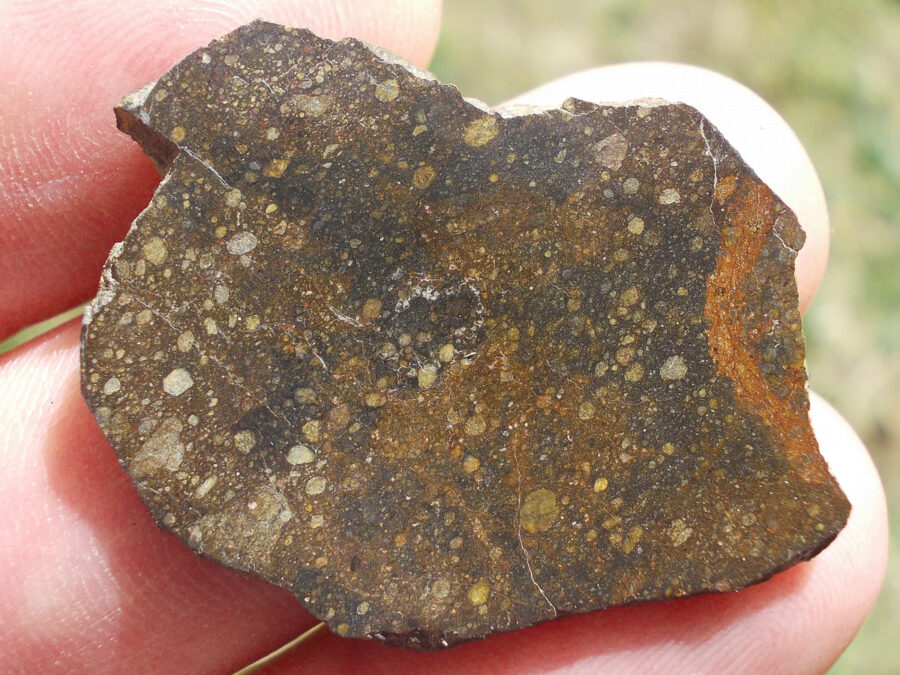
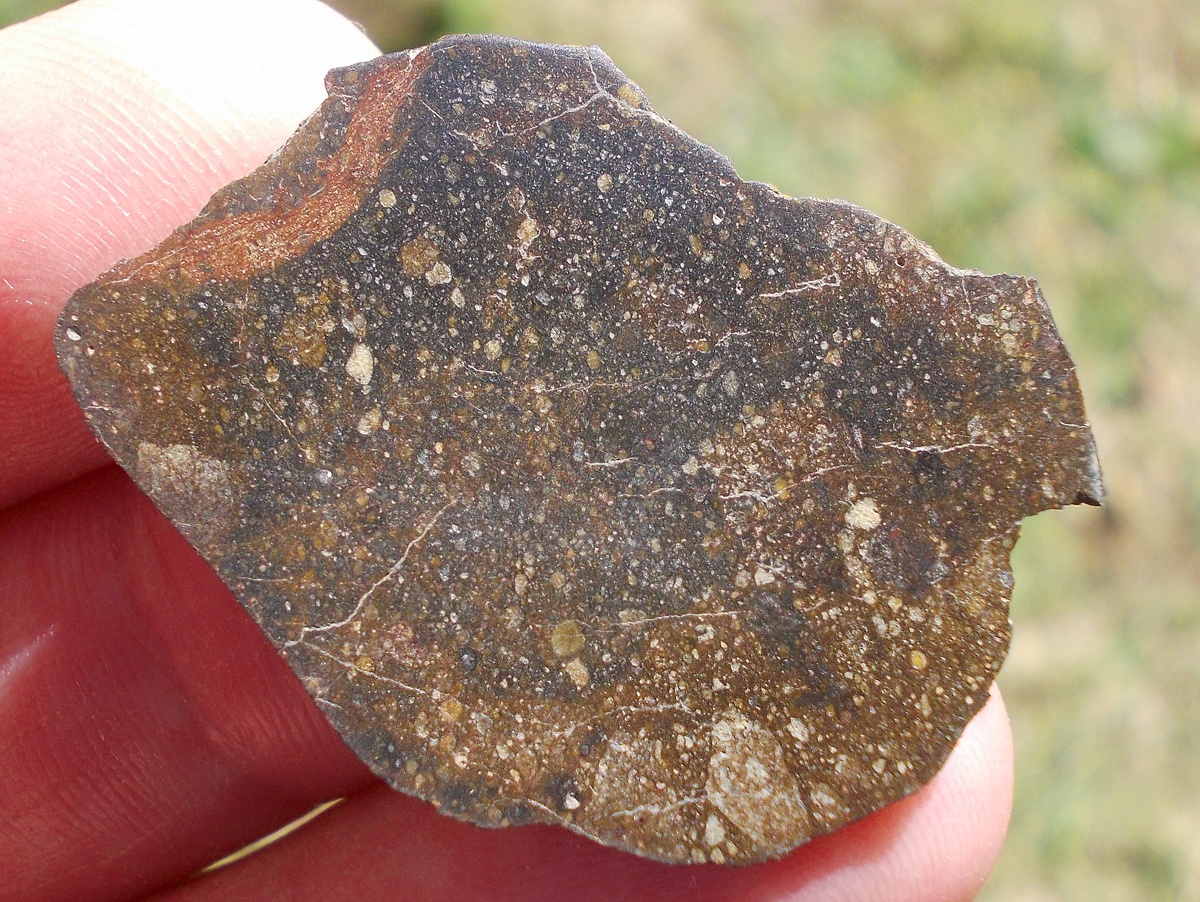
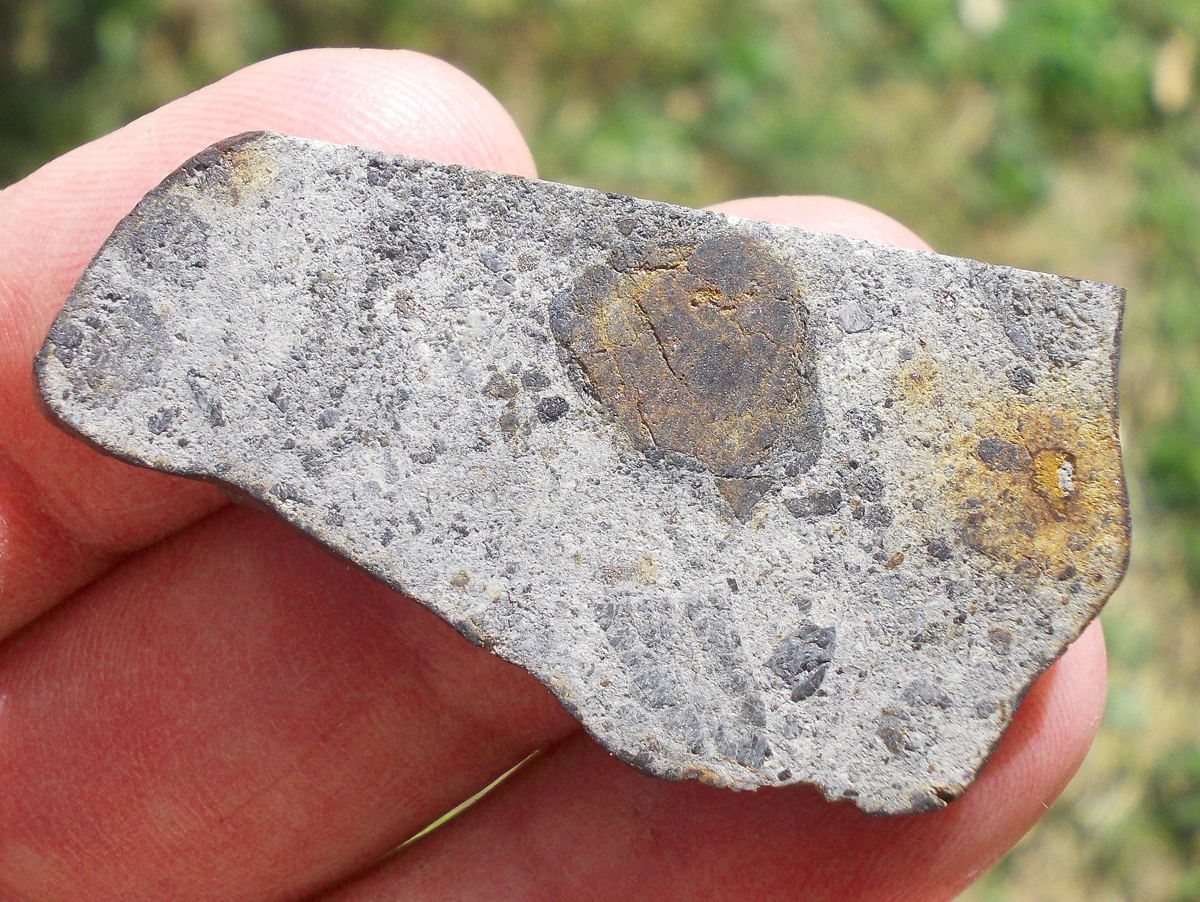
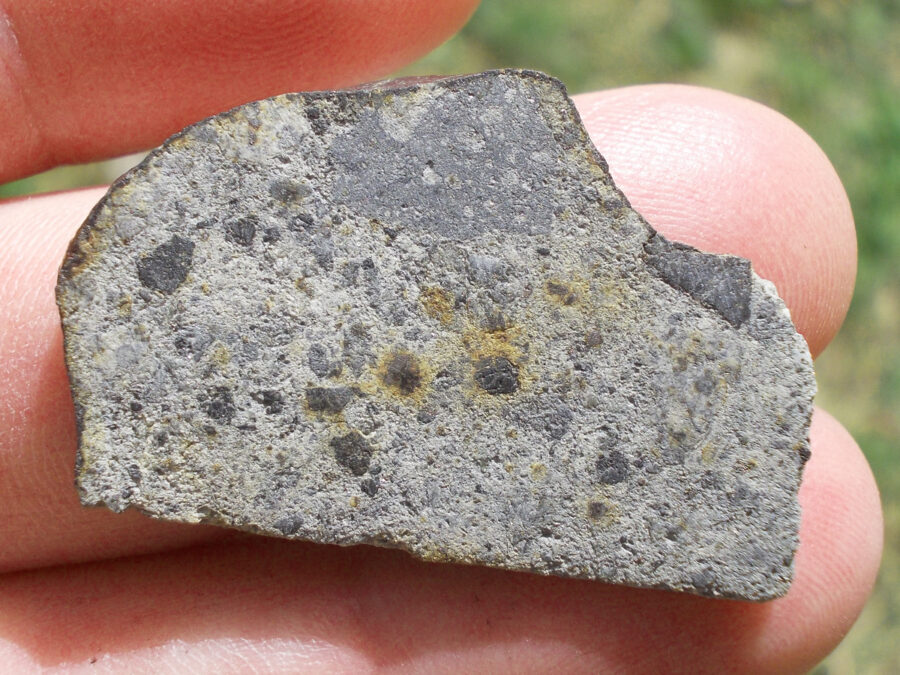
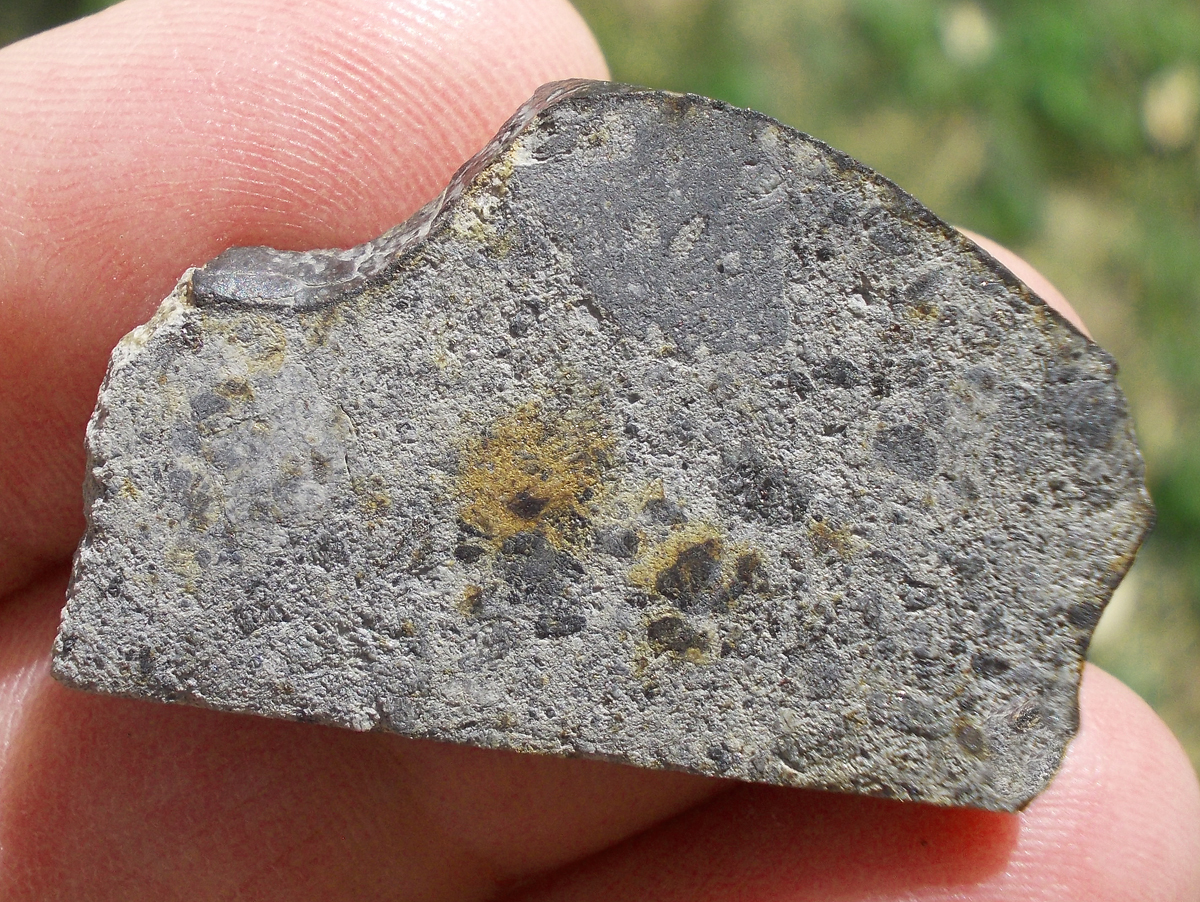
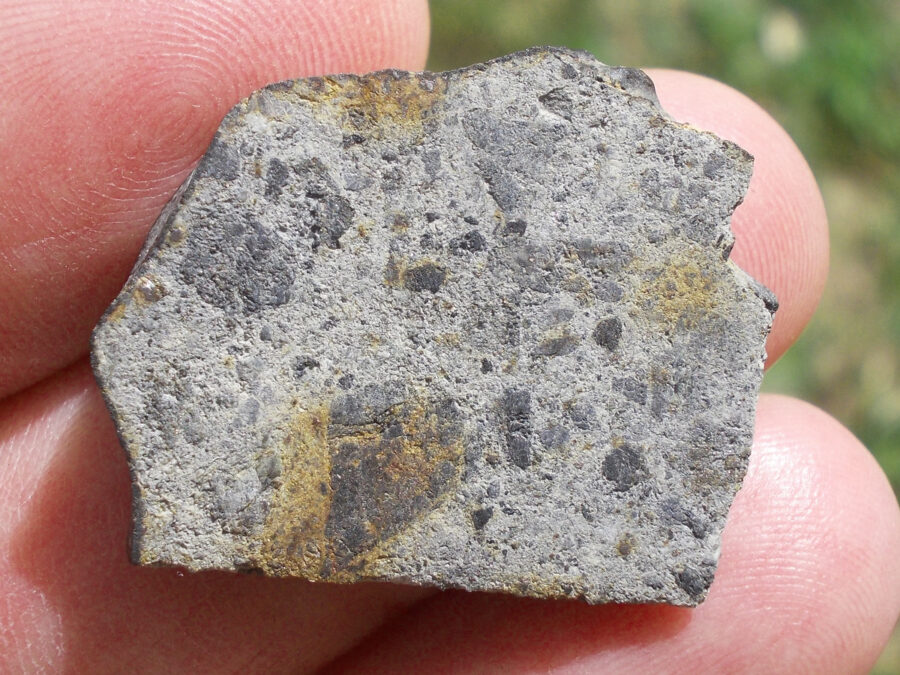
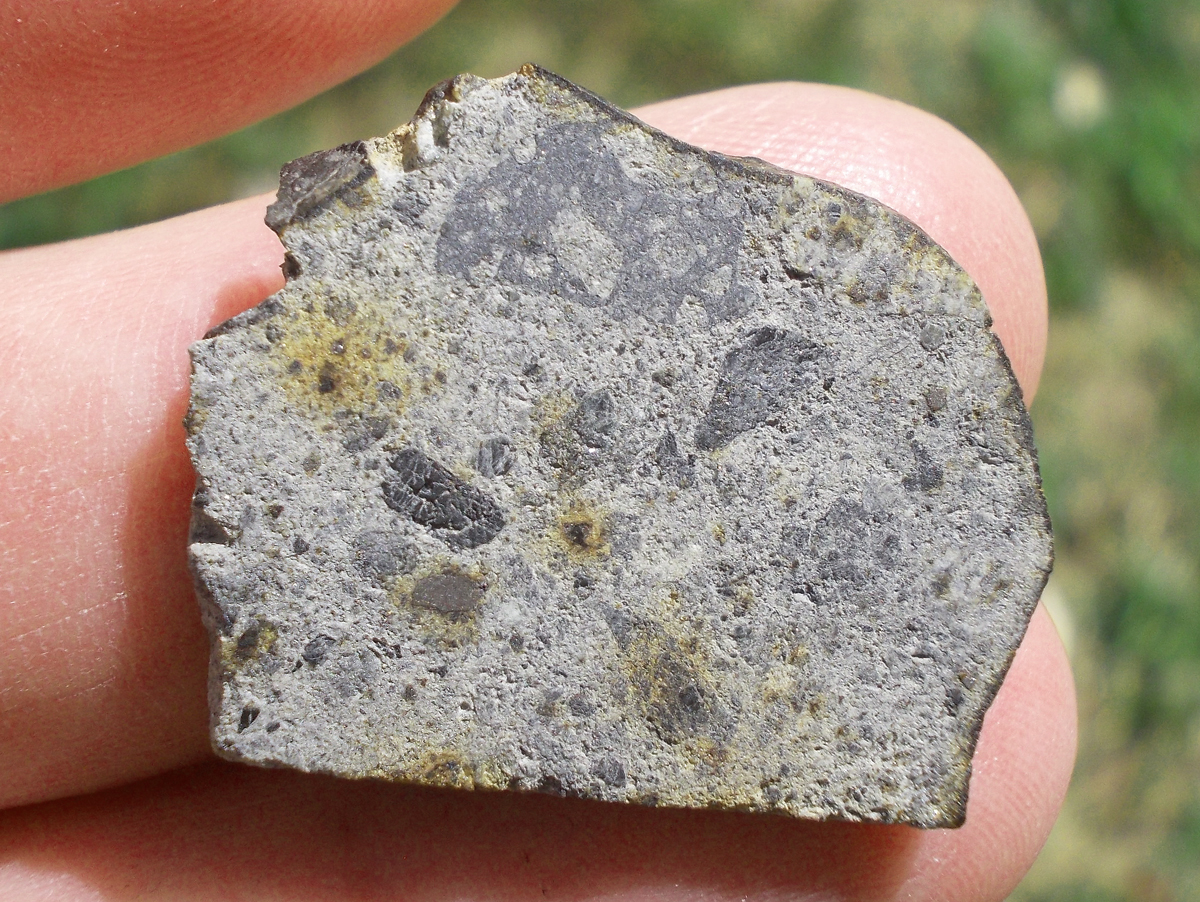
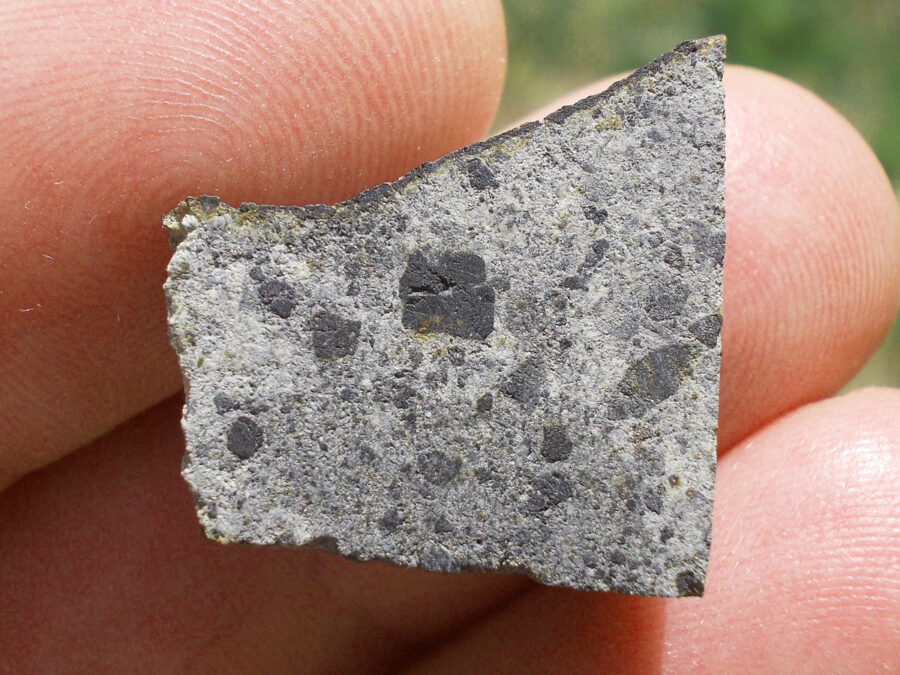
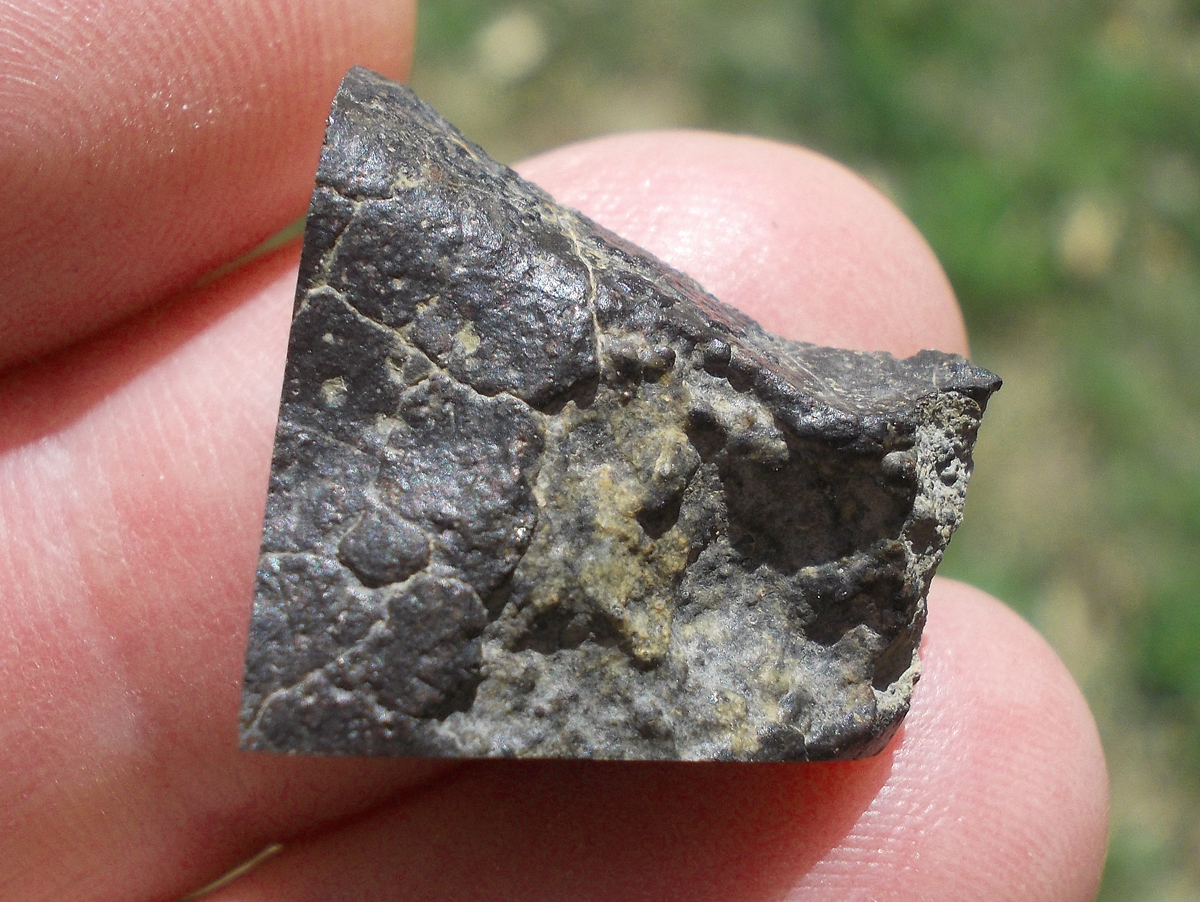
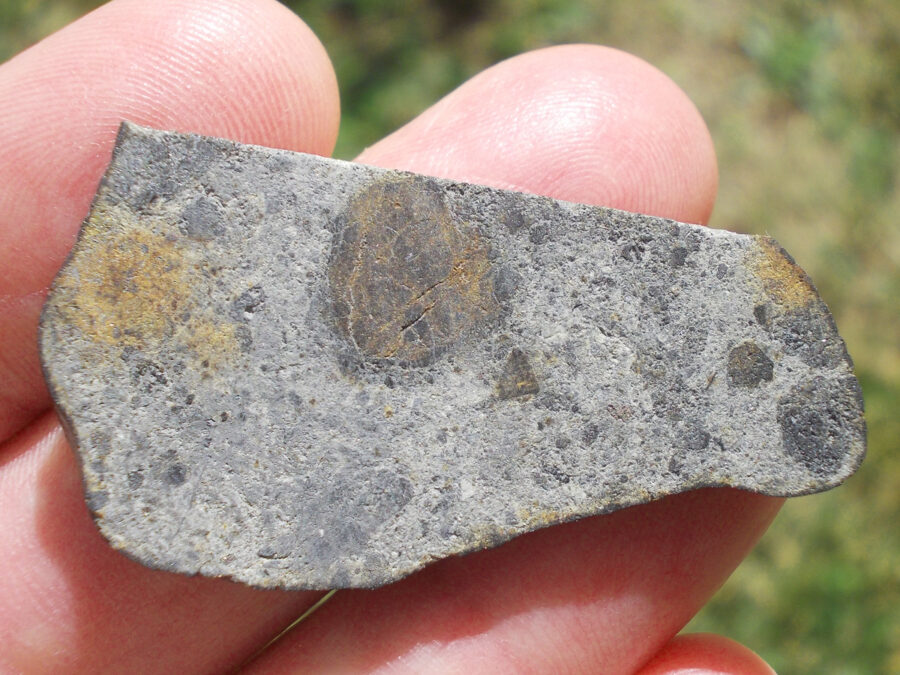
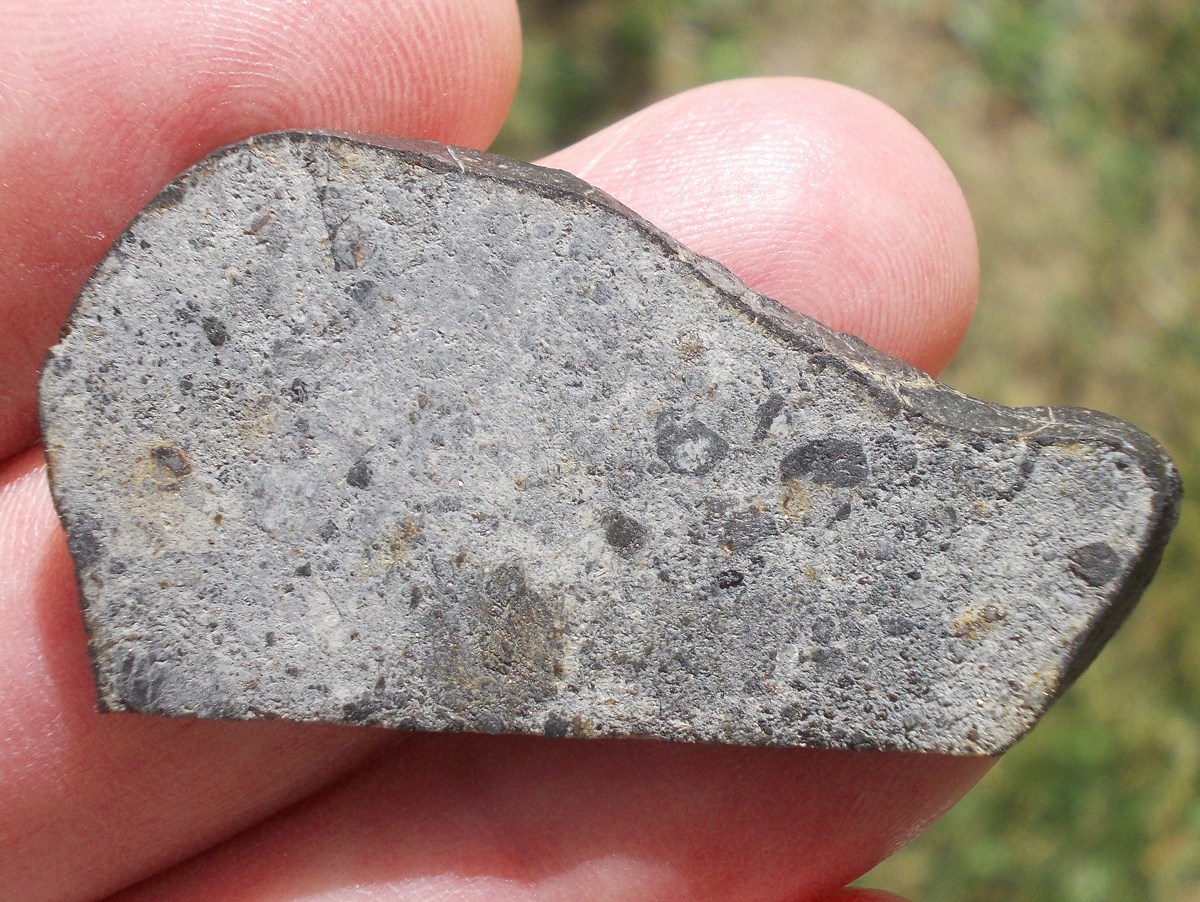
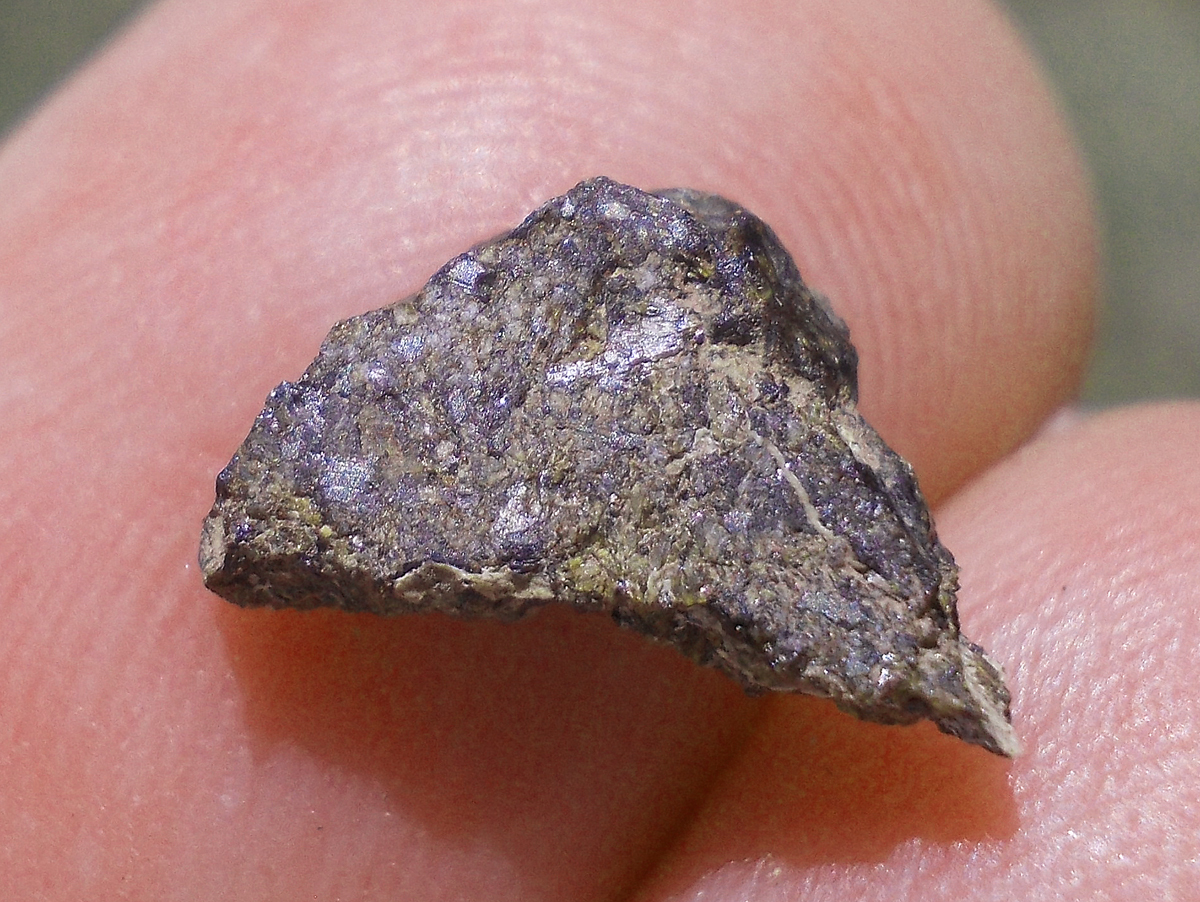
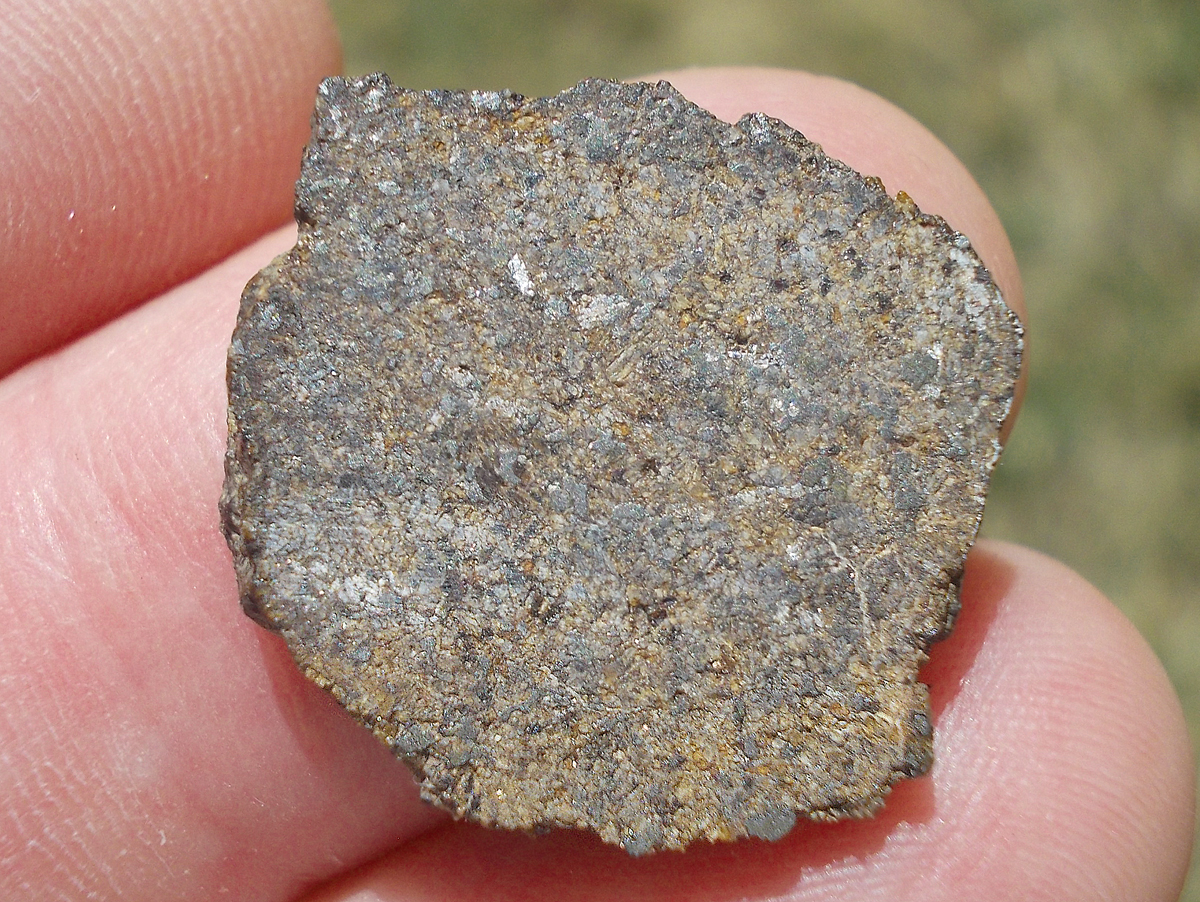
Jdiriya 004 is a rare and fresh rumuruti R3 chondrite weighing only 142 grams.
Magnetic susceptibility, chondrule diameters, mineral chemistry and texture suggest that it is an R3-4 breccia.
Only 10 meteorites of this type are classified to date.
The R chondrite group does not clearly belong to any of the major chondrite classes (ordinary, carbonaceous, enstatite); R chondrites have sub-solar Mg/Si and refractory/Si ratios, oxygen isotopic compositions that are above the terrestrial fractionation line and ordinary chondrites, and strongly oxidized mineralogy.
The first R chondrite, Carlisle Lakes, was found in Australia in 1977.
Jdiriya 004 is a rare and fresh rumuruti R3 chondrite weighing only 142 grams.
Magnetic susceptibility, chondrule diameters, mineral chemistry and texture suggest that it is an R3-4 breccia.
Only 10 meteorites of this type are classified to date.
The R chondrite group does not clearly belong to any of the major chondrite classes (ordinary, carbonaceous, enstatite); R chondrites have sub-solar Mg/Si and refractory/Si ratios, oxygen isotopic compositions that are above the terrestrial fractionation line and ordinary chondrites, and strongly oxidized mineralogy.
The first R chondrite, Carlisle Lakes, was found in Australia in 1977.
Jdiriya 004 is a rare and fresh rumuruti R3 chondrite weighing only 142 grams.
Magnetic susceptibility, chondrule diameters, mineral chemistry and texture suggest that it is an R3-4 breccia.
Only 10 meteorites of this type are classified to date.
The R chondrite group does not clearly belong to any of the major chondrite classes (ordinary, carbonaceous, enstatite); R chondrites have sub-solar Mg/Si and refractory/Si ratios, oxygen isotopic compositions that are above the terrestrial fractionation line and ordinary chondrites, and strongly oxidized mineralogy.
The first R chondrite, Carlisle Lakes, was found in Australia in 1977.
Jdiriya 004 is a rare and fresh rumuruti R3 chondrite weighing only 142 grams.
Magnetic susceptibility, chondrule diameters, mineral chemistry and texture suggest that it is an R3-4 breccia.
Only 10 meteorites of this type are classified to date.
The R chondrite group does not clearly belong to any of the major chondrite classes (ordinary, carbonaceous, enstatite); R chondrites have sub-solar Mg/Si and refractory/Si ratios, oxygen isotopic compositions that are above the terrestrial fractionation line and ordinary chondrites, and strongly oxidized mineralogy.
The first R chondrite, Carlisle Lakes, was found in Australia in 1977.
Jdiriya 004 is a rare and fresh rumuruti R3 chondrite weighing only 142 grams.
Magnetic susceptibility, chondrule diameters, mineral chemistry and texture suggest that it is an R3-4 breccia.
Only 10 meteorites of this type are classified to date.
The R chondrite group does not clearly belong to any of the major chondrite classes (ordinary, carbonaceous, enstatite); R chondrites have sub-solar Mg/Si and refractory/Si ratios, oxygen isotopic compositions that are above the terrestrial fractionation line and ordinary chondrites, and strongly oxidized mineralogy.
The first R chondrite, Carlisle Lakes, was found in Australia in 1977.
Jdiriya 004 is a rare and fresh rumuruti R3 chondrite weighing only 142 grams.
Magnetic susceptibility, chondrule diameters, mineral chemistry and texture suggest that it is an R3-4 breccia.
Only 10 meteorites of this type are classified to date.
The R chondrite group does not clearly belong to any of the major chondrite classes (ordinary, carbonaceous, enstatite); R chondrites have sub-solar Mg/Si and refractory/Si ratios, oxygen isotopic compositions that are above the terrestrial fractionation line and ordinary chondrites, and strongly oxidized mineralogy.
The first R chondrite, Carlisle Lakes, was found in Australia in 1977.
Jdiriya 004 is a rare and fresh rumuruti R3 chondrite weighing only 142 grams.
Magnetic susceptibility, chondrule diameters, mineral chemistry and texture suggest that it is an R3-4 breccia.
Only 10 meteorites of this type are classified to date.
The R chondrite group does not clearly belong to any of the major chondrite classes (ordinary, carbonaceous, enstatite); R chondrites have sub-solar Mg/Si and refractory/Si ratios, oxygen isotopic compositions that are above the terrestrial fractionation line and ordinary chondrites, and strongly oxidized mineralogy.
The first R chondrite, Carlisle Lakes, was found in Australia in 1977.
Jdiriya 004 is a rare and fresh rumuruti R3 chondrite weighing only 142 grams.
Magnetic susceptibility, chondrule diameters, mineral chemistry and texture suggest that it is an R3-4 breccia.
Only 10 meteorites of this type are classified to date.
The R chondrite group does not clearly belong to any of the major chondrite classes (ordinary, carbonaceous, enstatite); R chondrites have sub-solar Mg/Si and refractory/Si ratios, oxygen isotopic compositions that are above the terrestrial fractionation line and ordinary chondrites, and strongly oxidized mineralogy.
The first R chondrite, Carlisle Lakes, was found in Australia in 1977.
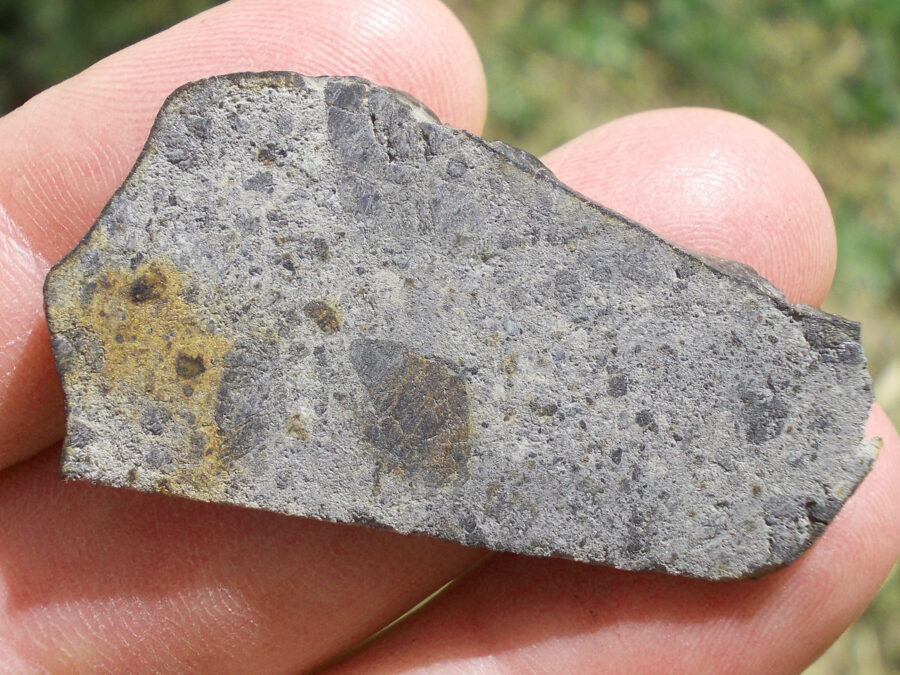
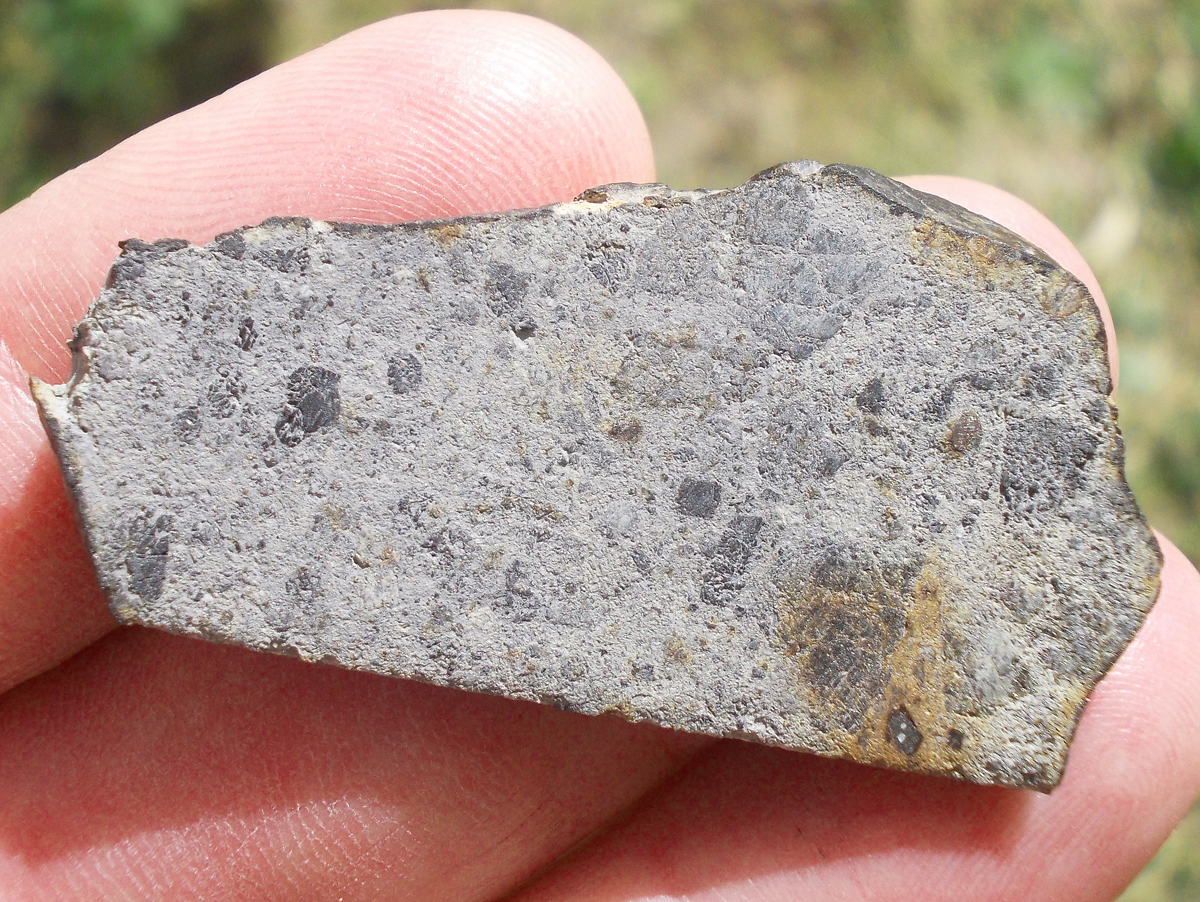
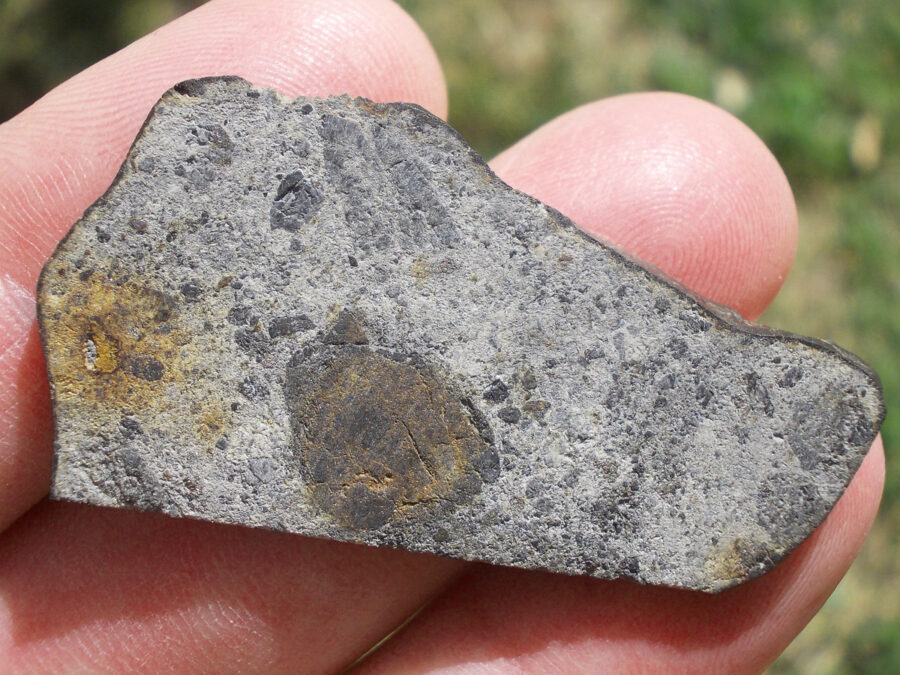
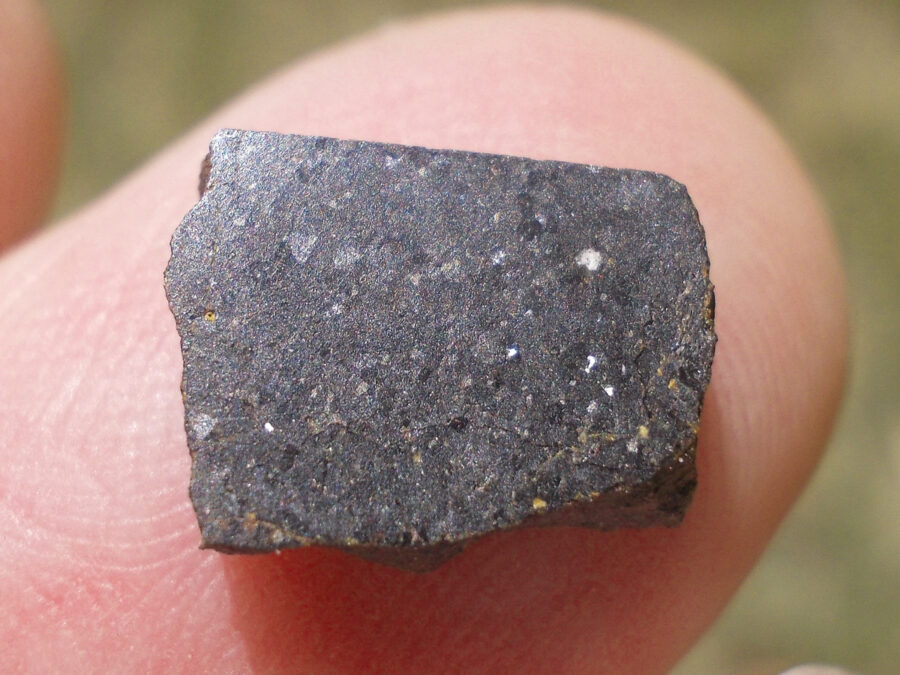
Nwa 13512 is an Aubrite meteorite discovered in Morocco near Boudnib in 2019.
I this date only 72 meteorites of this type have been classified.
It is a rare type of meteorite, difficult to find on the market.
The name Aubrites is linked to the fall of a meteorite in Aubres, France in 1836. They are composed mainly of orthopyroxene to enstatite.
History : Three visually-similar specimens (total weight 105 g)
found together near Boudnib, Morocco were purchased by Mohammed Hmani in December 2019.
Petrography: (A. Irving, UWS and P. Carpenter, WUSL) The specimen has a mean grainsize of ~400 µm and is composed predominantly of equant grains of enstatite with subordinate sodic plagioclase and accessory altered Si-bearing kamacite, altered Cr-troilite and schreibersite.
Geochemistry: Enstatite (Fs0.2±0.0Wo0.6-0.7, N = 3), plagioclase (Ab91.4An2.6Or6.0; Ab76.4An21.4Or2.3; N = 2), kamacite (Si = 1.5 wt.%, Ni = 7.9 wt.%).
Classification: Aubrite.
Specimens: 20.5 g including one polished thin section at UWB; remainder with Mr. M. Hmani.
Nwa 13512 is an Aubrite meteorite discovered in Morocco near Boudnib in 2019.
I this date only 72 meteorites of this type have been classified.
It is a rare type of meteorite, difficult to find on the market.
The name Aubrites is linked to the fall of a meteorite in Aubres, France in 1836. They are composed mainly of orthopyroxene to enstatite.
History : Three visually-similar specimens (total weight 105 g)
found together near Boudnib, Morocco were purchased by Mohammed Hmani in December 2019.
Petrography: (A. Irving, UWS and P. Carpenter, WUSL) The specimen has a mean grainsize of ~400 µm and is composed predominantly of equant grains of enstatite with subordinate sodic plagioclase and accessory altered Si-bearing kamacite, altered Cr-troilite and schreibersite.
Geochemistry: Enstatite (Fs0.2±0.0Wo0.6-0.7, N = 3), plagioclase (Ab91.4An2.6Or6.0; Ab76.4An21.4Or2.3; N = 2), kamacite (Si = 1.5 wt.%, Ni = 7.9 wt.%).
Classification: Aubrite.
Specimens: 20.5 g including one polished thin section at UWB; remainder with Mr. M. Hmani.