Showing 271–288 of 1512 resultsSorted by latest

Tarkint 001 Mars Shergottite #7 - 1,6 gOut of stock

Tarkint 001 Mars Shergottite #7 – 1,6 g

245,70 $

Tarkint 001 is a rare meteorite from Mars, classified as Shergottite (olivine-phyric).

It was discovered in Gao, Mali, in 2025.

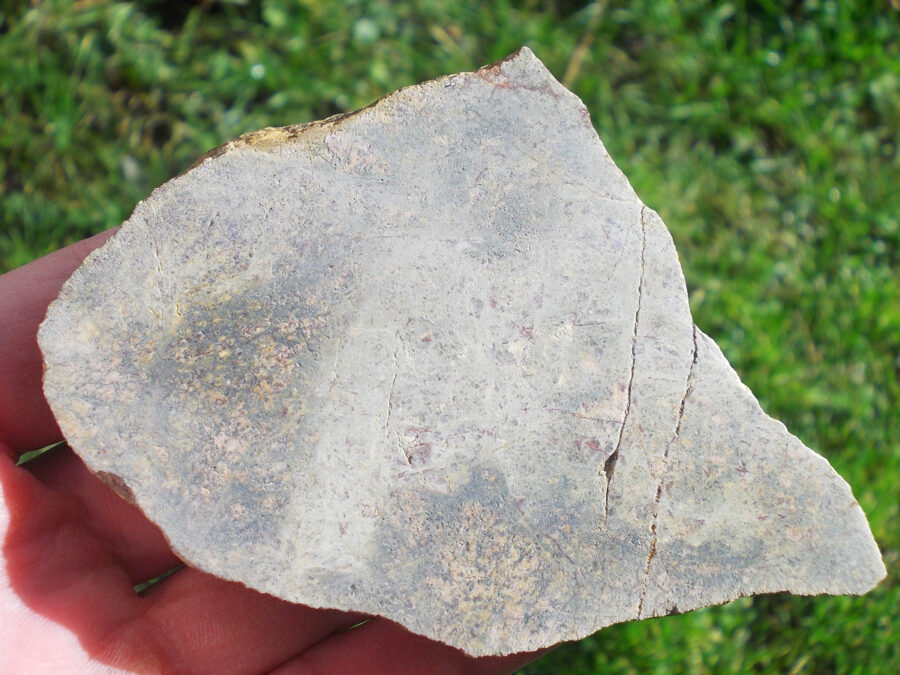
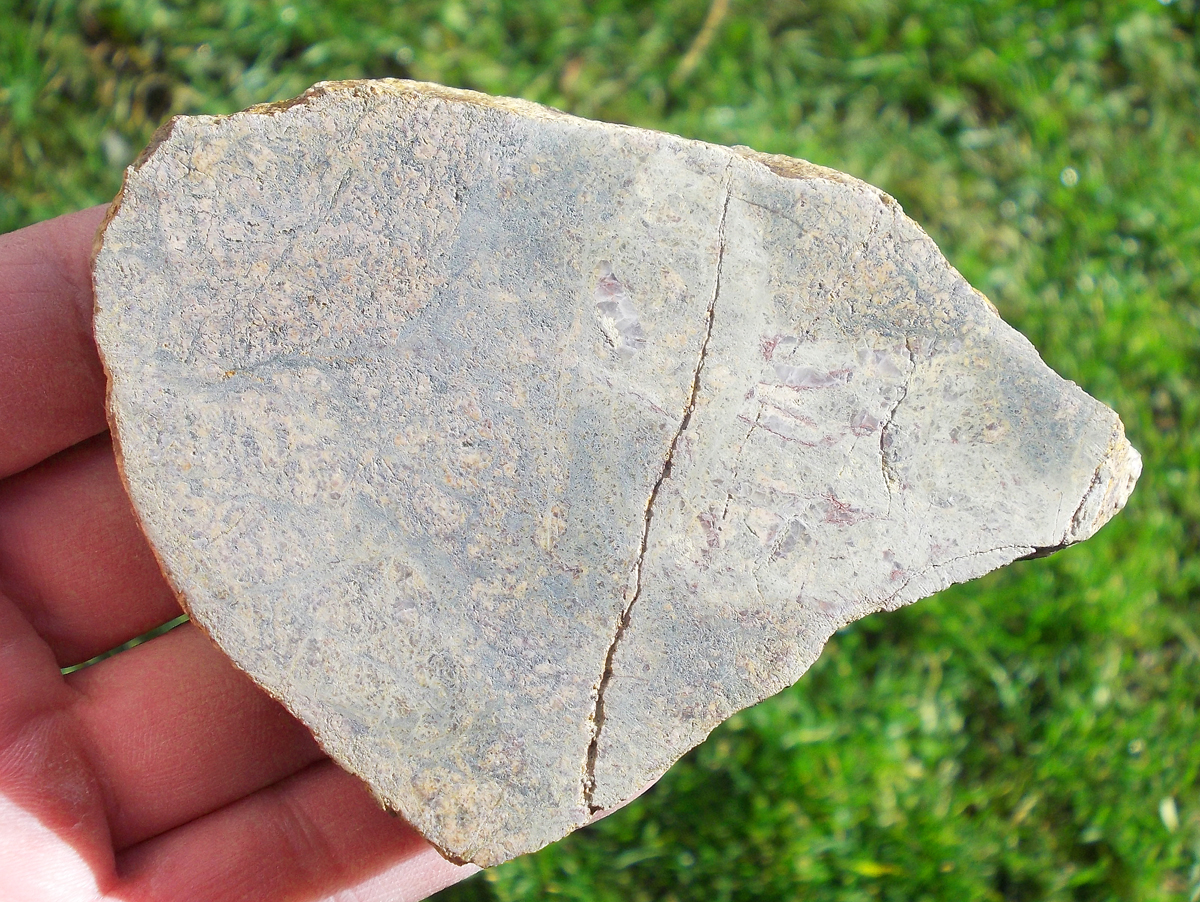
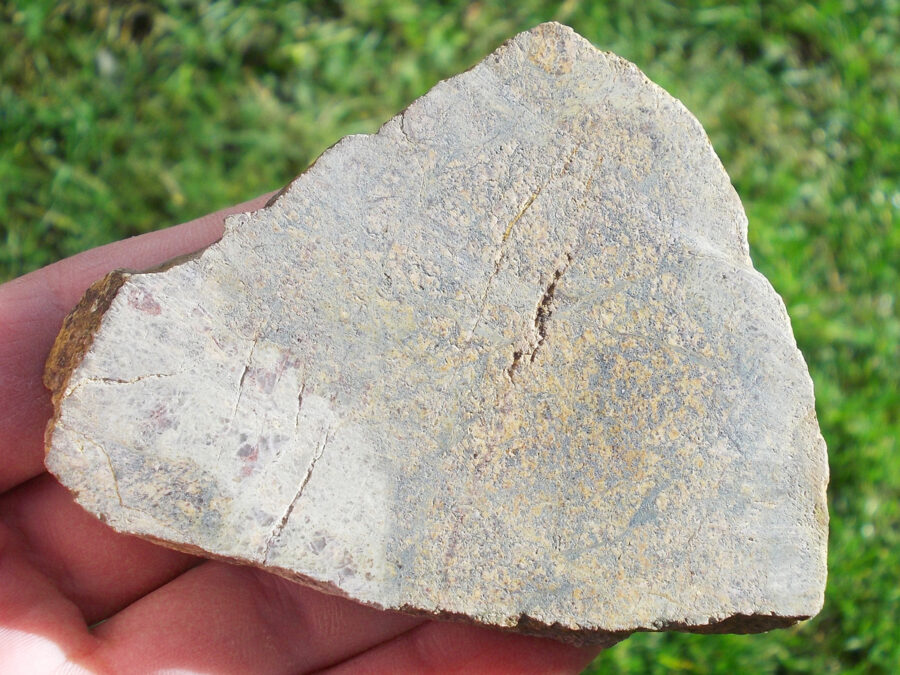
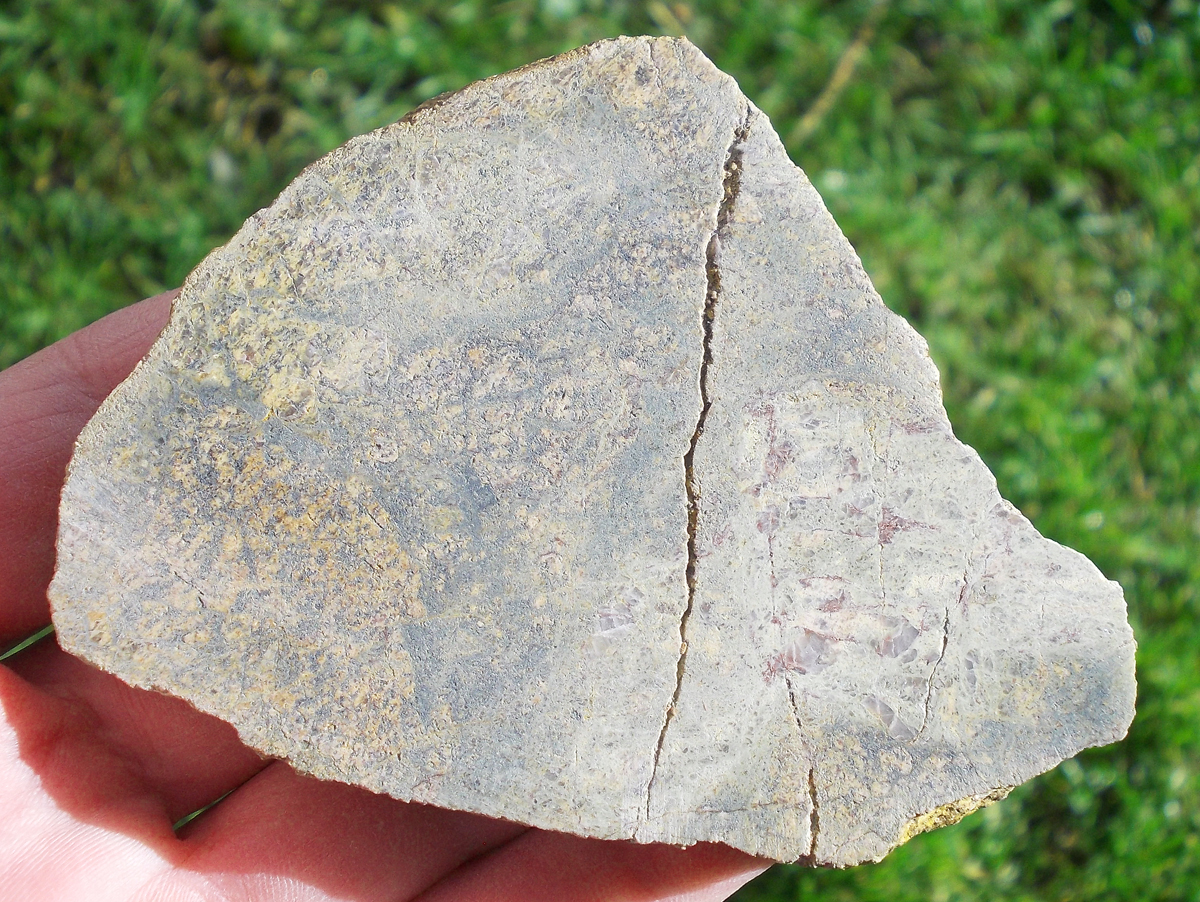
Its surface reveals numerous brown-green olivine phenocrystals measuring a few millimeters, embedded in a fine-grained, light beige matrix.

The unique feature of this meteorite is that it is unlike any other Martian meteorite.

The total known weight of this meteorite is only 2 kg, so there won’t be enough for everyone !

Tarkint 001 17.4959263, 0.6428554

Gao, Mali

Find: 2025

Classification: Martian meteorite (Shergottite)

History: In 2025, fragments of a meteorite were discovered in a desert area 60 km east of the village of Tarkint and approximately 150 km northeast of the city of Gao, Mali. The discovery occurred by chance during a local field survey, where the distinctive surface features of the stones drew the attention of the field researchers. Purchased by Ali Muftah in 2025.

Physical characteristics: The total collected mass was approximately 2 kg. The deposit samples display an exterior partially covered with dark, slightly abraded fusion crust. Sawcut surface reveals many distinctive mm-sized brown-green olivine phenocrysts set in light tan-colored, fine-grained groundmass.

Petrography: (C. Agee, UNM) Electron microprobe analysis of a polished mount shows this meteorite to be an olivine-phyric shergottite. Olivine phenocrysts display core-rim igneous zoning. Plagioclase has been converted to maskelynite. Fine-grained pigeonite and maskelynite make up the groundmass. Minor amounts of chromite, Ti-magnetite, and troilite are ubiquitous.

Geochemistry: (T. Shisseh, UNM) Olivine Fa32.6±12.1, Fe/Mn=53±4, n=13; pigeonite Fs23.3±3.2Wo4.9±2.2, Fe/Mn=30±1, n=17; maskelynite An54.9±3.5Ab44.7±3.5, n=4.

Classification: Martian, olivine-phyric shergottite. Visually, the macroscopic texture of this meteorite is reminiscent of NWA 10416, however they are not paired. This meteorite lacks augite and altered olivine, it also has maskelynite-only, with no remnant plagioclase present. This meteorite has olivine that is significantly more forsteritic than NWA 10416.

Specimens: 48 g on deposit at UNM, Ali Muftah holds the main mass, Eric Twelker holds a 410.7 g piece.

Tarkint 001 Mars Shergottite #6 - 0,9 gOut of stock

Tarkint 001 Mars Shergottite #6 – 0,9 g

136,90 $

Tarkint 001 is a rare meteorite from Mars, classified as Shergottite (olivine-phyric).

It was discovered in Gao, Mali, in 2025.

Its surface reveals numerous brown-green olivine phenocrystals measuring a few millimeters, embedded in a fine-grained, light beige matrix.

The unique feature of this meteorite is that it is unlike any other Martian meteorite.

The total known weight of this meteorite is only 2 kg, so there won’t be enough for everyone !

Tarkint 001 17.4959263, 0.6428554

Gao, Mali

Find: 2025

Classification: Martian meteorite (Shergottite)

History: In 2025, fragments of a meteorite were discovered in a desert area 60 km east of the village of Tarkint and approximately 150 km northeast of the city of Gao, Mali. The discovery occurred by chance during a local field survey, where the distinctive surface features of the stones drew the attention of the field researchers. Purchased by Ali Muftah in 2025.

Physical characteristics: The total collected mass was approximately 2 kg. The deposit samples display an exterior partially covered with dark, slightly abraded fusion crust. Sawcut surface reveals many distinctive mm-sized brown-green olivine phenocrysts set in light tan-colored, fine-grained groundmass.

Petrography: (C. Agee, UNM) Electron microprobe analysis of a polished mount shows this meteorite to be an olivine-phyric shergottite. Olivine phenocrysts display core-rim igneous zoning. Plagioclase has been converted to maskelynite. Fine-grained pigeonite and maskelynite make up the groundmass. Minor amounts of chromite, Ti-magnetite, and troilite are ubiquitous.

Geochemistry: (T. Shisseh, UNM) Olivine Fa32.6±12.1, Fe/Mn=53±4, n=13; pigeonite Fs23.3±3.2Wo4.9±2.2, Fe/Mn=30±1, n=17; maskelynite An54.9±3.5Ab44.7±3.5, n=4.

Classification: Martian, olivine-phyric shergottite. Visually, the macroscopic texture of this meteorite is reminiscent of NWA 10416, however they are not paired. This meteorite lacks augite and altered olivine, it also has maskelynite-only, with no remnant plagioclase present. This meteorite has olivine that is significantly more forsteritic than NWA 10416.

Specimens: 48 g on deposit at UNM, Ali Muftah holds the main mass, Eric Twelker holds a 410.7 g piece.

Tarkint 001 Mars Shergottite #5 - 2,3 g

Tarkint 001 Mars Shergottite #5 – 2,3 g

296,00 $

Tarkint 001 is a rare meteorite from Mars, classified as Shergottite (olivine-phyric).

It was discovered in Gao, Mali, in 2025.

Its surface reveals numerous brown-green olivine phenocrystals measuring a few millimeters, embedded in a fine-grained, light beige matrix.

The unique feature of this meteorite is that it is unlike any other Martian meteorite.

The total known weight of this meteorite is only 2 kg, so there won’t be enough for everyone !

Tarkint 001 17.4959263, 0.6428554

Gao, Mali

Find: 2025

Classification: Martian meteorite (Shergottite)

History: In 2025, fragments of a meteorite were discovered in a desert area 60 km east of the village of Tarkint and approximately 150 km northeast of the city of Gao, Mali. The discovery occurred by chance during a local field survey, where the distinctive surface features of the stones drew the attention of the field researchers. Purchased by Ali Muftah in 2025.

Physical characteristics: The total collected mass was approximately 2 kg. The deposit samples display an exterior partially covered with dark, slightly abraded fusion crust. Sawcut surface reveals many distinctive mm-sized brown-green olivine phenocrysts set in light tan-colored, fine-grained groundmass.

Petrography: (C. Agee, UNM) Electron microprobe analysis of a polished mount shows this meteorite to be an olivine-phyric shergottite. Olivine phenocrysts display core-rim igneous zoning. Plagioclase has been converted to maskelynite. Fine-grained pigeonite and maskelynite make up the groundmass. Minor amounts of chromite, Ti-magnetite, and troilite are ubiquitous.

Geochemistry: (T. Shisseh, UNM) Olivine Fa32.6±12.1, Fe/Mn=53±4, n=13; pigeonite Fs23.3±3.2Wo4.9±2.2, Fe/Mn=30±1, n=17; maskelynite An54.9±3.5Ab44.7±3.5, n=4.

Classification: Martian, olivine-phyric shergottite. Visually, the macroscopic texture of this meteorite is reminiscent of NWA 10416, however they are not paired. This meteorite lacks augite and altered olivine, it also has maskelynite-only, with no remnant plagioclase present. This meteorite has olivine that is significantly more forsteritic than NWA 10416.

Specimens: 48 g on deposit at UNM, Ali Muftah holds the main mass, Eric Twelker holds a 410.7 g piece.

Tarkint 001 Mars Shergottite #4 - 3,2 gOut of stock

Tarkint 001 Mars Shergottite #4 – 3,2 g

411,84 $

Tarkint 001 is a rare meteorite from Mars, classified as Shergottite (olivine-phyric).

It was discovered in Gao, Mali, in 2025.

Its surface reveals numerous brown-green olivine phenocrystals measuring a few millimeters, embedded in a fine-grained, light beige matrix.

The unique feature of this meteorite is that it is unlike any other Martian meteorite.

The total known weight of this meteorite is only 2 kg, so there won’t be enough for everyone !

Tarkint 001 17.4959263, 0.6428554

Gao, Mali

Find: 2025

Classification: Martian meteorite (Shergottite)

History: In 2025, fragments of a meteorite were discovered in a desert area 60 km east of the village of Tarkint and approximately 150 km northeast of the city of Gao, Mali. The discovery occurred by chance during a local field survey, where the distinctive surface features of the stones drew the attention of the field researchers. Purchased by Ali Muftah in 2025.

Physical characteristics: The total collected mass was approximately 2 kg. The deposit samples display an exterior partially covered with dark, slightly abraded fusion crust. Sawcut surface reveals many distinctive mm-sized brown-green olivine phenocrysts set in light tan-colored, fine-grained groundmass.

Petrography: (C. Agee, UNM) Electron microprobe analysis of a polished mount shows this meteorite to be an olivine-phyric shergottite. Olivine phenocrysts display core-rim igneous zoning. Plagioclase has been converted to maskelynite. Fine-grained pigeonite and maskelynite make up the groundmass. Minor amounts of chromite, Ti-magnetite, and troilite are ubiquitous.

Geochemistry: (T. Shisseh, UNM) Olivine Fa32.6±12.1, Fe/Mn=53±4, n=13; pigeonite Fs23.3±3.2Wo4.9±2.2, Fe/Mn=30±1, n=17; maskelynite An54.9±3.5Ab44.7±3.5, n=4.

Classification: Martian, olivine-phyric shergottite. Visually, the macroscopic texture of this meteorite is reminiscent of NWA 10416, however they are not paired. This meteorite lacks augite and altered olivine, it also has maskelynite-only, with no remnant plagioclase present. This meteorite has olivine that is significantly more forsteritic than NWA 10416.

Specimens: 48 g on deposit at UNM, Ali Muftah holds the main mass, Eric Twelker holds a 410.7 g piece.

Tarkint 001 Mars Shergottite #3 - 1,7 gOut of stock

Tarkint 001 Mars Shergottite #3 – 1,7 g

238,68 $

Tarkint 001 is a rare meteorite from Mars, classified as Shergottite (olivine-phyric).

It was discovered in Gao, Mali, in 2025.

Its surface reveals numerous brown-green olivine phenocrystals measuring a few millimeters, embedded in a fine-grained, light beige matrix.

The unique feature of this meteorite is that it is unlike any other Martian meteorite.

The total known weight of this meteorite is only 2 kg, so there won’t be enough for everyone !

Tarkint 001 17.4959263, 0.6428554

Gao, Mali

Find: 2025

Classification: Martian meteorite (Shergottite)

History: In 2025, fragments of a meteorite were discovered in a desert area 60 km east of the village of Tarkint and approximately 150 km northeast of the city of Gao, Mali. The discovery occurred by chance during a local field survey, where the distinctive surface features of the stones drew the attention of the field researchers. Purchased by Ali Muftah in 2025.

Physical characteristics: The total collected mass was approximately 2 kg. The deposit samples display an exterior partially covered with dark, slightly abraded fusion crust. Sawcut surface reveals many distinctive mm-sized brown-green olivine phenocrysts set in light tan-colored, fine-grained groundmass.

Petrography: (C. Agee, UNM) Electron microprobe analysis of a polished mount shows this meteorite to be an olivine-phyric shergottite. Olivine phenocrysts display core-rim igneous zoning. Plagioclase has been converted to maskelynite. Fine-grained pigeonite and maskelynite make up the groundmass. Minor amounts of chromite, Ti-magnetite, and troilite are ubiquitous.

Geochemistry: (T. Shisseh, UNM) Olivine Fa32.6±12.1, Fe/Mn=53±4, n=13; pigeonite Fs23.3±3.2Wo4.9±2.2, Fe/Mn=30±1, n=17; maskelynite An54.9±3.5Ab44.7±3.5, n=4.

Classification: Martian, olivine-phyric shergottite. Visually, the macroscopic texture of this meteorite is reminiscent of NWA 10416, however they are not paired. This meteorite lacks augite and altered olivine, it also has maskelynite-only, with no remnant plagioclase present. This meteorite has olivine that is significantly more forsteritic than NWA 10416.

Specimens: 48 g on deposit at UNM, Ali Muftah holds the main mass, Eric Twelker holds a 410.7 g piece.

Tarkint 001 Mars Shergottite #2 - 6,8 gOut of stock

Tarkint 001 Mars Shergottite #2 – 6,8 g

875,16 $

Tarkint 001 is a rare meteorite from Mars, classified as Shergottite (olivine-phyric).

It was discovered in Gao, Mali, in 2025.

Its surface reveals numerous brown-green olivine phenocrystals measuring a few millimeters, embedded in a fine-grained, light beige matrix.

The unique feature of this meteorite is that it is unlike any other Martian meteorite.

The total known weight of this meteorite is only 2 kg, so there won’t be enough for everyone !

Tarkint 001 17.4959263, 0.6428554

Gao, Mali

Find: 2025

Classification: Martian meteorite (Shergottite)

History: In 2025, fragments of a meteorite were discovered in a desert area 60 km east of the village of Tarkint and approximately 150 km northeast of the city of Gao, Mali. The discovery occurred by chance during a local field survey, where the distinctive surface features of the stones drew the attention of the field researchers. Purchased by Ali Muftah in 2025.

Physical characteristics: The total collected mass was approximately 2 kg. The deposit samples display an exterior partially covered with dark, slightly abraded fusion crust. Sawcut surface reveals many distinctive mm-sized brown-green olivine phenocrysts set in light tan-colored, fine-grained groundmass.

Petrography: (C. Agee, UNM) Electron microprobe analysis of a polished mount shows this meteorite to be an olivine-phyric shergottite. Olivine phenocrysts display core-rim igneous zoning. Plagioclase has been converted to maskelynite. Fine-grained pigeonite and maskelynite make up the groundmass. Minor amounts of chromite, Ti-magnetite, and troilite are ubiquitous.

Geochemistry: (T. Shisseh, UNM) Olivine Fa32.6±12.1, Fe/Mn=53±4, n=13; pigeonite Fs23.3±3.2Wo4.9±2.2, Fe/Mn=30±1, n=17; maskelynite An54.9±3.5Ab44.7±3.5, n=4.

Classification: Martian, olivine-phyric shergottite. Visually, the macroscopic texture of this meteorite is reminiscent of NWA 10416, however they are not paired. This meteorite lacks augite and altered olivine, it also has maskelynite-only, with no remnant plagioclase present. This meteorite has olivine that is significantly more forsteritic than NWA 10416.

Specimens: 48 g on deposit at UNM, Ali Muftah holds the main mass, Eric Twelker holds a 410.7 g piece.

Tarkint 001 Mars Shergottite #1 - 11,5 gOut of stock

Tarkint 001 Mars Shergottite #1 – 11,5 g

1.480,06 $

Tarkint 001 is a rare meteorite from Mars, classified as Shergottite (olivine-phyric).

It was discovered in Gao, Mali, in 2025.

Its surface reveals numerous brown-green olivine phenocrystals measuring a few millimeters, embedded in a fine-grained, light beige matrix.

The unique feature of this meteorite is that it is unlike any other Martian meteorite.

The total known weight of this meteorite is only 2 kg, so there won’t be enough for everyone !

Tarkint 001 17.4959263, 0.6428554

Gao, Mali

Find: 2025

Classification: Martian meteorite (Shergottite)

History: In 2025, fragments of a meteorite were discovered in a desert area 60 km east of the village of Tarkint and approximately 150 km northeast of the city of Gao, Mali. The discovery occurred by chance during a local field survey, where the distinctive surface features of the stones drew the attention of the field researchers. Purchased by Ali Muftah in 2025.

Physical characteristics: The total collected mass was approximately 2 kg. The deposit samples display an exterior partially covered with dark, slightly abraded fusion crust. Sawcut surface reveals many distinctive mm-sized brown-green olivine phenocrysts set in light tan-colored, fine-grained groundmass.

Petrography: (C. Agee, UNM) Electron microprobe analysis of a polished mount shows this meteorite to be an olivine-phyric shergottite. Olivine phenocrysts display core-rim igneous zoning. Plagioclase has been converted to maskelynite. Fine-grained pigeonite and maskelynite make up the groundmass. Minor amounts of chromite, Ti-magnetite, and troilite are ubiquitous.

Geochemistry: (T. Shisseh, UNM) Olivine Fa32.6±12.1, Fe/Mn=53±4, n=13; pigeonite Fs23.3±3.2Wo4.9±2.2, Fe/Mn=30±1, n=17; maskelynite An54.9±3.5Ab44.7±3.5, n=4.

Classification: Martian, olivine-phyric shergottite. Visually, the macroscopic texture of this meteorite is reminiscent of NWA 10416, however they are not paired. This meteorite lacks augite and altered olivine, it also has maskelynite-only, with no remnant plagioclase present. This meteorite has olivine that is significantly more forsteritic than NWA 10416.

Specimens: 48 g on deposit at UNM, Ali Muftah holds the main mass, Eric Twelker holds a 410.7 g piece.

Montoume #19 - 638 g

Montoume #19 – 638 g

58,50 $
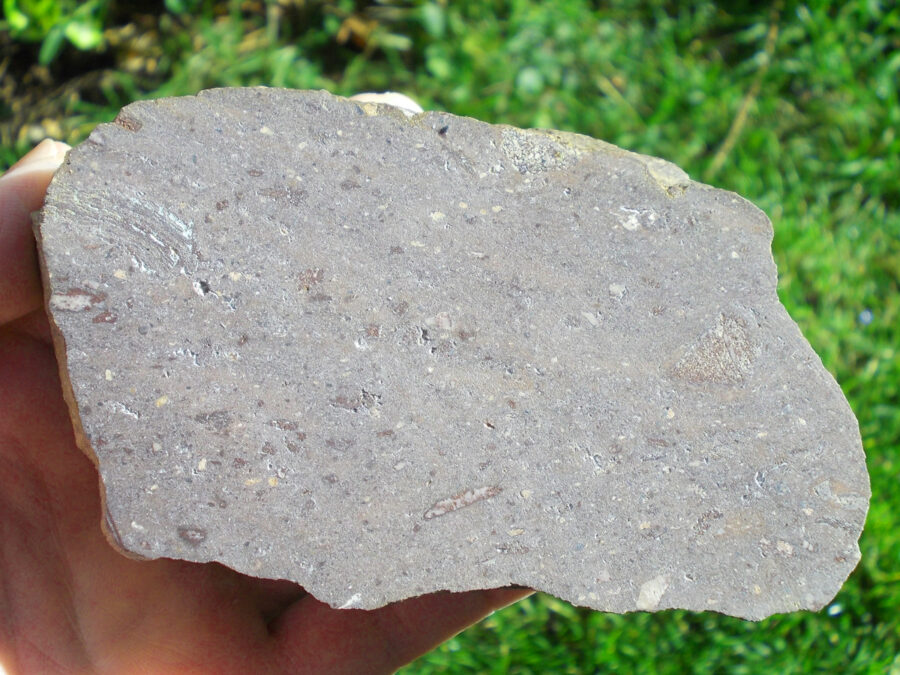
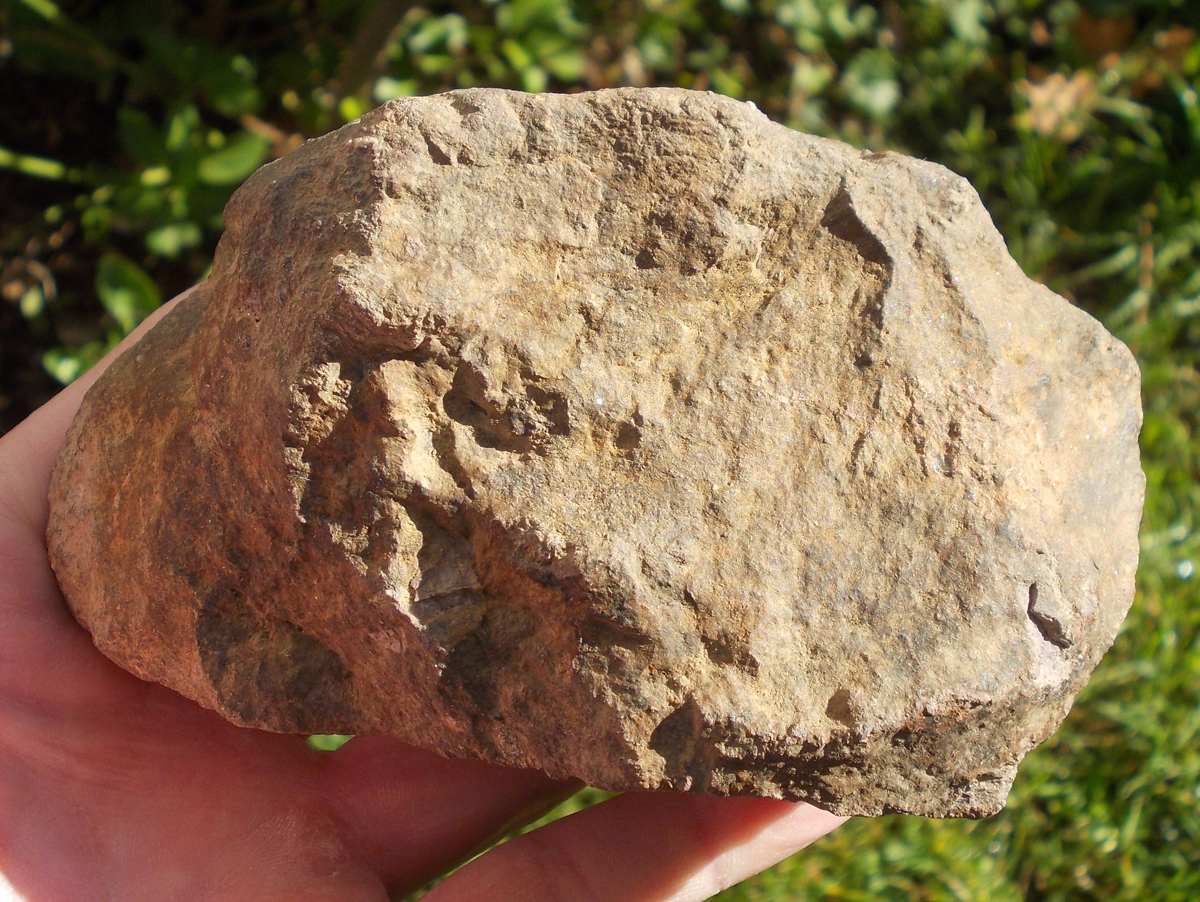
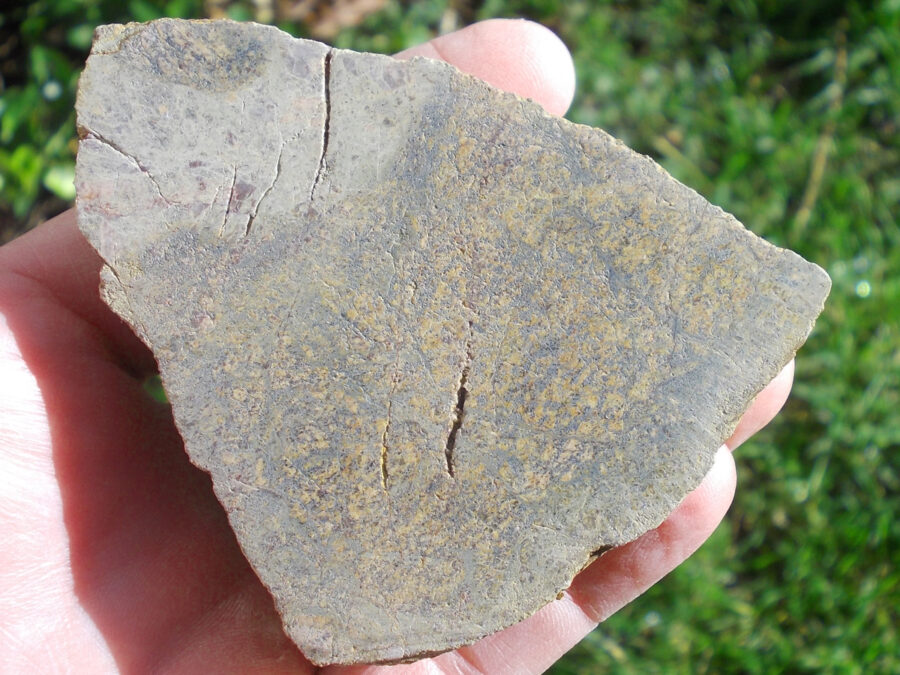
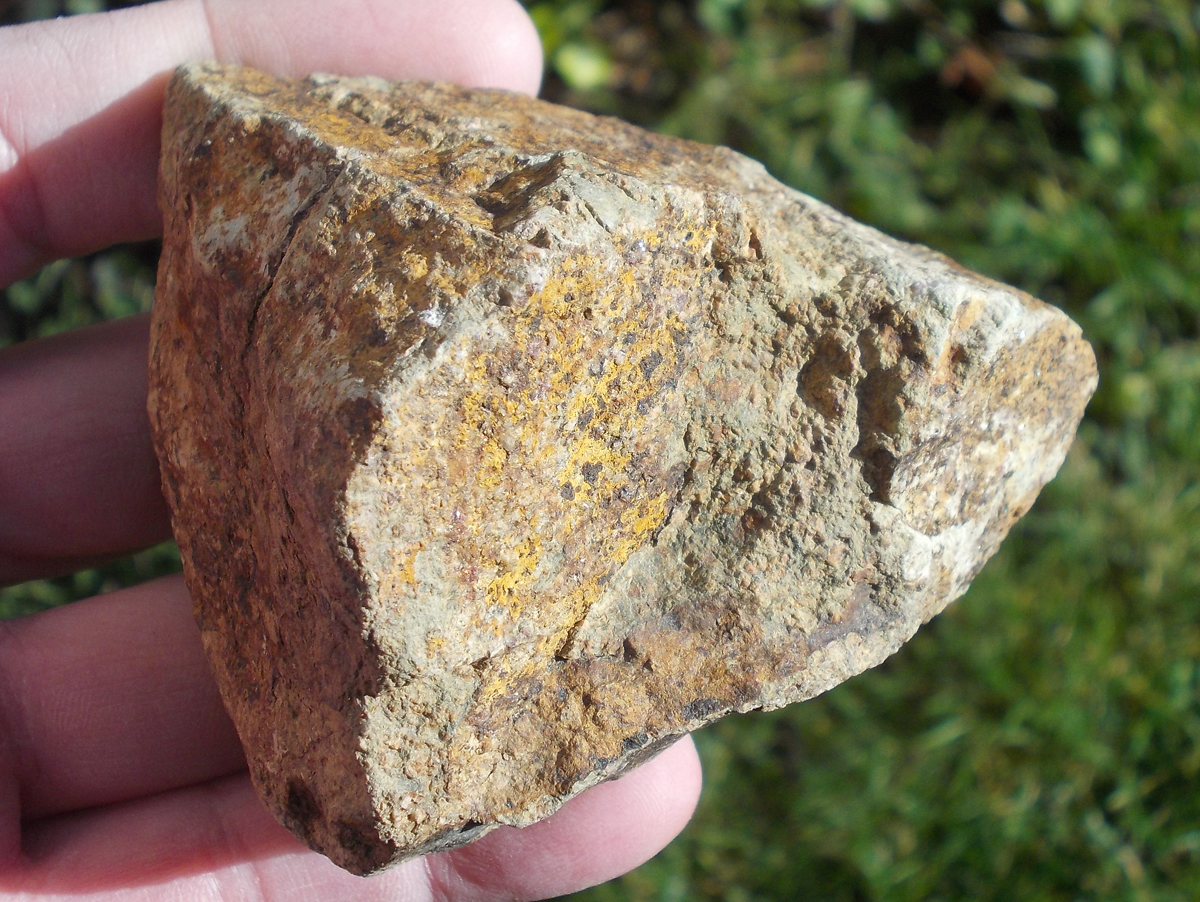
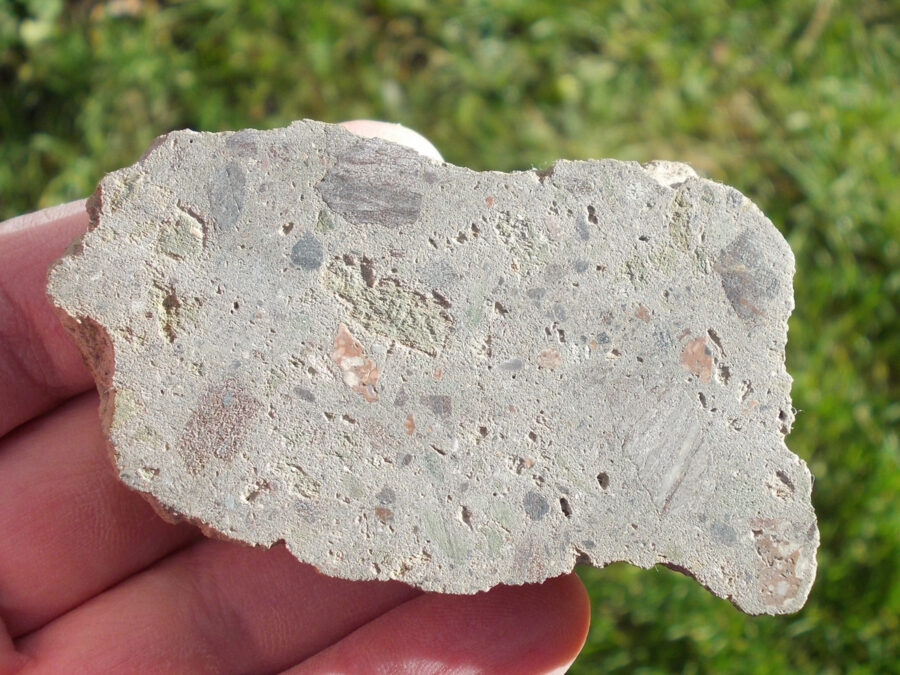
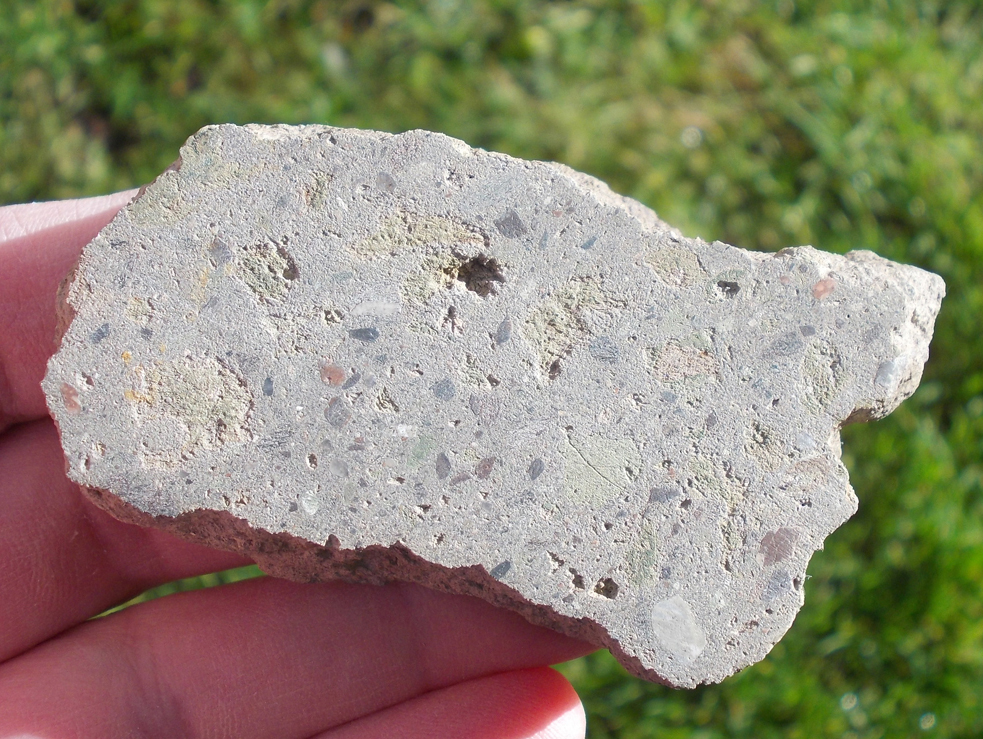
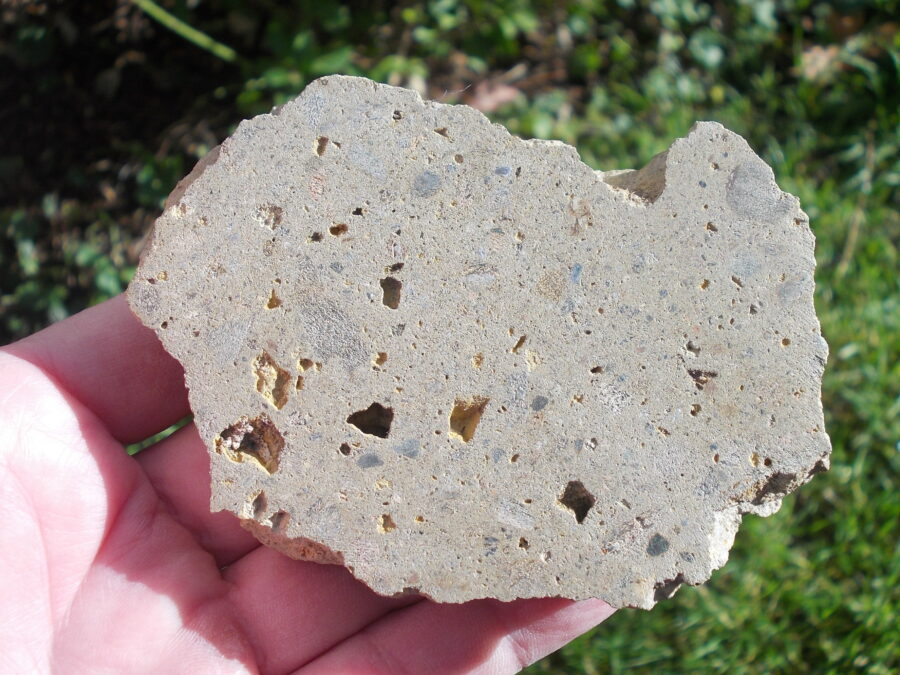
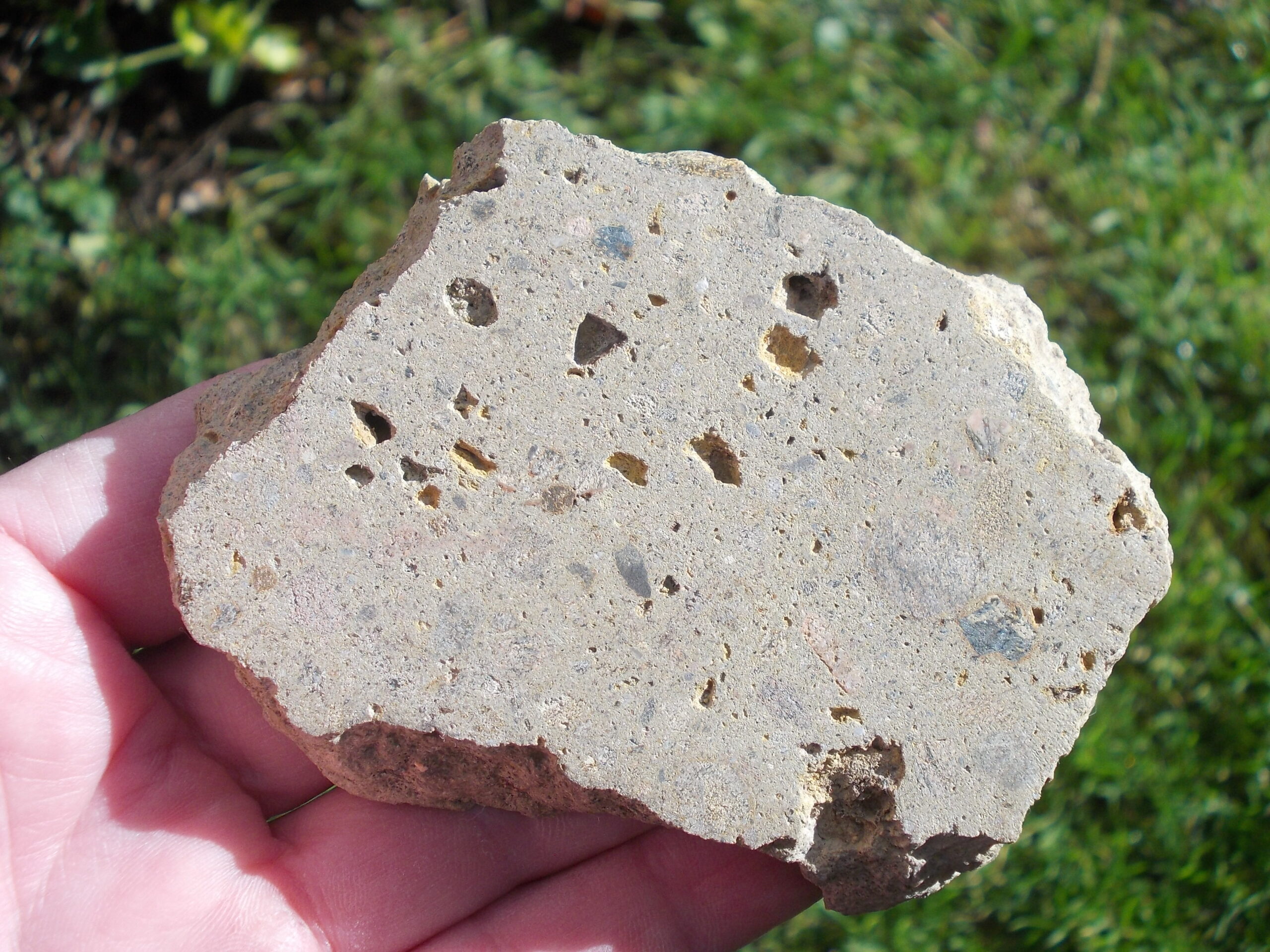
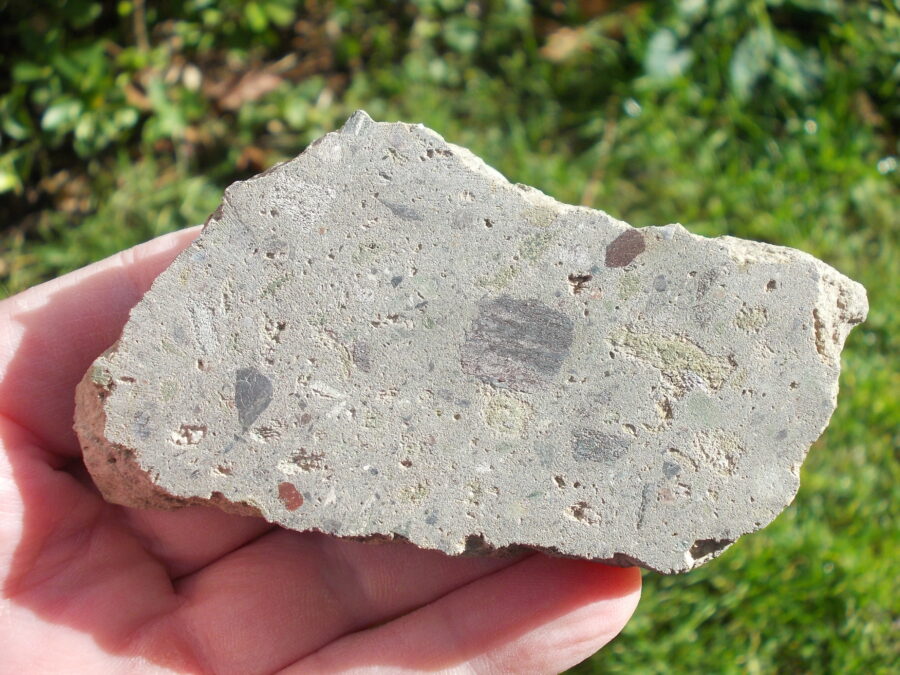
An impactite is a terrestrial rock modified by the impact of a large meteorite.
These rocks contain an agglomeration of fallout dust and fragments.
The Rochechouart impactites were formed as a result of a meteorite impact about 207 million years ago in New Aquitaine in the Rochechouart district.
The impact crater of the Rochechouart meteorite is called “Astroblème” because it is no longer visible following erosion.
There are several types of rocks :
Les brèches de type Babaudus, riche en verre à texture fluidale et en vacuoles
The “breccias” of Montoume type, red because of their richness in iron, metal supposed to come from the asteroid.
The “breccias” of Chassenon type, debris of glass of greenish tint.
The “breccias” of Rochechouart type, contain little glass and are constituted of elements of varied size and lithology.


Babaudus #8 - 254 g

Babaudus #8 – 254 g

30,42 $
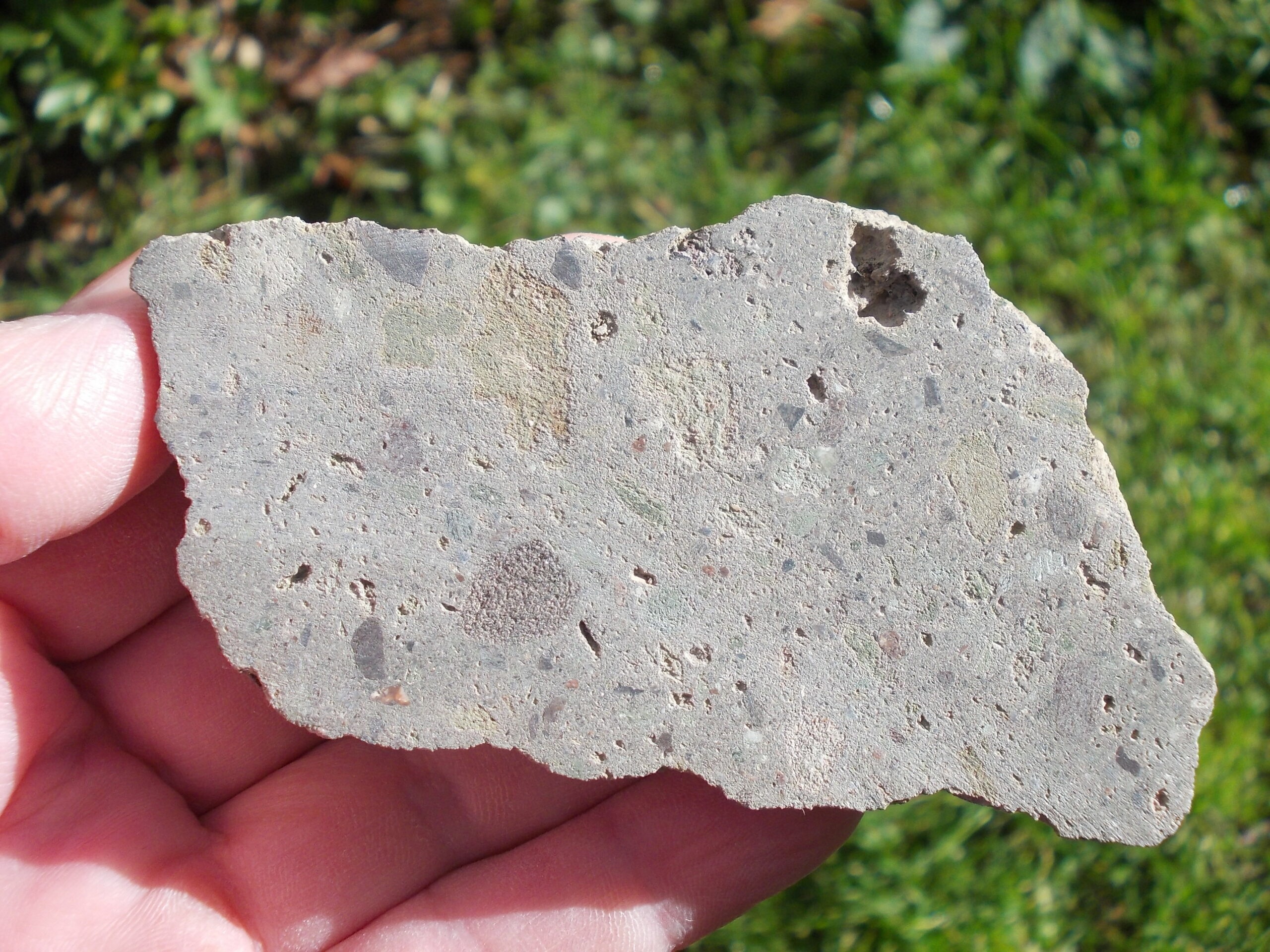
An impactite is a terrestrial rock modified by the impact of a large meteorite.
These rocks contain an agglomeration of fallout dust and fragments.
The Rochechouart impactites were formed as a result of a meteorite impact about 207 million years ago in New Aquitaine in the Rochechouart district.
The impact crater of the Rochechouart meteorite is called “Astroblème” because it is no longer visible following erosion.
There are several types of rocks :
Babaudus-type breccias, rich in fluid-textured glass and vacuoles, are found only in the center of the astroblast.
These breccias are contaminated with chromium, nickel and cobalt, metals coming mostly from the asteroid.
The “breccias” of Montoume type, red because of their richness in iron, metal supposed to come from the asteroid.
The “breccias” of Chassenon type, debris of glass of greenish tint.
The “breccias” of Rochechouart type, contain little glass and are constituted of elements of varied size and lithology.
Babaudus #7 - 243 g

Babaudus #7 – 243 g

29,24 $
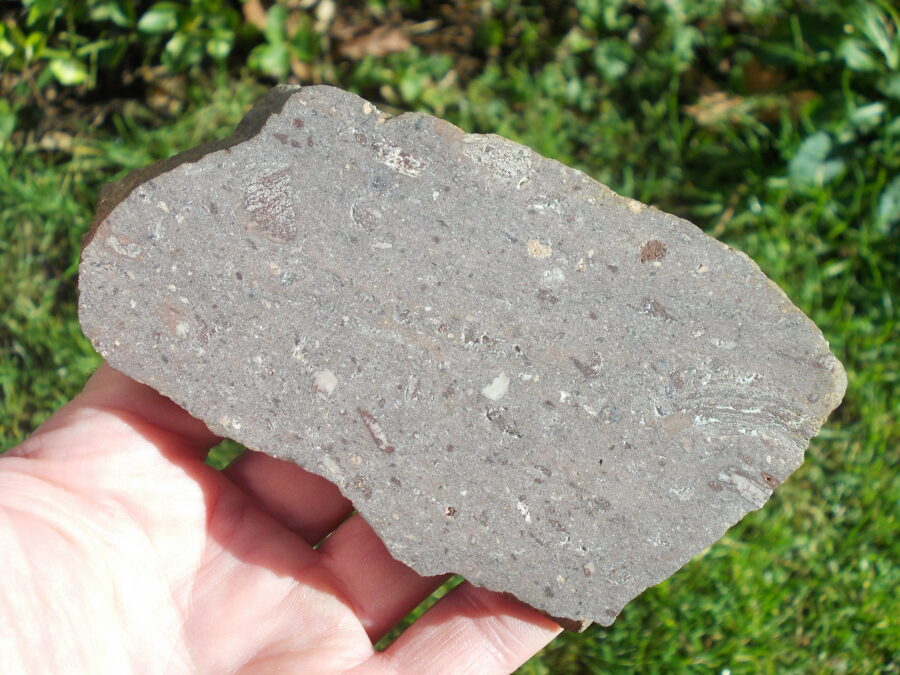
An impactite is a terrestrial rock modified by the impact of a large meteorite.
These rocks contain an agglomeration of fallout dust and fragments.
The Rochechouart impactites were formed as a result of a meteorite impact about 207 million years ago in New Aquitaine in the Rochechouart district.
The impact crater of the Rochechouart meteorite is called “Astroblème” because it is no longer visible following erosion.
There are several types of rocks :
Babaudus-type breccias, rich in fluid-textured glass and vacuoles, are found only in the center of the astroblast.
These breccias are contaminated with chromium, nickel and cobalt, metals coming mostly from the asteroid.
The “breccias” of Montoume type, red because of their richness in iron, metal supposed to come from the asteroid.
The “breccias” of Chassenon type, debris of glass of greenish tint.
The “breccias” of Rochechouart type, contain little glass and are constituted of elements of varied size and lithology.
Babaudus #6 - 166 g

Babaudus #6 – 166 g

22,22 $
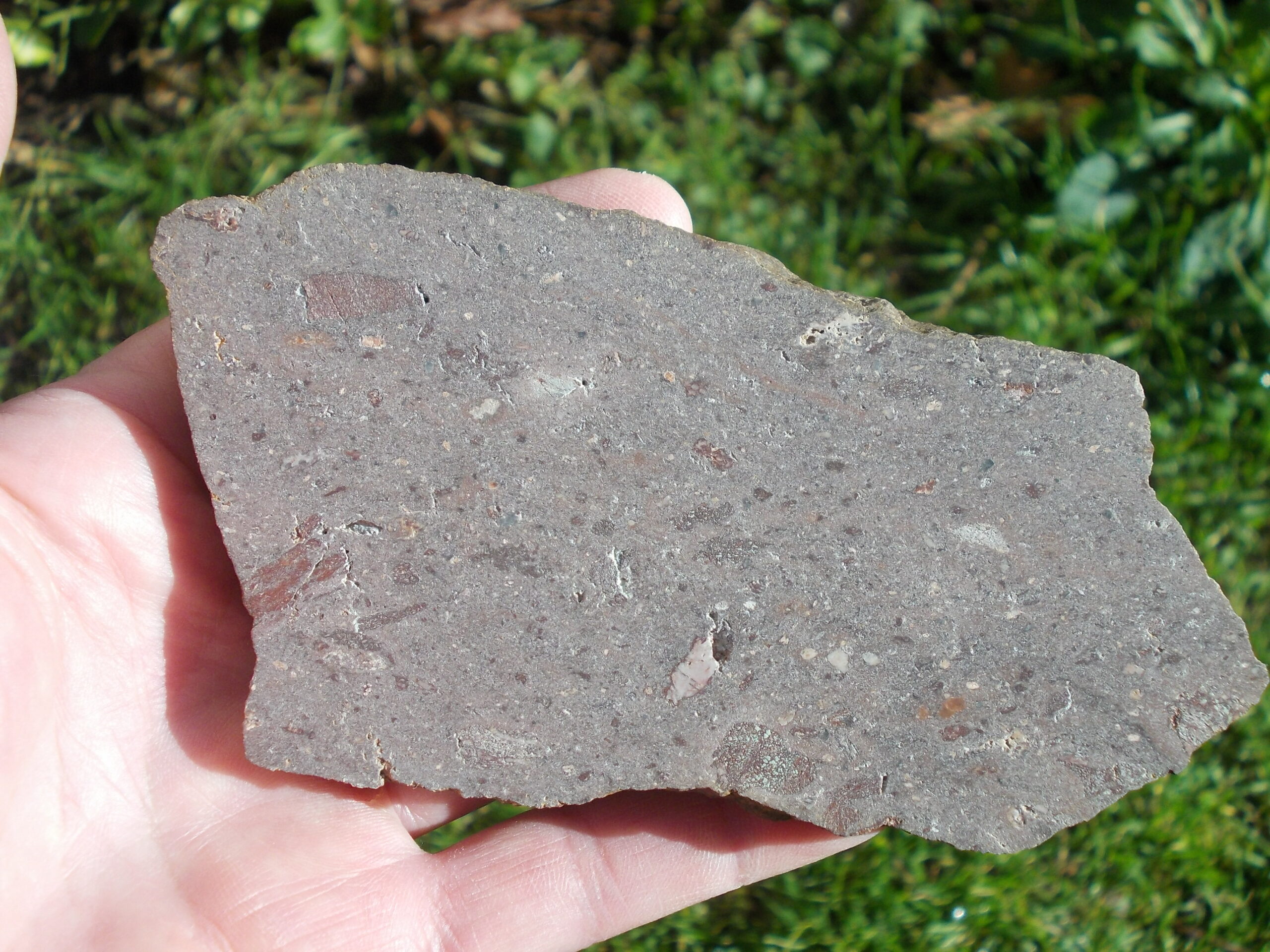
An impactite is a terrestrial rock modified by the impact of a large meteorite.
These rocks contain an agglomeration of fallout dust and fragments.
The Rochechouart impactites were formed as a result of a meteorite impact about 207 million years ago in New Aquitaine in the Rochechouart district.
The impact crater of the Rochechouart meteorite is called “Astroblème” because it is no longer visible following erosion.
There are several types of rocks :
Babaudus-type breccias, rich in fluid-textured glass and vacuoles, are found only in the center of the astroblast.
These breccias are contaminated with chromium, nickel and cobalt, metals coming mostly from the asteroid.
The “breccias” of Montoume type, red because of their richness in iron, metal supposed to come from the asteroid.
The “breccias” of Chassenon type, debris of glass of greenish tint.
The “breccias” of Rochechouart type, contain little glass and are constituted of elements of varied size and lithology.
Chassenon #10 - 84 gOut of stock

Chassenon #10 – 84 g

17,56 $
An impactite is a terrestrial rock modified by the impact of a large meteorite.
These rocks contain an agglomeration of fallout dust and fragments.
The Rochechouart impactites were formed as a result of a meteorite impact about 207 million years ago in New Aquitaine in the Rochechouart district.
Le cratère d’impact de la météorite de Rochechouart est appelé Astroblème car il n’est plus visible suite à l’érosion.
There are several types of rocks :
Babaudus-type breccias, rich in fluid-textured glass and vacuoles, are found only in the center of the astroblast.
These breccias are contaminated with chromium, nickel and cobalt, metals coming mostly from the asteroid.
The “breccias” of Montoume type, red because of their richness in iron, metal supposed to come from the asteroid.
The “breccias” of Chassenon type, debris of glass of greenish tint.
The “breccias” of Rochechouart type, contain little glass and are constituted of elements of varied size and lithology.
Rochechouart #8 - 142 g

Rochechouart #8 – 142 g

28,08 $
An impactite is a terrestrial rock modified by the impact of a large meteorite.
These rocks contain an agglomeration of fallout dust and fragments.
The Rochechouart impactites were formed as a result of a meteorite impact about 207 million years ago in New Aquitaine in the Rochechouart district.
The impact crater of the Rochechouart meteorite is called “Astroblème” because it is no longer visible following erosion.
There are several types of rocks :
Babaudus-type breccias, rich in fluid-textured glass and vacuoles, are found only in the center of the astroblast.
These breccias are contaminated with chromium, nickel and cobalt, metals coming mostly from the asteroid.
The “breccias” of Montoume type, red because of their richness in iron, metal supposed to come from the asteroid.
The “breccias” of Chassenon type, debris of glass of greenish tint.
The “breccias” of Rochechouart type, contain little glass and are constituted of elements of varied size and lithology.
Chassenon #9 - 108 g

Chassenon #9 – 108 g

21,06 $
An impactite is a terrestrial rock modified by the impact of a large meteorite.
These rocks contain an agglomeration of fallout dust and fragments.
The Rochechouart impactites were formed as a result of a meteorite impact about 207 million years ago in New Aquitaine in the Rochechouart district.
Le cratère d’impact de la météorite de Rochechouart est appelé Astroblème car il n’est plus visible suite à l’érosion.
There are several types of rocks :
Babaudus-type breccias, rich in fluid-textured glass and vacuoles, are found only in the center of the astroblast.
These breccias are contaminated with chromium, nickel and cobalt, metals coming mostly from the asteroid.
The “breccias” of Montoume type, red because of their richness in iron, metal supposed to come from the asteroid.
The “breccias” of Chassenon type, debris of glass of greenish tint.
The “breccias” of Rochechouart type, contain little glass and are constituted of elements of varied size and lithology.
Montoume #18 - 240 g

Montoume #18 – 240 g

35,10 $
An impactite is a terrestrial rock modified by the impact of a large meteorite.
These rocks contain an agglomeration of fallout dust and fragments.
The Rochechouart impactites were formed as a result of a meteorite impact about 207 million years ago in New Aquitaine in the Rochechouart district.
The impact crater of the Rochechouart meteorite is called “Astroblème” because it is no longer visible following erosion.
There are several types of rocks :
Les brèches de type Babaudus, riche en verre à texture fluidale et en vacuoles
The “breccias” of Montoume type, red because of their richness in iron, metal supposed to come from the asteroid.
The “breccias” of Chassenon type, debris of glass of greenish tint.
The “breccias” of Rochechouart type, contain little glass and are constituted of elements of varied size and lithology.


Sueilila 008 Lunaire melt breccia #12 - 0,5 gOut of stock

Sueilila 008 Lunaire melt breccia #12 – 0,5 g

58,50 $

Sueilila 008 is a beautiful lunar meteorite discovered in the Western Sahara in the Boujdour region in 2025 by a group of meteorite hunters :

Ibrahim Elguirah, Ibrahim Ouhra, Mhamd Oukhayyi, Bahba Mhamd, Idir Oubadda.

To date, only 52 meteorites of this type have been classified.

About fifteen years ago, lunar meteorites were sold for almost 1000 euros per gram !

A very nice acquisition for your collection !

Sueilila 008 Lunaire melt breccia #11 - 0,7 g

Sueilila 008 Lunaire melt breccia #11 – 0,7 g

81,90 $

Sueilila 008 is a beautiful lunar meteorite discovered in the Western Sahara in the Boujdour region in 2025 by a group of meteorite hunters :

Ibrahim Elguirah, Ibrahim Ouhra, Mhamd Oukhayyi, Bahba Mhamd, Idir Oubadda.

To date, only 52 meteorites of this type have been classified.

About fifteen years ago, lunar meteorites were sold for almost 1000 euros per gram !

A very nice acquisition for your collection !

Sueilila 008 Lunaire melt breccia #10 - 0,7 gOut of stock

Sueilila 008 Lunaire melt breccia #10 – 0,7 g

81,90 $

Sueilila 008 is a beautiful lunar meteorite discovered in the Western Sahara in the Boujdour region in 2025 by a group of meteorite hunters :

Ibrahim Elguirah, Ibrahim Ouhra, Mhamd Oukhayyi, Bahba Mhamd, Idir Oubadda.

To date, only 52 meteorites of this type have been classified.

About fifteen years ago, lunar meteorites were sold for almost 1000 euros per gram !

A very nice acquisition for your collection !