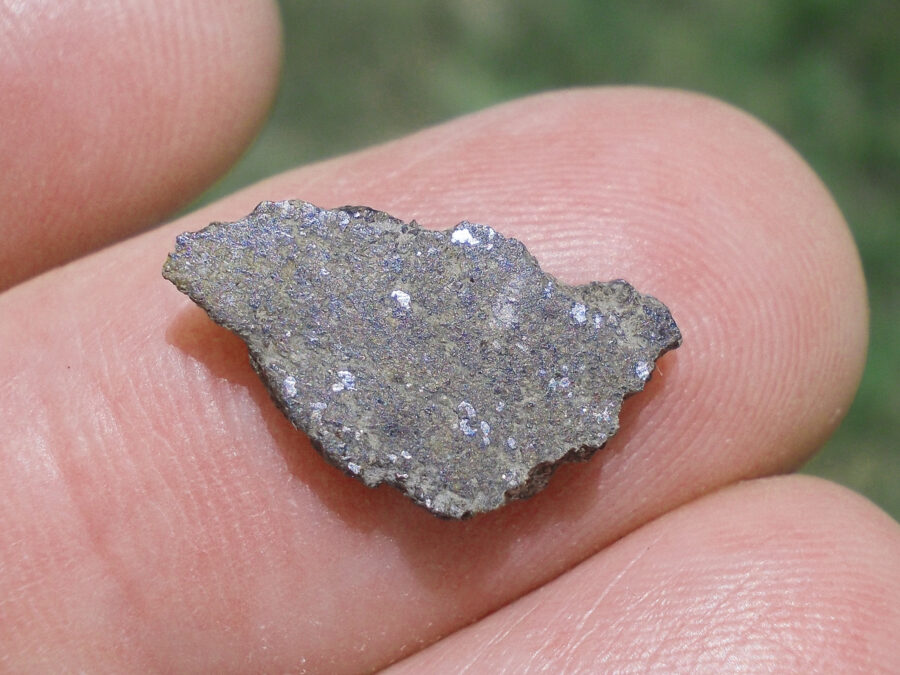
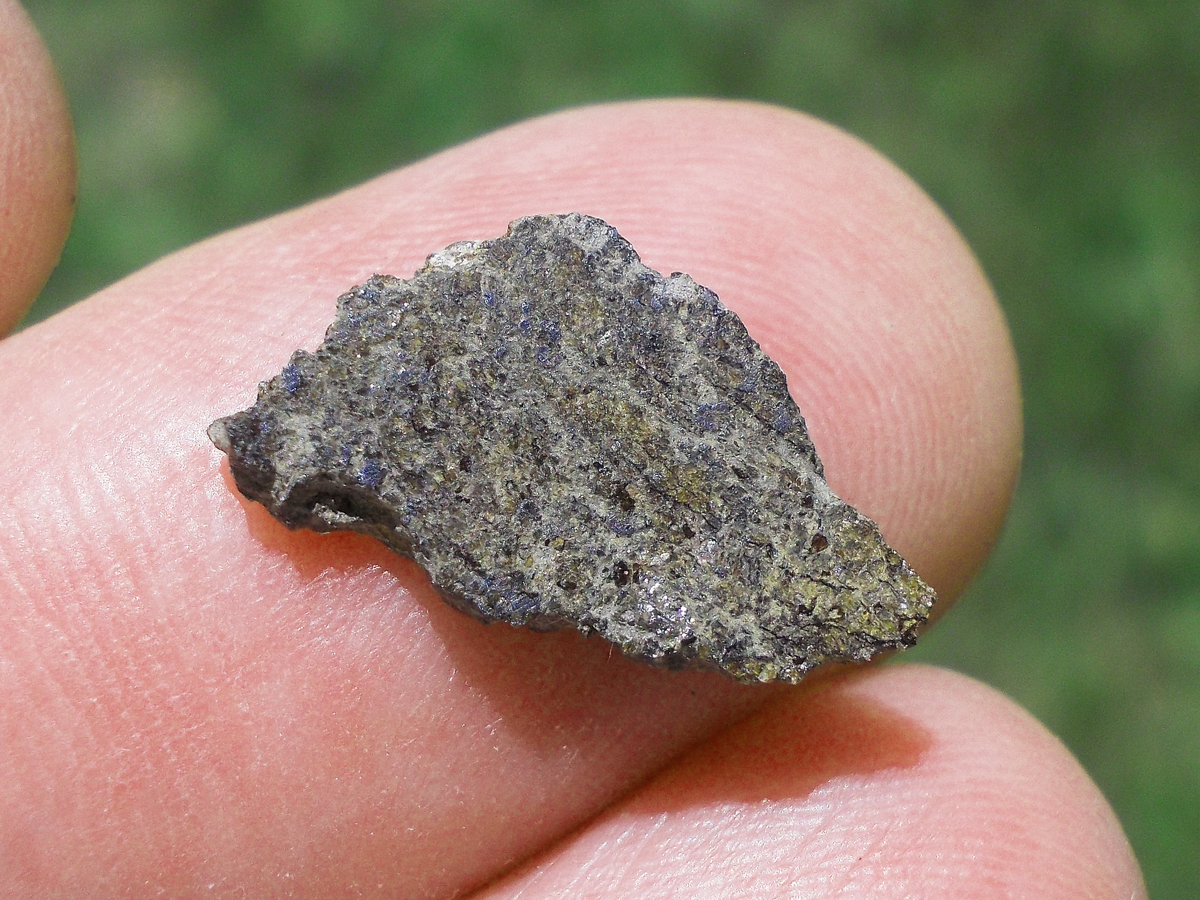
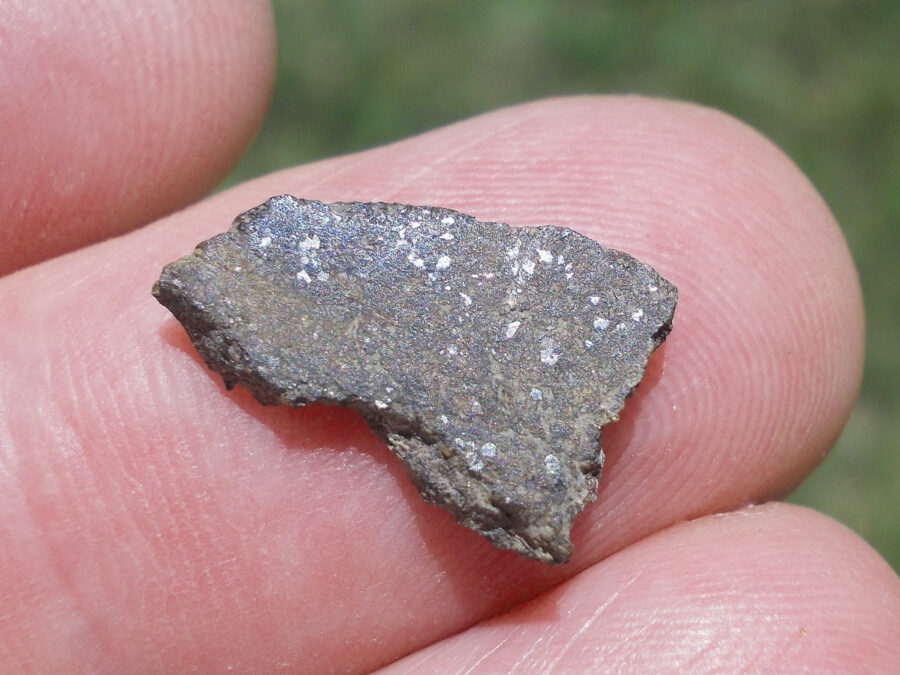
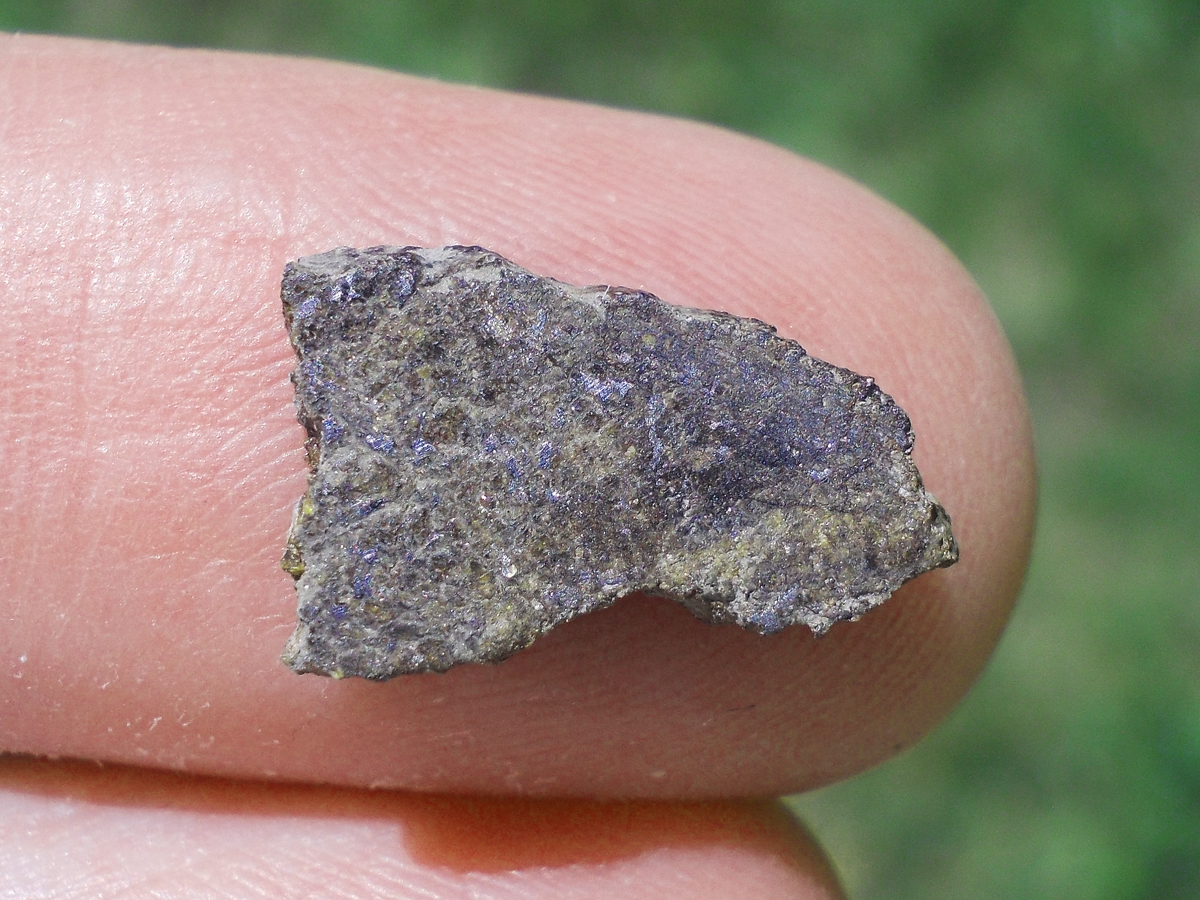
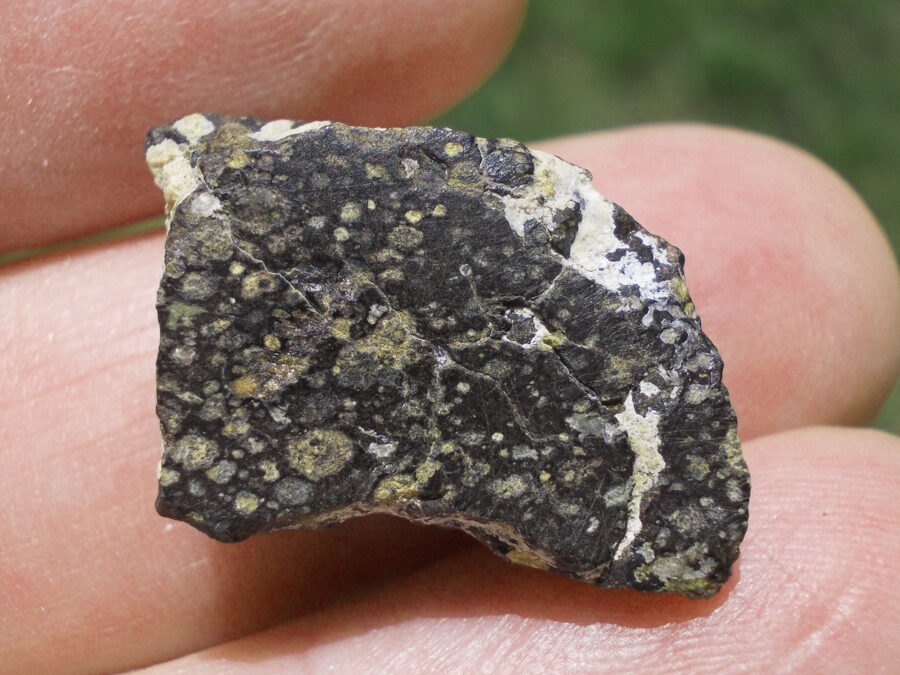
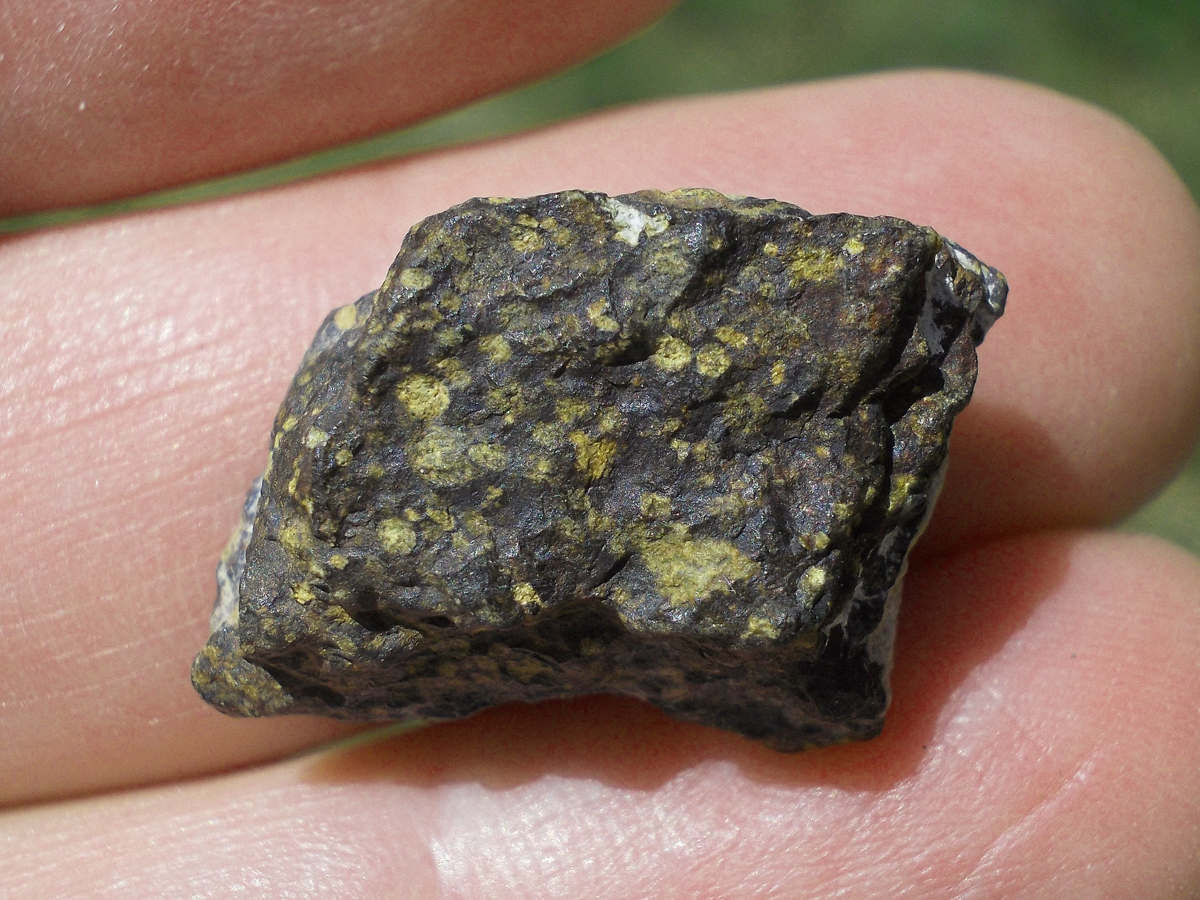
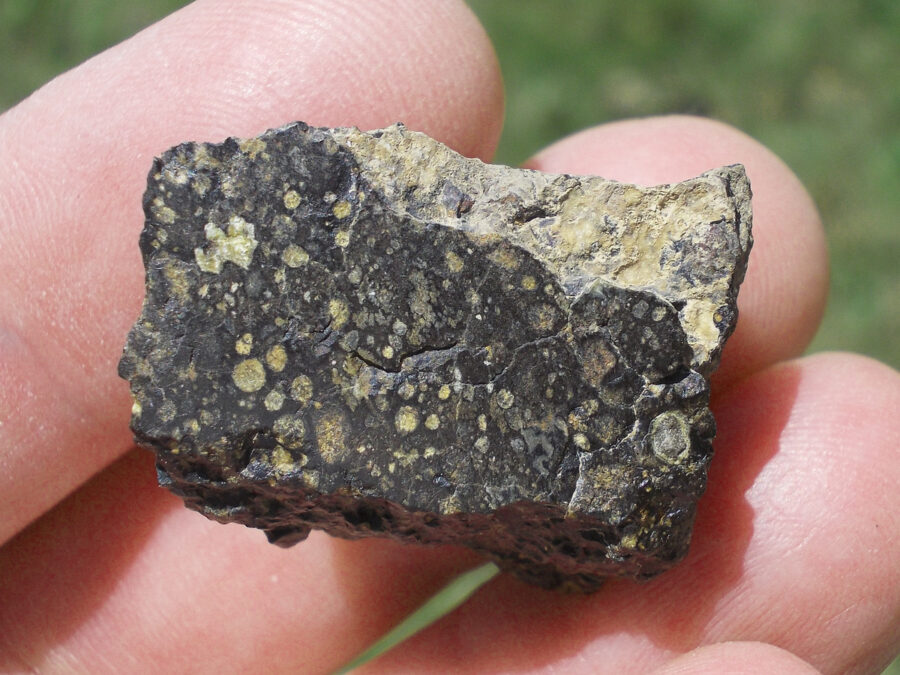
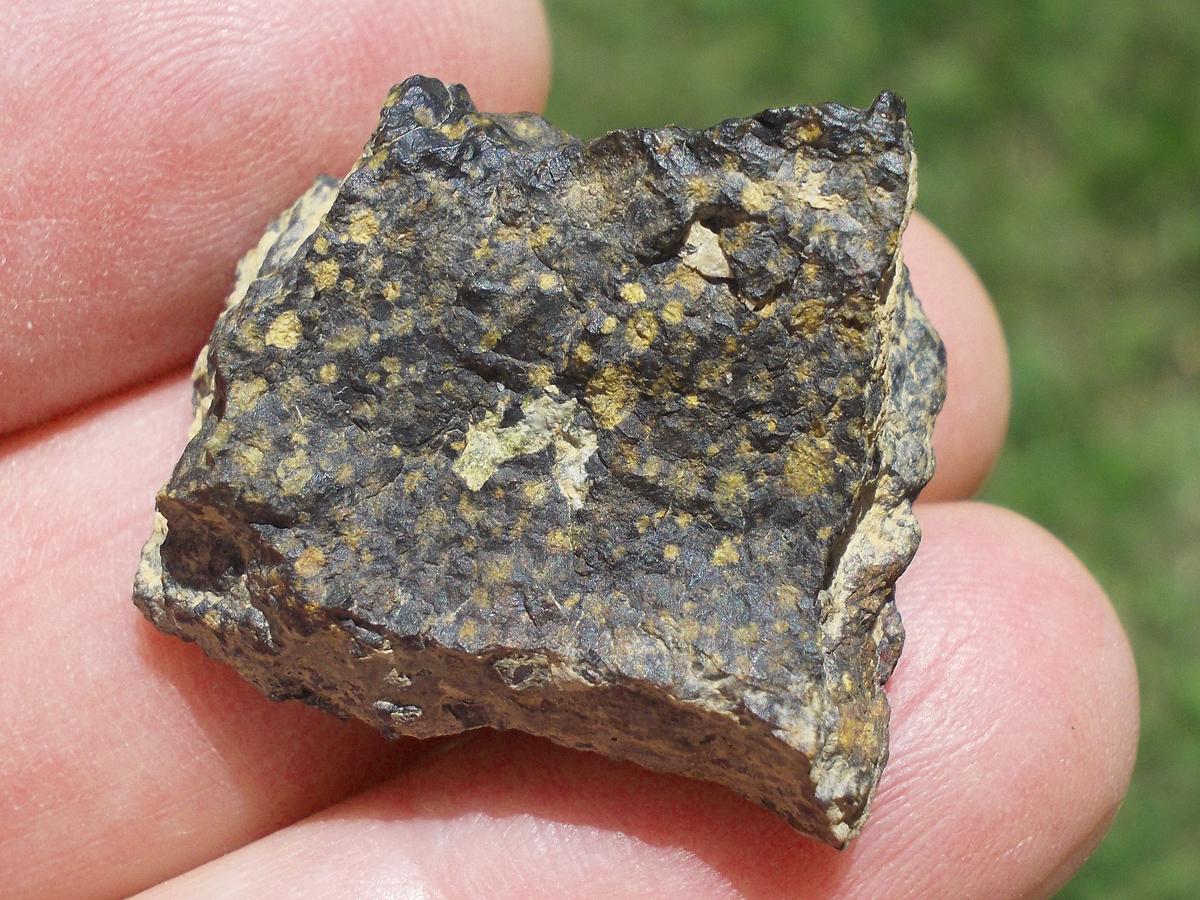
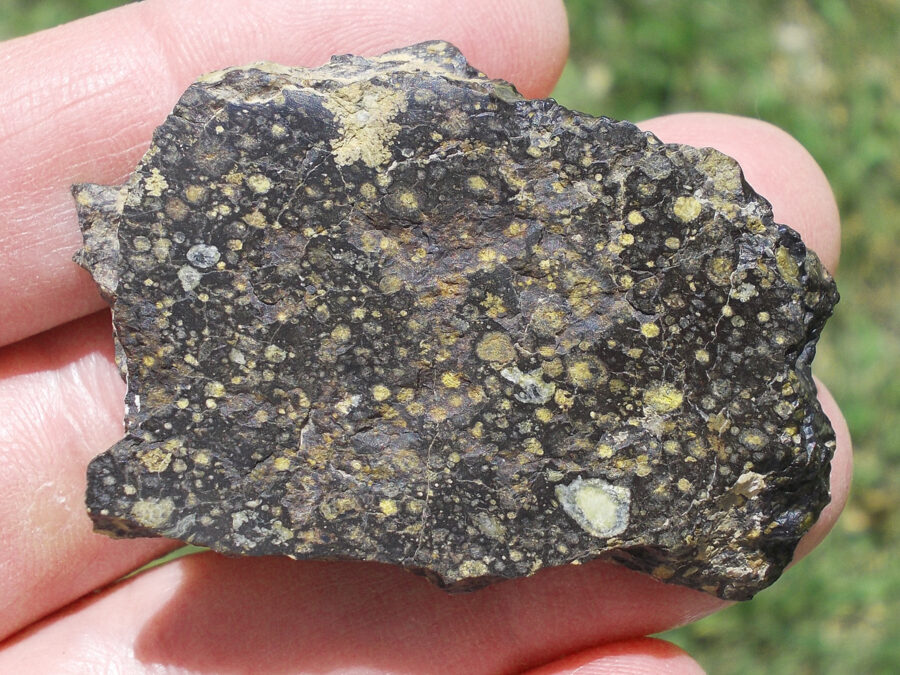
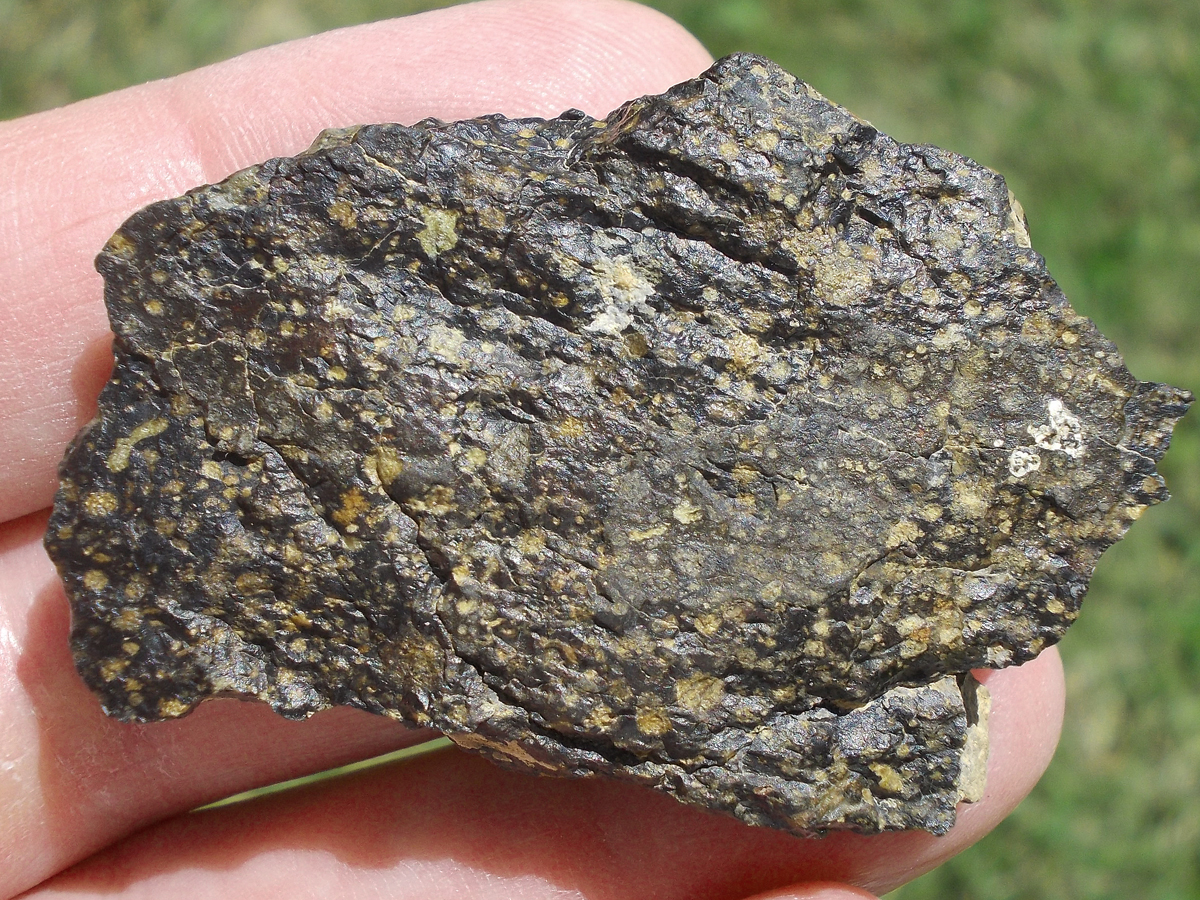
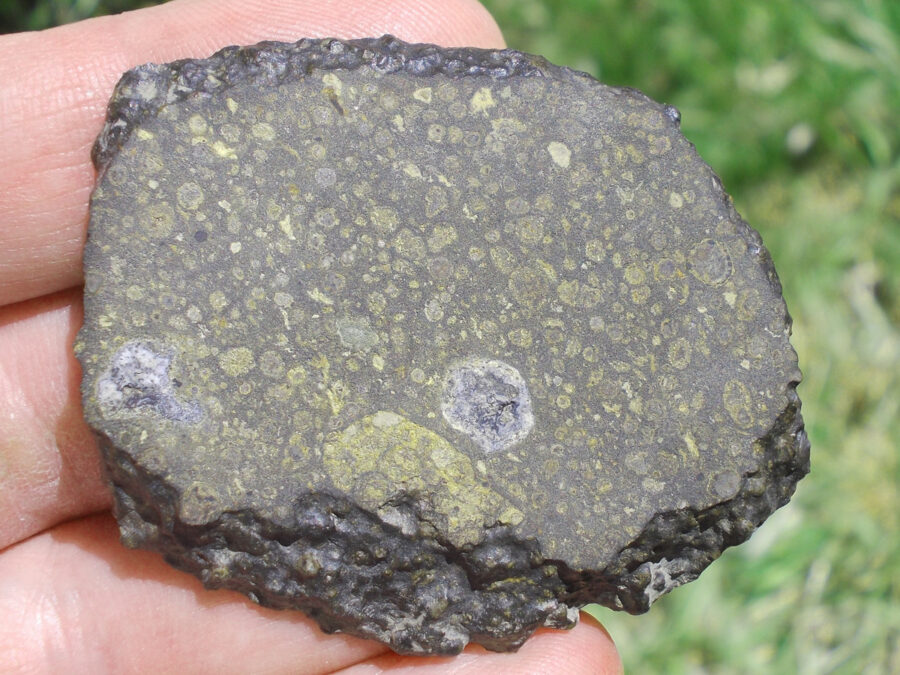
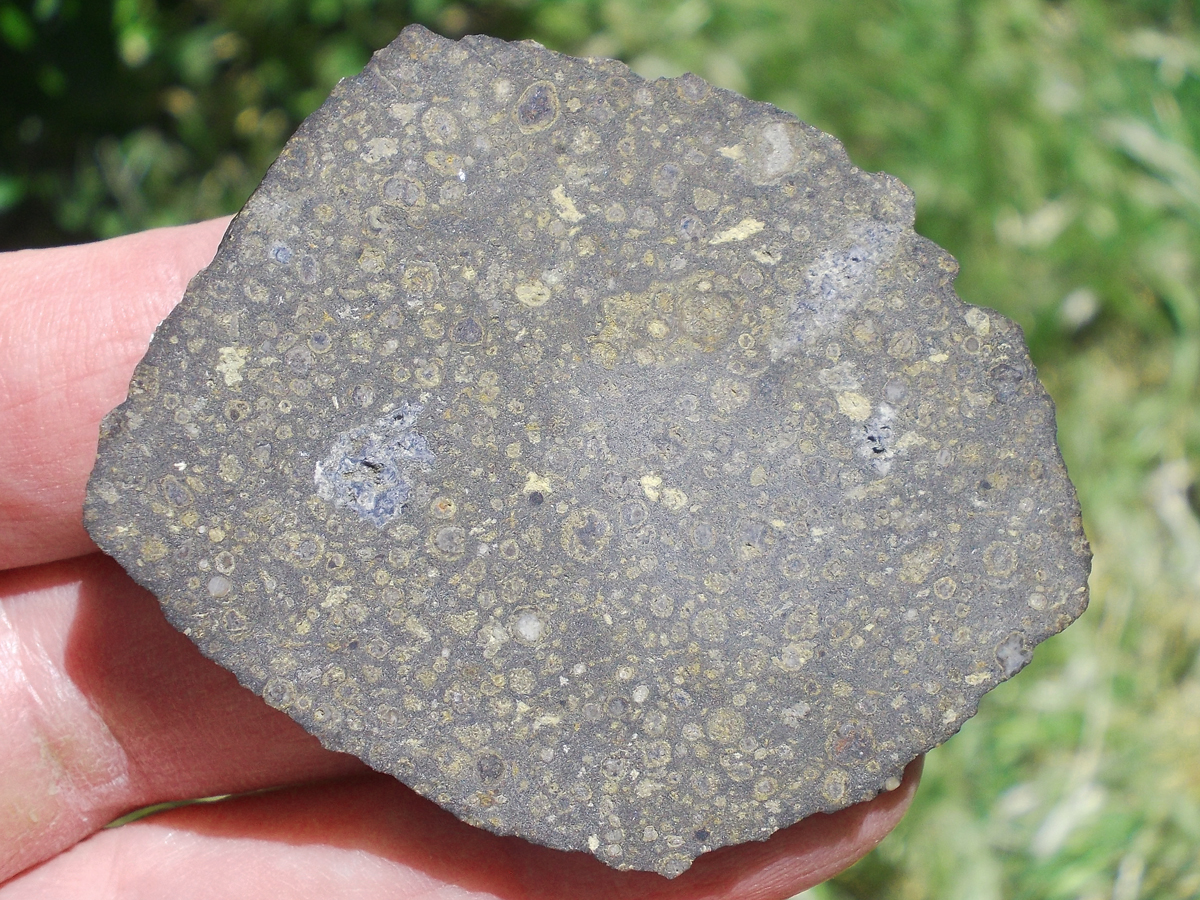
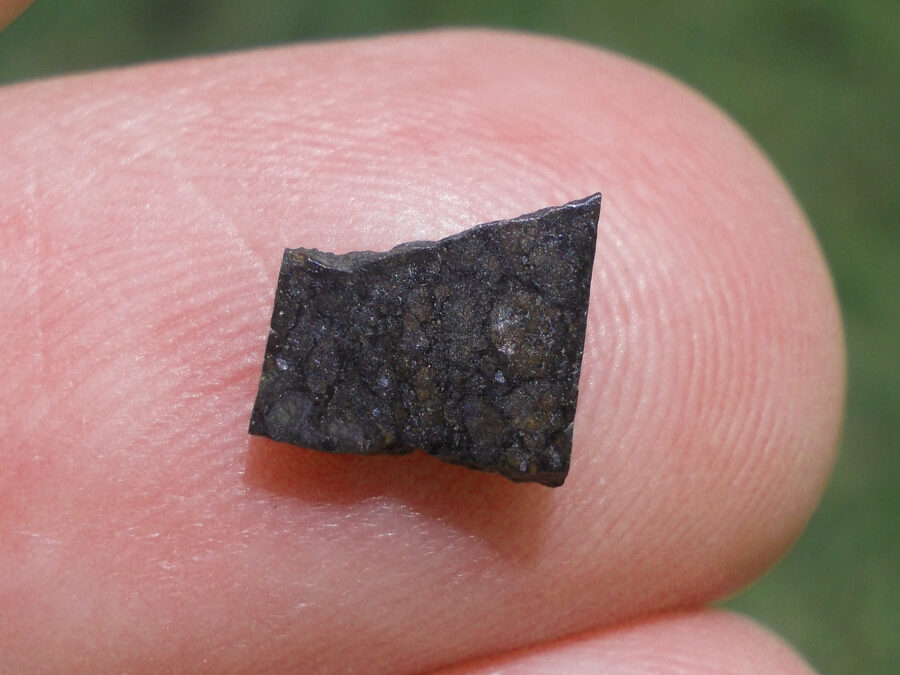
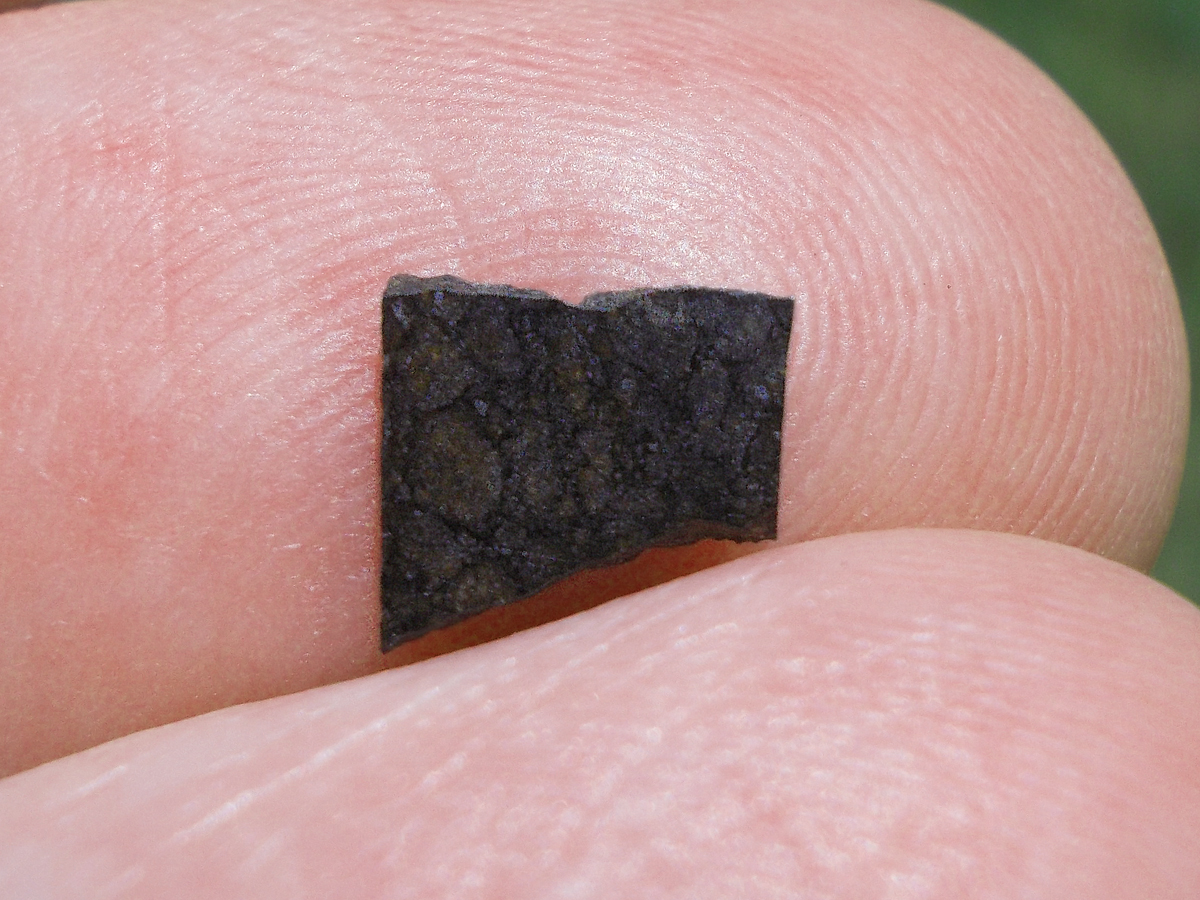
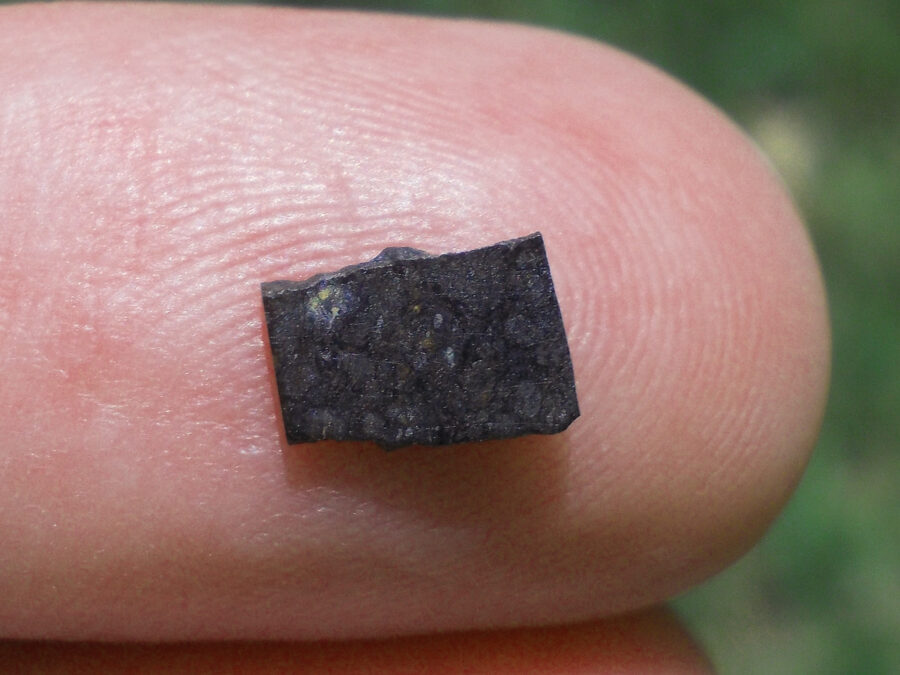
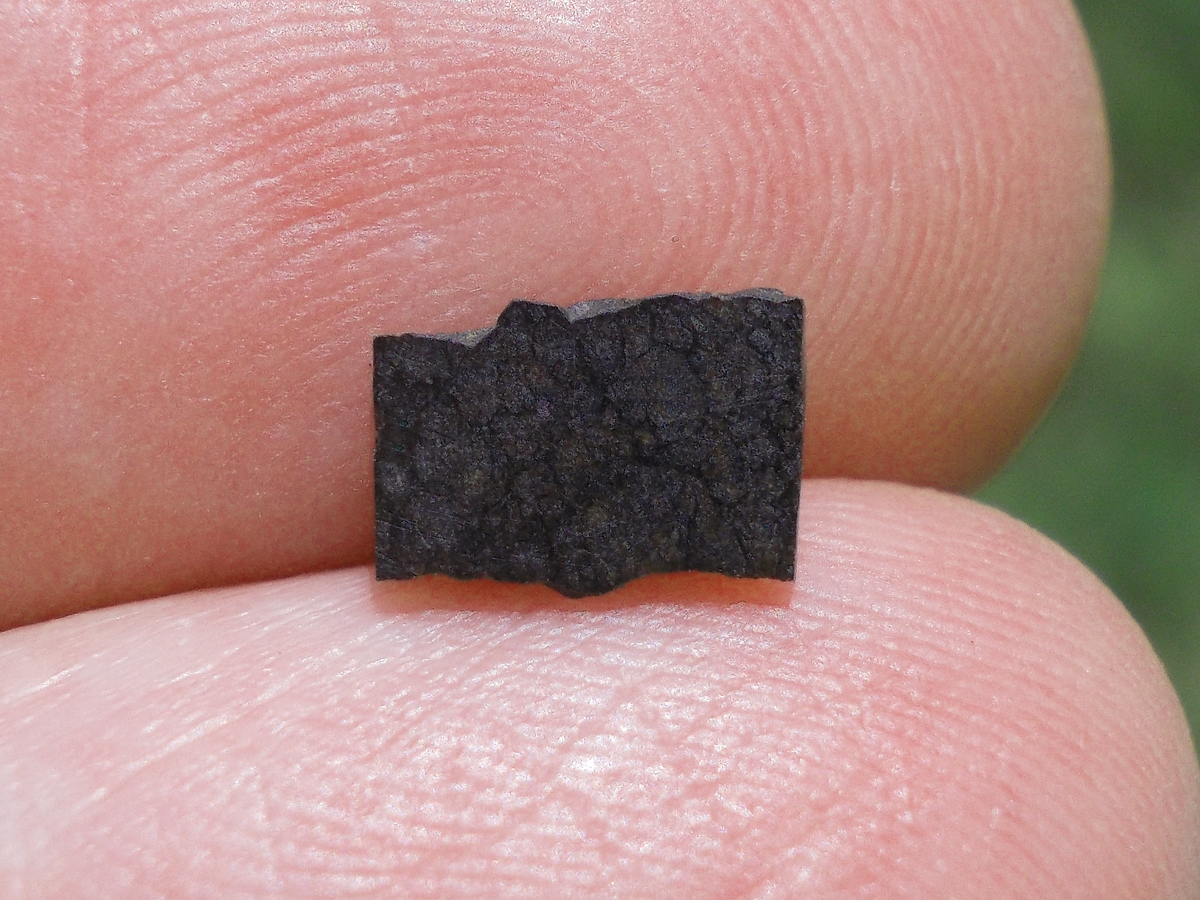
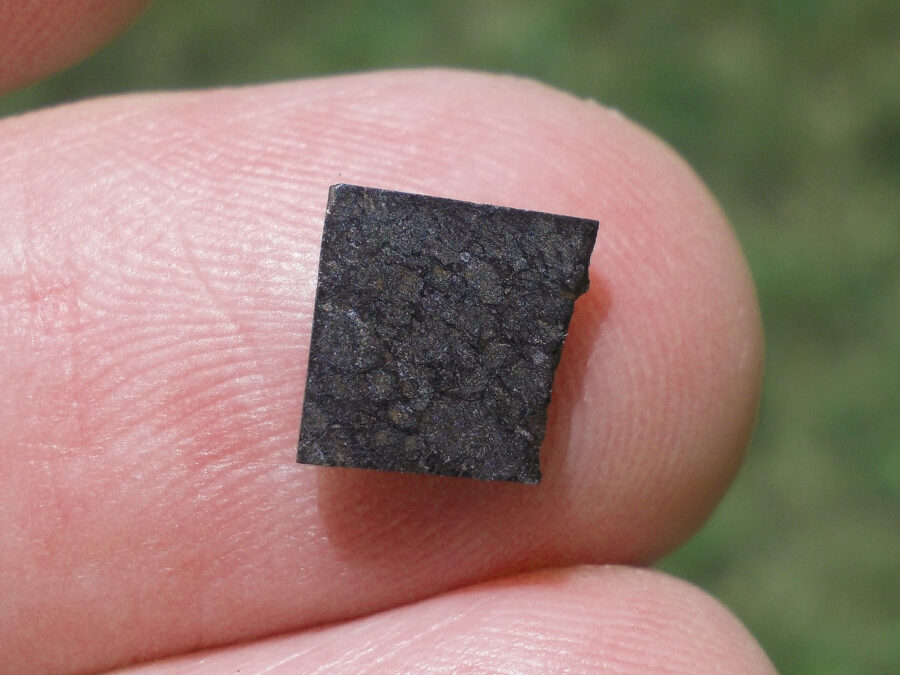
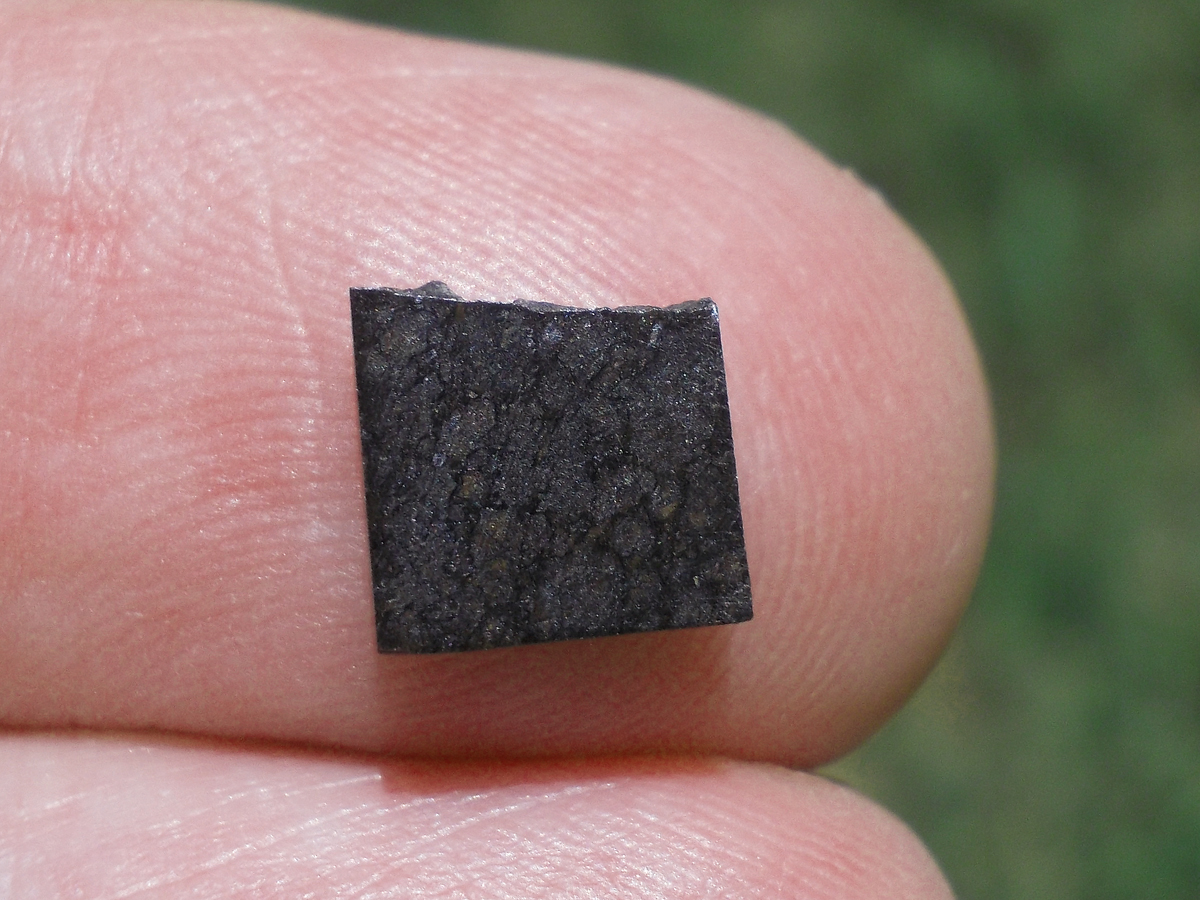
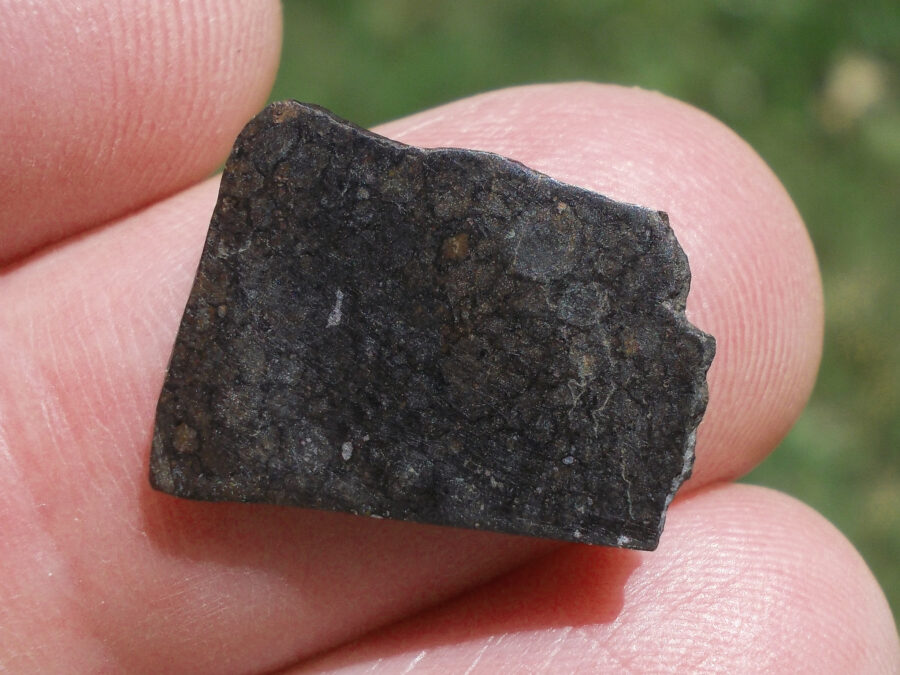
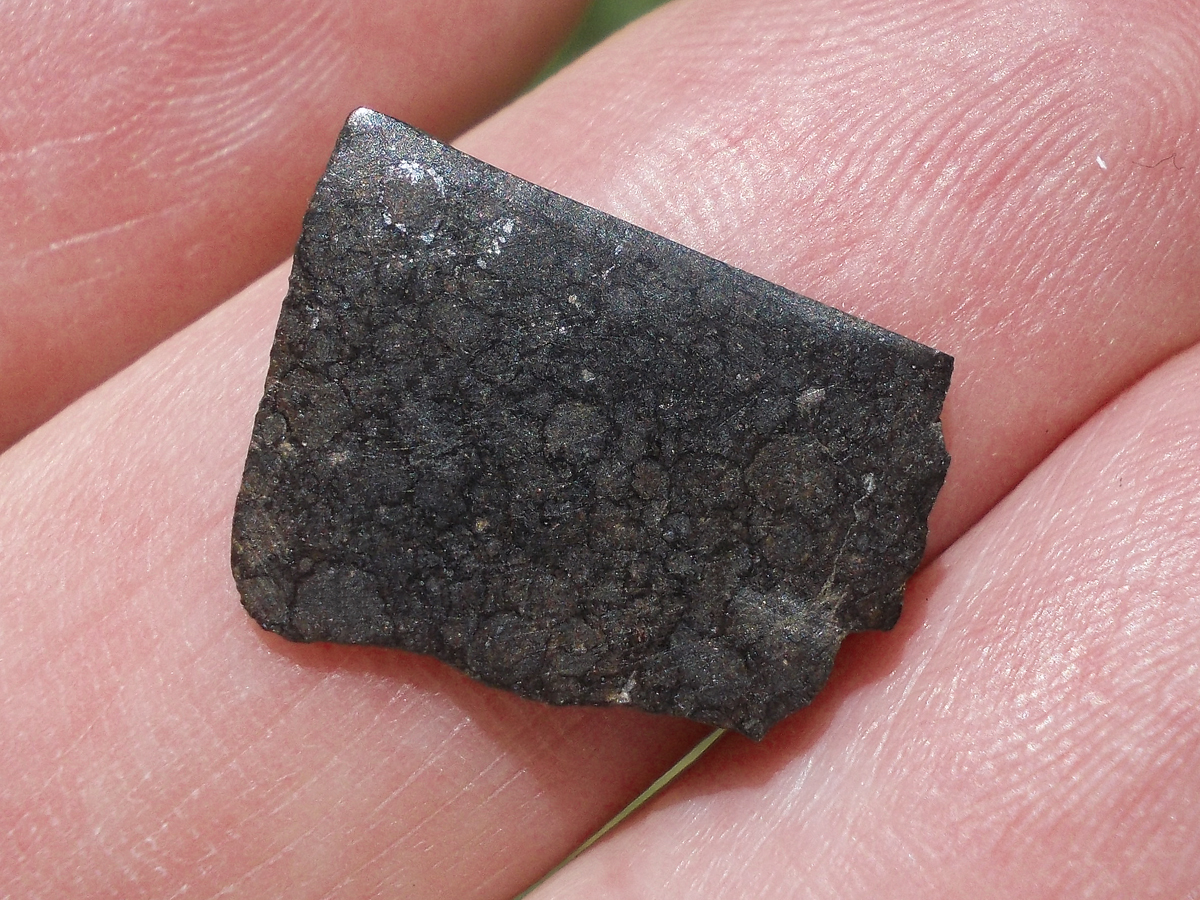
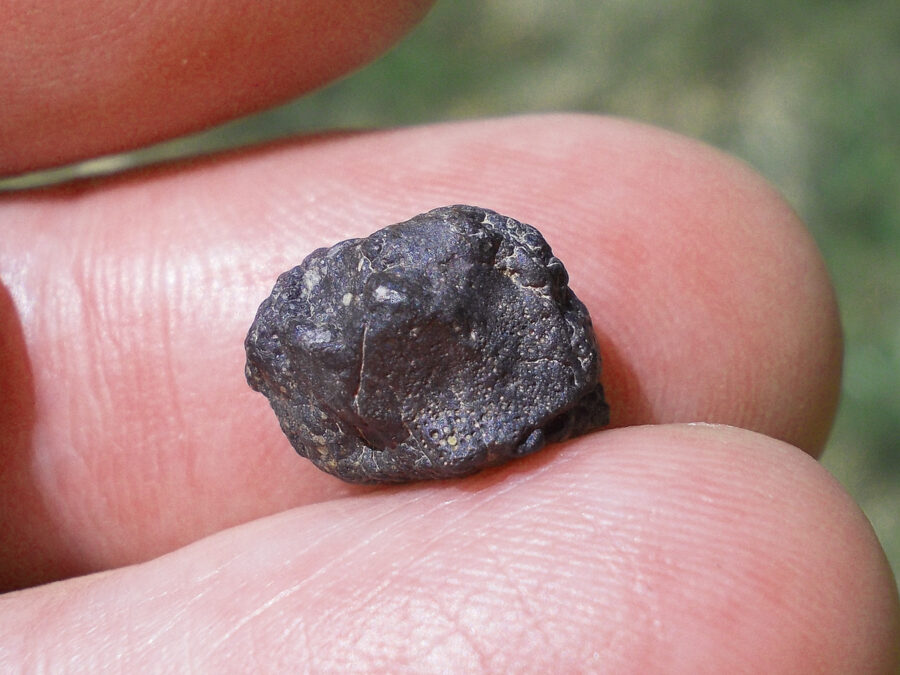
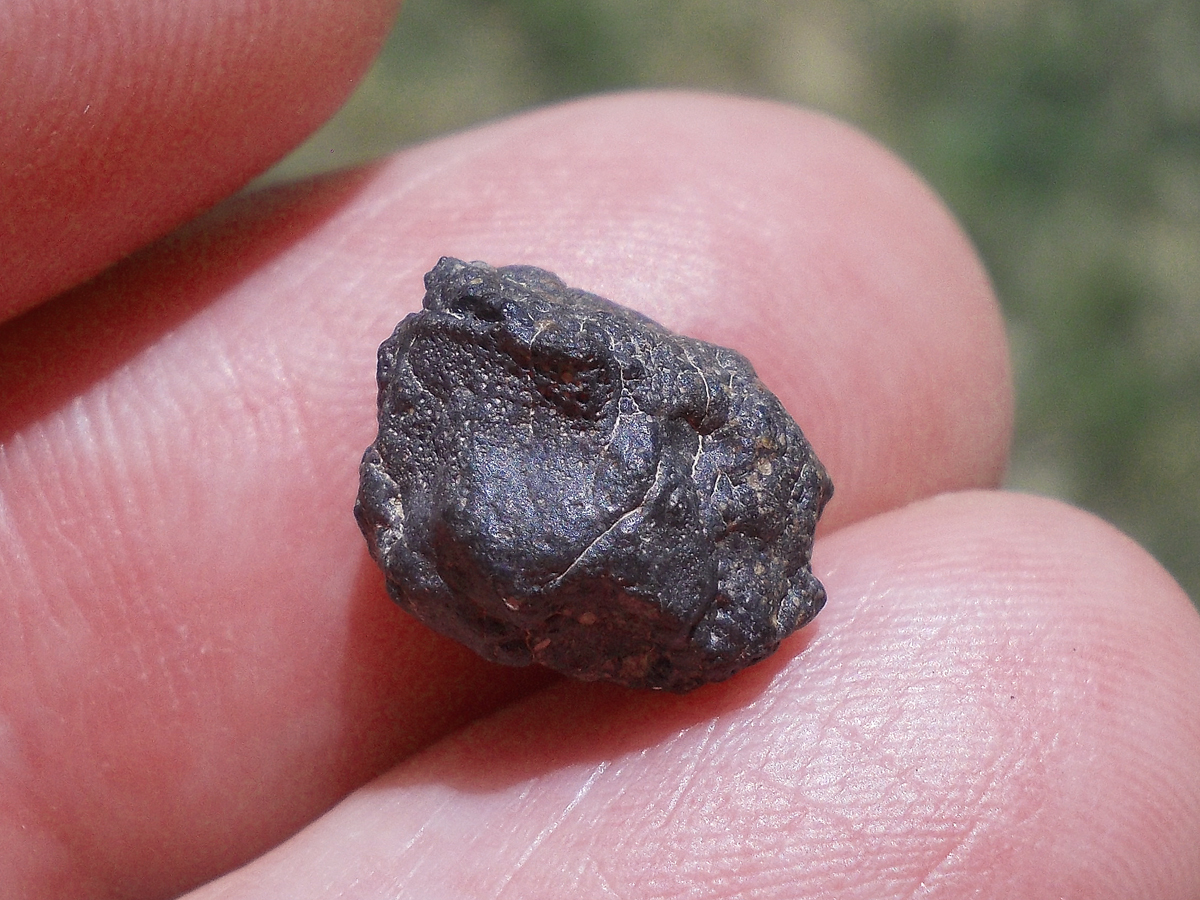
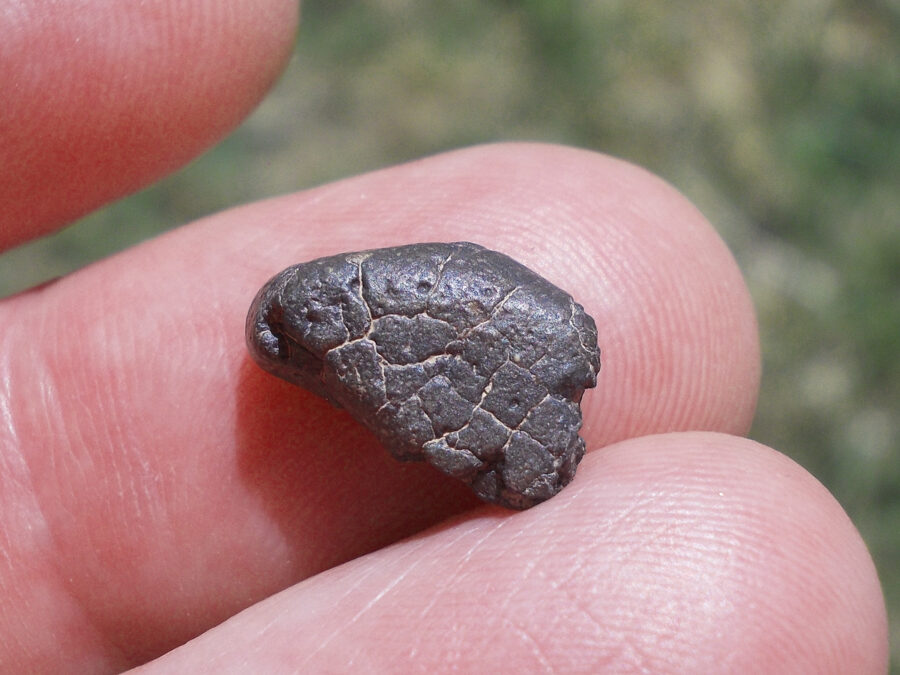
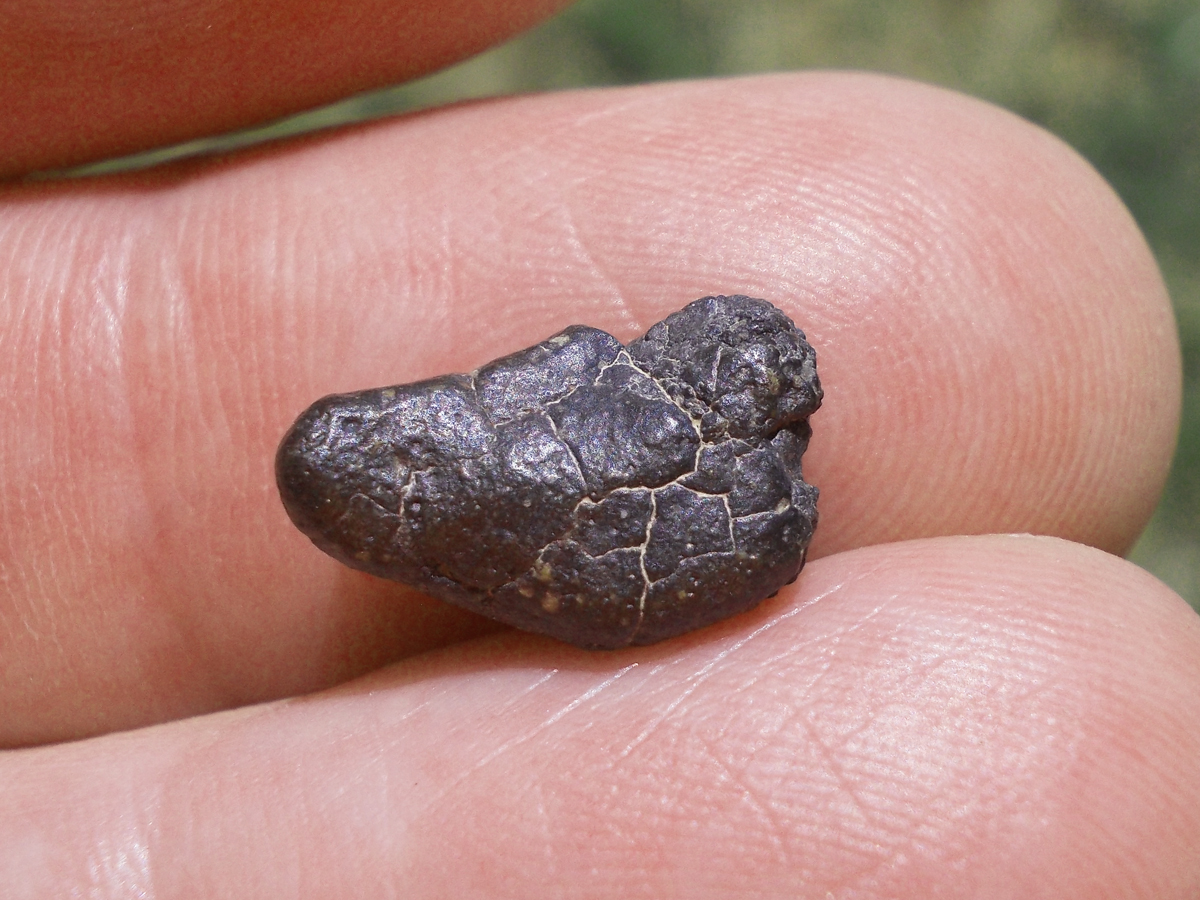
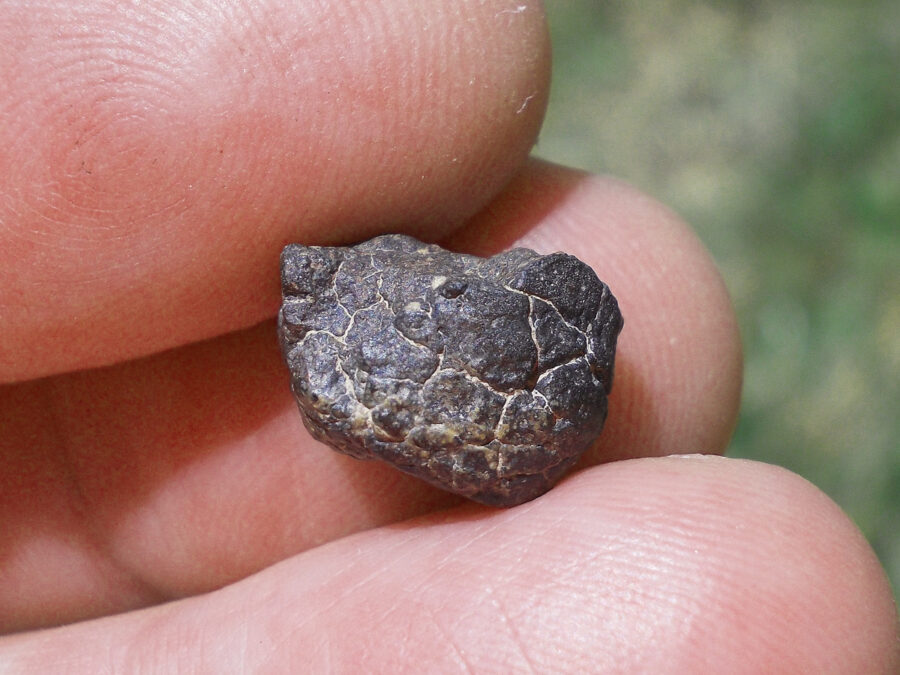
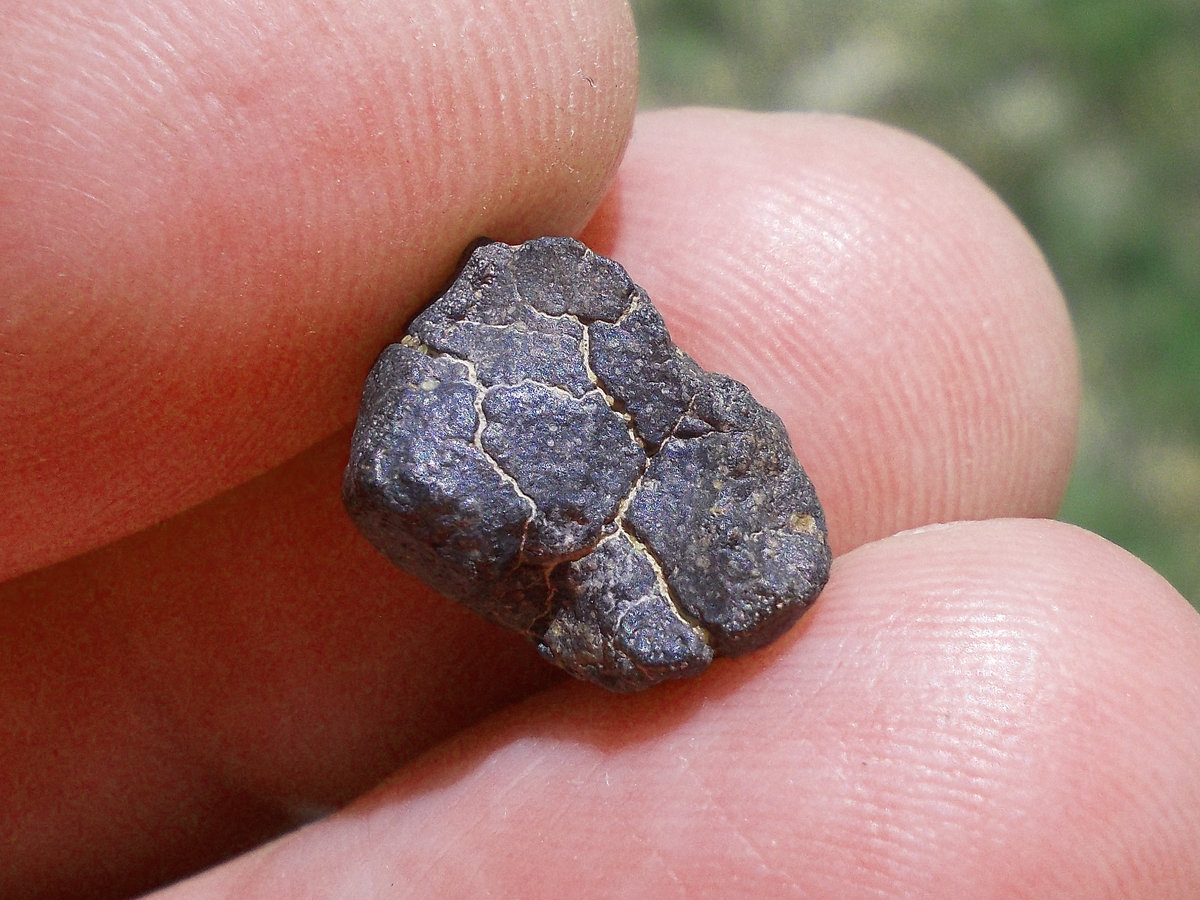
NWA 15170 is a lodranite meteorite of only 89 grams.
The lodranites are a type of meteorites forming a group within the primitive achondrites.
The reference fall is the Lodran meteorite that fell in 1868 in Pakistan..
These rare meteorites are composed for a large part of orthopyroxene (45 to 55 %), of magnesian olivine (40 %), of Fe-Ni alloy, of troilite, of clinopyroxene, of daubreelite, schreibersite, chromite and, accessorily, feldspars plagioclase and orthoclase, alabandite, graphite and apatite.
NWA 15170 is a lodranite meteorite of only 89 grams.
The lodranites are a type of meteorites forming a group within the primitive achondrites.
The reference fall is the Lodran meteorite that fell in 1868 in Pakistan..
These rare meteorites are composed for a large part of orthopyroxene (45 to 55 %), of magnesian olivine (40 %), of Fe-Ni alloy, of troilite, of clinopyroxene, of daubreelite, schreibersite, chromite and, accessorily, feldspars plagioclase and orthoclase, alabandite, graphite and apatite.
NWA 15170 is a lodranite meteorite of only 89 grams.
The lodranites are a type of meteorites forming a group within the primitive achondrites.
The reference fall is the Lodran meteorite that fell in 1868 in Pakistan..
These rare meteorites are composed for a large part of orthopyroxene (45 to 55 %), of magnesian olivine (40 %), of Fe-Ni alloy, of troilite, of clinopyroxene, of daubreelite, schreibersite, chromite and, accessorily, feldspars plagioclase and orthoclase, alabandite, graphite and apatite.
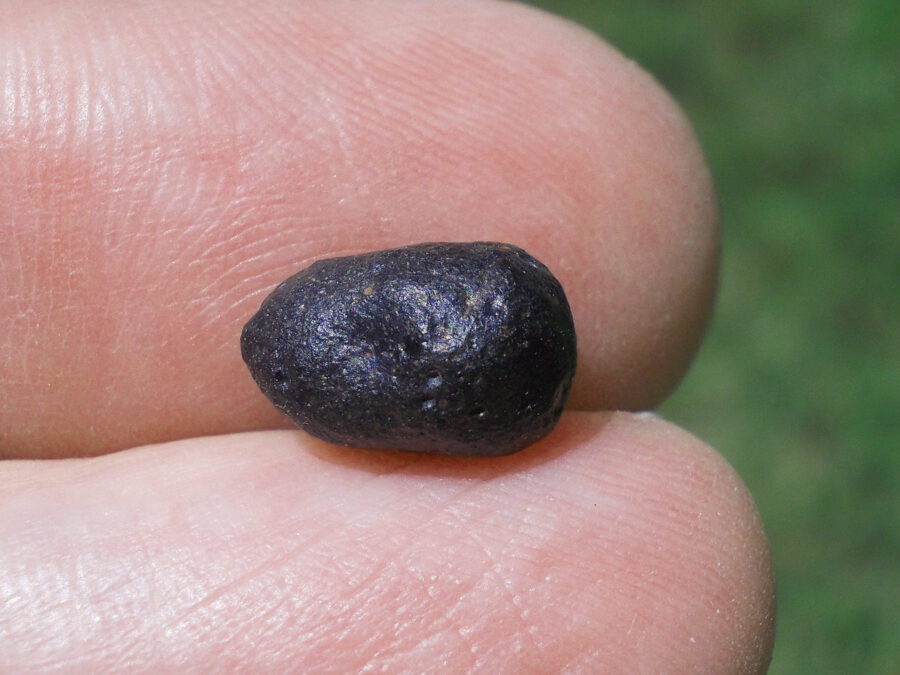
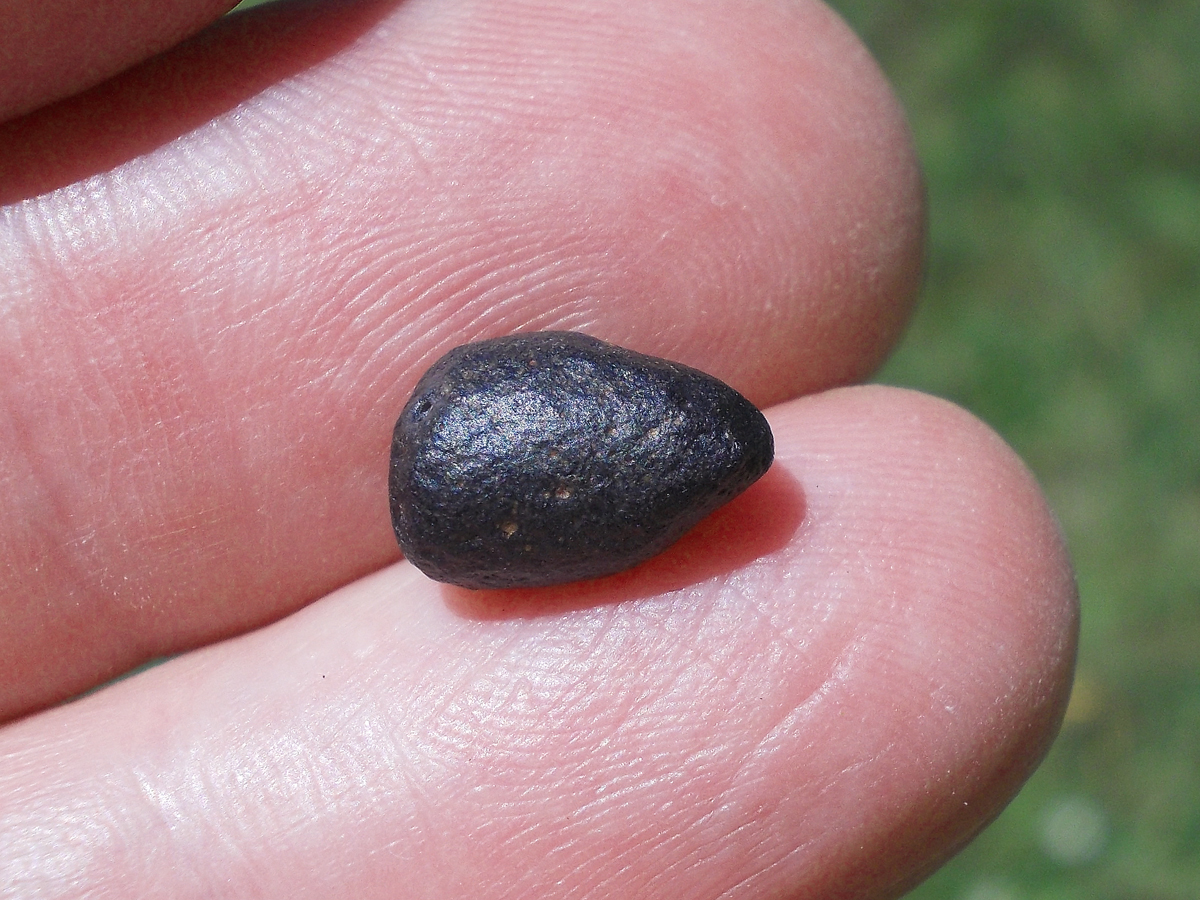
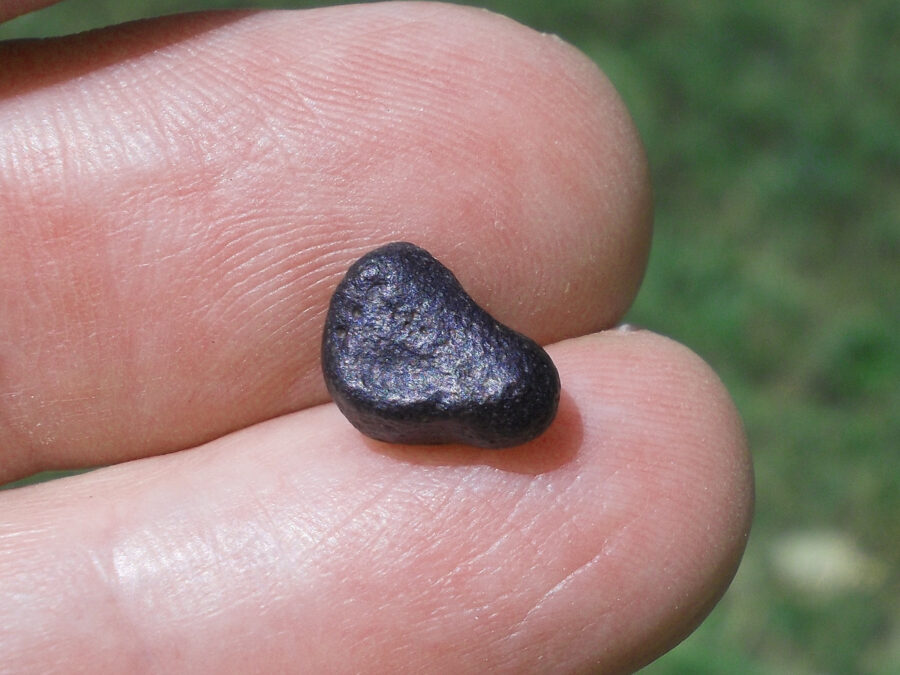
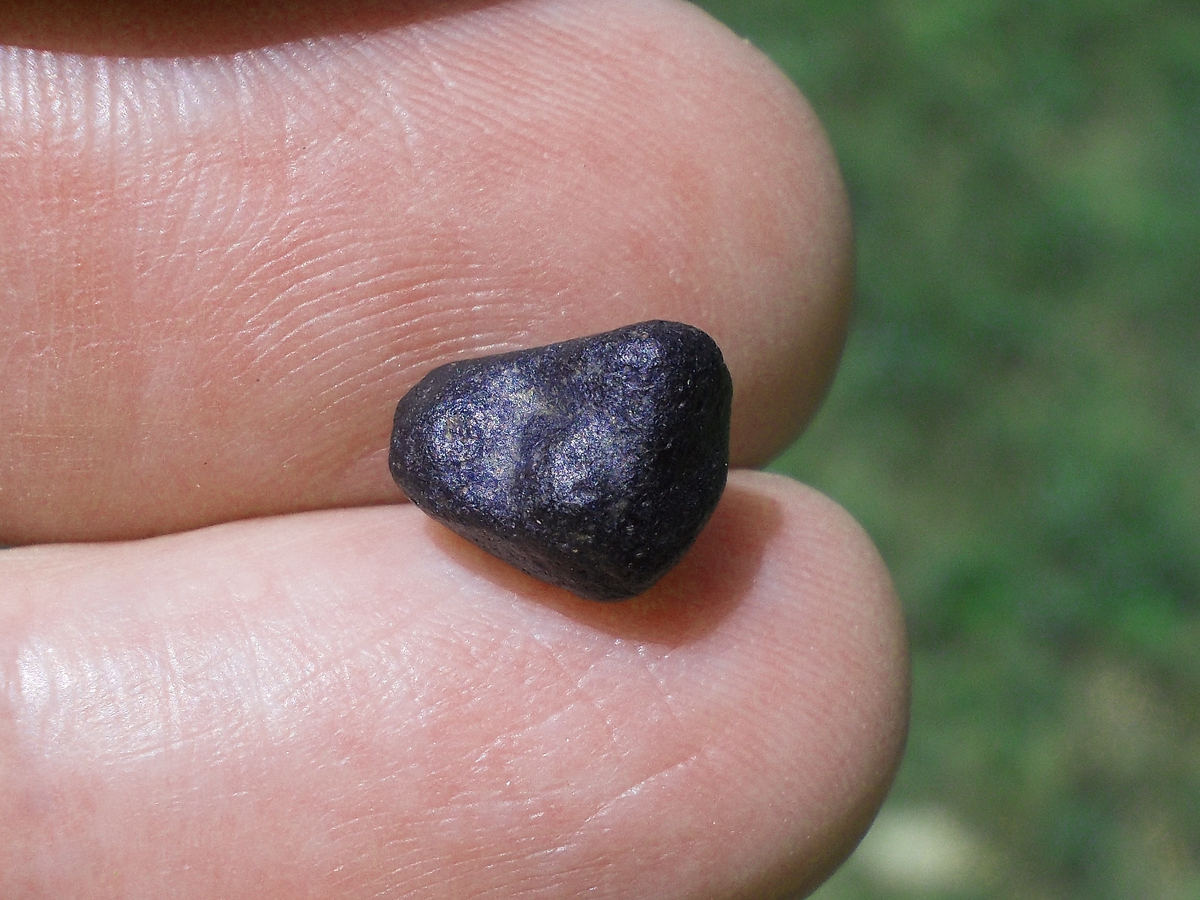
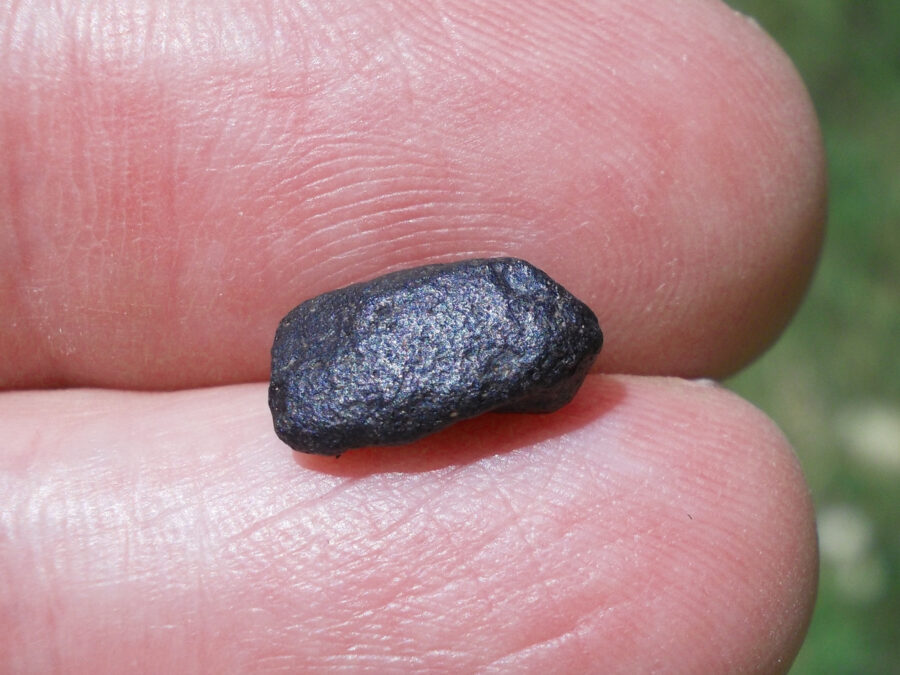
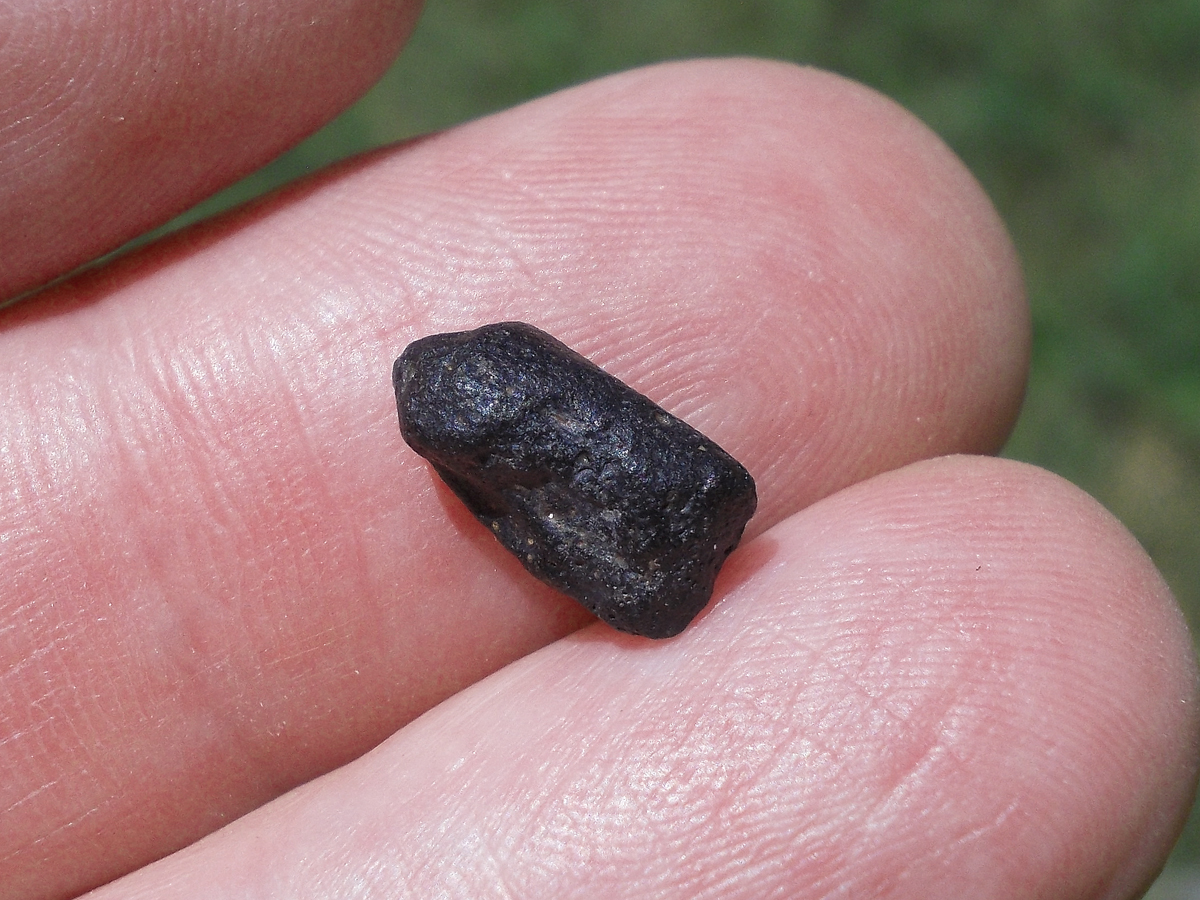
The Atacamaites were discovered in the Atacama desert in Chile.
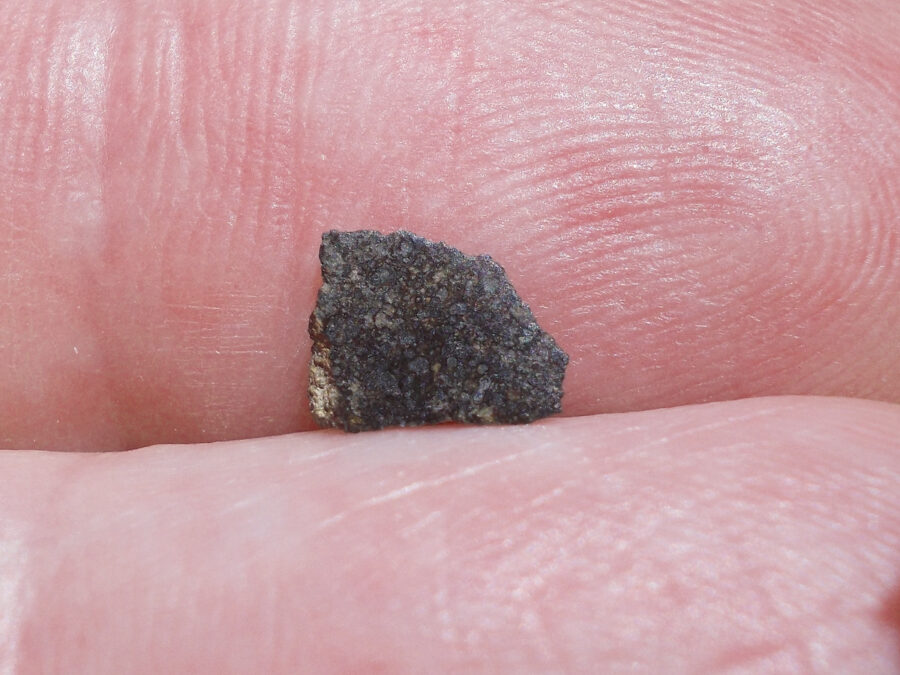
They are black and glassy objects of about 1 cm, they were formed following an impact about 7.8 million years ago.
Their small size, heterogeneity, state of oxidation and level of contamination distinguish them from tektites, which is why a study conducted by J. Gattacceca, Bertrand Devouard, Jean-Alix J-A Barrat, Pierre Rochette, M.L. Balestrieri, G. Bigazzi, G. Ménard, F. Moustard, E. dos Santos, R. Scorzelli, proposes to name them “tektoids”.
The impactor was an iron meteorite, most probably of the IIAB group.
The Atacamaites were discovered in the Atacama desert in Chile.
They are black and glassy objects of about 1 cm, they were formed following an impact about 7.8 million years ago.
Their small size, heterogeneity, state of oxidation and level of contamination distinguish them from tektites, which is why a study conducted by J. Gattacceca, Bertrand Devouard, Jean-Alix J-A Barrat, Pierre Rochette, M.L. Balestrieri, G. Bigazzi, G. Ménard, F. Moustard, E. dos Santos, R. Scorzelli, proposes to name them “tektoids”.
The impactor was an iron meteorite, most probably of the IIAB group.
The Atacamaites were discovered in the Atacama desert in Chile.
They are black and glassy objects of about 1 cm, they were formed following an impact about 7.8 million years ago.
Their small size, heterogeneity, state of oxidation and level of contamination distinguish them from tektites, which is why a study conducted by J. Gattacceca, Bertrand Devouard, Jean-Alix J-A Barrat, Pierre Rochette, M.L. Balestrieri, G. Bigazzi, G. Ménard, F. Moustard, E. dos Santos, R. Scorzelli, proposes to name them “tektoids”.
The impactor was an iron meteorite, most probably of the IIAB group.
The reference fall is the Karoonda meteorite that fell in 1930 in Australia.
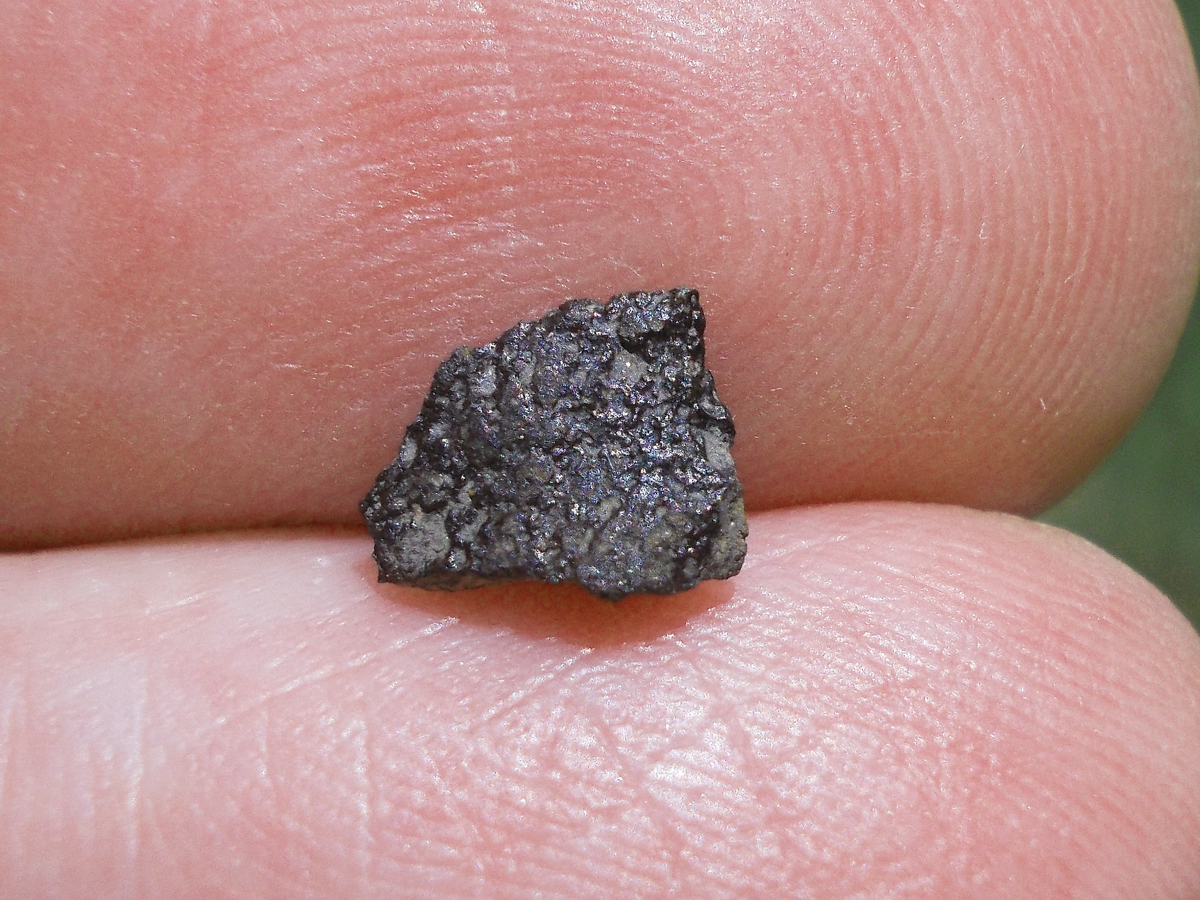
CK meteorites have inclusions called CAI’s, (calcium and aluminum rich mineral inclusions), formed 4,567 to 4,571 million years ago, they are the oldest materials in the Solar System.


 Out of stock