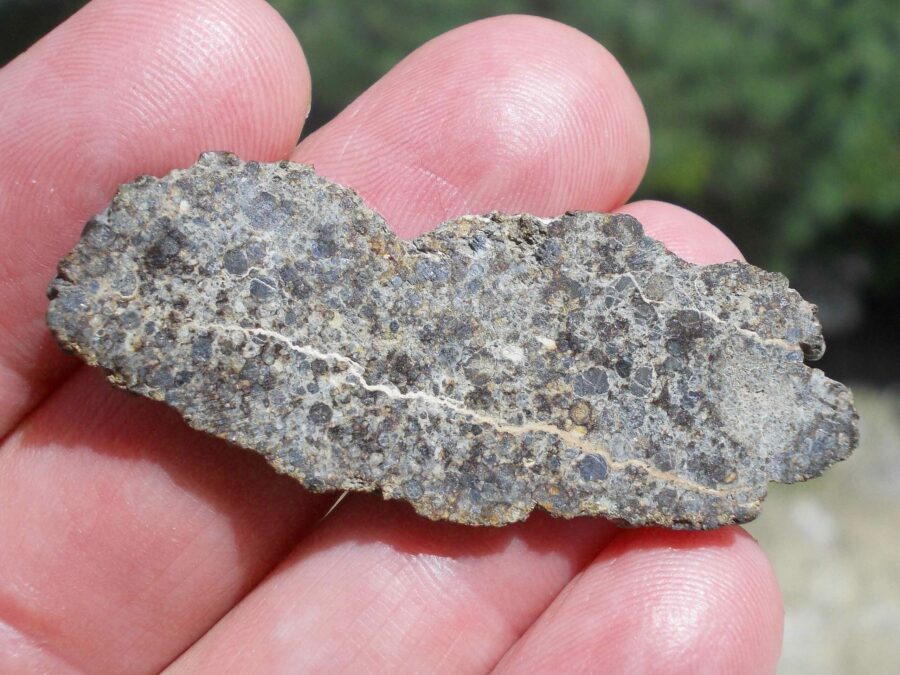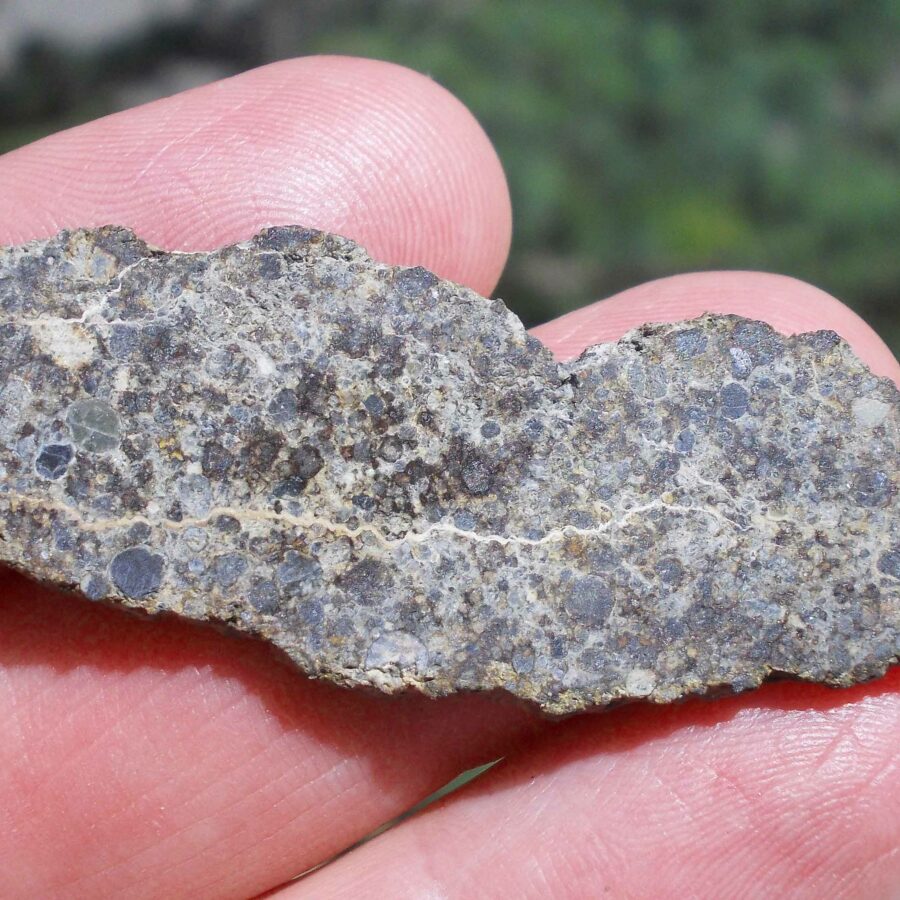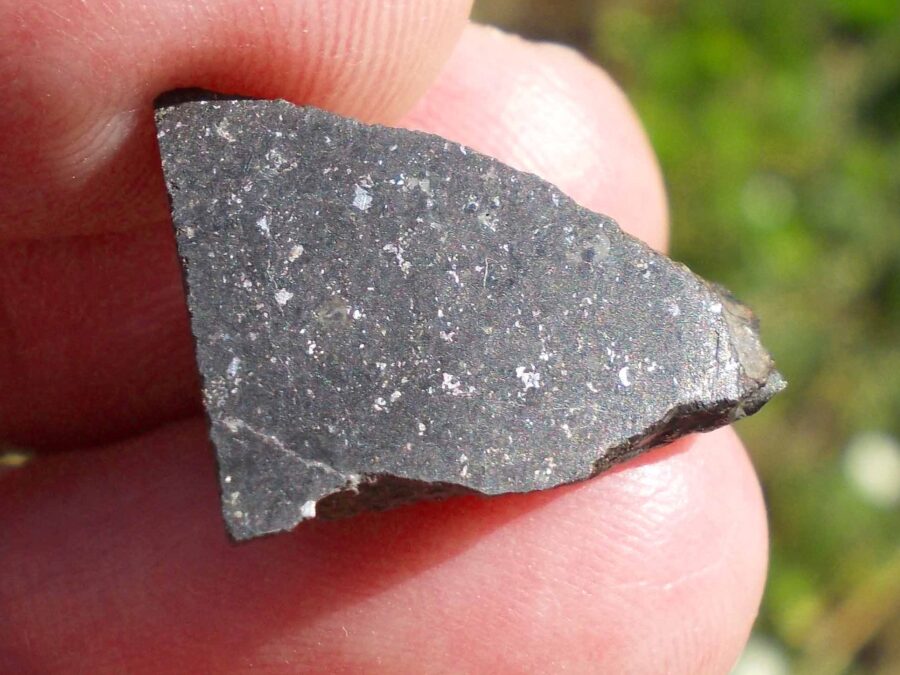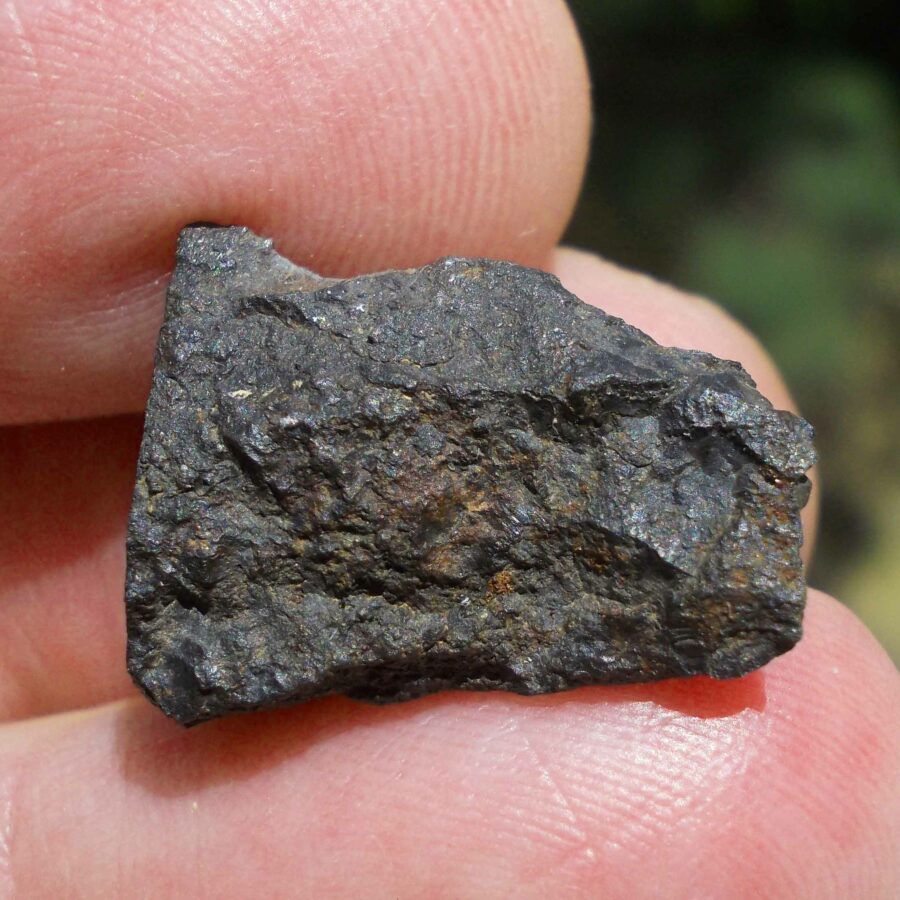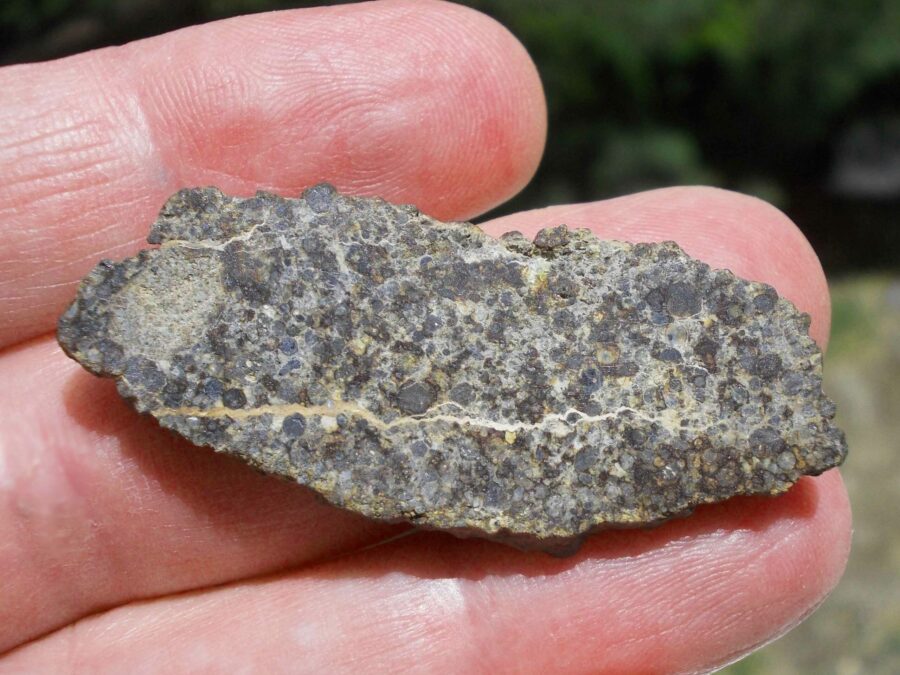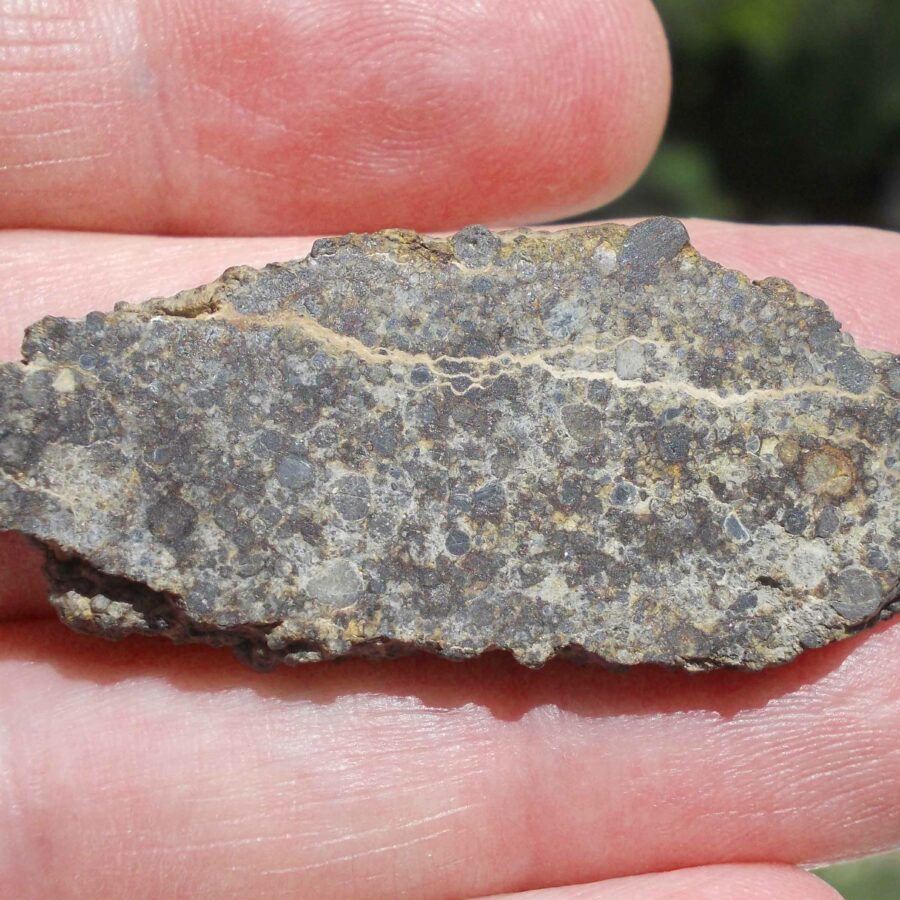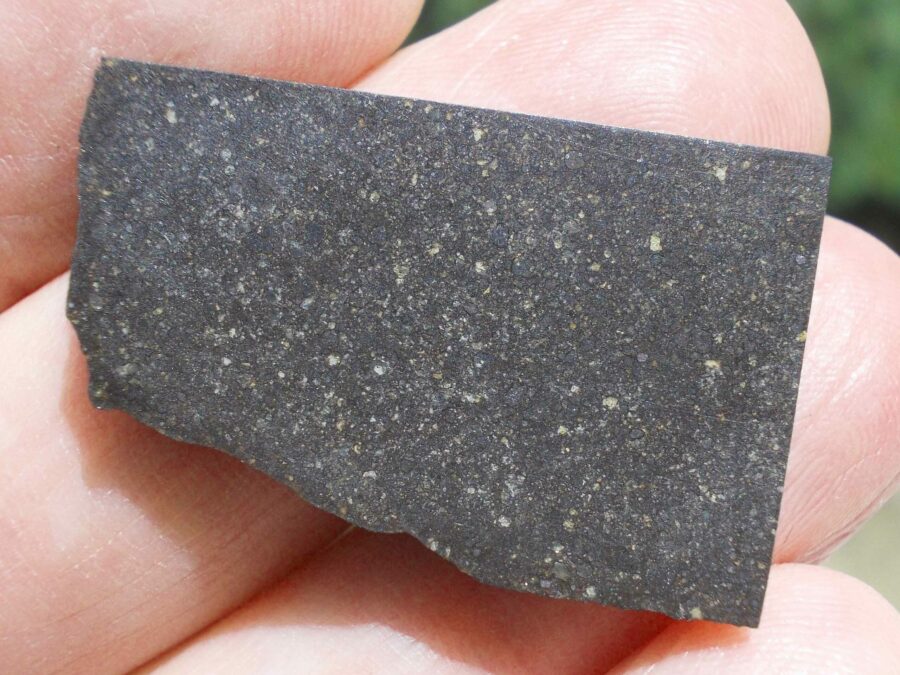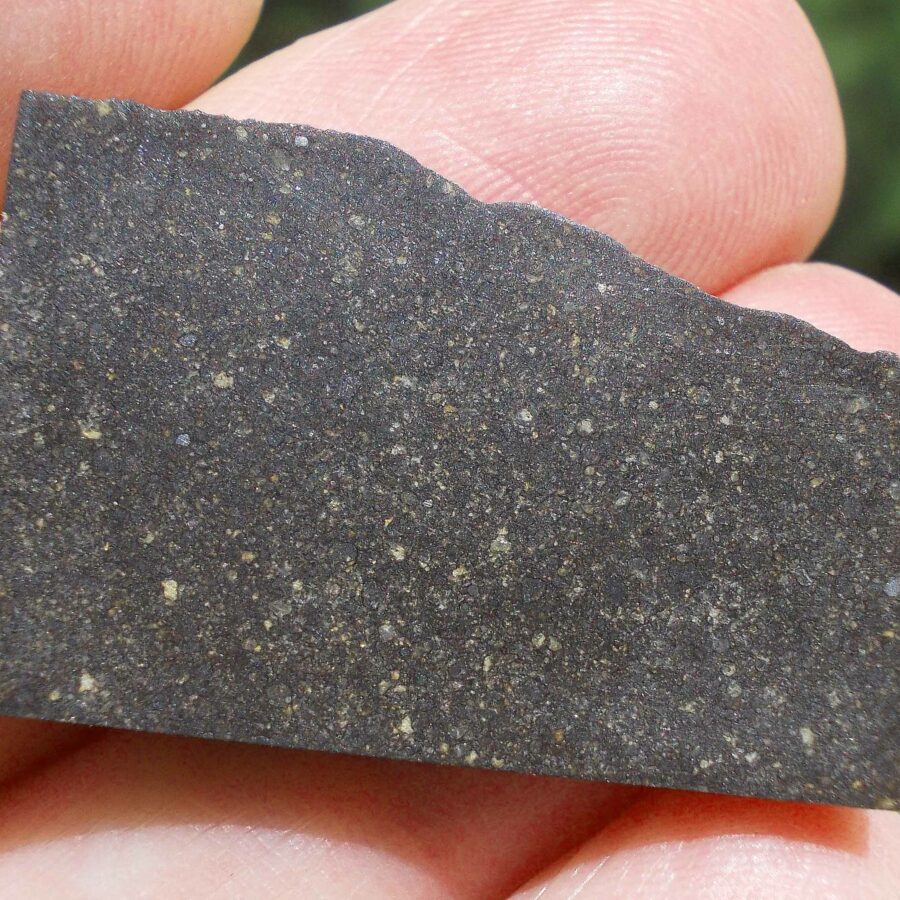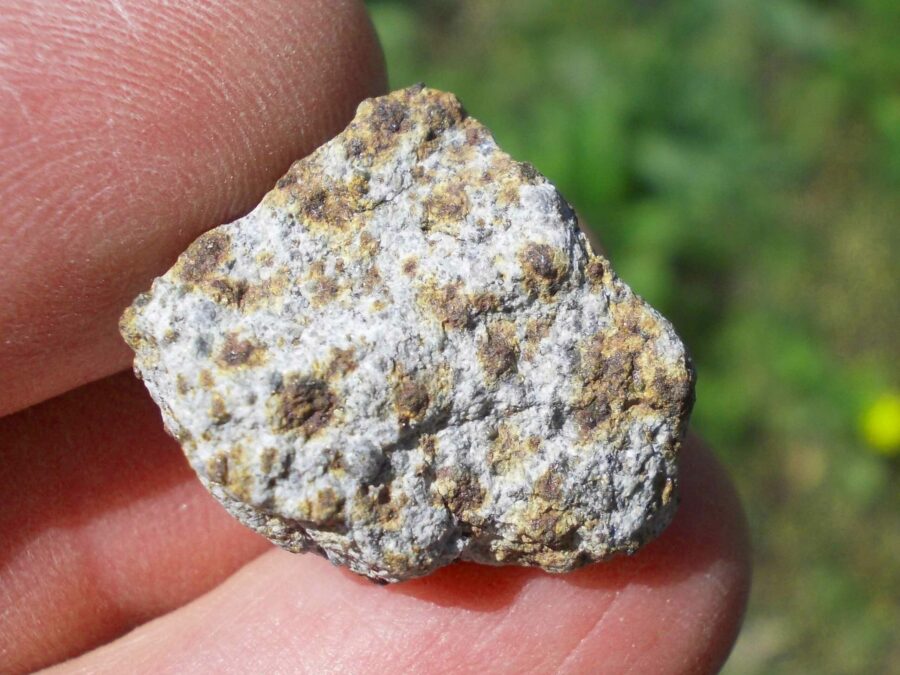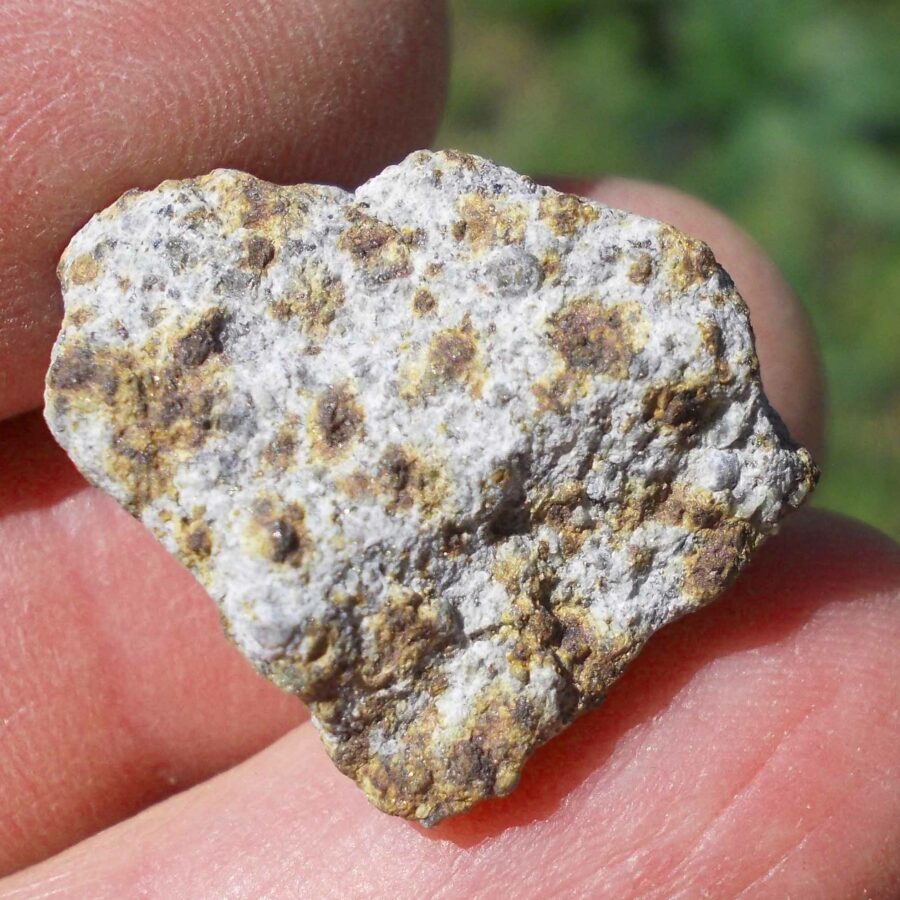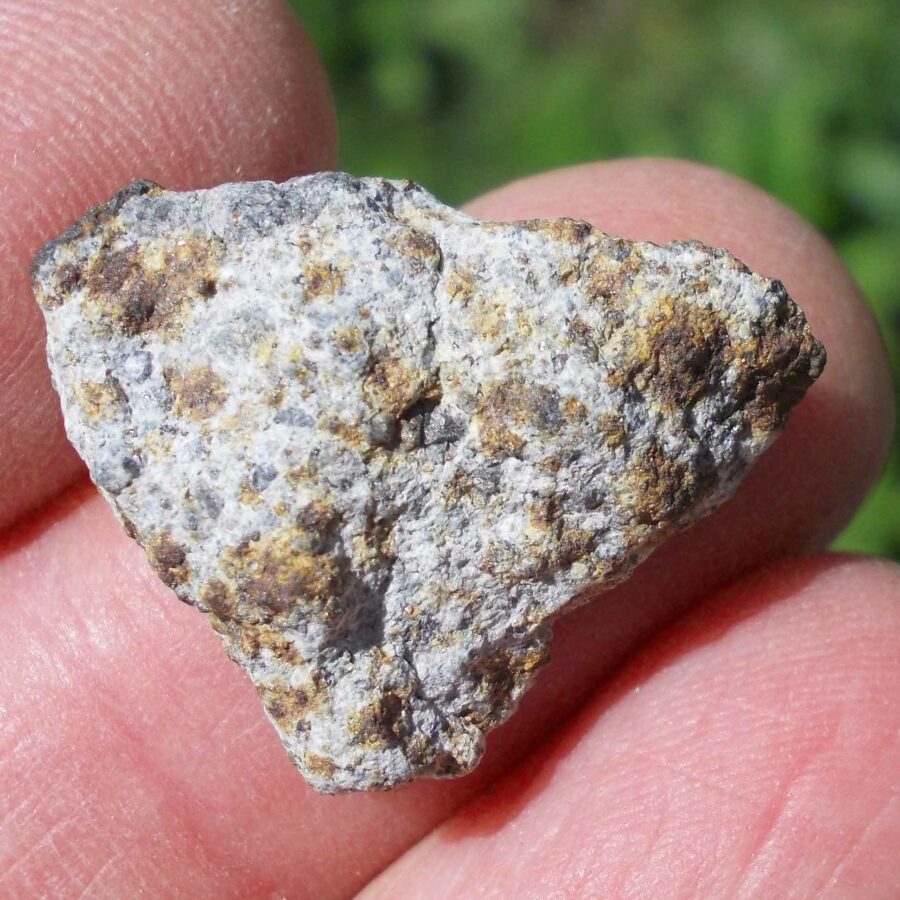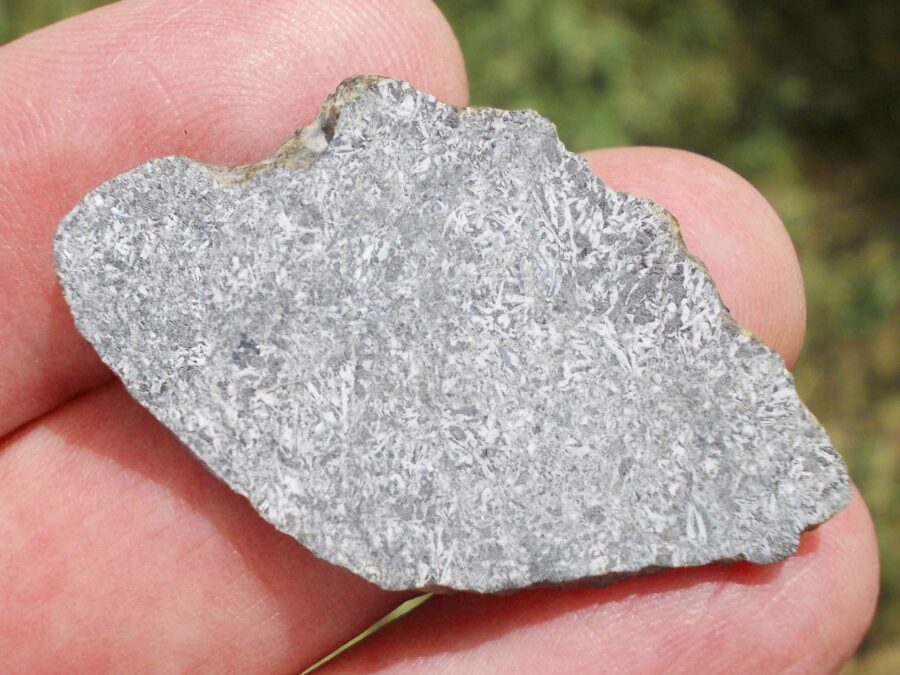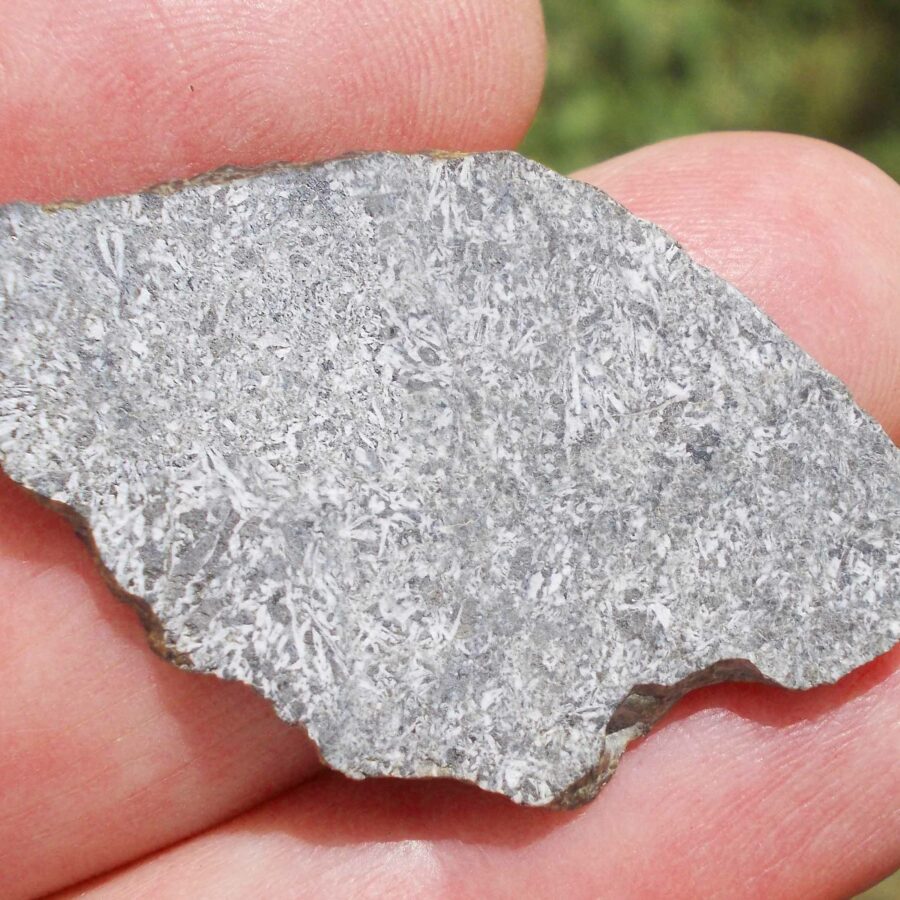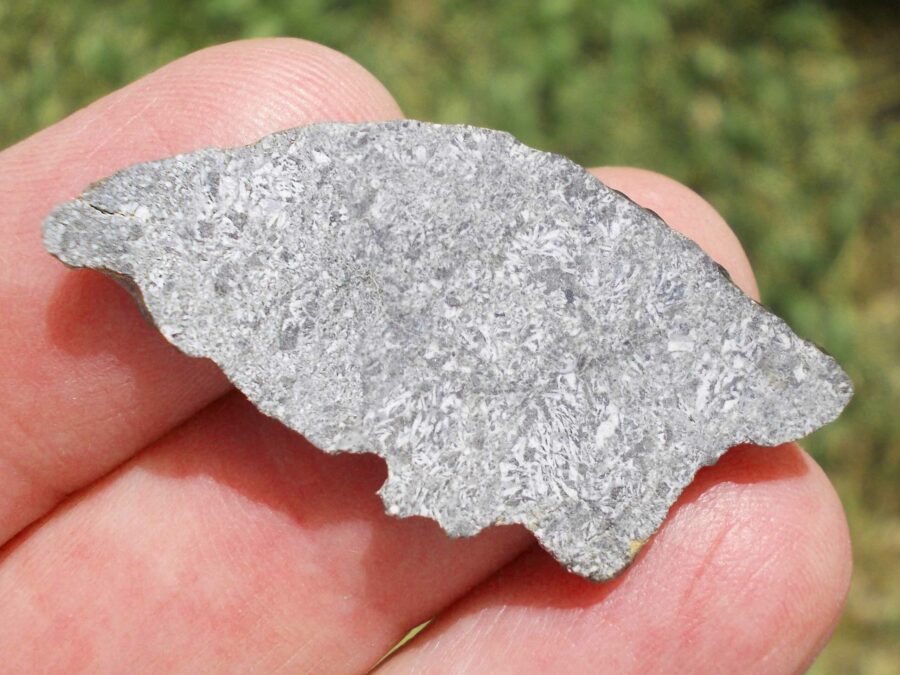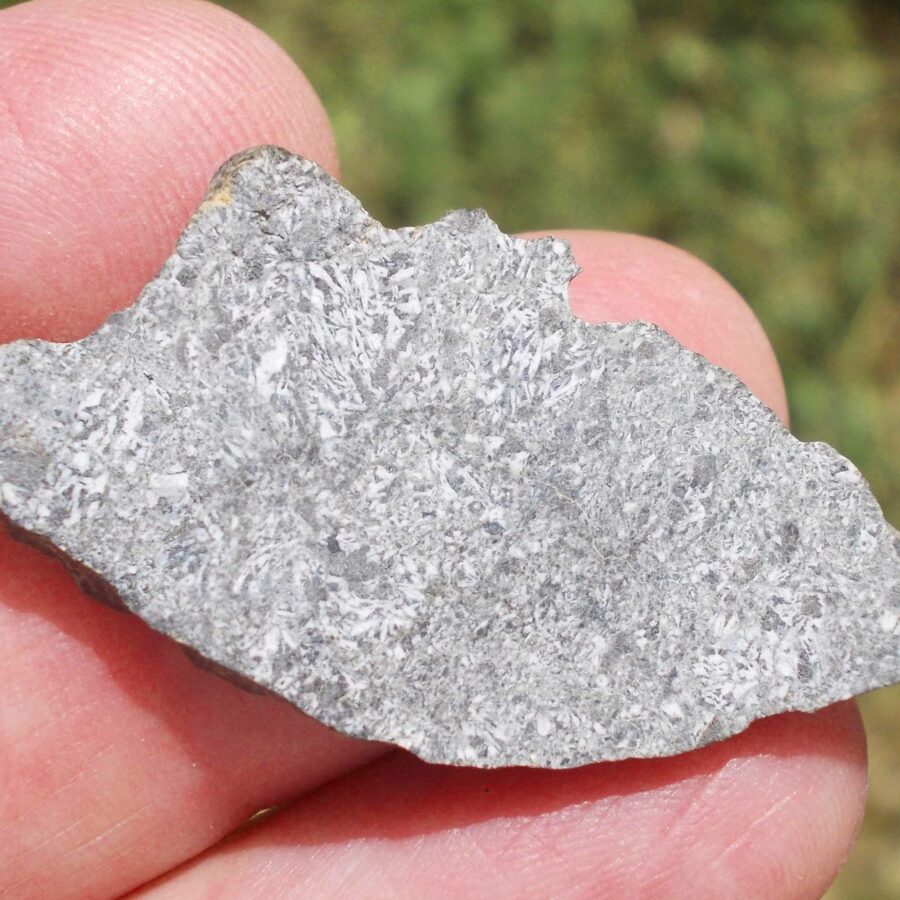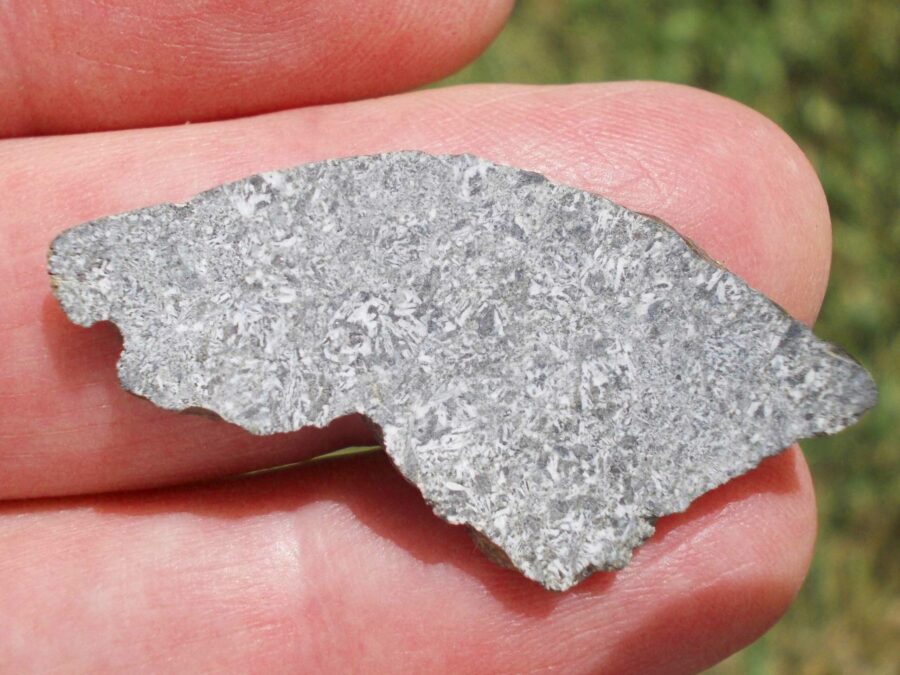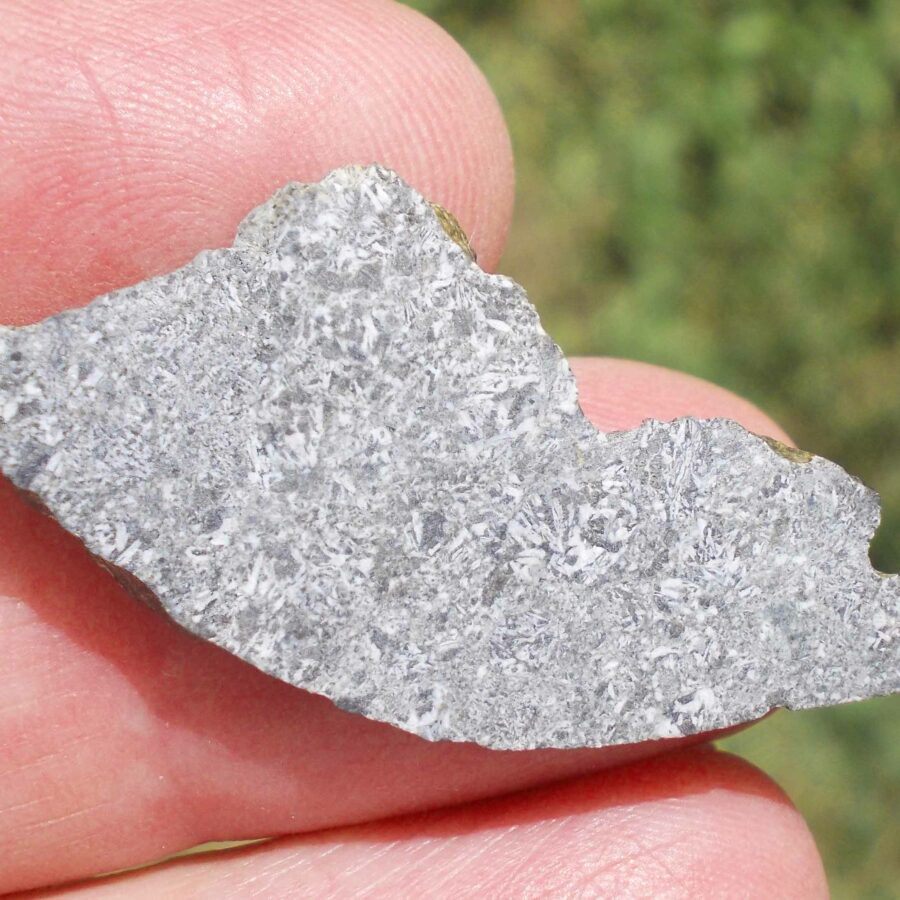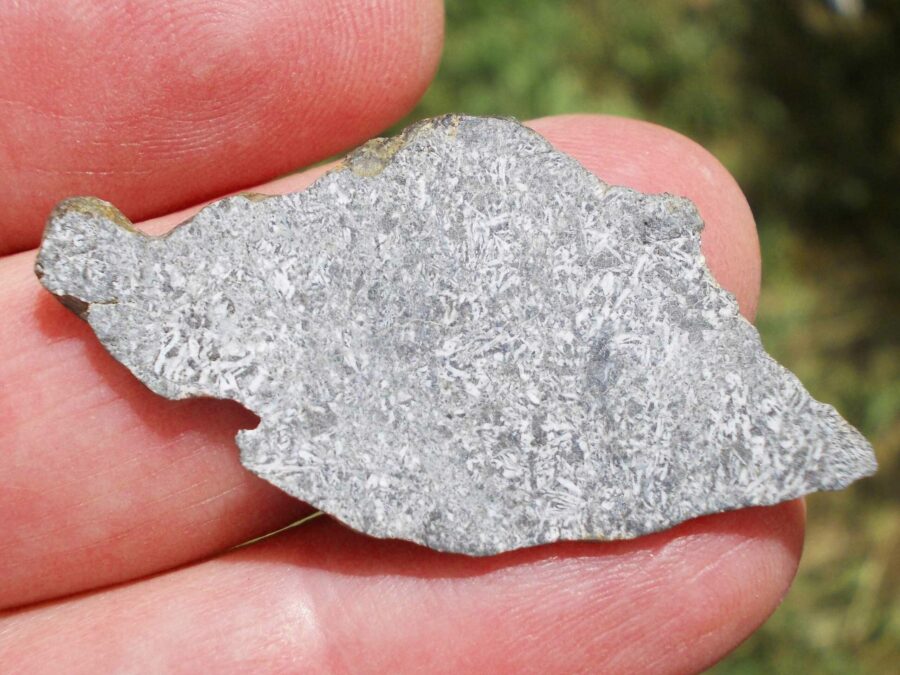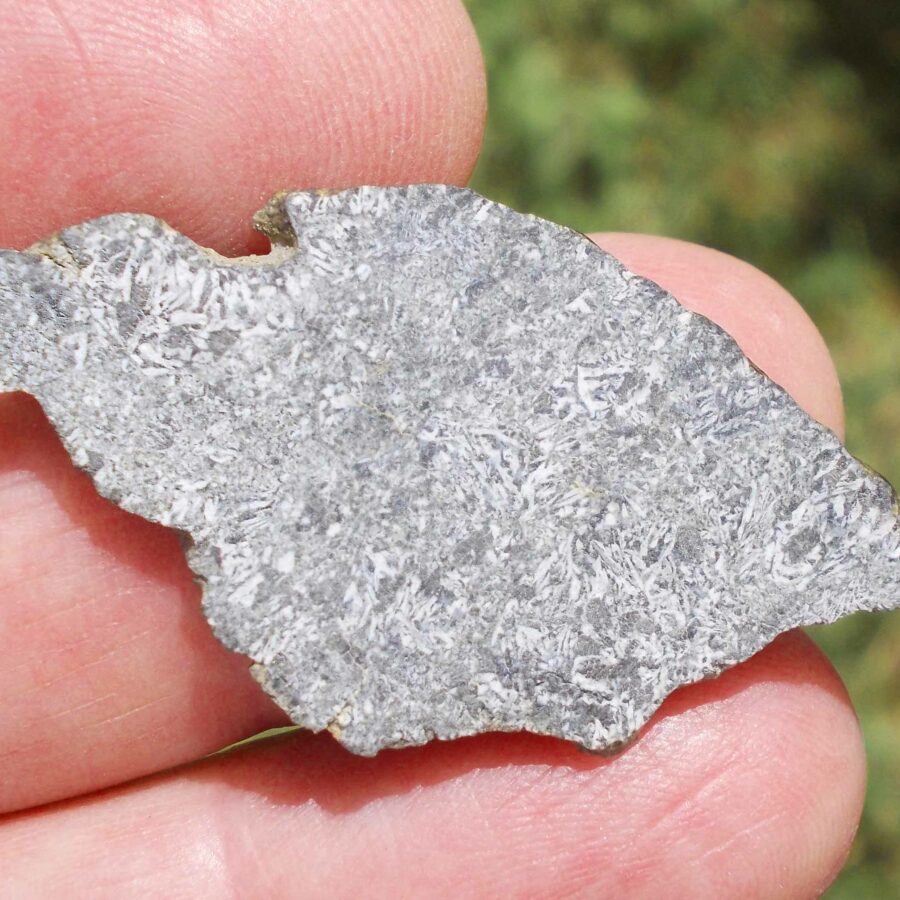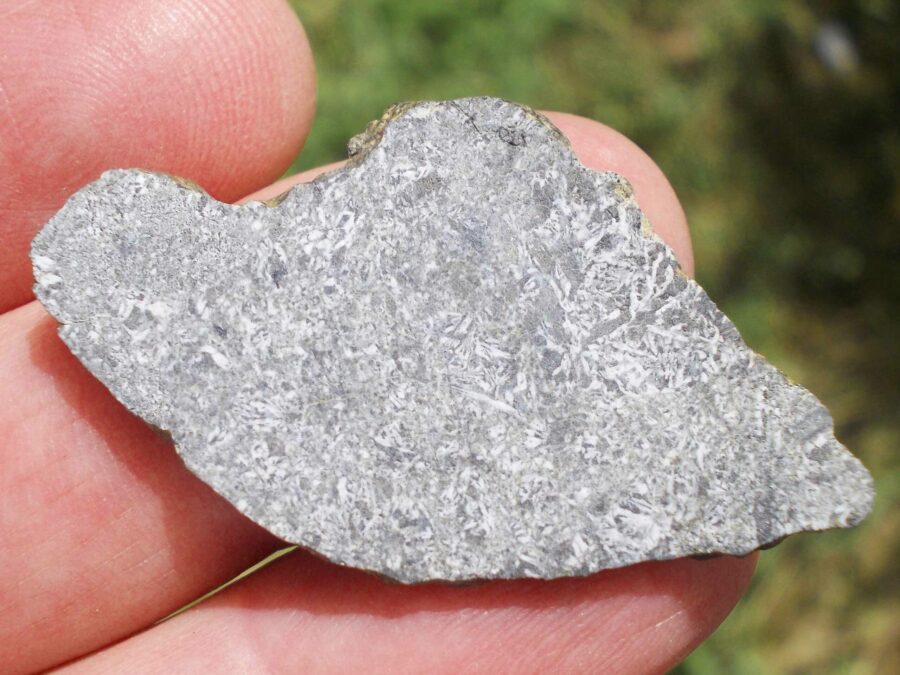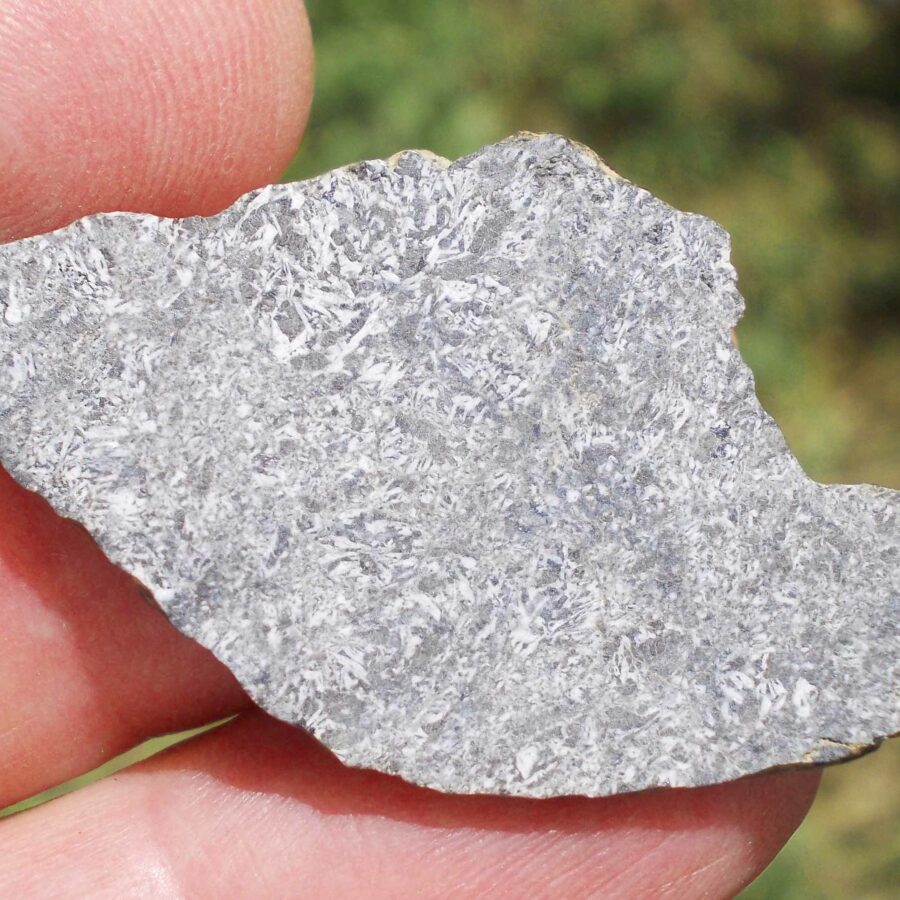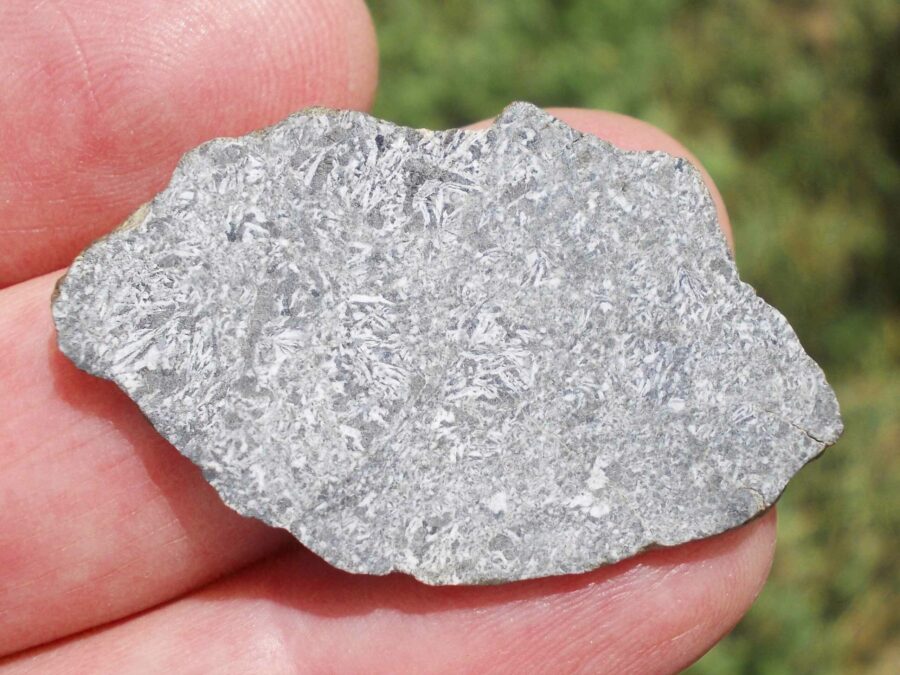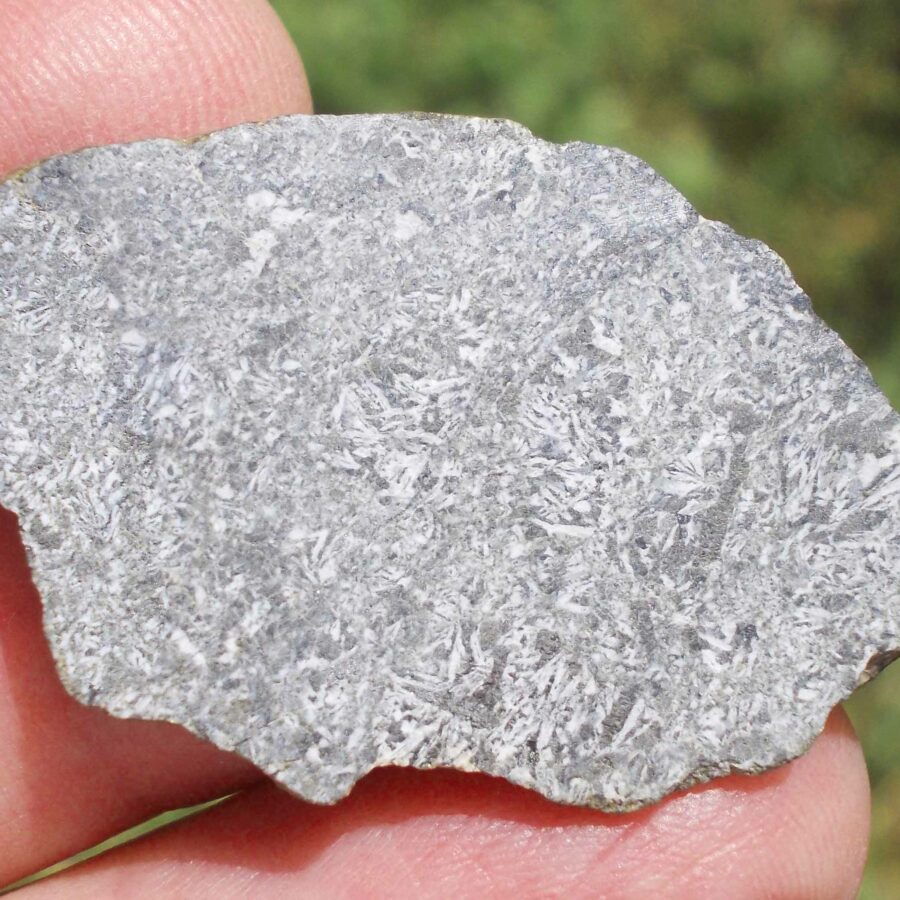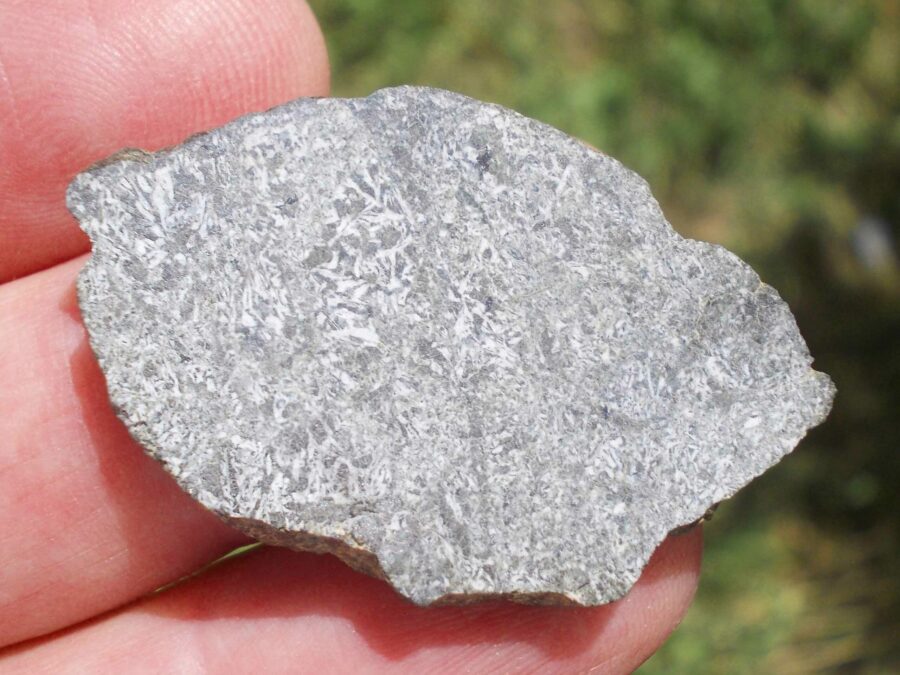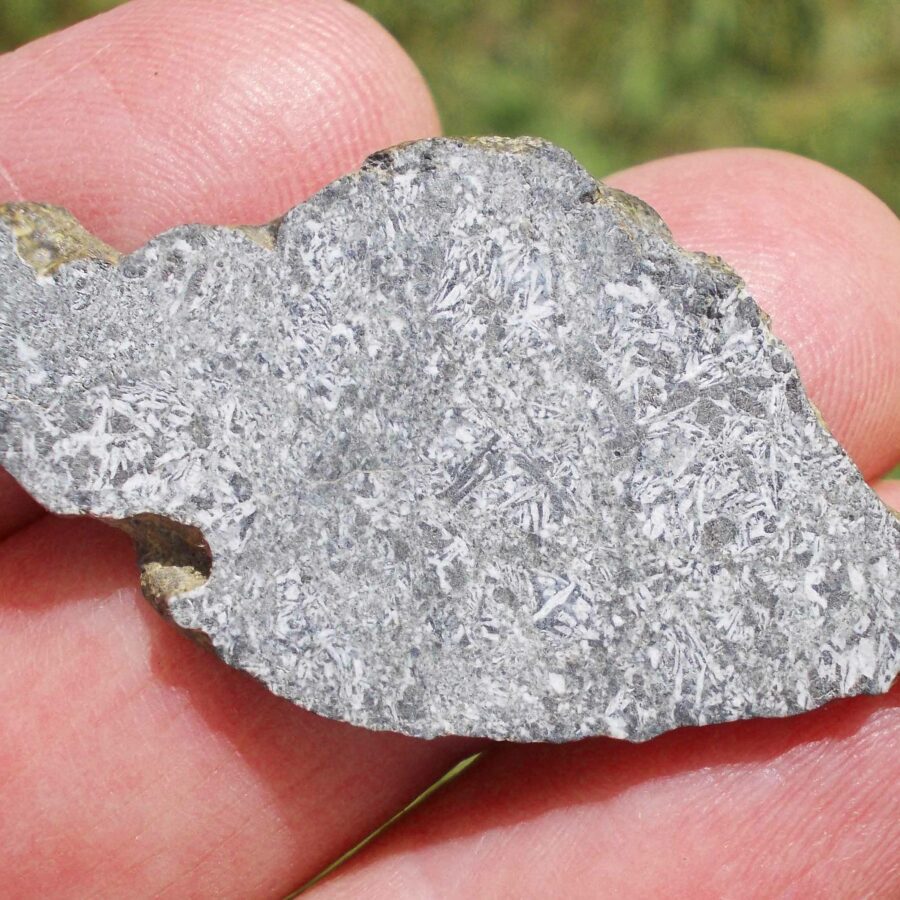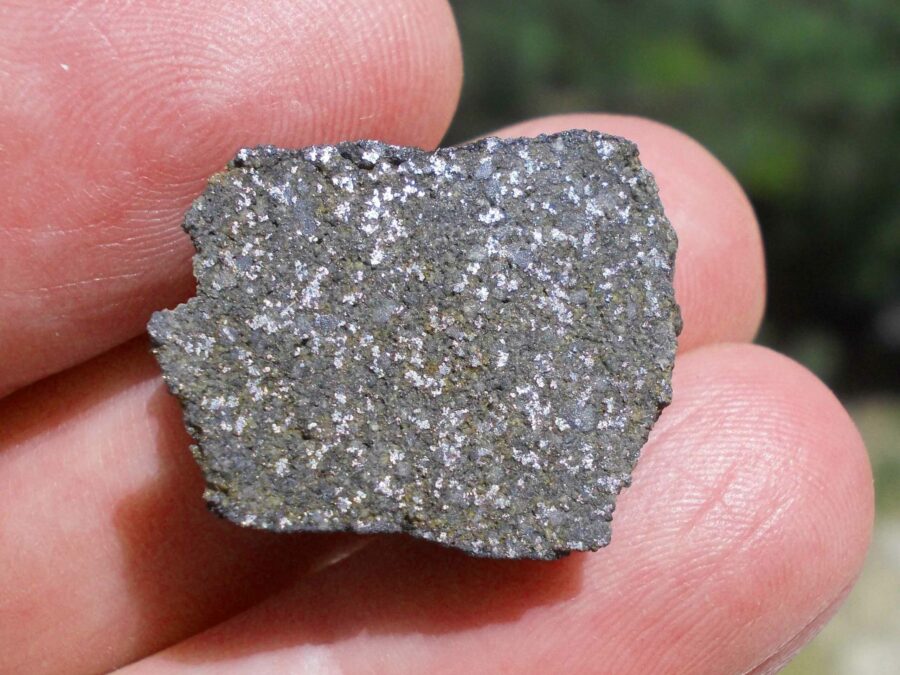
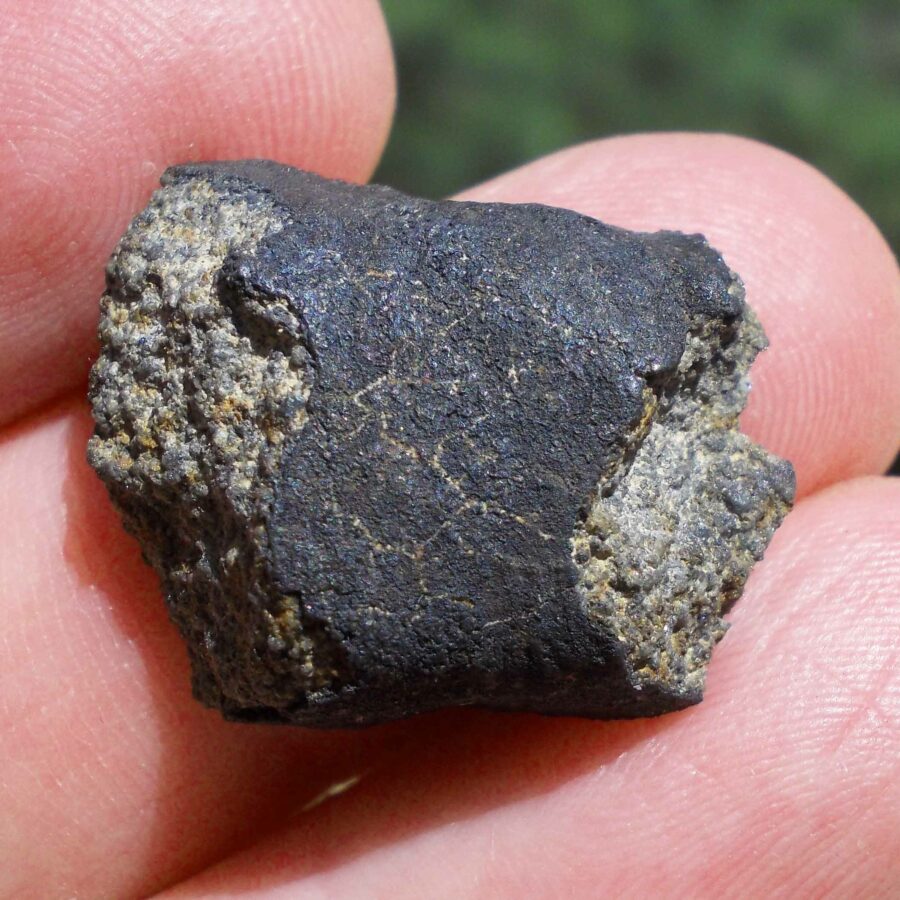
Lahmada 048 #3 Ureilite - 4,7 gOut of stock

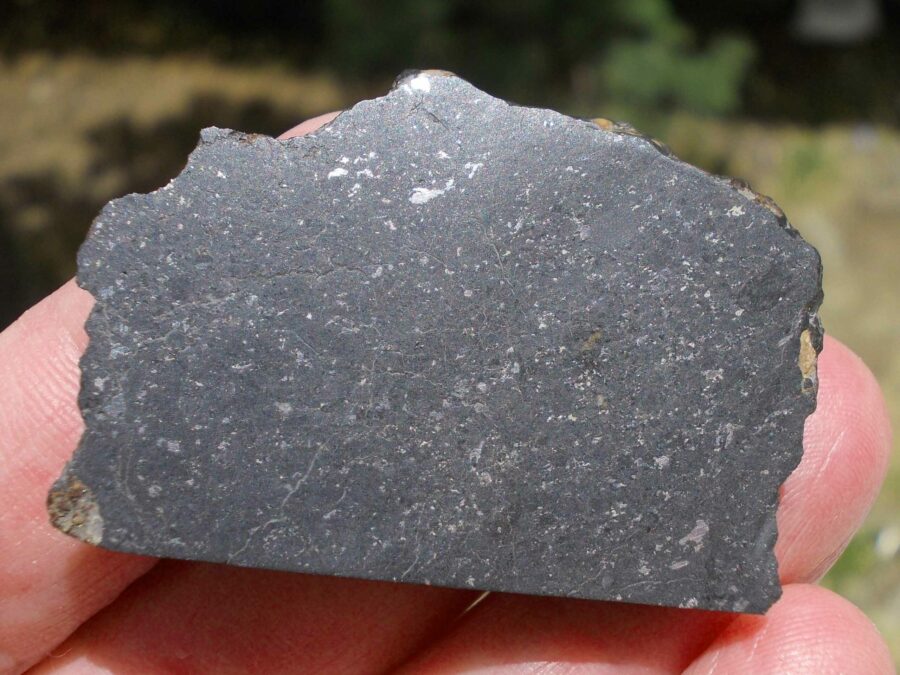
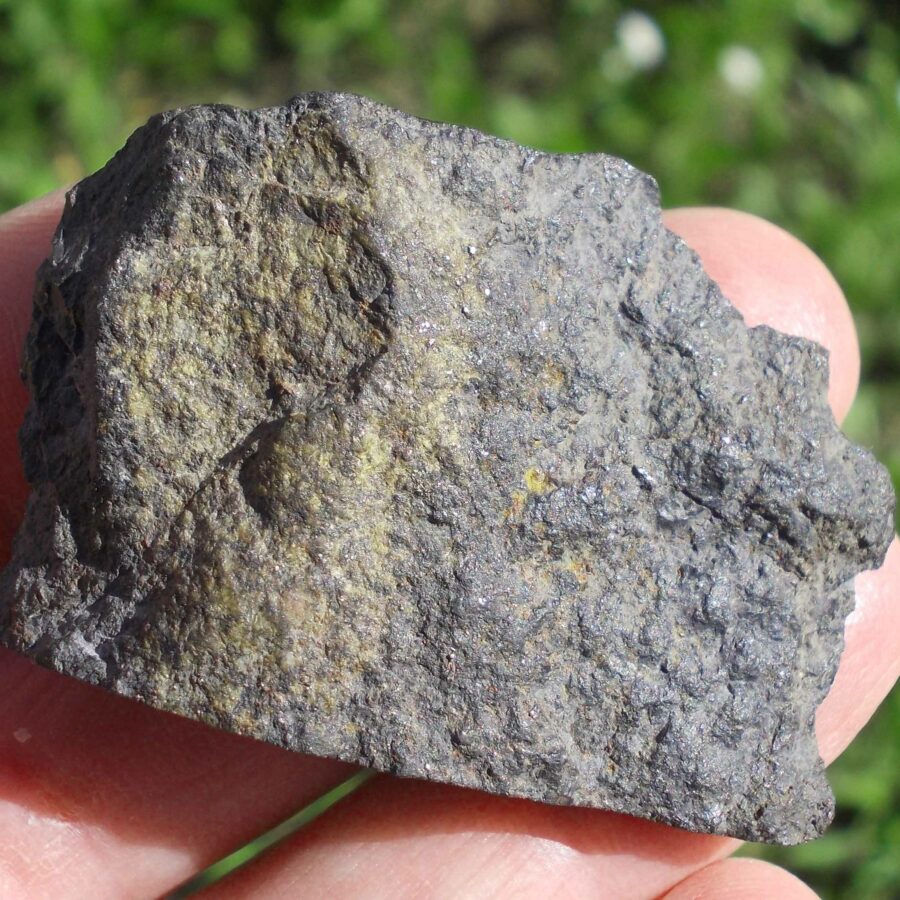
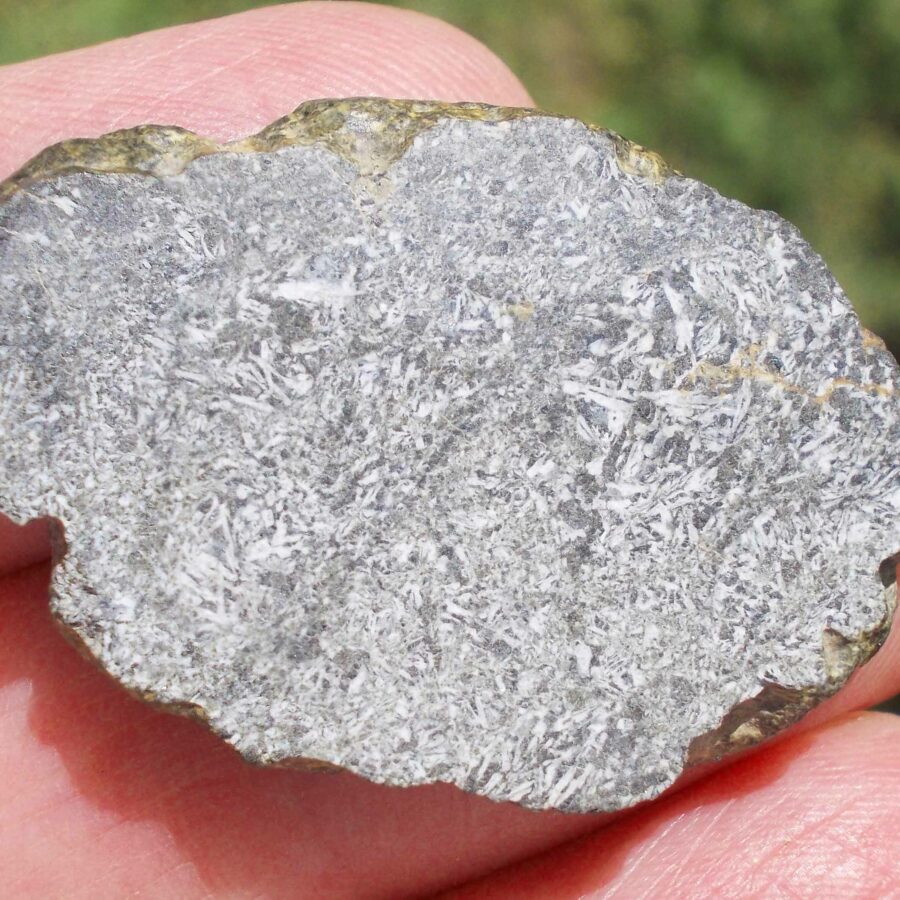
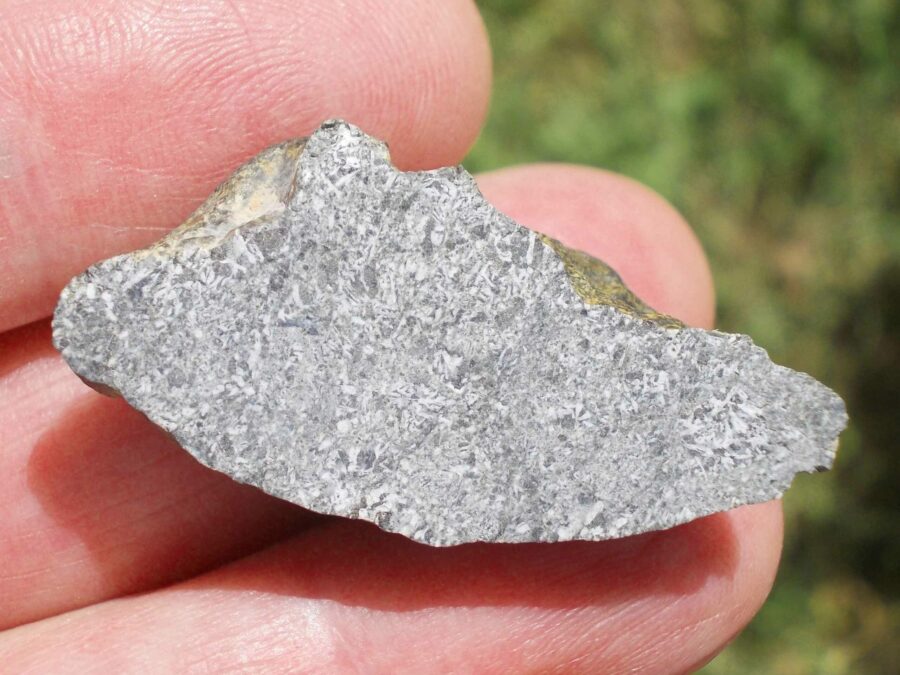
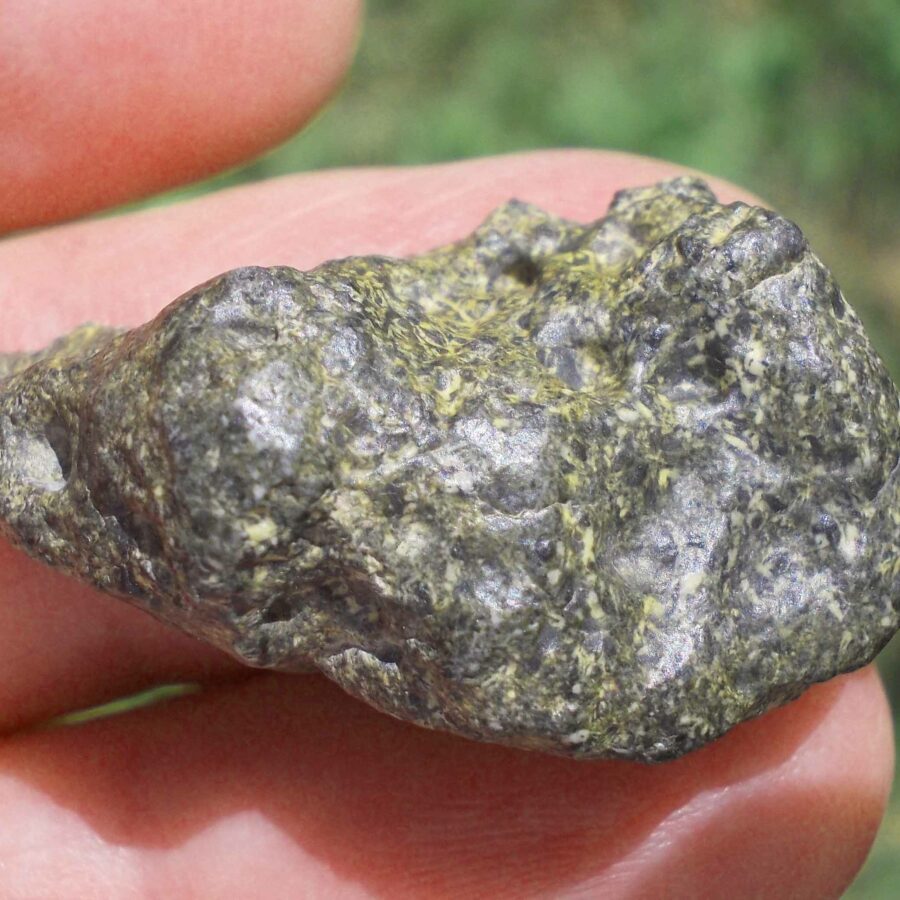
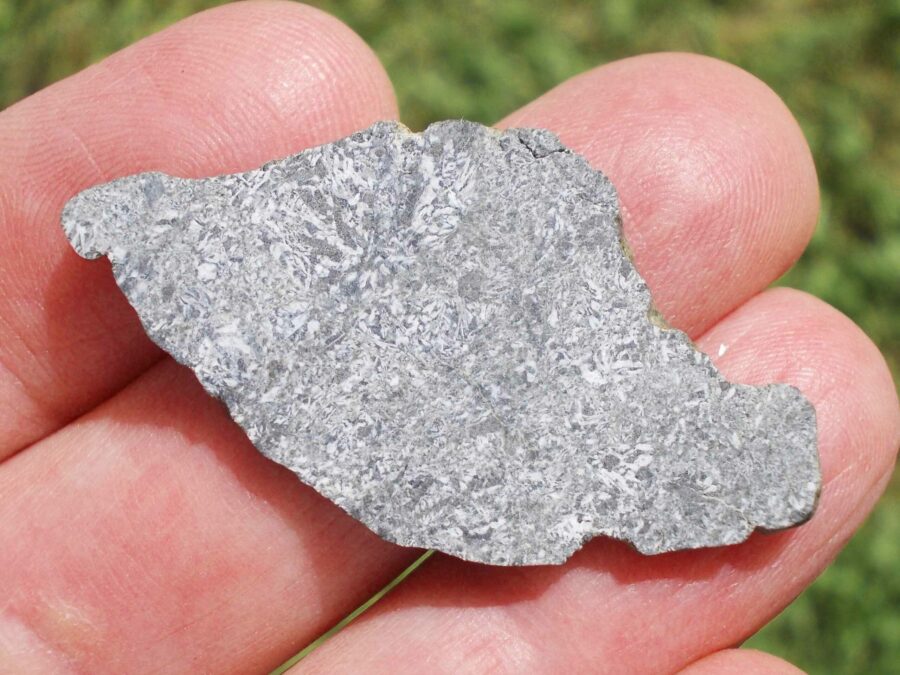
Lahmada 048 #3 Ureilite – 4,7 g

99,68 $

Lahmada 048 is an achondrite ureilite meteorite of only 59 grams discovered in the Western Sahara in a concentration area called Lahmada.

It was discovered on September 23, 2020 by Brahim Elguirah.

Lahmada 048 certainly contains diamonds in view of the difficulties to cut it.

The diamonds, which are rarely larger than a few micrometers in diameter, are probably the result of high-pressure shock waves produced by the collision of the parent body of the ureilites with other asteroids.

Writeup from MB 110:

Lahmada 048 27°24’20.78″N, 9°51’13.07″W

Saguia el Hamra, Western Sahara

Find: 2020 Sep 23

Classification: Ureilite

History: The meteorite was found by Brahim Elguirah. The meteorite was bought by Jean Redelsperger from Zaid Oualguirah in 2020.

Physical characteristics: A single dark brown stone

Petrography: (J. Gattacceca, CEREGE) Aggregate of blocky olivine grains (grain size 800 µm) with reduced margins. Metal, originally present along olivine rims, is almost entirely replaced by terrestrial weathering products. Contains a significant amount of carbon material, likely diamonds in view of the extreme difficulty to saw the rock.

Geochemistry: Olivine Fa21.9±0.4, CaO 0.36±0.02 wt%, CrO3 0.65±0.02, FeO/MnO = 53.4±7.9 (n=4). Olivine rim Fa5.1 (n=1).

Classification: Ureilite

Specimens: Type specimen at CEREGE. Mais mass with Jean Redelsperger.


Lahmada 048 #2 Ureilite - 2,5 gOut of stock

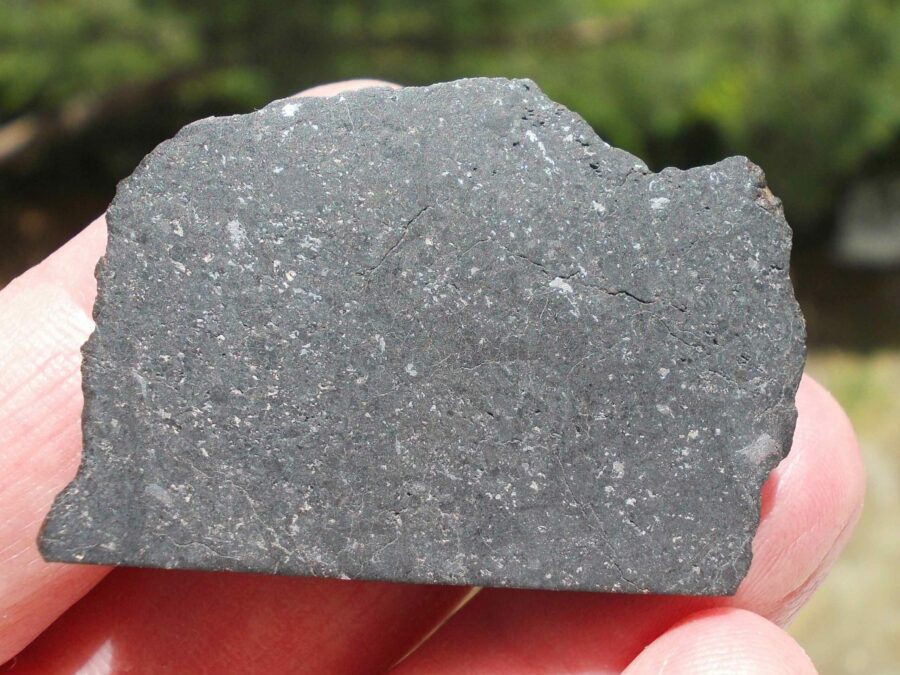
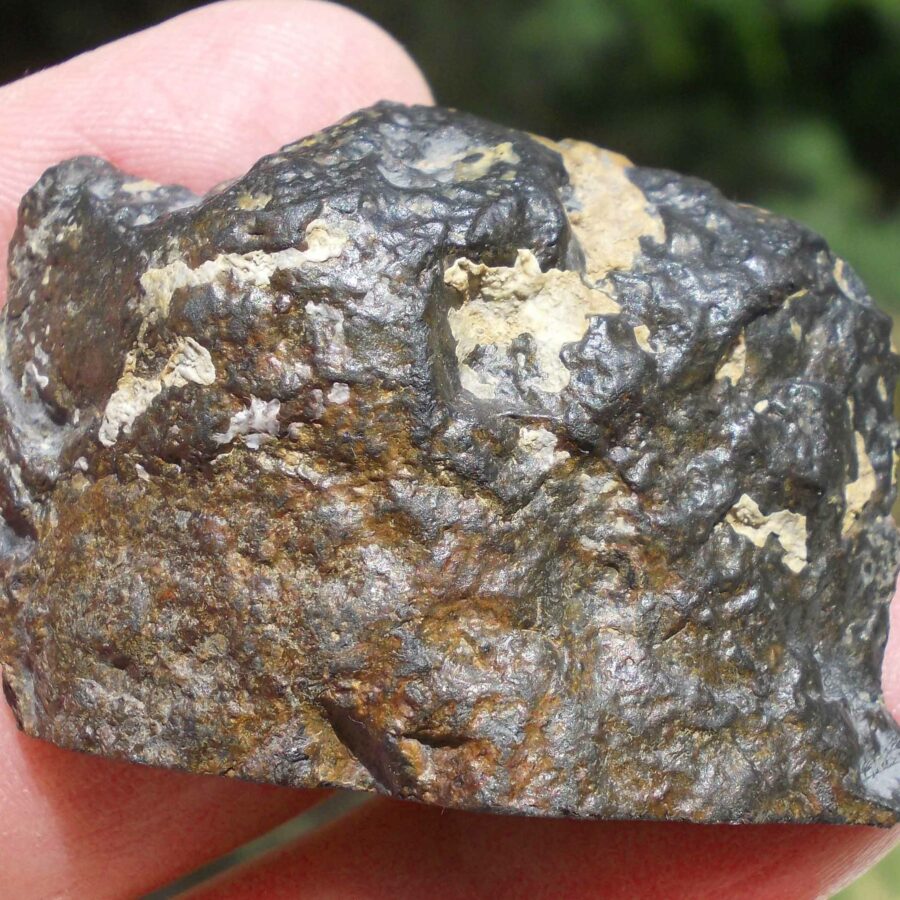
Lahmada 048 #2 Ureilite – 2,5 g

53,35 $

Lahmada 048 is an achondrite ureilite meteorite of only 59 grams discovered in the Western Sahara in a concentration area called Lahmada.

It was discovered on September 23, 2020 by Brahim Elguirah.

Lahmada 048 certainly contains diamonds in view of the difficulties to cut it.

The diamonds, which are rarely larger than a few micrometers in diameter, are probably the result of high-pressure shock waves produced by the collision of the parent body of the ureilites with other asteroids.

Writeup from MB 110:

Lahmada 048 27°24’20.78″N, 9°51’13.07″W

Saguia el Hamra, Western Sahara

Find: 2020 Sep 23

Classification: Ureilite

History: The meteorite was found by Brahim Elguirah. The meteorite was bought by Jean Redelsperger from Zaid Oualguirah in 2020.

Physical characteristics: A single dark brown stone

Petrography: (J. Gattacceca, CEREGE) Aggregate of blocky olivine grains (grain size 800 µm) with reduced margins. Metal, originally present along olivine rims, is almost entirely replaced by terrestrial weathering products. Contains a significant amount of carbon material, likely diamonds in view of the extreme difficulty to saw the rock.

Geochemistry: Olivine Fa21.9±0.4, CaO 0.36±0.02 wt%, CrO3 0.65±0.02, FeO/MnO = 53.4±7.9 (n=4). Olivine rim Fa5.1 (n=1).

Classification: Ureilite

Specimens: Type specimen at CEREGE. Mais mass with Jean Redelsperger.


Allende CV3 #9 - 3,4 gOut of stock

Allende CV3 #9 – 3,4 g

167,08 $

The Allende meteorite fell in Mexico in 1969.

It is often considered as the “Rosetta Stone” of planetologists, because it has improved our knowledge on the origins of our solar system. This meteorite was formed before our planet, in the very first moments of the solar system. It preserves in its heart the traces of the nebula which generated the Sun and its procession of planets.

Allende CV3 #8 - 2,8 gOut of stock

Allende CV3 #8 – 2,8 g

137,59 $

The Allende meteorite fell in Mexico in 1969.

It is often considered as the “Rosetta Stone” of planetologists, because it has improved our knowledge on the origins of our solar system. This meteorite was formed before our planet, in the very first moments of the solar system. It preserves in its heart the traces of the nebula which generated the Sun and its procession of planets.

Allende CV3 #7 - 1,6 gOut of stock

Allende CV3 #7 – 1,6 g

81,43 $

The Allende meteorite fell in Mexico in 1969.

It is often considered as the “Rosetta Stone” of planetologists, because it has improved our knowledge on the origins of our solar system. This meteorite was formed before our planet, in the very first moments of the solar system. It preserves in its heart the traces of the nebula which generated the Sun and its procession of planets.

Allende CV3 #6 - 1,8 gOut of stock

Allende CV3 #6 – 1,8 g

91,26 $

The Allende meteorite fell in Mexico in 1969.

It is often considered as the “Rosetta Stone” of planetologists, because it has improved our knowledge on the origins of our solar system. This meteorite was formed before our planet, in the very first moments of the solar system. It preserves in its heart the traces of the nebula which generated the Sun and its procession of planets.

Allende CV3 #5 - 3,3 gOut of stock

Allende CV3 #5 – 3,3 g

161,46 $

The Allende meteorite fell in Mexico in 1969.

It is often considered as the “Rosetta Stone” of planetologists, because it has improved our knowledge on the origins of our solar system. This meteorite was formed before our planet, in the very first moments of the solar system. It preserves in its heart the traces of the nebula which generated the Sun and its procession of planets.

Allende CV3 #4 - 3,7gOut of stock

Allende CV3 #4 – 3,7g

182,52 $

The Allende meteorite fell in Mexico in 1969.

It is often considered as the “Rosetta Stone” of planetologists, because it has improved our knowledge on the origins of our solar system. This meteorite was formed before our planet, in the very first moments of the solar system. It preserves in its heart the traces of the nebula which generated the Sun and its procession of planets.

Allende CV3 #2 - 4 gOut of stock

Allende CV3 #2 – 4 g

196,56 $

The Allende meteorite fell in Mexico in 1969.

It is often considered as the “Rosetta Stone” of planetologists, because it has improved our knowledge on the origins of our solar system. This meteorite was formed before our planet, in the very first moments of the solar system. It preserves in its heart the traces of the nebula which generated the Sun and its procession of planets.

Allende CV3 #3 - 4,2 gOut of stock

Allende CV3 #3 – 4,2 g

206,39 $

The Allende meteorite fell in Mexico in 1969.

It is often considered as the “Rosetta Stone” of planetologists, because it has improved our knowledge on the origins of our solar system. This meteorite was formed before our planet, in the very first moments of the solar system. It preserves in its heart the traces of the nebula which generated the Sun and its procession of planets.

Allende CV3 #1 - 8,8 gOut of stock

Allende CV3 #1 – 8,8 g

432,43 $

The Allende meteorite fell in Mexico in 1969.

It is often considered as the “Rosetta Stone” of planetologists, because it has improved our knowledge on the origins of our solar system. This meteorite was formed before our planet, in the very first moments of the solar system. It preserves in its heart the traces of the nebula which generated the Sun and its procession of planets.

Aydar 003 CM1/2 #6 - 0,06 gOut of stock

Aydar 003 CM1/2 #6 – 0,06 g

23,87 $

Aydar 003 is a very fresh carbonaceous meteorite of type CM1/2.

It is an extremely rare type, since to date only 26 meteorites of this type have been officially classified.

It was discovered in the Western Sahara in a concentration area called Aydar.

Writeup from MB 108:

Aydar 003 27°40’06.09″N, 10°06’25.33″W

South, Morocco

Purchased: 2018

Classification: Carbonaceous chondrite (CM1/2)

History: Found between 2016 and 2018. Bought from Abdelaziz Alhyane.

Physical characteristics: Crusted stones. The fusion crust shows a network of cracks. Cut surface reveals dark interior

Petrography: (J. Gattacceca, CEREGE) Small altered chondrules (average apparent diameter about 270 µm) and altered mineral fragments and fine grained CAIs set in an abundant fine-grained phyllosilicate-rich matrix (about 75 vol%). Olivine has been almost entirely serpentinized. Opaque minerals are FeS and magnetite. No metal was found. Transmission Infrared spectroscopy (L. Bonal, IPAG) of matrix grains reveals a water and Si-O bands attributable to phyllosilicates.

Geochemistry: Olivine is serpentinized, with microprobe totals of 85.9%±1.1% (n=9). Unaltered olivine crystals give Fa1.4 and Fa 17.9 (n=2). Defocused (10 µm) microprobe totals in the matrix 75.5±5.5% (n=7).

Classification: Carbonaceous chondrite (CM1/2). Petrologic type 1/2 from the almost total serpentinization of silicates but absence of narrow -OH band typically seen in phyllosilicates of the smectite group commonly observed seen in type 1 chondrites. Possibly paired with NWA 11322 and NWA 8534.

Specimens: Type specimen at CEREGE. Main mass with Jean Redelsperger.

Aydar 003 CM1/2 #5 - 0,05 gOut of stock

Aydar 003 CM1/2 #5 – 0,05 g

22,46 $

Aydar 003 is a very fresh carbonaceous meteorite of type CM1/2.

It is an extremely rare type, since to date only 26 meteorites of this type have been officially classified.

It was discovered in the Western Sahara in a concentration area called Aydar.

Writeup from MB 108:

Aydar 003 27°40’06.09″N, 10°06’25.33″W

South, Morocco

Purchased: 2018

Classification: Carbonaceous chondrite (CM1/2)

History: Found between 2016 and 2018. Bought from Abdelaziz Alhyane.

Physical characteristics: Crusted stones. The fusion crust shows a network of cracks. Cut surface reveals dark interior

Petrography: (J. Gattacceca, CEREGE) Small altered chondrules (average apparent diameter about 270 µm) and altered mineral fragments and fine grained CAIs set in an abundant fine-grained phyllosilicate-rich matrix (about 75 vol%). Olivine has been almost entirely serpentinized. Opaque minerals are FeS and magnetite. No metal was found. Transmission Infrared spectroscopy (L. Bonal, IPAG) of matrix grains reveals a water and Si-O bands attributable to phyllosilicates.

Geochemistry: Olivine is serpentinized, with microprobe totals of 85.9%±1.1% (n=9). Unaltered olivine crystals give Fa1.4 and Fa 17.9 (n=2). Defocused (10 µm) microprobe totals in the matrix 75.5±5.5% (n=7).

Classification: Carbonaceous chondrite (CM1/2). Petrologic type 1/2 from the almost total serpentinization of silicates but absence of narrow -OH band typically seen in phyllosilicates of the smectite group commonly observed seen in type 1 chondrites. Possibly paired with NWA 11322 and NWA 8534.

Specimens: Type specimen at CEREGE. Main mass with Jean Redelsperger.

Aydar 003 CM1/2 #4 - 0,06 gOut of stock

Aydar 003 CM1/2 #4 – 0,06 g

23,87 $

Aydar 003 is a very fresh carbonaceous meteorite of type CM1/2.

It is an extremely rare type, since to date only 26 meteorites of this type have been officially classified.

It was discovered in the Western Sahara in a concentration area called Aydar.

Writeup from MB 108:

Aydar 003 27°40’06.09″N, 10°06’25.33″W

South, Morocco

Purchased: 2018

Classification: Carbonaceous chondrite (CM1/2)

History: Found between 2016 and 2018. Bought from Abdelaziz Alhyane.

Physical characteristics: Crusted stones. The fusion crust shows a network of cracks. Cut surface reveals dark interior

Petrography: (J. Gattacceca, CEREGE) Small altered chondrules (average apparent diameter about 270 µm) and altered mineral fragments and fine grained CAIs set in an abundant fine-grained phyllosilicate-rich matrix (about 75 vol%). Olivine has been almost entirely serpentinized. Opaque minerals are FeS and magnetite. No metal was found. Transmission Infrared spectroscopy (L. Bonal, IPAG) of matrix grains reveals a water and Si-O bands attributable to phyllosilicates.

Geochemistry: Olivine is serpentinized, with microprobe totals of 85.9%±1.1% (n=9). Unaltered olivine crystals give Fa1.4 and Fa 17.9 (n=2). Defocused (10 µm) microprobe totals in the matrix 75.5±5.5% (n=7).

Classification: Carbonaceous chondrite (CM1/2). Petrologic type 1/2 from the almost total serpentinization of silicates but absence of narrow -OH band typically seen in phyllosilicates of the smectite group commonly observed seen in type 1 chondrites. Possibly paired with NWA 11322 and NWA 8534.

Specimens: Type specimen at CEREGE. Main mass with Jean Redelsperger.

Aydar 003 CM1/2 #3 - 0,06 gOut of stock

Aydar 003 CM1/2 #3 – 0,06 g

23,87 $

Aydar 003 is a very fresh carbonaceous meteorite of type CM1/2.

It is an extremely rare type, since to date only 26 meteorites of this type have been officially classified.

It was discovered in the Western Sahara in a concentration area called Aydar.

Writeup from MB 108:

Aydar 003 27°40’06.09″N, 10°06’25.33″W

South, Morocco

Purchased: 2018

Classification: Carbonaceous chondrite (CM1/2)

History: Found between 2016 and 2018. Bought from Abdelaziz Alhyane.

Physical characteristics: Crusted stones. The fusion crust shows a network of cracks. Cut surface reveals dark interior

Petrography: (J. Gattacceca, CEREGE) Small altered chondrules (average apparent diameter about 270 µm) and altered mineral fragments and fine grained CAIs set in an abundant fine-grained phyllosilicate-rich matrix (about 75 vol%). Olivine has been almost entirely serpentinized. Opaque minerals are FeS and magnetite. No metal was found. Transmission Infrared spectroscopy (L. Bonal, IPAG) of matrix grains reveals a water and Si-O bands attributable to phyllosilicates.

Geochemistry: Olivine is serpentinized, with microprobe totals of 85.9%±1.1% (n=9). Unaltered olivine crystals give Fa1.4 and Fa 17.9 (n=2). Defocused (10 µm) microprobe totals in the matrix 75.5±5.5% (n=7).

Classification: Carbonaceous chondrite (CM1/2). Petrologic type 1/2 from the almost total serpentinization of silicates but absence of narrow -OH band typically seen in phyllosilicates of the smectite group commonly observed seen in type 1 chondrites. Possibly paired with NWA 11322 and NWA 8534.

Specimens: Type specimen at CEREGE. Main mass with Jean Redelsperger.

Aydar 003 CM1/2 #1 - 0,07 gOut of stock

Aydar 003 CM1/2 #1 – 0,07 g

25,27 $

Aydar 003 is a very fresh carbonaceous meteorite of type CM1/2.

It is an extremely rare type, since to date only 26 meteorites of this type have been officially classified.

It was discovered in the Western Sahara in a concentration area called Aydar.

Writeup from MB 108:

Aydar 003 27°40’06.09″N, 10°06’25.33″W

South, Morocco

Purchased: 2018

Classification: Carbonaceous chondrite (CM1/2)

History: Found between 2016 and 2018. Bought from Abdelaziz Alhyane.

Physical characteristics: Crusted stones. The fusion crust shows a network of cracks. Cut surface reveals dark interior

Petrography: (J. Gattacceca, CEREGE) Small altered chondrules (average apparent diameter about 270 µm) and altered mineral fragments and fine grained CAIs set in an abundant fine-grained phyllosilicate-rich matrix (about 75 vol%). Olivine has been almost entirely serpentinized. Opaque minerals are FeS and magnetite. No metal was found. Transmission Infrared spectroscopy (L. Bonal, IPAG) of matrix grains reveals a water and Si-O bands attributable to phyllosilicates.

Geochemistry: Olivine is serpentinized, with microprobe totals of 85.9%±1.1% (n=9). Unaltered olivine crystals give Fa1.4 and Fa 17.9 (n=2). Defocused (10 µm) microprobe totals in the matrix 75.5±5.5% (n=7).

Classification: Carbonaceous chondrite (CM1/2). Petrologic type 1/2 from the almost total serpentinization of silicates but absence of narrow -OH band typically seen in phyllosilicates of the smectite group commonly observed seen in type 1 chondrites. Possibly paired with NWA 11322 and NWA 8534.

Specimens: Type specimen at CEREGE. Main mass with Jean Redelsperger.

Aydar 003 CM1/2 #1 - 0,05 gOut of stock

Aydar 003 CM1/2 #1 – 0,05 g

23,87 $

Aydar 003 is a very fresh carbonaceous meteorite of type CM1/2.

It is an extremely rare type, since to date only 26 meteorites of this type have been officially classified.

It was discovered in the Western Sahara in a concentration area called Aydar.

Writeup from MB 108:

Aydar 003 27°40’06.09″N, 10°06’25.33″W

South, Morocco

Purchased: 2018

Classification: Carbonaceous chondrite (CM1/2)

History: Found between 2016 and 2018. Bought from Abdelaziz Alhyane.

Physical characteristics: Crusted stones. The fusion crust shows a network of cracks. Cut surface reveals dark interior

Petrography: (J. Gattacceca, CEREGE) Small altered chondrules (average apparent diameter about 270 µm) and altered mineral fragments and fine grained CAIs set in an abundant fine-grained phyllosilicate-rich matrix (about 75 vol%). Olivine has been almost entirely serpentinized. Opaque minerals are FeS and magnetite. No metal was found. Transmission Infrared spectroscopy (L. Bonal, IPAG) of matrix grains reveals a water and Si-O bands attributable to phyllosilicates.

Geochemistry: Olivine is serpentinized, with microprobe totals of 85.9%±1.1% (n=9). Unaltered olivine crystals give Fa1.4 and Fa 17.9 (n=2). Defocused (10 µm) microprobe totals in the matrix 75.5±5.5% (n=7).

Classification: Carbonaceous chondrite (CM1/2). Petrologic type 1/2 from the almost total serpentinization of silicates but absence of narrow -OH band typically seen in phyllosilicates of the smectite group commonly observed seen in type 1 chondrites. Possibly paired with NWA 11322 and NWA 8534.

Specimens: Type specimen at CEREGE. Main mass with Jean Redelsperger.

NWA 10241 LL3 #2 - 59 g

NWA 10241 LL3 #2 – 59 g

362,23 $

NWA 10241 is a beautiful LL3 chondrite of only 495 grams.

The piece for sale has the particularity of having a chondrule of 1 cm.

Writeup from MB 104:

Northwest Africa 10241 (NWA 10241)

(Northwest Africa)

Purchased: 2015 Jan

Classification: Ordinary chondrite (LL3)

History: Bought by Jean Redelsperger from Lahcen Ait Ha in Erfoud in January 2015.

Physical characteristics: Eight irregular gray fragments without fusion crust. Chondrules are clearly visible at the surface. Cut surface shows closely packed large chondrules, with little weathering.

Petrography: Well-defined closely packed chondrules. Chondrule mesostasis devitrified.

Geochemistry: Olivine range Fa5.8-39.6. Cr2O3 in ferroan olivine 0.15±0.12 wt%. Orthopyroxene range Fs6.1-14.0.

Classification: LL3

Specimens: 23.5 g at CEREGE. Main mass with Jean Redelsperger. Another 804 g stone exists with the seller, that is not accounted for here.