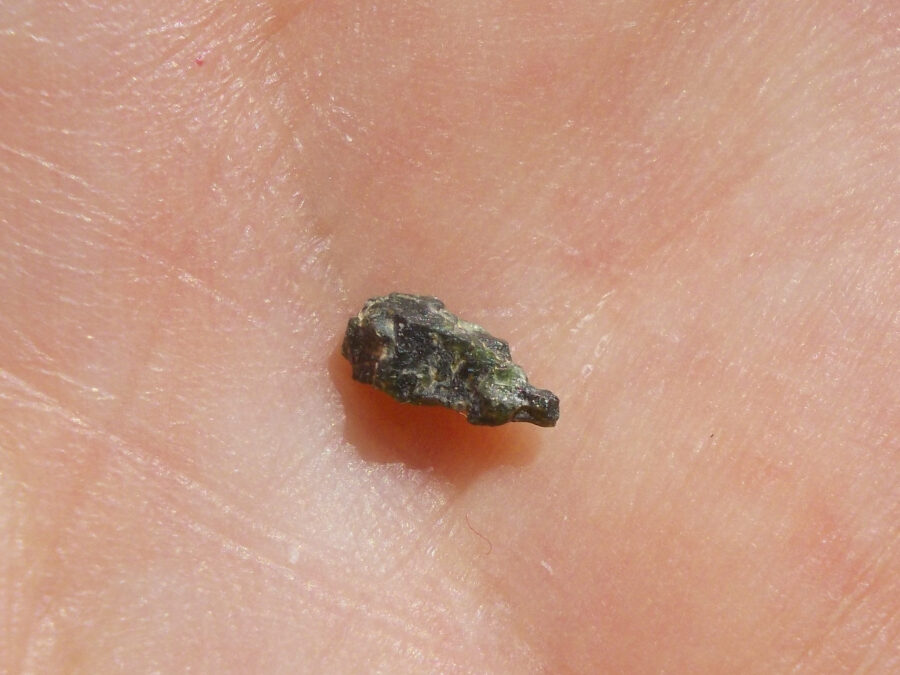
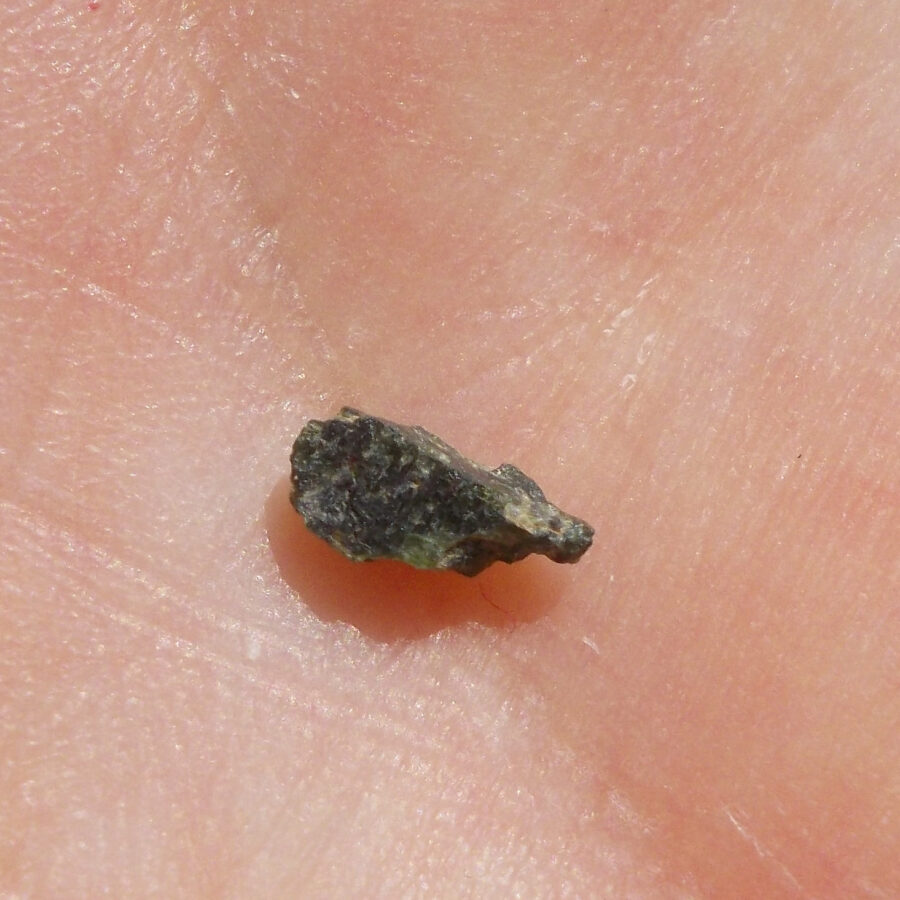
Sidi Ali Ou Azza 29°47’2.9″N, 7°23’21.8″W
Guelmim-Es-Semara, Morocco
Confirmed fall: 28 Jul 2015
Classification: Ordinary chondrite (L4)
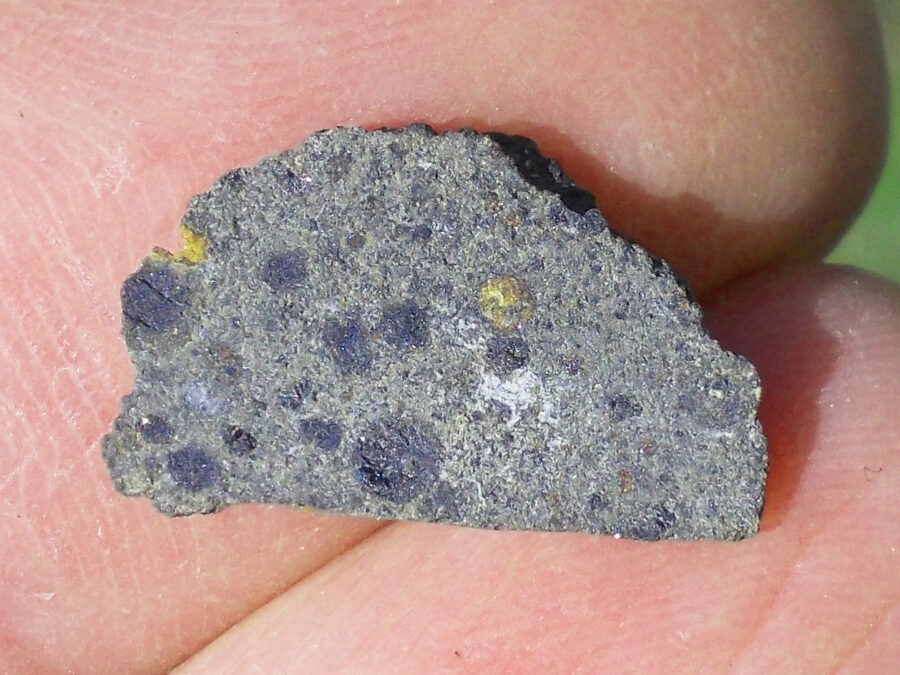
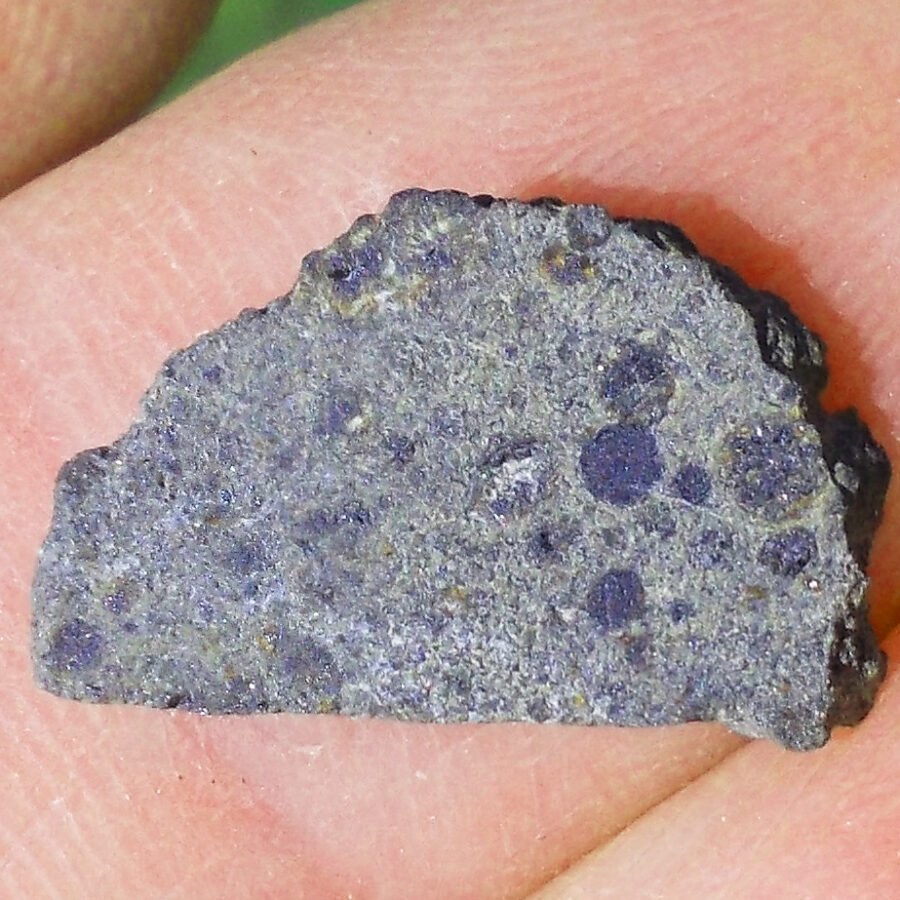
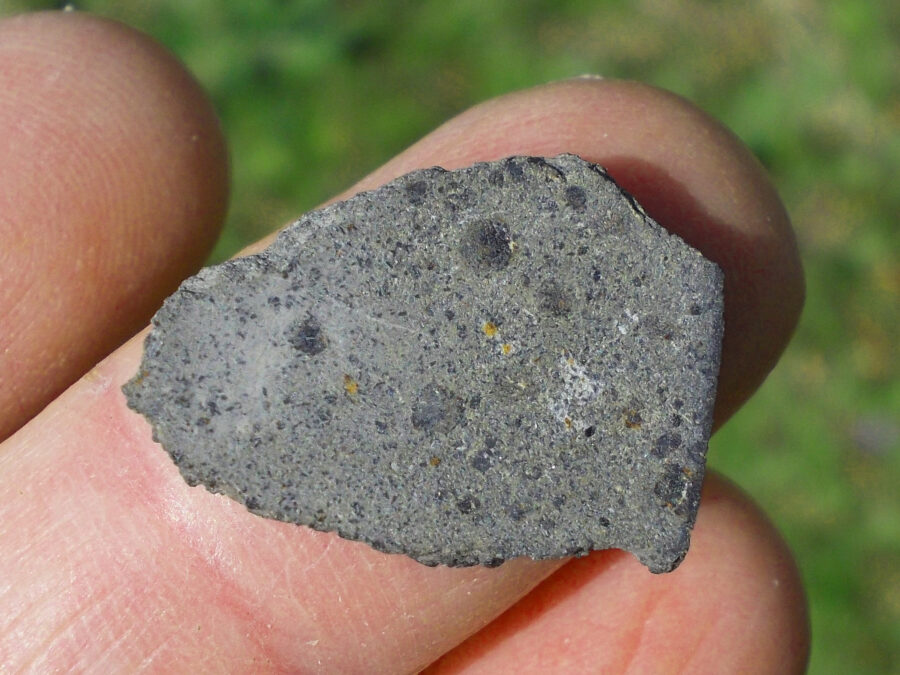
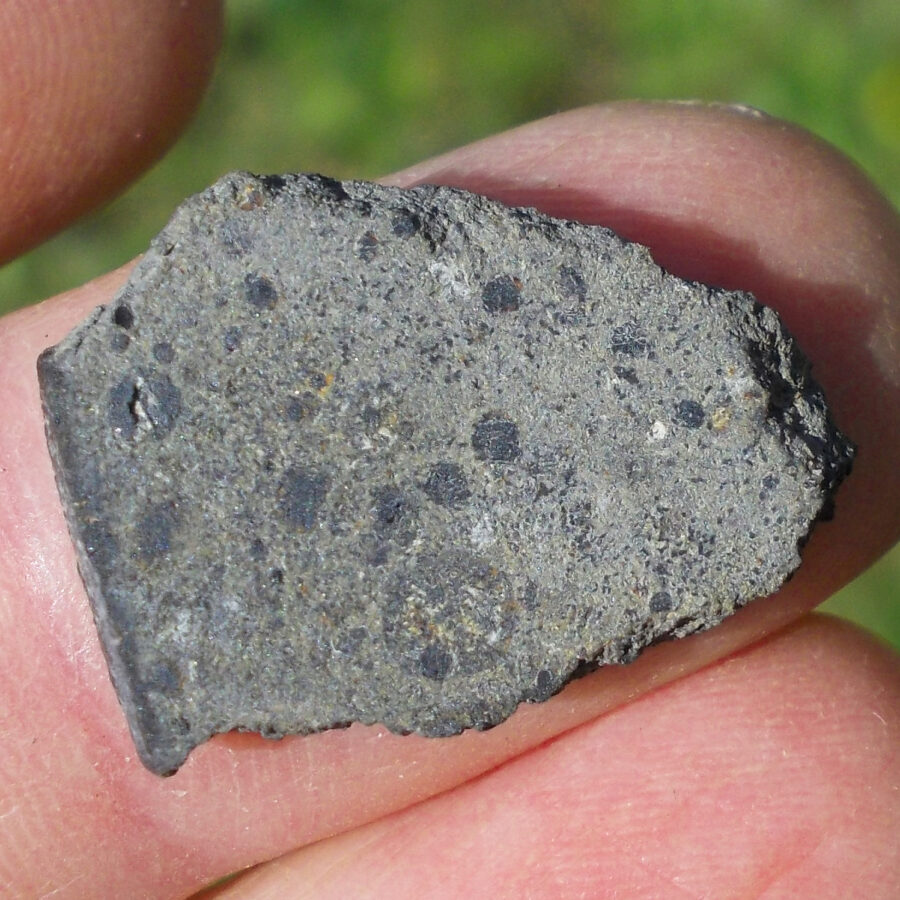
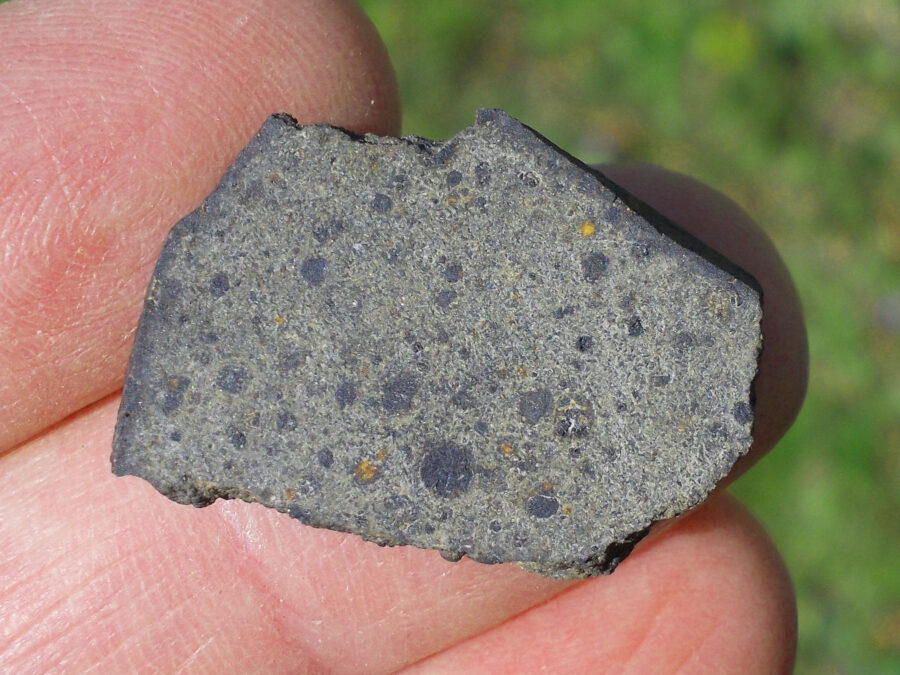
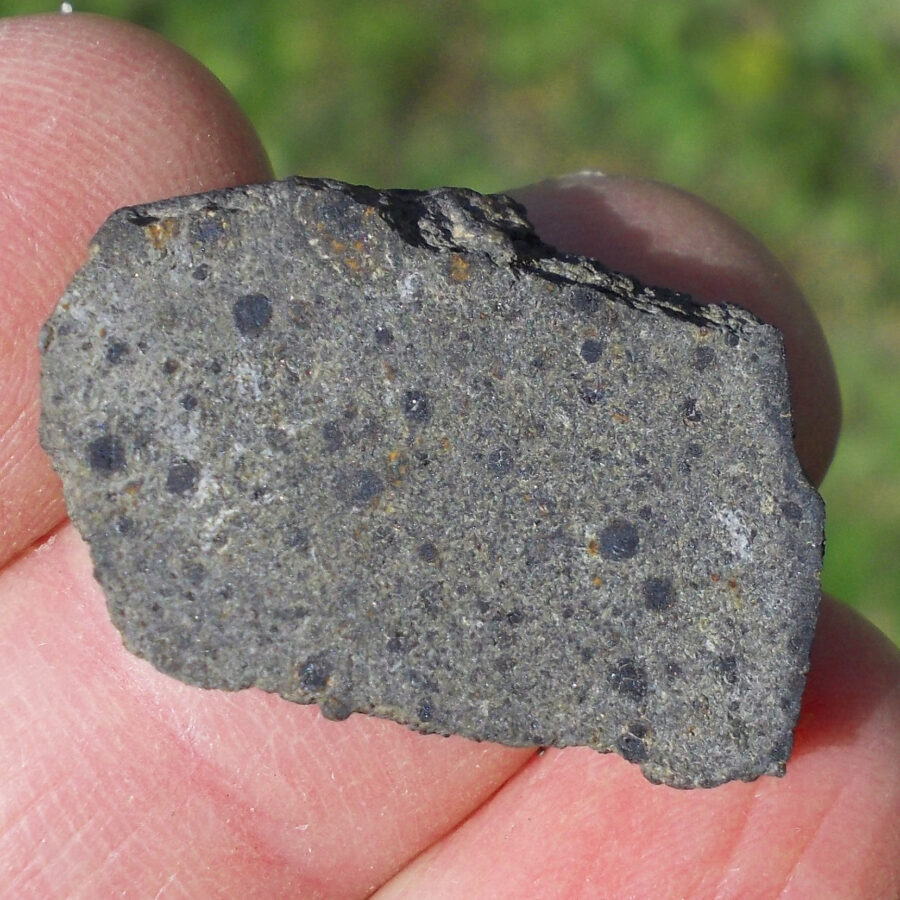
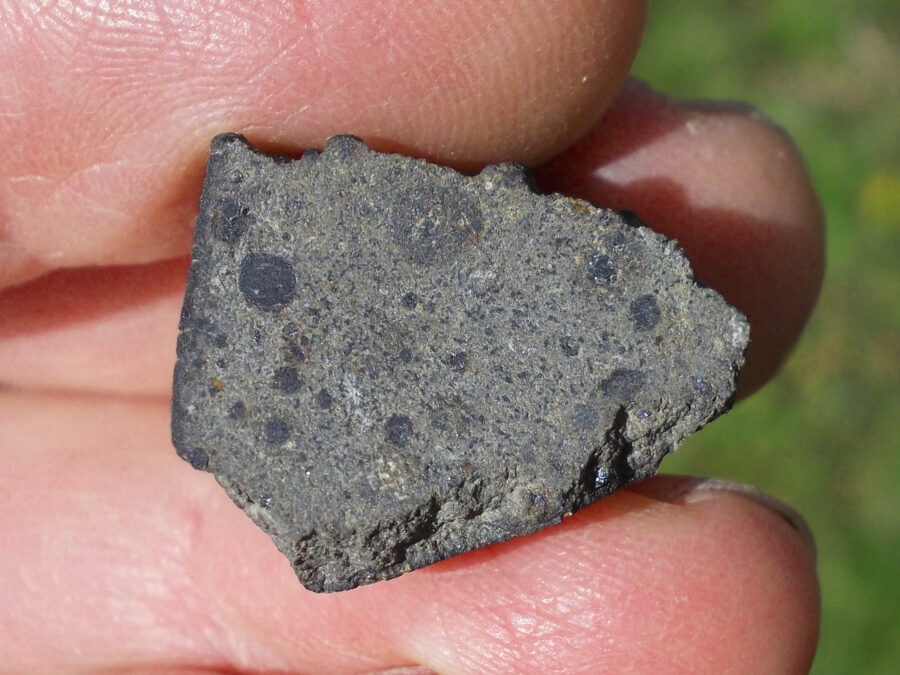
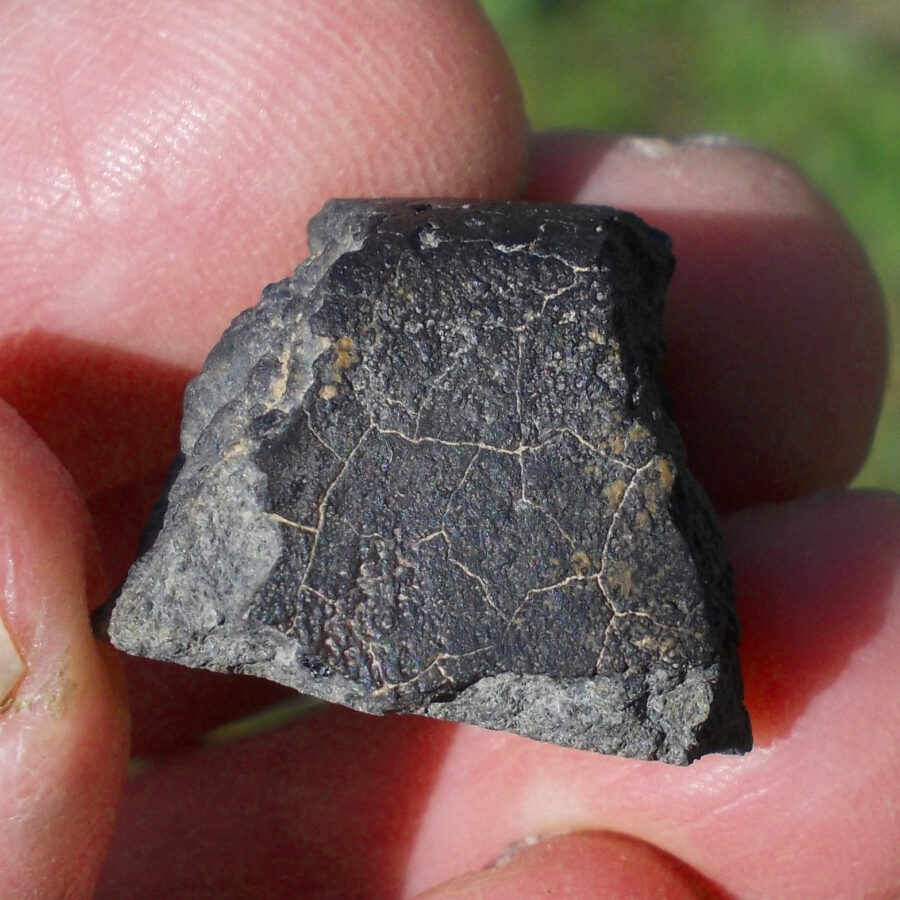
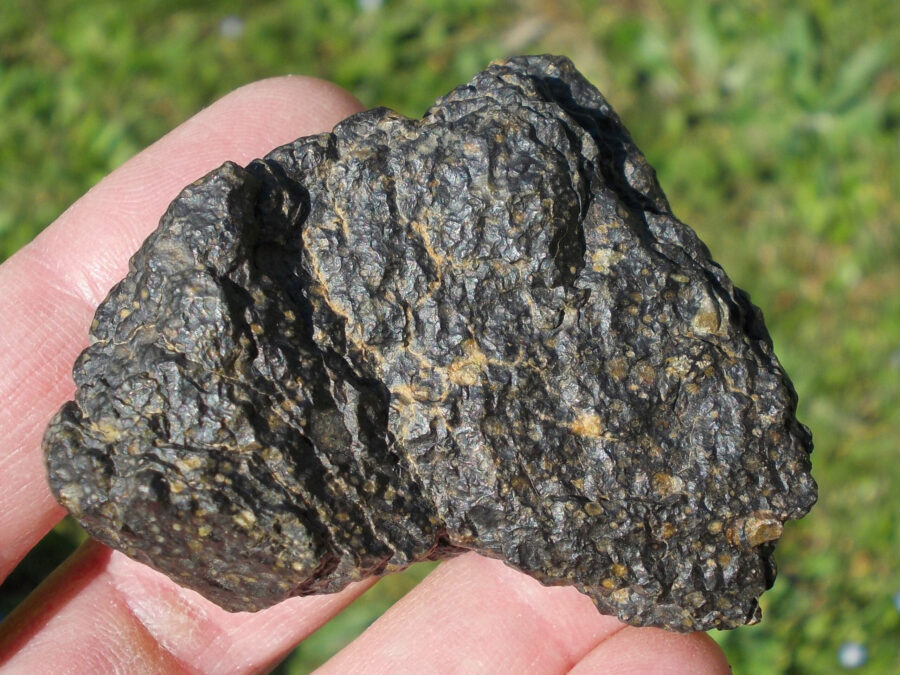
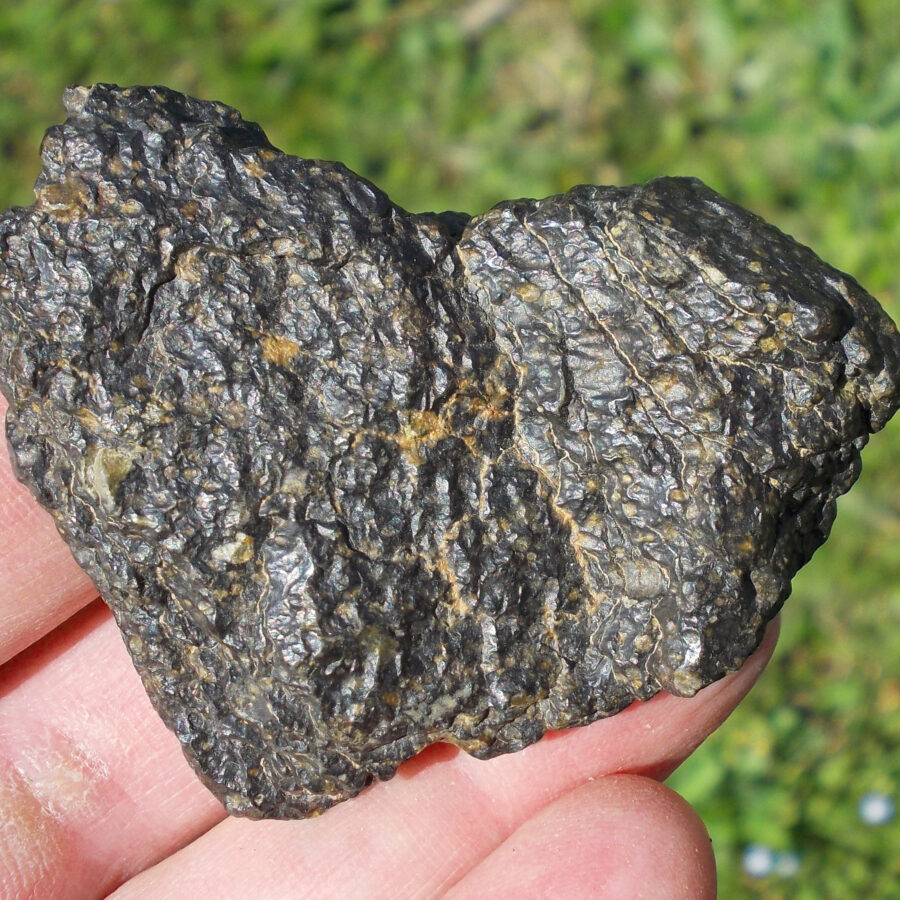
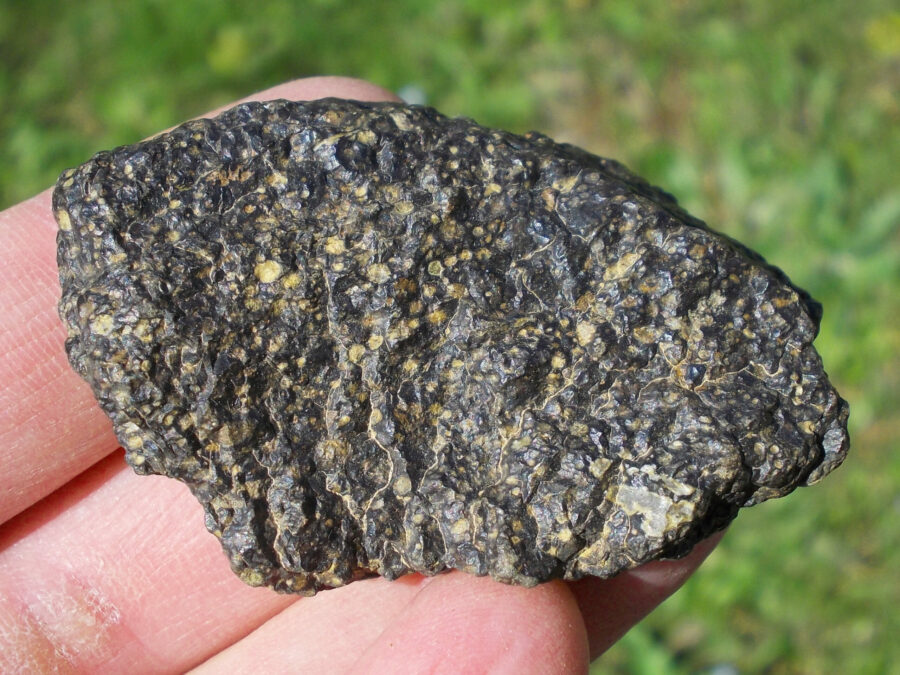
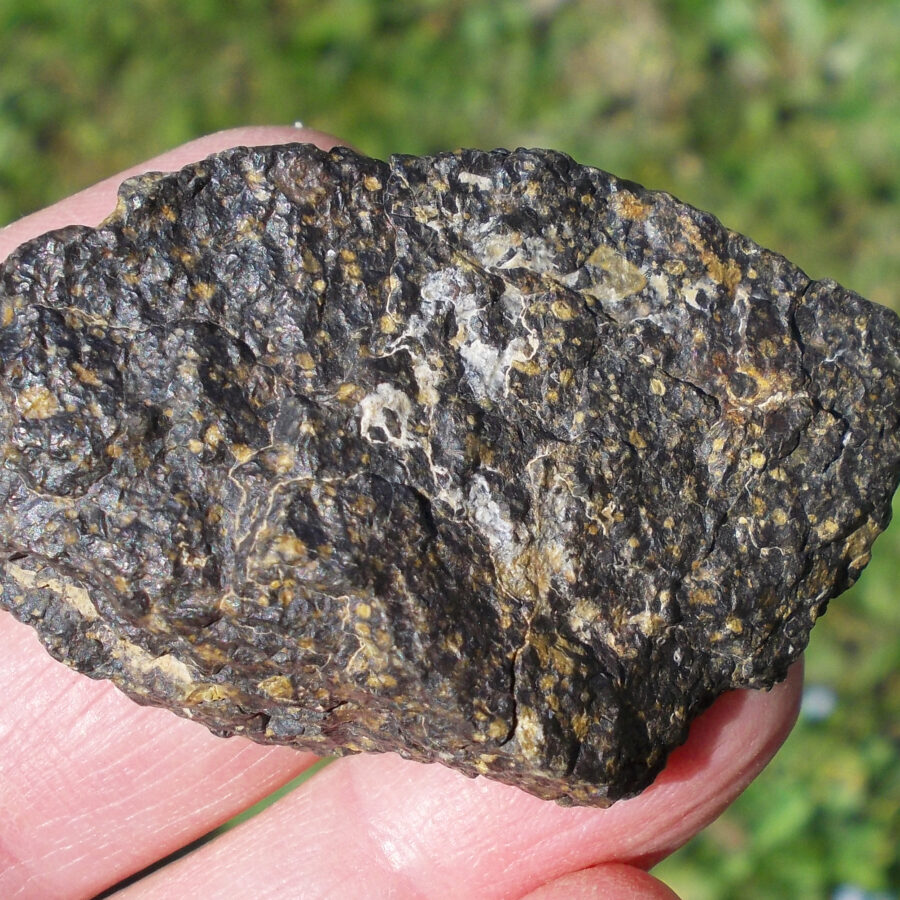
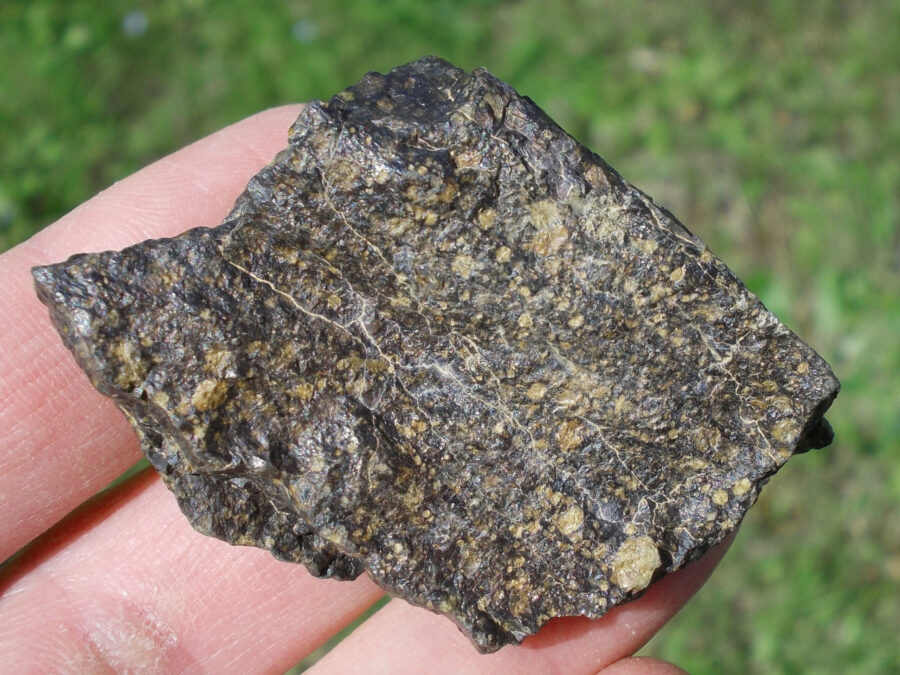
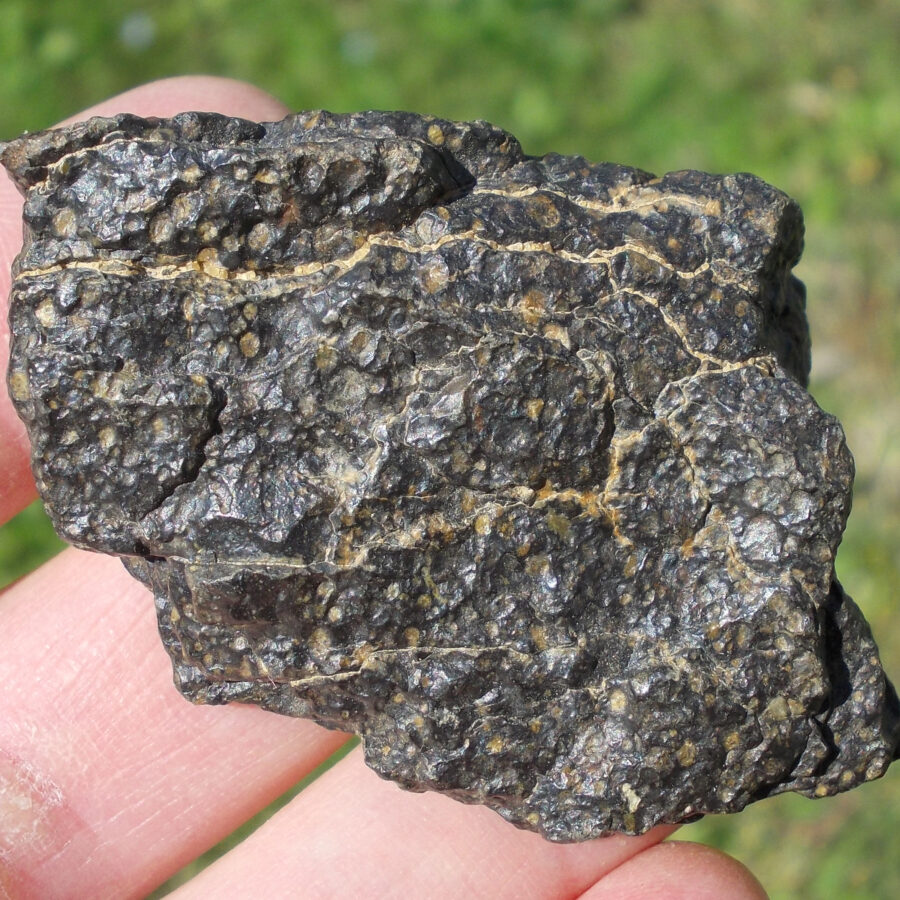
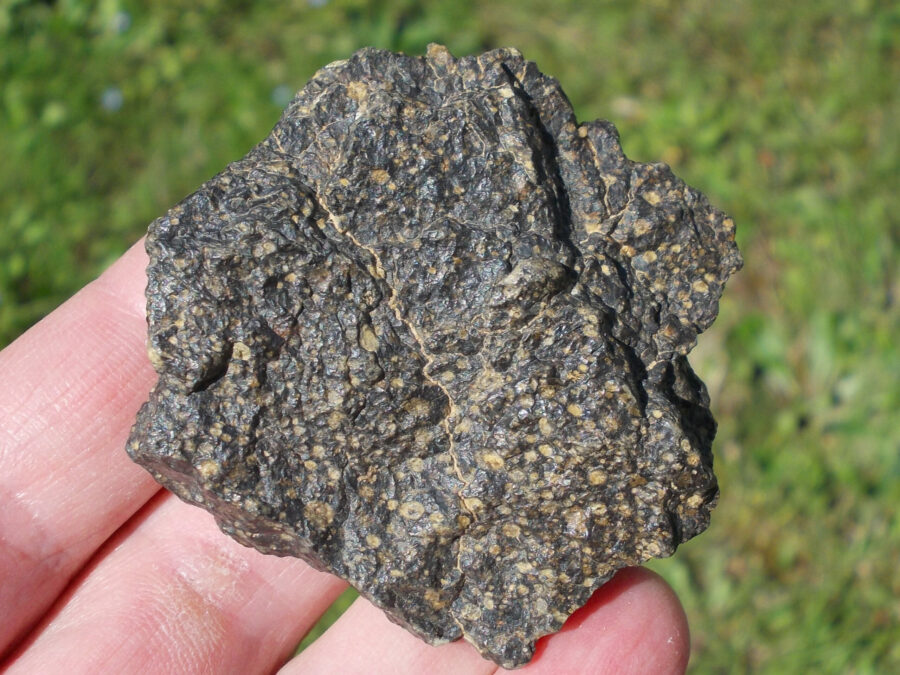
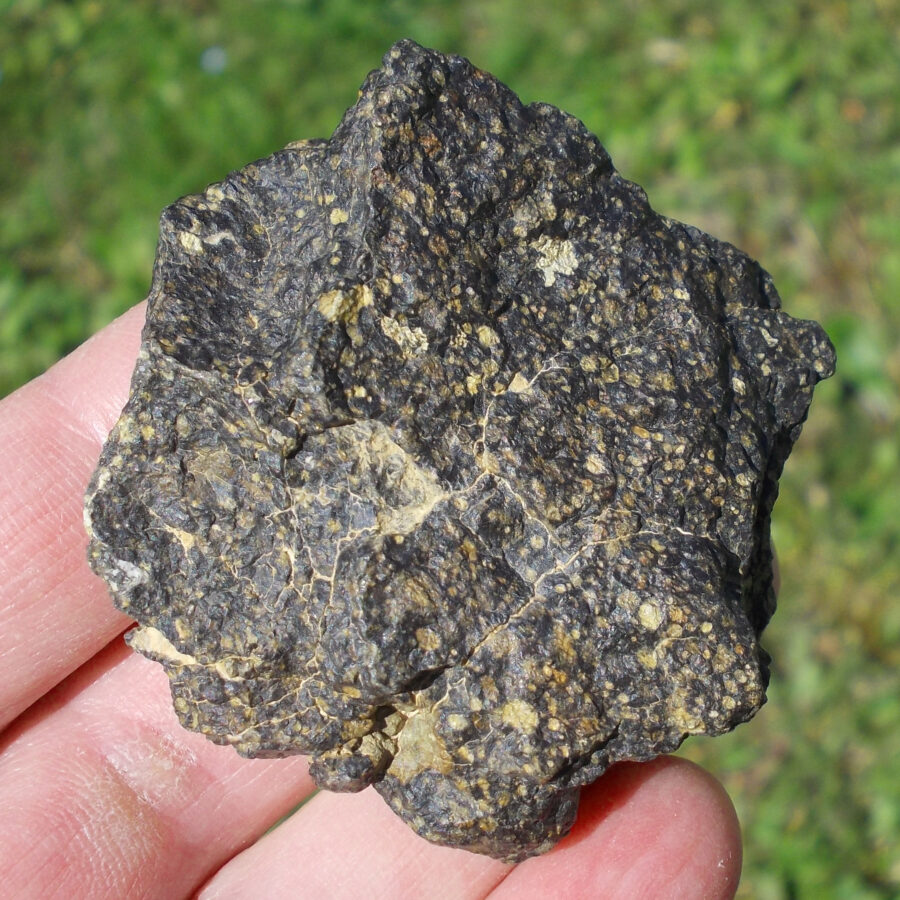
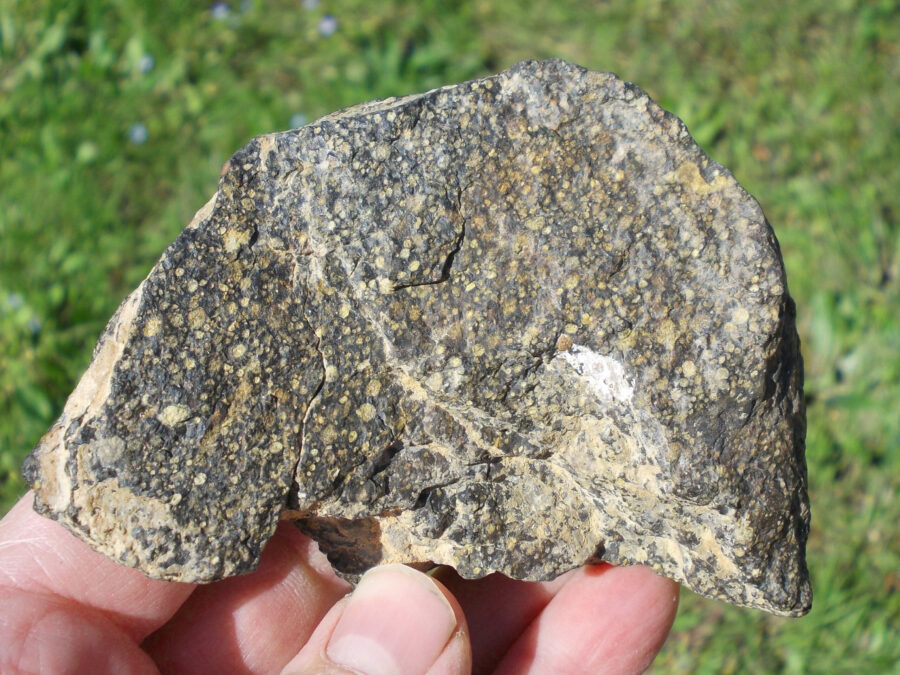
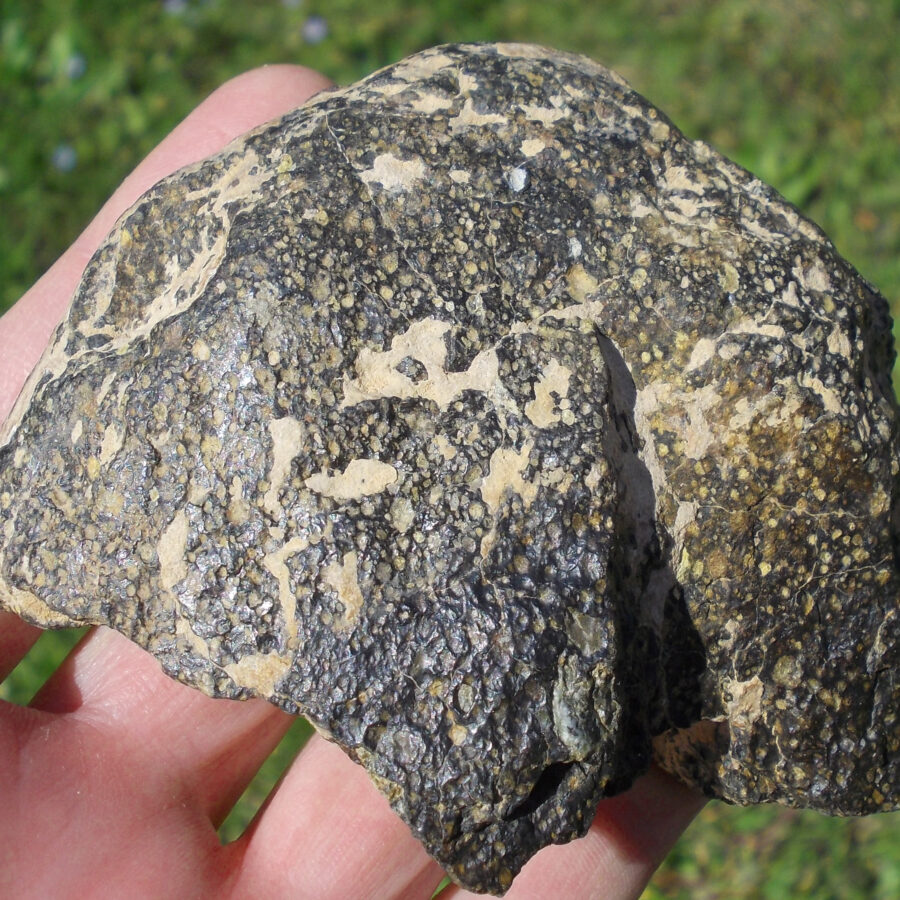
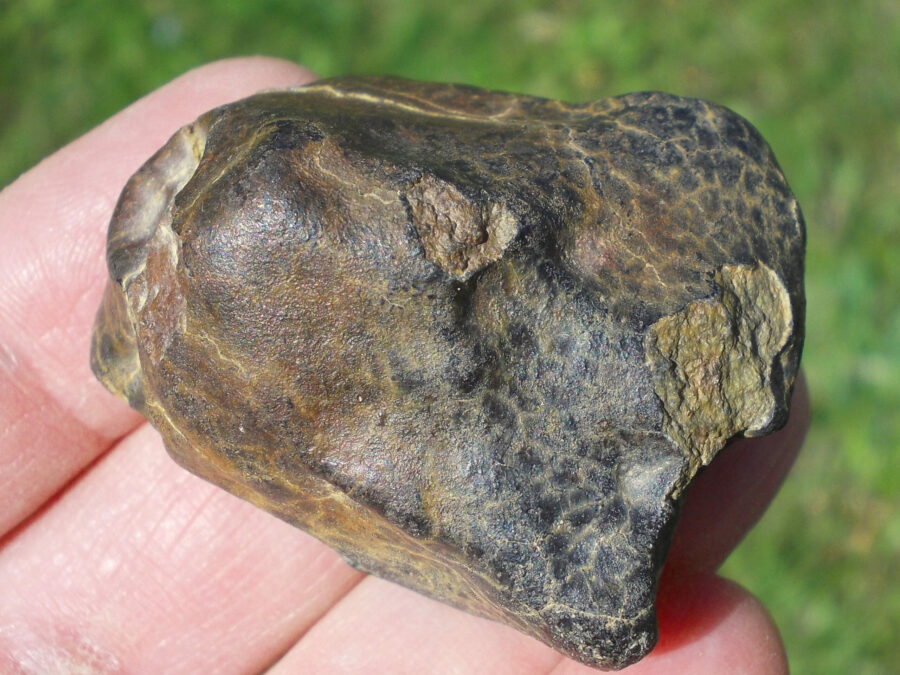
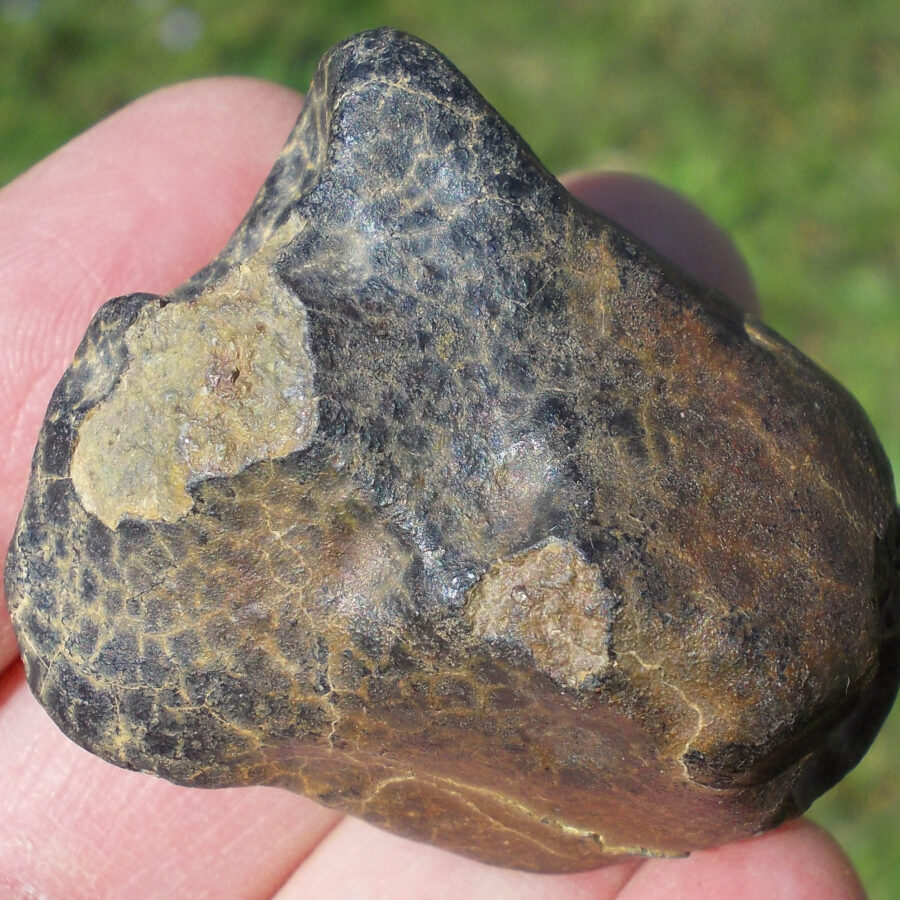
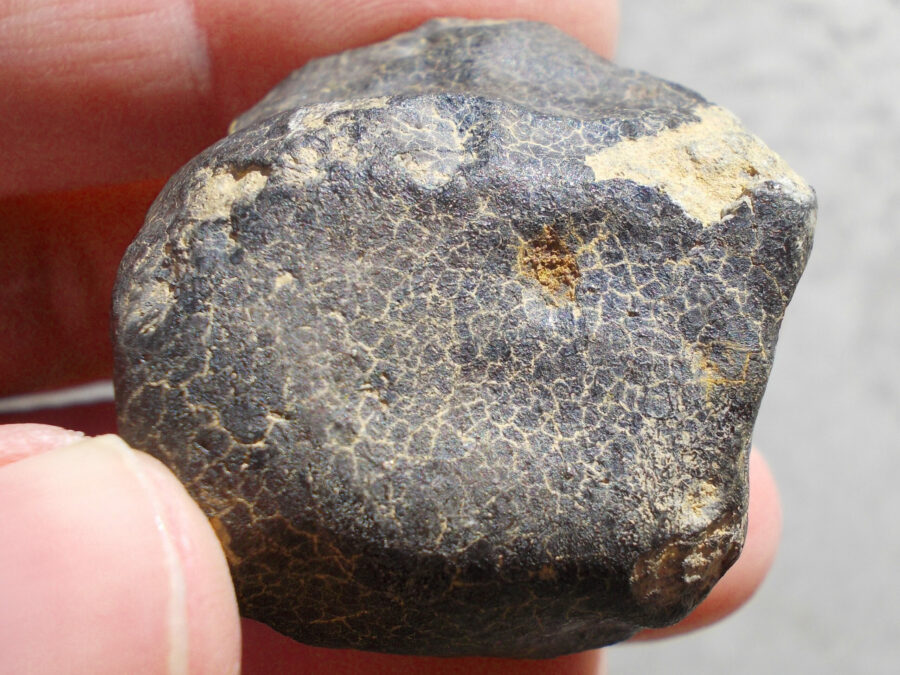
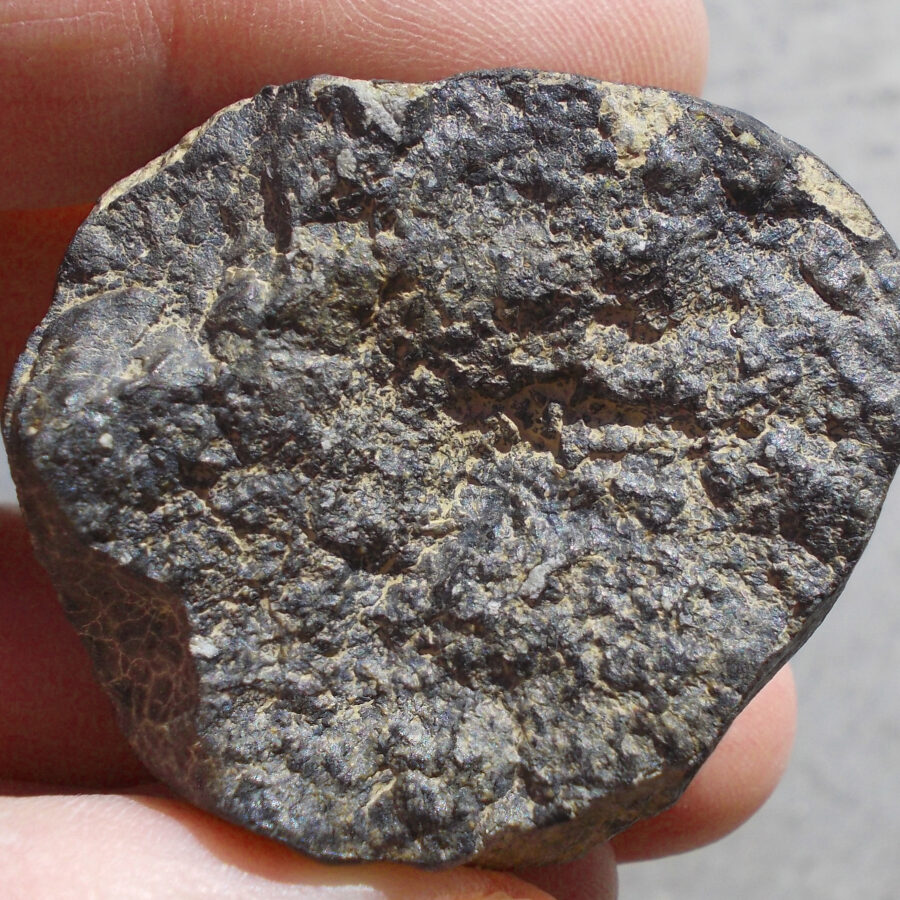
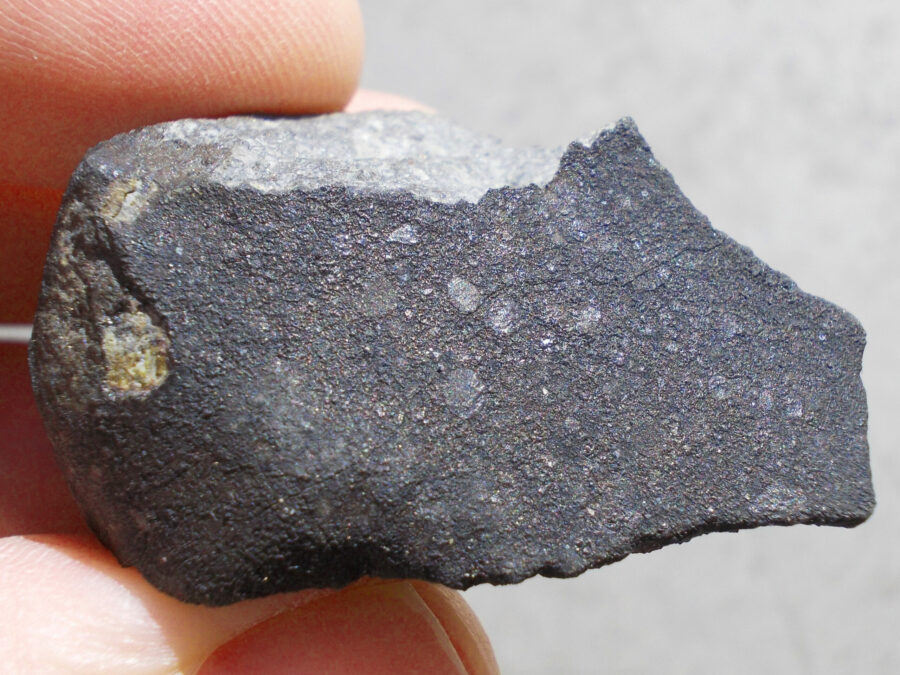
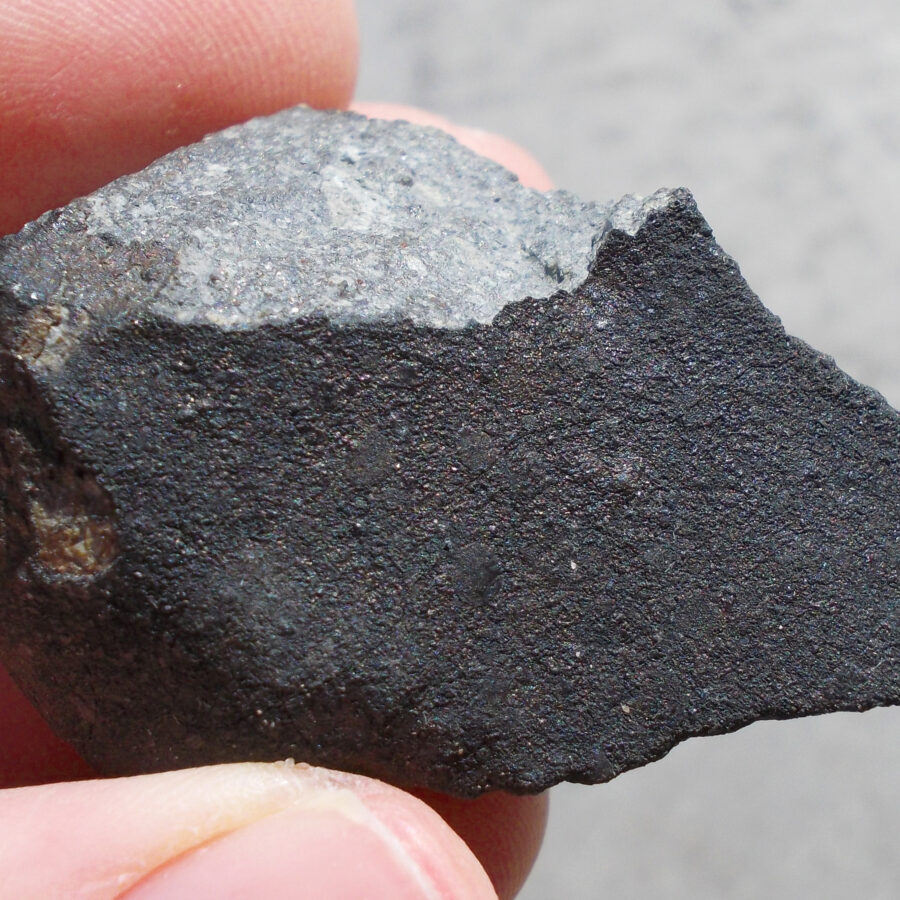
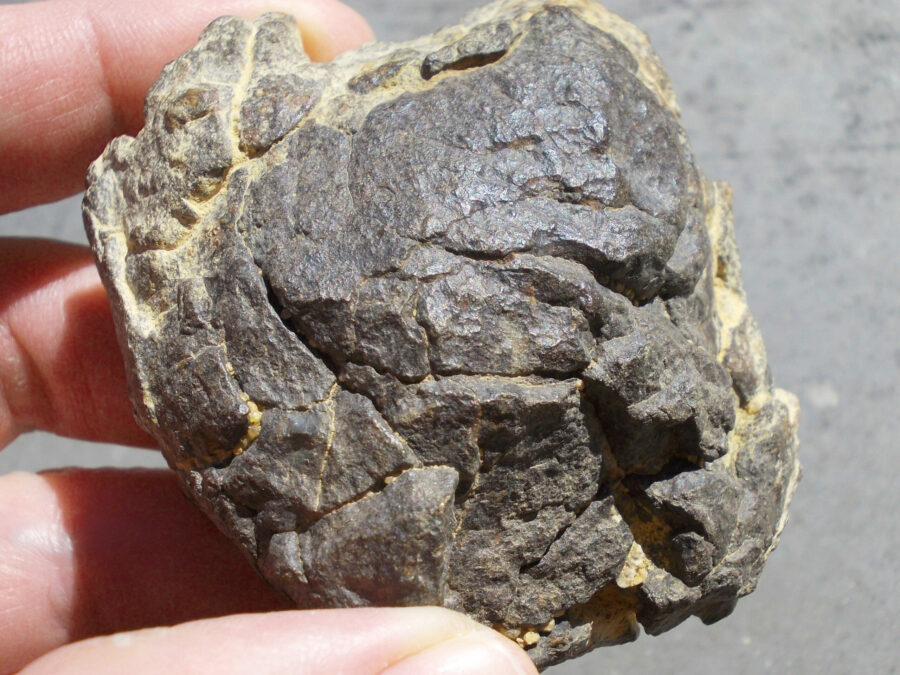
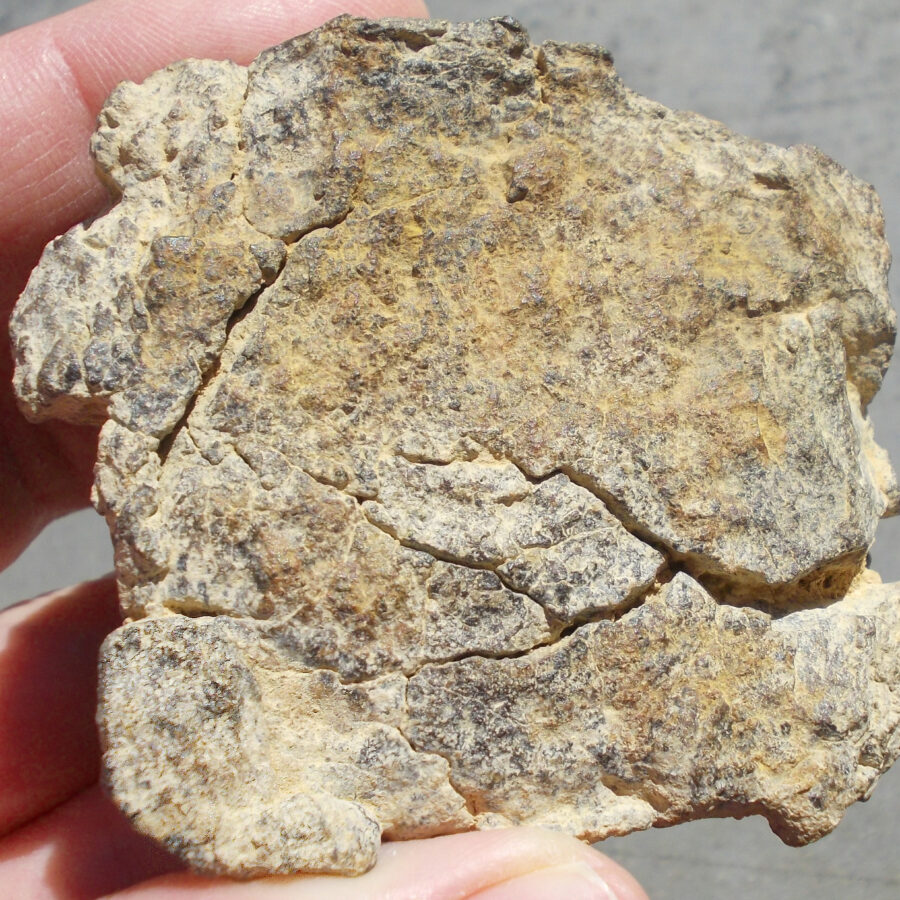
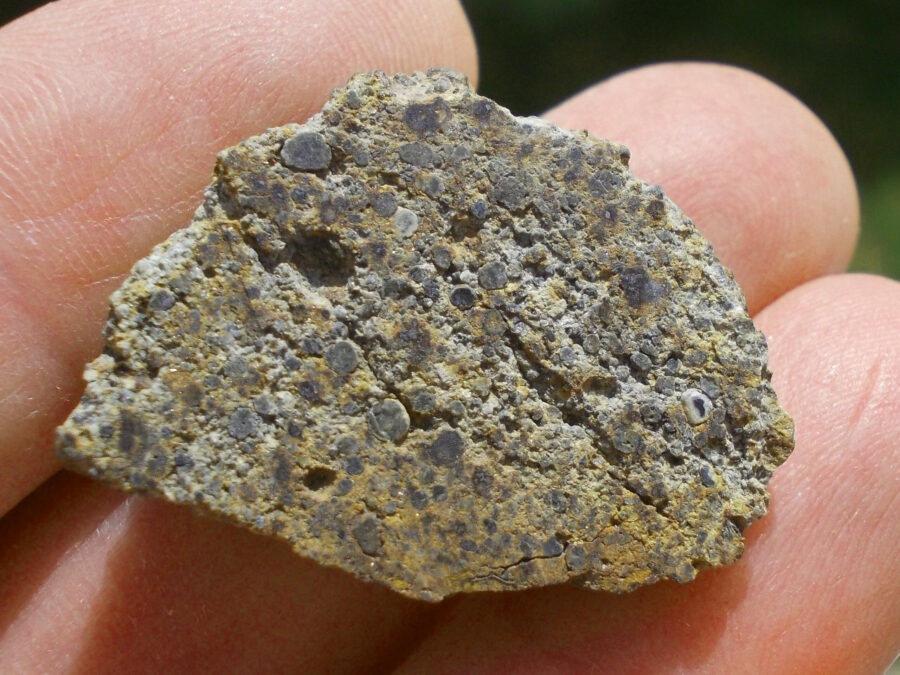
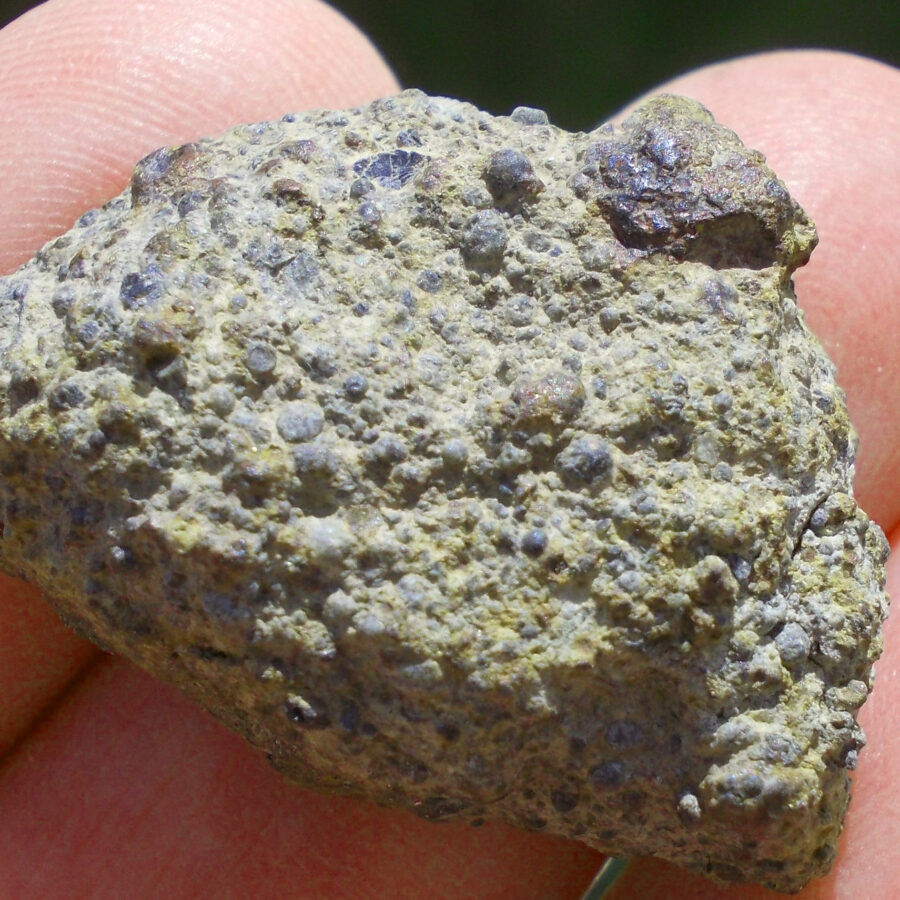
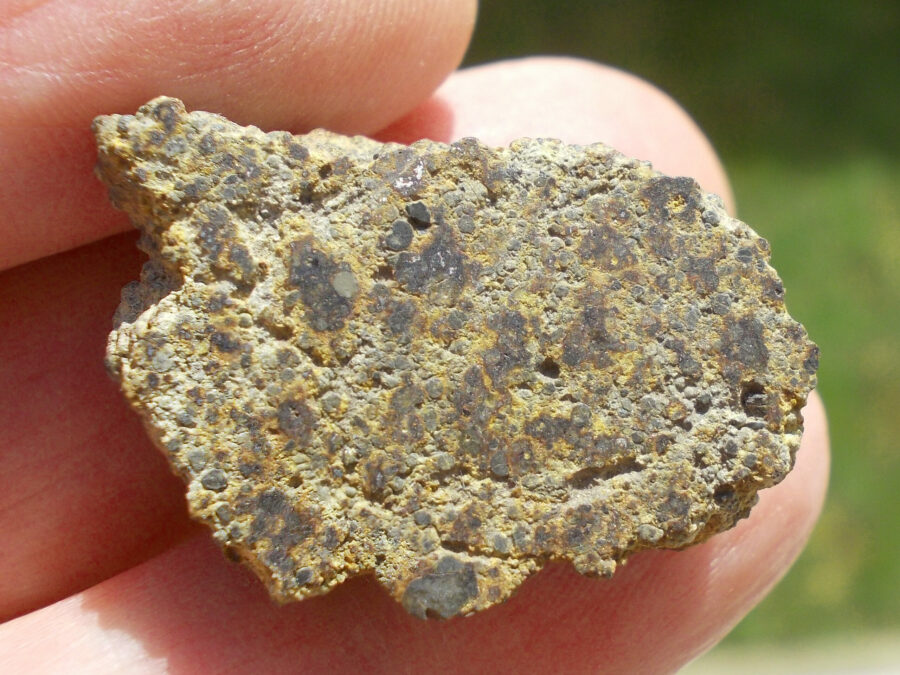
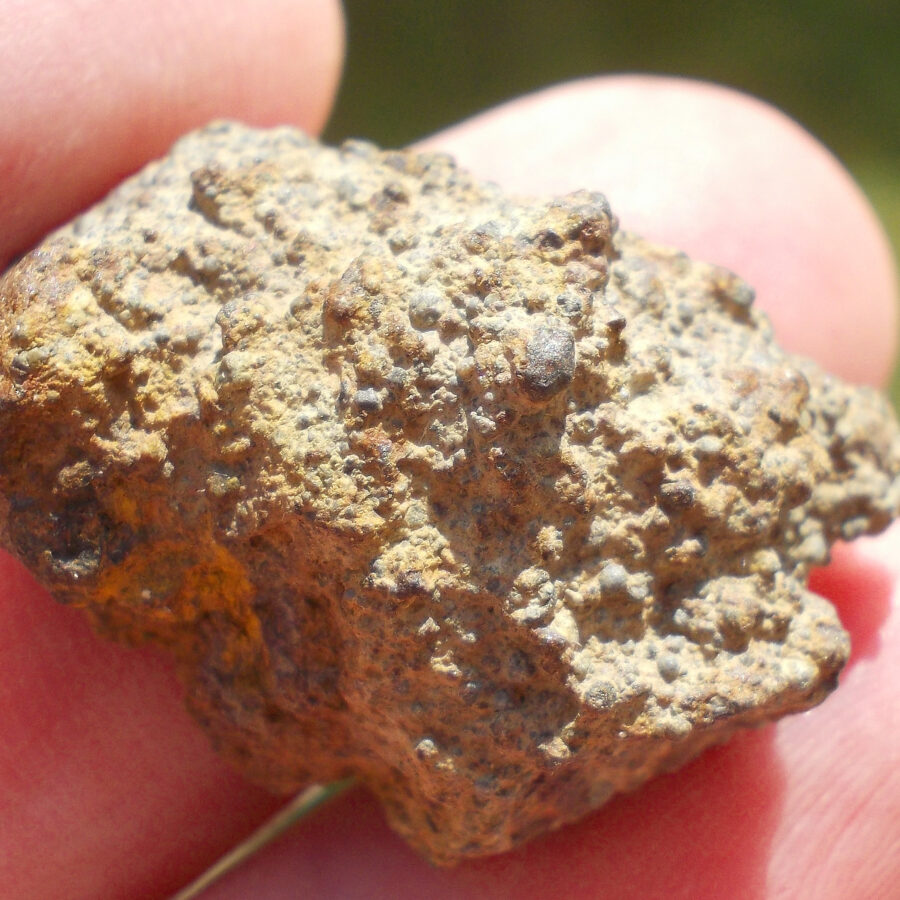
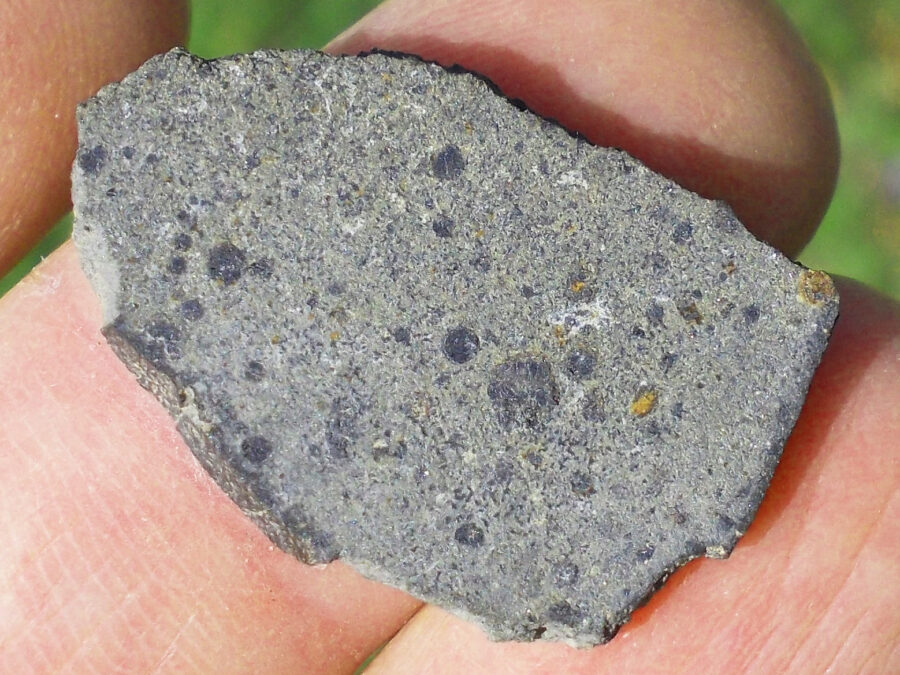
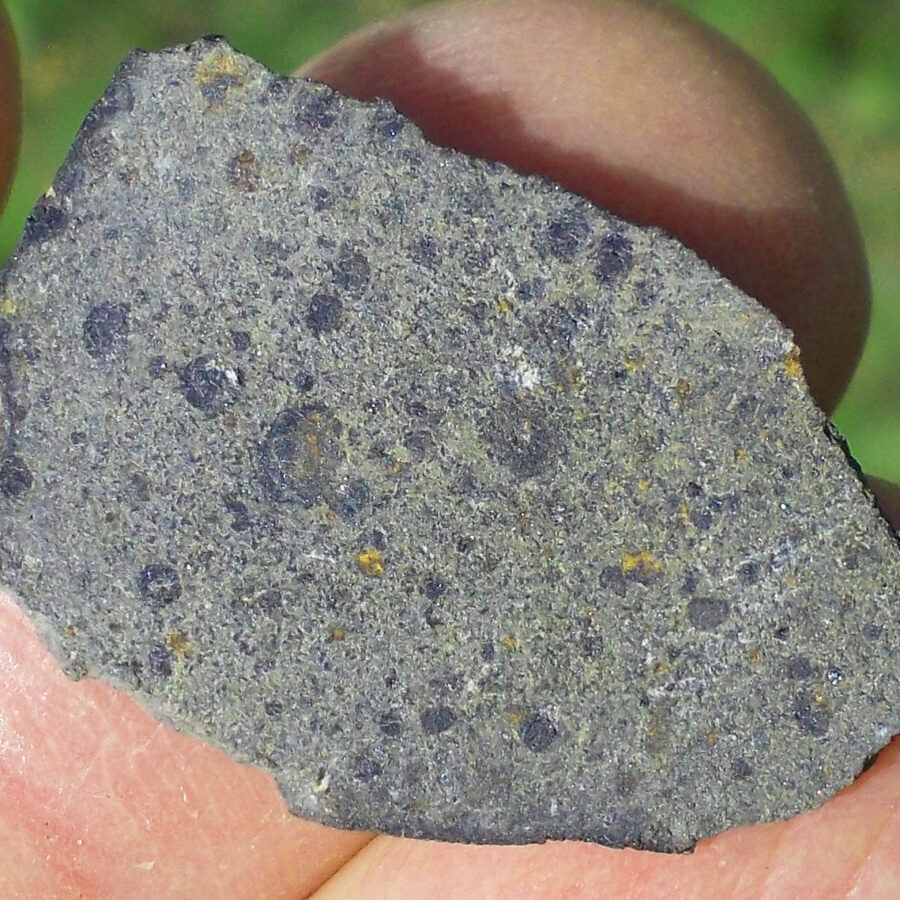
History: (H. Chennaoui Aoudjehane FSAC, A. Aaranson, A. Bouragaa, A. Bouferra). On Tuesday, 28 July 2015, around 5:30 pm local time (6:30 pm GMT), many people from Tissint and its vicinity heard three sonic booms in the direction of Sidi Ali Ou Azza. Immediately, numerous people begin searching for the meteorite in the area. Two days after the fall, many small pieces from 5 to 109 g (so far: 109, 100, 75, 50, 40, 37, 20, 10, 7, and 5.7 g) were recovered close to Sidi Ali Ou Azza and El Kharoua’ well, a few km west of Tissint. Most pieces are complete and mostly covered by black fusion crust. The interior is dark and brecciated, with a few clear gray zones. Numerous small and well-defined chondrules are visible as well as sulfides and metals. The direction of the fall was from north to south; the strewnfield is ~4 km long.
Physical characteristics: Black and brown patchy fusion crust. A saw cut reveals numerous, distinct chondrules and fine grained metal/sulfide. A dark angular clast, ~5 mm, was also observed.
Petrography: (C. Agee, UNM) Microprobe examination of a polished mount shows numerous porphyritic chondrules, a few BO chondrules, and an enstatite-rich chondrule. Mesostasis and very fine-grained plagioclase is ubiquitous. Kamacite, taenite, troilite, chromite, and a phosphate phase were observed throughout. The dark angular clast described above has an igneous texture with ~50% zoned euhedral olivines (up to 50 μm) and ~50% fine spinifex quench crystals, with sparse scattered metal or sulfide blebs (up to 10 μm).
Geochemistry: (C. Agee and N. Muttik, UNM) Chondrule olivine Fa25.7±0.9, Fe/Mn=50±3, Cr2O3=0.03±0.03 (wt%), n=24; chondrule low-Ca pyroxene Fa20.4±1.7, Fe/Mn=29±1, n=10; chondrule enstatite Fs2.1±0.2Wo0.6±0.2, n=2; plagioclase An8.3±3.9Ab86.9±3.1Or4.9±0.9. Clast olivine Fa19.3±4.1, Fe/Mn=47±4, Cr2O3=0.45±0.21 (wt%), n=6.
Classification: Ordinary chondrite, L4
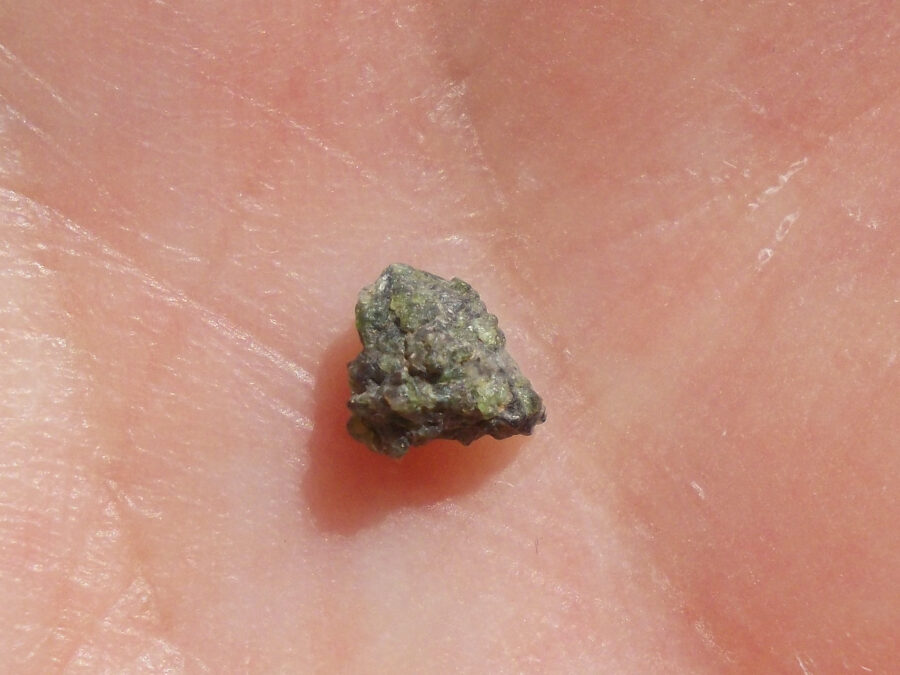
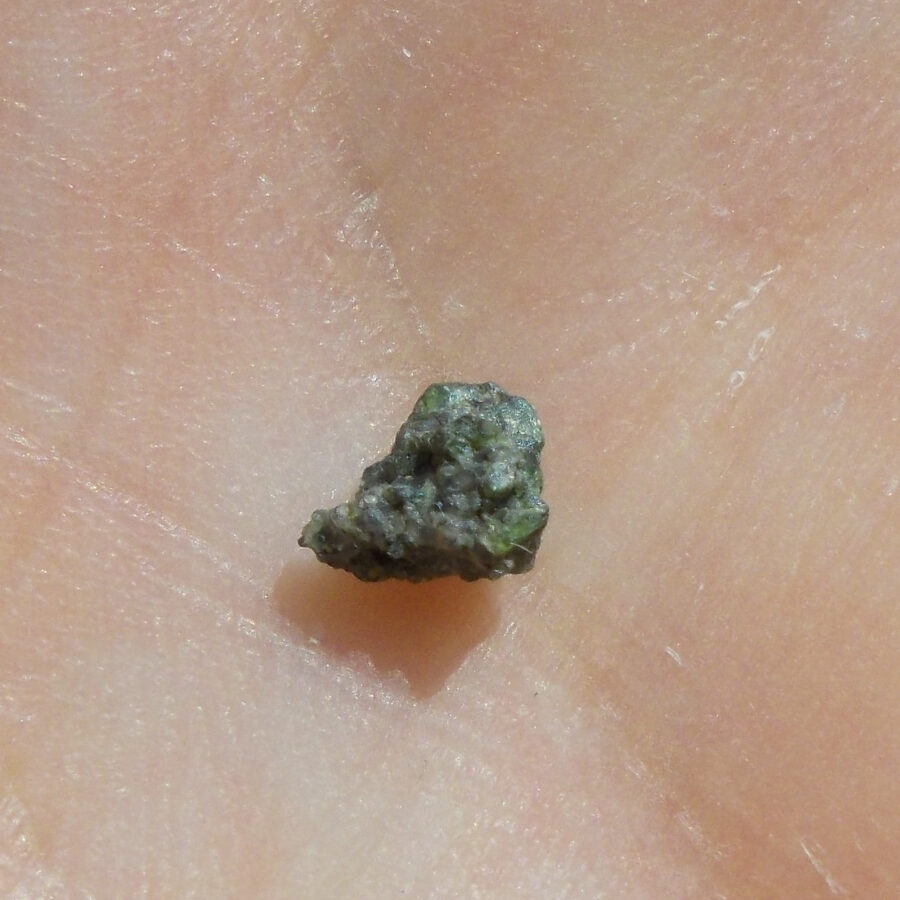
Specimens: 20.8 g, UNM; 10.7 g, FSAC


 Out of stock